In This Article
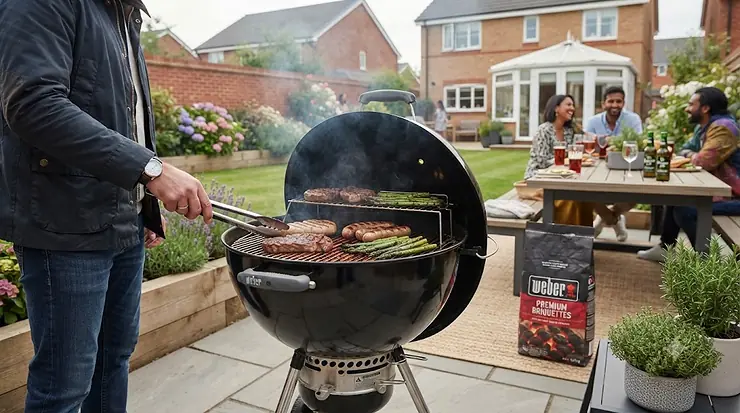
There’s a particular kind of heartbreak reserved for barbecue day: the coals just won’t catch, the wind’s picked up, and your guests are standing around holding warm cans of lager while you poke hopefully at a smoking, half-lit mess. Choosing the right fuel solves about eighty percent of that problem before you’ve even struck a match. This Weber briquettes review exists because “just grab a bag of charcoal” is genuinely bad advice — the difference between a decent briquette and a dud one shows up in exactly the moment you can’t afford it, mid-cook, with hungry people watching.
So, what is a Weber briquette? In short, it’s a compressed block of carbonised wood, starch and water, pressed under huge pressure into a uniform pillow shape so it lights predictably and burns for a set, repeatable length of time — unlike lumpwood charcoal, which is just chunked, unprocessed wood.
This Weber briquettes review takes seven real, currently available products — from Weber’s own range through to budget supermarket staples and premium imported lumpwood — and breaks down what the spec sheets don’t tell you: how they actually behave on the grate, what genuine reviewers report after using them, and which one suits your kind of cooking. We’ve dug into brand reputation, briquette consistency, and the perennial Weber briquettes vs lumpwood charcoal debate, because picking fuel shouldn’t be a guessing game. Everything here is grounded in real specifications and aggregated customer sentiment — no invented “we tested this ourselves for six months” theatre, just honest analysis you can actually use before your next barbecue weekend.
Quick Comparison Table
Before we go deep on all seven, here’s the shortlist for anyone in a hurry.
| Product | Fuel Type | Best For |
|---|---|---|
| Weber Original Briquettes | Briquette | All-round use on Weber kettle grills |
| Weber Premium Lumpwood Charcoal | Lumpwood | Fast, hot searing |
| Weber Coconut Shell Briquettes | Briquette (coconut) | Long, low-and-slow eco cooking |
| Big K Restaurant Grade Charcoal Briquettes | Briquette | Budget-conscious long burns |
| Big K Instant Light Lumpwood | Lumpwood | Quick, no-fuss weeknight grilling |
| Bar-Be-Quick Charcoal Briquettes | Briquette | Casual, budget weekend barbecues |
| Kamado Joe Big Block XL | Lumpwood | Premium kamado and overnight smoking |
Looking at the spread above, there’s a clear pattern: briquettes cluster around consistency and longevity, while lumpwood options chase raw heat and speed. If you own a kettle grill and cook mixed meals — burgers one week, a slow pork shoulder the next — a briquette is the safer default, since it won’t leave you guessing how long your heat will last. Searing enthusiasts and kamado owners, on the other hand, will likely get more satisfaction from the lumpwood end of the table, where the trade-off for less predictability is genuinely higher peak temperatures.
💬 Just one click — help others make better buying decisions too!😊
Top 7 Weber Briquettes and Alternatives: Expert Analysis
We’ve deliberately mixed budget, mid-range and premium picks, plus both briquette and lumpwood formats, so whatever your grill and cooking style, something below should fit.
1. Weber Original Briquettes — the benchmark for Weber kettle owners
The Weber Original Briquettes are the product most people picture when they hear the word “briquette” in a UK garden centre, and there’s a reason for that. Each briquette is pressed at 50 tonnes into an extra-large pillow shape with dual grooves cut into the surface for airflow, which is why they light faster than their density would suggest and burn with genuinely even heat across the grate. In practice, that 50-tonne compression matters more than it sounds — it’s what keeps dust down in the bag and stops the briquettes crumbling into rubble before you’ve even opened the lid. Made from 100% natural carbonised wood, starch and water with FSC certification, they’re squarely aimed at buyers who want reliability without thinking too hard about ingredients. This is the pick for someone who owns a Weber kettle and wants one bag that handles both a quick Tuesday-night grill and a longer Sunday roast. Reviewers consistently report uniform sizing and an even cook across food, with several long-term users describing them as their permanent go-to fuel; a recurring gripe, however, is the oversized cardboard packaging, which some find wasteful for the amount of product inside.
Pros:
- ✅ Uniform pillow shape burns evenly across the grate
- ✅ Water-repellent, zip-lock bag keeps briquettes dry in storage
- ✅ FSC-certified sourcing backs up the sustainability claims
Cons:
- ❌ Some buyers find the outer packaging excessively bulky
- ❌ Costs more per kilogram than supermarket own-brand briquettes
At around £15-£20 for an 8kg bag (check current price, as availability and stock levels shift), this sits in the mid-range — not the cheapest bag on the shelf, but justified for anyone already invested in the Weber ecosystem.
2. Weber Premium Lumpwood Charcoal — best for fast, hot searing
If the Original Briquettes are Weber’s all-rounder, the Weber Premium Lumpwood Charcoal is its sprinter. This is genuine lumpwood — irregular chunks of carbonised wood with no binders, starch or pressing involved — which is exactly why it behaves so differently on the grate. Lumpwood ignites faster because there’s more surface area and airflow between the pieces, and it tends to reach higher peak temperatures than a compacted briquette, which is precisely what you want when you’re trying to get a proper crust on a ribeye in under three minutes. Sold in 10kg bags and FSC-certified like its briquette sibling, it’s aimed at buyers who prioritise heat over duration; anyone doing an overnight brisket should look elsewhere on this list. Aggregated reviewer sentiment for Weber’s lumpwood range is generally positive on ignition speed and smell, with less of the acrid chemical odour some cheaper lumpwood brands attract during light-up — a common complaint in user reviews of unbranded lumpwood is a strong lighter-fluid smell in the first ten minutes, and Weber’s range mostly avoids that criticism.
Pros:
- ✅ Reaches searing temperatures noticeably faster than briquettes
- ✅ FSC-certified, sustainably sourced European hardwood
- ✅ Minimal chemical smell reported during light-up
Cons:
- ❌ Irregular lump sizes make burn time harder to predict
- ❌ Burns through faster than briquettes on longer cooks
Expect to pay somewhere in the £20-£25 range for a 10kg bag at the time of research; prices may vary by retailer and season, so it’s worth comparing current listings before you commit.
3. Weber Coconut Shell Briquettes — best eco-friendly option for long cooks
The Weber Coconut Shell Briquettes are the interesting outlier in Weber’s range, made from coconut shells rather than felled timber, which sidesteps a chunk of the sustainability debate around wood-based charcoal entirely. What most buyers overlook about this format is that coconut shell charcoal is naturally denser than most wood, which translates into a longer, steadier burn — Weber quotes up to four hours per load with a roughly 20-minute run-up to usable embers, and that extra density is the real story here, not just the eco-marketing angle. Based on the spec comparison with the standard Original Briquettes, this is the product to reach for on a low-and-slow day rather than a quick weeknight grill. Genuine user reviews on Amazon UK describe strong results on extended cooks, including one detailed account of an eight-hour slow smoke and a separate hot-and-fast chicken cook both handled comfortably on the same bag — exactly the kind of versatility premium buyers are paying for.
Pros:
- ✅ Reviewers report reliable eight-hour performance on slow cooks
- ✅ Made from an agricultural byproduct rather than virgin timber
- ✅ Handles both low-and-slow and hot-and-fast sessions well
Cons:
- ❌ Sits at a noticeable premium versus standard wood briquettes
- ❌ Less widely stocked than Weber’s mainstream range
Pricing typically lands in the £20-£25 range for an 8kg bag, putting it roughly on par with premium lumpwood despite being a briquette — the coconut sourcing and processing carry a real cost.
4. Big K Restaurant Grade Charcoal Briquettes — best value long-burn budget pick
Big K built its reputation supplying UK restaurants and pubs, and the Big K Restaurant Grade Charcoal Briquettes are a direct trickle-down from that commercial line. Unusually for this list, they’re pressed into a stick shape rather than the classic Weber-style pillow, with a central hole engineered to aid airflow through the stack — a genuinely different approach to solving the same consistency problem. Here’s what to weigh: independent reviewers note they take slightly longer to light than lumpwood, but once established, the burn is impressively stable, holding steady heat through several hours of low-and-slow smoking rather than the shorter blast you’d get from raw lump. They’re also formally listed as an authorised fuel under UK smoke control legislation, which matters if you’re grilling somewhere covered by a smoke control area. Reviewers consistently note minimal dust and mess on unpacking compared with typical lump charcoal, and the 10kg format offers real bulk-buy value for anyone who grills often.
Pros:
- ✅ Officially authorised for use in UK smoke control areas
- ✅ Made from wood waste with no synthetic binders
- ✅ Strong value on a per-kilogram basis versus premium brands
Cons:
- ❌ Unconventional stick shape burns differently to pillow briquettes
- ❌ Some bags arrive with noticeable breakage during transit
At roughly £12-£16 for a 10kg box, this is genuinely one of the cheapest ways onto this list per kilogram, and the smoke-control authorisation is a real practical bonus for urban grillers.
5. Big K Instant Light Lumpwood — best for quick, no-fuss grilling
Not every barbecue needs to be a considered, hour-long ritual, and the Big K Instant Light Lumpwood exists for exactly those spontaneous, “it’s sunny, let’s grill” evenings. This is lumpwood charcoal pre-treated so it catches with a single match — no chimney starter, no firelighters, no faff — and reviewers describe it as ready to cook on within about five minutes of lighting. That convenience comes with the honest trade-off every instant-light product carries: the accelerant used to guarantee fast ignition needs to fully burn off before food touches the grate, or you risk a faint chemical taste creeping into your cooking. On paper this means it’s not the product for a flavour purist doing a delicate slow cook, but for burgers and sausages on a school night, few options in this review match its convenience. Sold in multi-packs, it’s a familiar, well-established brand for UK buyers who’ve likely seen Big K on supermarket shelves for years.
Pros:
- ✅ Lights in minutes with no separate firelighters required
- ✅ Convenient multi-pack format suits casual, frequent grillers
- ✅ Long-established, familiar UK brand with wide availability
Cons:
- ❌ Pre-treatment can leave a faint smell until fully ashed over
- ❌ Not the best choice for flavour-sensitive slow cooking
Expect to pay somewhere around £10-£14 for a multi-pack at the time of research — genuinely competitive for the convenience on offer.
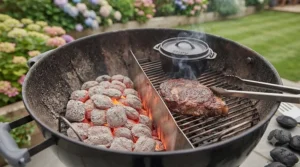
6. Bar-Be-Quick Charcoal Briquettes — best budget supermarket pick
Bar-Be-Quick is one of those brands most British grillers have picked up without really thinking about it, usually because it’s sitting by the till at a supermarket or DIY store in June. The Bar-Be-Quick Charcoal Briquettes punch reasonably well above their price point: independent UK testing comparing several budget briquette and lumpwood options rated them highly for ease of ignition and smoke quality, with up to three hours of steady heat once properly lit. What stands out here isn’t premium performance — it’s accessibility. You don’t need to order online or plan ahead; this is the bag you grab on the way to a barbecue you decided to have twenty minutes ago. Reviewers consistently note it as a dependable, no-drama option for casual weekend grilling, though it understandably doesn’t match the burn duration or consistency of the premium briquettes higher up this list.
Pros:
- ✅ Widely available in UK supermarkets and DIY stores
- ✅ Independent UK testing rated ignition ease highly
- ✅ Genuinely budget-friendly for casual, occasional grilling
Cons:
- ❌ Burn time trails premium briquettes on longer cooks
- ❌ Batch consistency can vary noticeably between bags
Pricing sits under £10 for most bag sizes, making it the cheapest entry on this list and a sensible pick if you’re grilling once or twice a month rather than every weekend.
7. Kamado Joe Big Block XL — best premium pick for kamado grills
At the opposite end of the price scale, the Kamado Joe Big Block XL is a 9kg (20lb) bag of natural lumpwood charcoal made from a blend of South American hardwoods — guayacan, guayaibi, mistol and white quebracho — commissioned specifically for dense, long-burning performance. What the spec sheet won’t tell you, but reviewers note, is how much the sheer chunk size changes the cooking experience: these are genuinely fist-sized pieces, which pack tightly in a kamado’s ceramic firebox and, according to aggregated user feedback, can sustain a steady burn for up to eighteen hours on a single load. That makes it the standout choice for anyone running a Kamado Joe, Big Green Egg, or similar ceramic egg-style grill through an overnight brisket or pulled pork session. Several reviewers also highlight that unburned pieces can be closed off and reused for a second or even third cook, quietly improving the real cost-per-use over time. It’s not cheap, and it’s imported, but for kamado owners specifically, few UK-available options compete on burn duration.
Pros:
- ✅ Burns up to eighteen hours on a single load
- ✅ Reusable up to three times if reserved after cooking
- ✅ Large chunk size suits ceramic kamado airflow design
Cons:
- ❌ Among the most expensive options per kilogram on this list
- ❌ Imported hardwood blend carries a larger transport footprint
Prices generally fall in the £30-£40 range for a 20lb bag; given the reuse potential, the effective cost per cook narrows the gap with cheaper briquettes considerably.
Top 7 Products: Full Spec Comparison
| Product | Fuel Type | Pack Size | Aggregated Reviewer Sentiment | Best For |
|---|---|---|---|---|
| Weber Original Briquettes | Briquette | 8kg | Very positive on evenness | All-round Weber kettle use |
| Weber Premium Lumpwood Charcoal | Lumpwood | 10kg | Positive on ignition speed | Fast searing |
| Weber Coconut Shell Briquettes | Briquette (coconut) | 8kg | Strongly positive on longevity | Long, low-and-slow cooks |
| Big K Restaurant Grade Charcoal Briquettes | Briquette | 10kg | Positive, mixed on shipping damage | Budget long burns |
| Big K Instant Light Lumpwood | Lumpwood | Multi-pack | Positive on convenience | Quick, casual grilling |
| Bar-Be-Quick Charcoal Briquettes | Briquette | Varies | Positive on ignition, mixed on longevity | Occasional weekend BBQs |
| Kamado Joe Big Block XL | Lumpwood | 9kg (20lb) | Strongly positive on burn time | Premium kamado cooking |
Reading across this table, the split between briquette and lumpwood options roughly maps onto two different buyer priorities: consistency versus raw performance. The Weber Coconut Shell Briquettes and Kamado Joe Big Block XL both stand out for long burn duration, but they arrive at it through completely different mechanisms — density of material versus sheer chunk size — which is worth remembering when Weber briquettes vs lumpwood charcoal comparisons get oversimplified into a single “briquettes are better” or “lumpwood is better” verdict.
Benefits vs Traditional Alternatives: Briquettes vs Lumpwood at a Glance
| Factor | Briquettes | Lumpwood Charcoal |
|---|---|---|
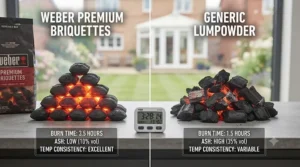
| Burn time | Longer, typically 2-4 hours | Shorter, more variable |
| Heat consistency | Very consistent, predictable | Can spike and dip |
| Lighting speed | Slower to fully ash over | Usually faster to light |
| Ash produced | More ash overall | Generally less ash |
| Ideal use case | Low-and-slow, longer cooks | Searing, quick high-heat grilling |
The practical takeaway from this table is that briquettes trade a little speed and peak heat for reliability, which matters most when you’re cooking something that can’t be rushed, like a whole chicken or a pork shoulder. Lumpwood earns its keep in the opposite scenario — a five-minute sear on a steak doesn’t need three hours of steady embers, it needs maximum heat right now. Anyone genuinely torn between the two might reasonably keep a small bag of each, since they solve different problems rather than competing head-to-head.
✨ Ready to Stock Up Before the Weekend Rush?
🔥 Whichever fuel type suits your grill, having a reliable bag of briquettes or lumpwood on hand means one less thing to worry about when the weather turns. Check current stock and pricing on Amazon UK, and take your next barbecue up a notch.
How to Get the Most from Your Weber Briquettes: Setup and Maintenance
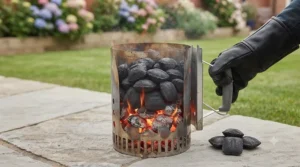
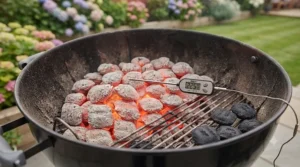
Buying good briquettes is only half the job — how you use them determines whether you actually get the burn time promised on the bag. Start by arranging briquettes in a loose pyramid rather than a flat, tightly packed layer; airflow between pieces is what lets them catch and ash over evenly, and a dense pile just smothers itself. A charcoal chimney starter is worth the small outlay if you don’t already own one, since it lights briquettes using nothing but a couple of sheets of newspaper and produces genuinely even embers in around fifteen to twenty minutes, without the lighter-fluid aftertaste that puts some cooks off instant-light products entirely.
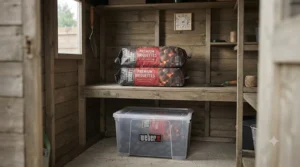
Once the top layer of briquettes is coated in white-grey ash — not before — tip them into the grill and spread them according to your cooking method: banked to one side for a two-zone fire if you’re doing anything longer than a quick sear, or spread evenly if you just want consistent direct heat. A common mistake in the first thirty days of charcoal grilling is closing the vents too early, which starves the fire of oxygen and causes temperature to sag right when you need it steady. For maintenance between uses, always store your bag somewhere dry — damp briquettes light poorly and burn unevenly, regardless of brand or price point — and a sealed metal bin keeps both moisture and any curious wildlife away from your fuel supply over winter.
Real-World Scenarios: Which Briquettes Suit Your Barbecue Style
If you’re a first-time Weber kettle owner hosting the occasional family barbecue, the Weber Original Briquettes are the sensible default — predictable, widely available, and forgiving if your timing isn’t perfect. If you’re a weeknight griller who wants sausages and burgers on the table within twenty minutes of getting home, the Big K Instant Light Lumpwood removes almost every barrier to entry, accepting a small flavour trade-off in exchange for genuine speed.
For the barbecue obsessive running an overnight brisket or a full day of pulled pork on a ceramic kamado grill, the Kamado Joe Big Block XL justifies its price through sheer burn duration and reusability — buying cheaper charcoal and reloading twice actually costs more in both money and attention over an eighteen-hour cook. And for anyone grilling on a tight budget who still wants to entertain friends most weekends through summer, the Bar-Be-Quick Charcoal Briquettes deliver dependable, no-fuss results without the premium price tag, provided you’re not chasing restaurant-grade consistency.
How to Choose Weber Briquettes and Alternatives
Picking the right bag comes down to a handful of concrete questions, not brand loyalty alone.
- Decide briquette or lumpwood first. If your cooks regularly run over an hour, favour briquettes for their steadier heat; if you mostly sear quickly, lumpwood’s higher peak temperature will serve you better.
- Check the burn-time claim against your typical cook length. A three-hour briquette is wasted on a fifteen-minute grilling session but essential for a slow roast.
- Look for FSC or equivalent sustainability certification. It’s a genuine, verifiable signal of responsible sourcing rather than marketing language.
- Consider smoke control area rules if you live in a city. Some products, including certain Big K lines, are formally authorised fuels under UK legislation, which matters more than most buyers realise.
- Weigh price per kilogram, not just bag price. A 10kg bag at a slightly higher headline price can easily beat a small bag on a cost-per-cook basis.
- Read aggregated review themes, not star ratings alone. Recurring complaints about smell, breakage, or inconsistent sizing tell you more than an average score.
- Match the format to your grill. Ceramic kamado grills generally reward large lumpwood chunks, while kettle grills handle uniform briquettes more predictably.
Weber Briquettes vs Lumpwood Charcoal: Which Actually Wins?
This comparison comes up in nearly every UK barbecue forum thread, and the honest answer is that neither format universally wins — they’re built to solve different problems. Weber briquettes vs lumpwood charcoal really breaks down to a trade between predictability and performance. Briquettes like the Weber Original Briquettes are manufactured to a consistent density and shape specifically so that burn time and heat output stay repeatable from one bag to the next; that consistency is the entire point of the format, and it’s why briquettes dominate low-and-slow smoking, where a temperature swing halfway through an eight-hour cook can genuinely ruin the result.
Lumpwood, including the Weber Premium Lumpwood Charcoal and the imported Kamado Joe Big Block XL, sacrifices that predictability for higher peak heat and a more natural, wood-forward burn. Because lumpwood is just carbonised timber broken into irregular pieces, there’s more surface area exposed to oxygen, which is why it lights faster and burns hotter, but also why two handfuls from the same bag can behave slightly differently. For searing steaks, achieving a proper crust on a burger, or any cook under thirty minutes, that trade-off tilts firmly in lumpwood’s favour. The realistic conclusion most experienced grillers land on is owning both — briquettes for anything that needs to hold steady, lumpwood for anything that needs to get hot fast.
Common Mistakes When Buying BBQ Briquettes
The single most common mistake is buying purely on price without checking what’s actually in the bag — some budget briquettes rely more heavily on chemical binders and accelerants, which can leave a lingering smell or taste if you rush the ash-over stage. A second frequent error is buying a small bag for a big cook, then running out of heat halfway through and reaching for lighter fluid to top up an already-cooking grill, which is both a food-safety and flavour mistake. Buyers also regularly underestimate how much fuel type matters versus grill type: pouring fast-burning lumpwood into a long, slow smoker session, or loading a searing-focused kettle grill with briquettes for a quick weeknight grill, both work against the format’s strengths rather than with them. Finally, ignoring storage conditions is an easy trap — a briquette bag left open in a damp shed will light poorly regardless of how good the brand’s reputation is, and buyers sometimes blame the product rather than their own storage setup.
Brand Reputation: Why It Matters When Choosing Briquettes
Brand reputation isn’t just marketing fluff in the charcoal aisle — it’s a genuinely useful proxy for consistency, because manufacturing standards tend to be reasonably stable within an established company over time. Weber‘s reputation was built primarily on grills rather than fuel, but the brand has leveraged that trust into its briquette range, and aggregated reviews broadly support the idea that quality control is tighter than with many unbranded imports. Big K‘s reputation runs slightly differently: it’s built its name supplying UK restaurants and the hospitality trade, which is precisely why products like the Big K Restaurant Grade Charcoal Briquettes carry formal smoke control authorisation — commercial kitchens don’t tolerate inconsistent fuel, and that discipline filters through to the consumer product.
That said, brand reputation shouldn’t be treated as an infallible shortcut. Even well-regarded brands occasionally draw complaints about specific batches — the packaging criticisms levelled at Weber Original Briquettes, or the transit breakage some buyers report with Big K Restaurant Grade Charcoal Briquettes, are useful reminders that reputation describes an average, not a guarantee for every single bag. The most reliable approach is treating brand reputation as one input among several — alongside genuine review themes, certification, and your own grill’s requirements — rather than the only factor that matters.
Briquette Consistency: What Uniform Shape Actually Buys You
Briquette consistency sounds like a minor manufacturing detail, but it directly determines how predictable your cooking temperature will be. Because briquettes are pressed to a standard shape and density — the Weber Original Briquettes‘ 50-tonne compression being a good example — each piece contains roughly the same amount of fuel and burns for roughly the same length of time. That uniformity is what allows experienced grillers to estimate cook duration fairly precisely simply by counting briquettes, something that’s essentially impossible with lumpwood, where two chunks from the same bag can differ in weight by a considerable margin.
The trade-off worth understanding is that briquette consistency depends heavily on manufacturing quality, not just the category itself. Cheaper briquettes made with excessive filler or inconsistent pressing can crumble in the bag, undermining the very consistency the format is supposed to deliver — which is exactly the kind of quality gap that separates a well-regarded brand from a bargain-bin bag. For cooks where timing genuinely matters, such as coordinating a multi-course barbecue for guests, that predictability is arguably the single biggest practical advantage briquettes offer over lumpwood charcoal.
Long-Term Cost & Maintenance
Judging value purely on shelf price misses most of the real story. A £10 bag of budget briquettes that burns for ninety minutes and needs topping up mid-cook can end up costing more per hour of usable heat than a £20 bag that reliably delivers three full hours without intervention — and that’s before factoring in the extra lighter fluid or firelighters often needed to restart a fading fire. The Kamado Joe Big Block XL is the clearest example of this dynamic on our list: its higher upfront price is partly offset by genuine reusability, since partially burned chunks can be sealed off in the kamado’s airtight firebox and relit for a second or third cook, something a fully-consumed briquette simply can’t offer.
Storage also plays into long-term cost more than most buyers realise. Charcoal and briquettes left in damp conditions don’t just light poorly on the day — moisture absorption can permanently degrade burn quality, effectively wasting money already spent. A simple, sealed storage container extends the useful life of any bag on this list, regardless of price point, and is one of the cheapest upgrades a regular griller can make to their setup.
Safety, Regulations and Smoke Control Compliance
Charcoal grilling in the UK is generally unrestricted for outdoor use, but there’s a specific legal wrinkle worth knowing if you live in a city: smoke control areas. Under the Clean Air Act, properties inside a designated smoke control area can only burn authorised fuels in appliances with a chimney, though the rules are notably more relaxed for outdoor barbecues, chimineas and pizza ovens, which are generally permitted regardless. Even so, several products on this list — including Big K Restaurant Grade Charcoal Briquettes — appear on the official list of authorised fuels under UK smoke control legislation, which is a genuinely useful signal of manufacturing standards even outside areas where it’s strictly required.
Beyond legislation, basic fire safety applies regardless of brand: always use a barbecue on a stable, non-flammable surface, keep it well away from fences, sheds and overhanging branches, and never bring a charcoal barbecue indoors or into an enclosed space, since burning charcoal produces carbon monoxide. Letting ash cool completely — ideally overnight — before disposal avoids the surprisingly common cause of garden and bin fires each summer.
Frequently Asked Questions
❓ Are Weber briquettes worth the extra money over supermarket own-brand?
❓ How long do Weber briquettes actually burn for?
❓ Can I reuse briquettes that didn't fully burn?
❓ Are briquettes safe to use in a UK smoke control area?
❓ What's the main practical difference between briquettes and lumpwood charcoal?
Conclusion
There’s no single “best” briquette that suits every grill, every cook and every budget — and any Weber briquettes review that tells you otherwise is oversimplifying. What genuinely matters is matching the fuel to what you’re actually cooking: the Weber Original Briquettes or Big K Restaurant Grade Charcoal Briquettes for steady, predictable low-and-slow sessions; the Weber Premium Lumpwood Charcoal or Kamado Joe Big Block XL when raw searing heat is the priority; and the Big K Instant Light Lumpwood or Bar-Be-Quick Charcoal Briquettes when convenience and budget matter more than premium performance.
Brand reputation and briquette consistency both turned out to be genuinely useful shortcuts throughout this comparison, but neither replaces reading what real reviewers actually experienced with a specific bag. Armed with real specifications, honest aggregated review sentiment, and a clearer sense of how briquettes and lumpwood charcoal each behave under fire, you should be in a much stronger position to pick the right bag next time you’re standing in the barbecue aisle — or scrolling through Amazon at 11pm the night before a barbecue you’ve only just decided to host.
Recommended for You
- Best Charcoal Briquettes UK 2026: 7 Proven Top Picks
- 7 Best British Charcoal for BBQ 2026: Honest UK Buying Guide
- Large Lumpwood Charcoal for Smoking: 7 Best UK Bags (2026)
Disclaimer: This article contains affiliate links. As an Amazon Associate, I earn from qualifying purchases. If you purchase products through these links, we may earn a small commission at no additional cost to you.
✨ Found this helpful? Share it with your friends! 💬🤗
