In This Article
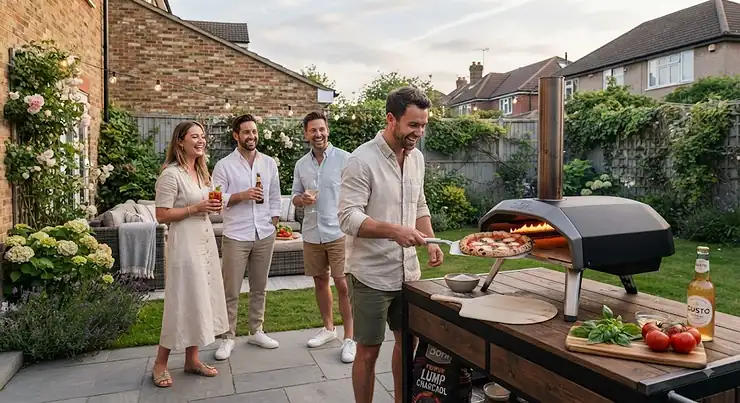
There’s a particular kind of smugness that settles over a garden the moment a charcoal pizza oven starts glowing orange in the corner. Neighbours lean over fences. Someone’s dog appears from nowhere. It’s not really about the pizza — although, yes, it is also entirely about the pizza. A charcoal pizza oven is an outdoor cooking appliance that uses burning lump charcoal or charcoal briquettes, rather than gas or electricity, as its heat source to bake pizzas at very high temperatures, typically between 350°C and 500°C. That heat is what separates a proper stone-baked crust from anything your kitchen oven can manage, no matter how hot you crank the dial.
This guide exists because the charcoal pizza oven market has quietly exploded over the past few years, and most of what you’ll find online reads like a rewritten spec sheet with a “buy now” button bolted on. We’re doing something different: real products, honestly compared, with the kind of practical detail — fuel choices, lump charcoal quality, how to actually get that smoky flavour without torching your dinner — that you won’t find on a manufacturer’s Amazon listing. Whether you’re weighing up a charcoal pizza oven against a traditional wood-fired pizza oven, or you’ve never lit a chimney starter in your life, you’ll find your answer below.
Quick Comparison Table: 7 Charcoal Pizza Ovens at a Glance
Before we dig into the detail, here’s the shortlist. Prices below are indicative ranges only — always check the current price on the product page, since Amazon pricing shifts constantly and rarely sits still for long.
| Product | Fuel Type | Price Range | Best For |
|---|---|---|---|
| Ooni Karu 16 | Wood, charcoal, gas (optional) | £600-£700 | Large gatherings, serious home cooks |
| Ooni Karu 12G | Wood, charcoal, gas (optional) | £300-£350 | Portability without sacrificing flexibility |
| Kamado Joe DōJoe | Charcoal (kamado attachment) | £260-£370 | Existing Kamado Joe owners |
| La Hacienda 56173 | Charcoal, wood | £100-£180 | Multi-use pizza, BBQ and smoker in one |
| Dellonda Portable 14-inch | Charcoal, hardwood pellets | £170-£190 | Budget buyers who still want quality |
| Burnhard Nero | Wood, charcoal | Under £150 | First-time buyers, occasional use |
| VonHaus BBQ Pizza Oven Outdoor | Charcoal, gas (grill topper) | Under £80 | Trying charcoal pizza before committing |
Looking at the spread, the gap between the cheapest and priciest option here isn’t really about who “wins” — it’s about what your garden setup and cooking habits actually demand. A family that entertains ten people every weekend has entirely different needs from someone who wants to test the waters before Christmas. Budget-conscious buyers should note that the VonHaus BBQ Pizza Oven Outdoor only works if you already own a charcoal or gas BBQ, since it’s a topper rather than a standalone unit, while the Ooni Karu 16 demands a genuine investment but rewards it with restaurant-scale output.
💬 Just one click — help others make better buying decisions too!😊
Top 7 Charcoal Pizza Ovens: Expert Analysis
We’ve picked these seven to cover every realistic buyer: the family that wants one oven for life, the renter who needs something foldable, and the person who already owns a kamado grill and just wants the missing piece. Every product below has been researched for real specifications and genuine aggregated review sentiment — where we can’t verify specific customer feedback, we say so rather than inventing it.
1. Ooni Karu 16 — multi-fuel flagship built for bigger pizzas
The standout here is size: a 16-inch cooking stone that turns out proper 16-inch pizzas, not the slightly apologetic 12-inch discs most portable ovens are limited to. The Ooni Karu 16 runs on wood or charcoal as standard, with a gas burner attachment sold separately for those days when convenience beats ceremony. Its double-walled stainless steel body with ceramic fibre insulation reaches cooking temperature faster than single-wall competitors and, crucially, holds that heat through a whole evening of back-to-back pizzas rather than sagging after the third one.
Based on the spec comparison, what most buyers overlook about this model is the glass viewing door — ViewFlame technology, in Ooni’s branding — which lets you watch the rolling flame and monitor doneness without opening the door and losing precious heat every thirty seconds. That’s a genuinely useful engineering choice, not just a gimmick. Reviewers consistently report that the Karu 16 reaches around 500°C within 15 minutes of a well-managed charcoal or wood fire, comfortably in Neapolitan pizza territory. This is the pick for anyone hosting regularly or cooking for a crowd; if you’re feeding two people on a Tuesday, it’s overkill.
Aggregated user feedback across retailer reviews consistently praises the build quality and heat retention, while a recurring theme in critical reviews is that first-time charcoal users find the learning curve steeper than Ooni’s gas-only models — expect a few slightly uneven early attempts.
Pros:
- ✅ 16-inch stone cooks full-size pizzas, not mini ones
- ✅ Genuine multi-fuel flexibility across wood, charcoal and gas
- ✅ Insulated body holds heat through long cooking sessions
Cons:
- ❌ Charcoal management has a real learning curve for beginners
- ❌ Substantial investment compared with entry-level ovens
At around the £600-£700 range, the Ooni Karu 16 sits at the top of this list for good reason — it’s the closest thing to a permanent pizzeria fixture that still folds away into a shed.
2. Ooni Karu 12G — most portable true multi-fuel oven
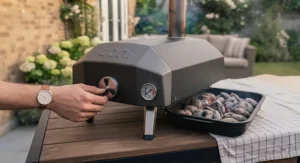
Where the Karu 16 goes big, the Ooni Karu 12G goes practical. It’s the same multi-fuel philosophy — wood, charcoal, or gas with an add-on burner — squeezed into a lighter, more compact frame that suits smaller gardens, balconies, and anyone who wants to sling it in the car for a weekend away. The standout feature is genuinely the flexibility: few ovens in this size class let you switch fuel types depending on mood or occasion.
What the spec sheet won’t tell you, but reviewers note, is that the smaller cooking chamber means you need to be more attentive with charcoal placement to avoid one side of the pizza charring before the other’s cooked through — a five-minute skill to learn, not a design flaw. The insulated shell still gets the stone up to Neapolitan-ready temperatures in roughly 15-20 minutes with a properly built charcoal bed, and the compact footprint means it earns its keep on a small patio table just as well as a full-size garden.
For buyer type, this is the pick for renters, campers, and anyone whose outdoor space is more “courtyard” than “estate.” Aggregated review sentiment across major retailers leans strongly positive on portability and build quality, with the most common gripe being that the gas attachment — sold separately at roughly £80-£90 — feels like it should be bundled in at this price point.
Pros:
- ✅ Genuinely portable without dropping multi-fuel flexibility
- ✅ Reaches high cooking temperatures in around 15-20 minutes
- ✅ Compact footprint suits small gardens and balconies
Cons:
- ❌ Smaller chamber demands more attentive charcoal management
- ❌ Gas burner is a separate purchase, adding to total cost
Typically found in the £300-£350 range, the Ooni Karu 12G is arguably the smartest all-rounder on this list for anyone not entertaining crowds every weekend.
3. Kamado Joe DōJoe — turns your kamado grill into a pizzeria
This one’s a curveball worth including precisely because it isn’t a standalone oven — it’s a cast-aluminium insert that transforms an existing Kamado Joe Classic or Big Joe charcoal grill into a genuine pizza oven. If you already own a kamado, the Kamado Joe DōJoe is arguably the single smartest upgrade you can buy, since it repurposes charcoal and ceramic insulation you’ve already paid for rather than asking you to buy an entire new appliance.
The wedge shape is the clever bit: it maintains steady internal temperatures between roughly 200°C and 370°C for hours at a time, and the open front lets you watch the pizza cook and rotate it without losing heat the way a fully enclosed chamber would. Based on the spec comparison, this design solves the single biggest headache of DIY kamado pizza cooking — uneven top-and-bottom heat — by channelling airflow so the dome radiates heat down onto the pizza while the stone crisps the base. Reviewers and forum communities consistently describe results that rival dedicated pizza ovens once you’ve dialled in your charcoal setup, though it does take a session or two to learn.
This is a niche pick, and honestly, it should be: it’s for existing kamado owners specifically, not a first pizza oven purchase.
Pros:
- ✅ Converts an existing kamado grill, no new appliance needed
- ✅ Wedge design maintains steady, even heat for hours
- ✅ Open front allows monitoring without losing temperature
Cons:
- ❌ Only useful if you already own a compatible Kamado Joe grill
- ❌ Requires confident charcoal management to get the best results
Pricing for the DōJoe attachment alone typically sits in the £260-£370 range depending on retailer and size, which represents genuinely strong value against buying a second, separate pizza oven from scratch.
4. La Hacienda 56173 — three-in-one oven, BBQ and smoker
The La Hacienda 56173 takes a different approach entirely: rather than being a dedicated pizza-only appliance, it’s built as a multi-function charcoal and wood oven that also handles barbecuing and smoking. The standout feature is genuine versatility — a firebox design that lets you cook pizza on one side of the chamber while keeping the stone away from direct flame, reducing the risk of a scorched base and an undercooked top that plagues cheaper multi-use ovens.
Key specs with real-world meaning: the stainless steel flue and steel body with high-temperature black paint are built to handle sustained charcoal heat rather than the occasional weekend blast, and the temperature gauge on the lid means you’re not guessing whether you’re in the 250-350°C sweet spot that La Hacienda itself recommends for pizza. Reviewers consistently report that pizzas cook in three to five minutes once the oven’s properly heated, with a crisp, light base that holds up well against pricier dedicated ovens — and several note it doubles effectively as a roasting oven for joints of meat and vegetables, which none of the dedicated pizza-only ovens on this list can claim.
Honest analysis: this is the pick for buyers who want one appliance that earns its keep year-round, not just on pizza night. It’s a genuine multi-tasker rather than a specialist.
Pros:
- ✅ Doubles as a full barbecue and smoker, not just pizza
- ✅ Built-in temperature gauge removes the guesswork
- ✅ Reviewers report crisp results comparable to pricier ovens
Cons:
- ❌ Restricted access makes conventional BBQ grilling a little fiddly
- ❌ Heavier and less portable than dedicated tabletop pizza ovens
Prices for the La Hacienda 56173 typically sit in the £100-£180 range depending on retailer, making it one of the strongest value propositions on this list if versatility matters to you.
5. Dellonda Portable Wood-Fired 14-inch — Gardeners’ World-approved budget buy
Don’t let the low price fool you into expecting low quality. The Dellonda Portable Wood-Fired 14-inch oven was named a BBC Gardeners’ World Magazine Best Buy for value, and it earns that badge with a compact, foldable-leg design that’s fuelled by charcoal or sustainable hardwood pellets, giving buyers flexibility over fuel cost and smoke intensity.
The standout feature is the pizza peel’s generous 12-inch capacity paired with genuinely long wooden handles throughout, keeping hands well clear of hot metal during cooking — a small but telling design decision that suggests real thought went into everyday usability rather than just cost-cutting. What most buyers overlook about this model is that despite its modest price, testers reported it produced a well-browned underside and properly bubbled, golden cheese, results that punch noticeably above the price bracket. The legs fold flat for storage, and the chimney can be stowed inside the body, which matters if you’re working with a shed rather than a dedicated outdoor kitchen.
For buyer type, this is squarely aimed at first-time pizza oven owners who want to test whether charcoal cooking suits their lifestyle before committing to a premium multi-fuel model.
Pros:
- ✅ BBC Gardeners’ World Best Buy for value credentials
- ✅ Wooden handles throughout keep hands away from hot metal
- ✅ Folds flat with storable chimney for easy storage
Cons:
- ❌ 14-inch stone still limits pizza size versus premium models
- ❌ Charcoal-only insulation isn’t as robust as double-walled ovens
Available for around £170-£190 from major UK retailers, the Dellonda Portable Wood-Fired 14-inch is hard to beat for buyers who want proven quality without the premium price tag.
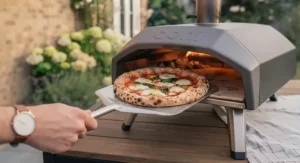
6. Burnhard Nero — budget charcoal oven that overperforms
The Burnhard Nero occupies genuinely useful territory: a wood-and-charcoal oven that reaches temperatures around 500°C at a price point that undercuts most of the competition on this list. The standout feature is the built-in thermometer, a detail that’s often reserved for pricier ovens but here comes as standard, giving budget buyers the same temperature visibility that more expensive brands charge a premium for.
Key specs with real-world meaning: the removable stone simplifies cleaning considerably compared with fixed-stone designs, where crumbs and cheese residue can be genuinely difficult to reach. Based on the spec comparison, this won’t match the refined build quality or heat retention of an Ooni or Gozney — the single-wall construction means it loses heat faster between pizzas, so you’ll be topping up the charcoal more frequently during a long cooking session. That said, for occasional weekend use rather than nightly pizza production, reviewers describe genuinely impressive results for the price, particularly for a first purchase.
Honest verdict: this is the entry point for buyers who want to establish whether they enjoy charcoal cooking before spending three or four times as much on a premium multi-fuel oven.
Pros:
- ✅ Built-in thermometer included as standard at this price
- ✅ Removable stone makes cleaning noticeably easier
- ✅ Reaches genuinely high cooking temperatures for the price bracket
Cons:
- ❌ Single-wall build loses heat faster than insulated premium ovens
- ❌ Less refined finish compared with Ooni or Gozney equivalents
Sitting comfortably under £150 in most listings, the Burnhard Nero is a sensible low-risk entry into charcoal pizza cooking.
7. VonHaus BBQ Pizza Oven Outdoor — cheapest way to try charcoal pizza
The VonHaus BBQ Pizza Oven Outdoor isn’t a standalone appliance at all — it’s a stainless steel pizza oven topper designed to sit inside an existing charcoal or gas BBQ, using a barbecue you already own as the heat source. The standout feature is the price-to-entry ratio: for buyers who already have a hooded charcoal BBQ gathering dust, this is by far the cheapest route into stone-baked pizza.
Key specs with real-world meaning: the insulated cavity is engineered to reach around 400°C within 15-20 minutes when placed over a properly established charcoal bed, cooking a 12-inch pizza in as little as 90 seconds once fully preheated. The included ceramic pizza stone and on-lid temperature gauge mean you’re not buying accessories separately, and the compact dimensions (roughly 41.5cm wide, 35.5cm deep) mean storage isn’t the headache it can be with full-size ovens. Reviewers note it also doubles for smoking meat, fish, and vegetables, adding versatility beyond pizza night.
For buyer type, this is squarely for existing charcoal BBQ owners who want to test the charcoal pizza oven concept without committing serious money, rather than anyone starting entirely from scratch.
Pros:
- ✅ Works with a charcoal BBQ you may already own
- ✅ Reaches cooking temperature in roughly 15-20 minutes
- ✅ Comes with pizza stone and temperature gauge included
Cons:
- ❌ Requires a compatible hooded BBQ to function at all
- ❌ Smaller 12-inch capacity limits pizza size
At typically under £80, the VonHaus BBQ Pizza Oven Outdoor is the lowest-risk way to find out whether charcoal pizza cooking is for you.
Comparison Table: Top 7 Charcoal Pizza Ovens by Spec
| Product | Cooking Surface | Heat-Up Time | Fuel | Best For |
|---|---|---|---|---|
| Ooni Karu 16 | 16-inch stone | ~15 mins | Wood/charcoal/gas | Large gatherings |
| Ooni Karu 12G | 12-inch stone | ~15-20 mins | Wood/charcoal/gas | Portability |
| Kamado Joe DōJoe | Fits existing kamado stone | Varies with grill | Charcoal | Existing kamado owners |
| La Hacienda 56173 | Multi-use chamber | ~20-30 mins | Charcoal/wood | Multi-purpose cooking |
| Dellonda 14-inch | 12-inch peel capacity | ~15-20 mins | Charcoal/pellets | Budget quality |
| Burnhard Nero | Removable stone | ~20 mins | Wood/charcoal | First-time buyers |
| VonHaus BBQ Topper | 12-inch stone | ~15-20 mins | Charcoal/gas | Existing BBQ owners |
Reading across this table, heat-up time clusters remarkably tightly between 15 and 20 minutes across nearly every model, which tells you something useful: at this point in the market’s maturity, fast heat-up is table stakes rather than a genuine differentiator. Where the real gap opens up is cooking surface and fuel flexibility — the Ooni Karu 16 simply cooks bigger food faster than anything else here, while the Kamado Joe DōJoe only makes sense as an add-on rather than a first purchase.
✨ Don’t Miss These Exclusive Deals!
🔍 Ready to fire up your first charcoal pizza? Click through to check current pricing and availability on any of the models above — stock and prices shift fast during barbecue season, so it’s worth checking sooner rather than later.
Practical Usage Guide: Setup, Lighting and Your First 30 Days
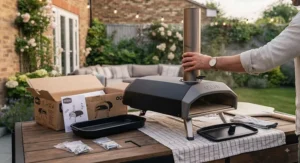
Getting a charcoal pizza oven from box to first proper pizza involves more nuance than the instruction leaflet usually admits, and this is exactly the kind of practical detail that never makes it onto an Amazon listing. Start with your fuel: lump charcoal is generally preferred over briquettes for pizza ovens because it burns hotter and produces less ash, though it also burns slightly less predictably — a trade-off worth knowing before your first attempt.
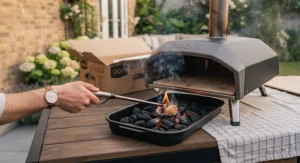
Lighting properly matters more than most beginners expect. A chimney starter — essentially a metal cylinder that funnels airflow through packed charcoal — is genuinely the single best £15-£25 investment you can make alongside any of the ovens above. Fill it with lump charcoal, place a couple of firelighter cubes underneath, and you’ll have glowing coals ready to tip into your oven in around 15-20 minutes, without a whiff of lighter fluid tainting your food. Skipping a chimney starter and reaching for lighter fluid instead is the single most common first-30-days mistake, and it’s an easy one to avoid entirely.
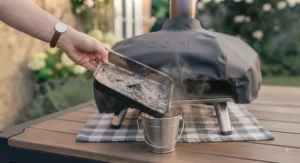
Once your coals are established, resist the urge to cook immediately. Let the stone soak up heat for a full 15-20 minutes after the oven itself feels hot — a common mistake is cooking on an underheated stone, which produces a pale, soggy base no amount of topping quality can rescue. Use semolina or fine polenta rather than plain flour on your peel; it acts like tiny ball bearings, letting the dough slide rather than stick. For maintenance, let the oven run at full heat for ten minutes after your last pizza to burn off residue, then let it cool fully before brushing out ash — never store a charcoal pizza oven with ash still inside, as trapped moisture accelerates rust in the firebox.
Real-World Scenarios: Which Oven Suits Your Life?
Specs only tell half the story, so here’s how three realistic buyer profiles map onto the products above.
The weekend host, feeding six to eight people regularly: budget and space allowing, the Ooni Karu 16 earns its keep here — its 16-inch stone means you’re not stuck cooking one small pizza at a time while guests wait, and the insulated body holds temperature through back-to-back bakes. If budget is the constraint rather than appetite, the La Hacienda 56173 offers comparable versatility at a fraction of the price, provided you’re patient with charcoal management.
The renter or small-garden owner cooking for one or two: the Ooni Karu 12G or Dellonda Portable Wood-Fired 14-inch both make sense here, since portability and a manageable footprint matter more than raw capacity. Someone in this situation cooking twice a month doesn’t need — and shouldn’t pay for — the Karu 16’s scale.
The existing BBQ or kamado owner testing the waters: rather than buying a whole new appliance, the VonHaus BBQ Pizza Oven Outdoor or Kamado Joe DōJoe repurpose equipment already sitting in the garden. This is the lowest-cost, lowest-commitment route into charcoal pizza cooking, and honestly the smartest first move if you’re not yet certain charcoal cooking will become a habit.
How to Choose a Charcoal Pizza Oven
Choosing between these seven — or any charcoal pizza oven on the wider market — comes down to weighing a handful of criteria against your actual cooking habits, not marketing claims.
- Cooking surface size. Decide whether you regularly cook for two or ten, since stone diameter dictates pizza size and how many you can realistically get through in an evening.
- Fuel flexibility. Multi-fuel ovens cost more upfront but let you switch between charcoal for flavour and gas for convenience depending on the occasion.
- Insulation quality. Double-walled, insulated builds hold heat far longer between pizzas than single-wall budget models, which matters if you’re feeding a crowd.
- Portability requirements. Weight, folding legs, and carry handles matter enormously if you’re taking the oven camping or simply storing it in a shed each winter.
- Included accessories. A pizza peel, temperature gauge, and cover can add £30-£50 in extra spend if they’re not bundled in, so factor that into your real budget.
- Existing equipment. If you already own a kamado grill or hooded charcoal BBQ, an attachment like the DōJoe or VonHaus topper may be more sensible than a standalone purchase.
The independent product-testing charity Which? notes that pizza ovens with larger grates generally suit charcoal better than smaller ones, since a bigger fuel bed produces more consistent, sustained heat — worth bearing in mind if you’re torn between two similarly priced models.
Charcoal Pizza Oven vs Wood-Fired Pizza Oven
This is the comparison that trips up most first-time buyers, largely because “wood-fired” and “charcoal” get used almost interchangeably in casual conversation despite being genuinely different cooking experiences. A dedicated wood-fired pizza oven burns logs or kindling directly, producing tall, dramatic flames and a distinctly resinous, campfire-adjacent aroma. A charcoal pizza oven vs wood-fired pizza oven debate really comes down to heat consistency versus theatre: charcoal burns at a steadier, more predictable temperature over a longer period, with less active tending required once the bed is established, while wood delivers more dramatic flavour but demands closer attention to avoid flare-ups and uneven heat.
| Factor | Charcoal Pizza Oven | Wood-Fired Pizza Oven |
|---|---|---|
| Heat consistency | Steadier, longer-lasting bed | More variable, needs active management |
| Flavour profile | Milder smokiness | Stronger, more resinous smoke flavour |
| Skill curve | Moderate | Steeper, more hands-on |
| Best For | Consistent results, less tending | Maximum flavour, hands-on cooking |
What this data actually means in practice: several ovens on our list, including the Ooni Karu 16 and Ooni Karu 12G, sidestep the choice entirely by running on either fuel, which is precisely why multi-fuel models command a price premium. If you genuinely can’t decide, that flexibility is often worth paying for rather than committing to one fuel type permanently.
Lump Charcoal vs Briquettes: Which Fuel Wins?
Fuel choice matters more than most buyers realise when they’re focused entirely on the oven itself. Lump charcoal — irregular chunks of carbonised hardwood with no additives — lights faster, burns hotter, and produces noticeably less ash than compressed briquettes, making it the preferred choice for most charcoal pizza oven owners chasing quick, high-temperature cooking sessions. Briquettes, by contrast, burn more slowly and consistently over a longer period, which suits low-and-slow barbecuing far better than the fast, high-heat demands of pizza baking.
The trade-off worth understanding: lump charcoal’s irregular chunk sizes mean heat output can vary slightly batch to batch, so it rewards a bit of practice in judging your fire by eye rather than following a rigid timer. Sustainably sourced lump charcoal — look for FSC certification on the bag — also tends to come from managed UK or European coppiced woodland rather than imported, less traceable sources; the Forestry Commission notes that charcoal production has a long history in English woodland management and remains a genuine outlet for timber that isn’t suitable for higher-value uses. Buying UK-sourced lump charcoal, where available, both supports domestic woodland management and tends to burn cleaner than some imported alternatives, which can contain scrap wood or additives that taint flavour.
For any of the seven ovens above, a mid-sized bag of quality lump charcoal typically runs £8-£15 and lasts several cooking sessions depending on how generously you load the firebox.
Getting That Smoky Flavour: Techniques That Actually Work
Genuine smoky flavour comes from more than simply “using charcoal” — plenty of charcoal-cooked pizzas end up tasting disappointingly neutral because the technique behind the fire matters as much as the fuel itself. The single biggest lever is proximity and airflow: a well-ventilated charcoal bed that’s allowed to develop a light smoulder, rather than roaring flames, imparts noticeably more smoky character than a fire burning too cleanly and fast.
Adding a small handful of soaked wood chips — oak, applewood, or beech all work well — directly onto hot lump charcoal partway through preheating introduces additional aromatic smoke without overwhelming the crust the way raw green wood can. Reviewers across multiple ovens in this guide consistently note that resisting the urge to fully open every vent produces a noticeably smokier result, since a slightly restricted airflow encourages smoulder over pure flame. It’s worth experimenting cautiously here, though: too much restriction starves the fire of oxygen and drops your cooking temperature, which defeats the entire purpose of a charcoal pizza oven in the first place. Balance, not extremity, is what actually delivers that smoky flavour people chase.
Common Mistakes When Buying a Charcoal Pizza Oven
Even careful buyers fall into a handful of predictable traps. Reviewers consistently flag underestimating stone size as the most common regret — a 12-inch stone feels perfectly adequate in the showroom photos, then frustratingly small the first time you’re cooking for six hungry people. Skipping accessories is another recurring theme: buyers who choose the cheapest oven on the list often discover afterwards that a pizza peel, cover, and infrared thermometer aren’t included, adding £40-£60 to the real cost.
A third mistake is ignoring insulation quality entirely and comparing ovens purely on price. Single-wall budget ovens lose heat considerably faster between pizzas, meaning you’re topping up charcoal more often and waiting longer between bakes — fine for occasional use, genuinely frustrating if you’re hosting. Finally, buyers frequently overlook portability requirements until after purchase; a 20kg insulated oven is a poor fit for anyone planning to take it camping, however good its cooking performance.
Long-Term Cost & Maintenance
The purchase price is only the opening chapter of a charcoal pizza oven’s total cost of ownership. Ongoing fuel costs matter: at roughly £10-£15 per bag of quality lump charcoal, and needing perhaps half a bag per cooking session for the larger ovens on this list, regular weekend use adds up to a genuine annual running cost worth budgeting for — typically somewhere in the £100-£200 range for weekly summer use, though light or occasional users will spend considerably less.
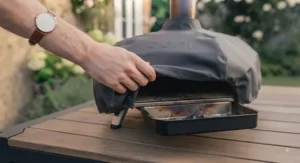
Maintenance costs are generally modest if you look after the oven properly: brushing out ash after every session, storing it under a cover through winter, and periodically checking stainless steel components for rust are the main tasks, and none require paid servicing. Where costs creep in is replacement parts — pizza stones can crack under thermal shock if handled carelessly, and a replacement typically runs £20-£40 depending on the model. Buying a cover from day one is genuinely one of the best-value long-term investments across every oven on this list, since UK weather is considerably less forgiving on unprotected stainless steel and paint finishes than a covered garden shed.
Safety, Regulations and Compliance Guide
Charcoal pizza ovens are outdoor-only appliances, and this isn’t a minor caveat — it’s a genuine safety requirement. Never use any charcoal-fuelled oven indoors, in a garage, or inside any enclosed structure like a tent, gazebo, or covered porch, since burning charcoal produces carbon monoxide, a colourless, odourless gas that can build to dangerous levels extremely quickly in confined spaces. According to safety guidance from theGas Safe Register, both gas and solid-fuel barbecues and ovens carry a genuine carbon monoxide poisoning risk if used incorrectly, and appliances should always be positioned on stable, level, non-combustible ground well away from fences, overhanging branches, and building eaves.
Beyond ventilation, a few practical habits matter: always let ash cool fully — ideally overnight — before disposal, and never tip warm ash directly into a standard bin, since even seemingly cool embers can reignite. Keep children and pets at a sensible distance from any lit oven, given that surface temperatures can exceed 400°C. None of the ovens covered in this guide require special UK planning permission for domestic garden use, though it’s sensible to check with your landlord or building management if you’re in rented or shared accommodation before installing anything permanent.
Frequently Asked Questions
❓ Is a charcoal pizza oven better than a gas one?
❓ How long does a charcoal pizza oven take to heat up?
❓ What's the best charcoal for a pizza oven?
❓ Can I use a charcoal pizza oven in winter or wet weather?
❓ Do I need permission to use a charcoal pizza oven in my garden?
Conclusion
Choosing between these seven charcoal pizza ovens really comes down to being honest with yourself about how you’ll actually use one, not how you imagine using it during a heatwave in July. If you’re feeding a crowd regularly and have the budget, the Ooni Karu 16 remains the standout for scale and flexibility. If space and portability matter more, the Ooni Karu 12G or Dellonda Portable Wood-Fired 14-inch hit a genuinely useful middle ground between capability and footprint. And if you’re simply curious whether charcoal pizza cooking suits your lifestyle before committing serious money, the VonHaus BBQ Pizza Oven Outdoor or Burnhard Nero offer a low-risk way in.
Whichever you land on, the fundamentals matter more than the model number: good lump charcoal, a proper chimney starter, patience while the stone heats fully, and a bit of practice reading your fire. Get those right, and even the humblest oven on this list will produce a pizza worth showing off to the neighbours.
Recommended for You
- Electric Pizza Oven for Flats: 7 Best Picks for 2026
- Outdoor Electric Pizza Oven: 7 Best Picks Tested for UK Gardens 2026
- Countertop Pizza Ovens Under £200: 7 Real 2026 Picks Compared
Disclaimer: This article contains affiliate links. As an Amazon Associate, I earn from qualifying purchases. If you purchase products through these links, we may earn a small commission at no additional cost to you.
✨ Found this helpful? Share it with your friends! 💬🤗
