In This Article
There’s a very specific kind of heartbreak that only barbecue owners understand: the sinking feeling of watching your coals go from glowing orange to sulking grey exactly four minutes before the chicken thighs are done. You end up hovering over the grill with tongs in one hand and a bag of firelighters in the other, silently negotiating with physics. Nine times out of ten, the culprit isn’t your technique. It’s the fuel.
So, what is a charcoal briquette? In short, it’s compressed charcoal dust, wood by-product, or coconut shell, bound together (usually with starch or a similar natural binder) and pressed into a uniform shape so it burns predictably. Unlike lumpwood charcoal, which is just chunks of carbonised wood in wildly varying sizes, briquettes are engineered for consistency — which matters enormously once you’re trying to cook a three-course barbecue rather than just char some sausages.
Choosing the best charcoal briquettes for your setup isn’t as simple as grabbing whatever’s nearest the tills at the garden centre. Burn time varies from under two hours to well over four. Ash output ranges from “barely noticeable” to “you’ll be scraping the grate for a week.” And the binder used to hold everything together genuinely affects how clean your food tastes. This guide draws on real UK product specifications, aggregated Forest Stewardship Council certification standards for sustainable sourcing, and honest reviewer sentiment to help you pick fuel that actually behaves the way the bag promises — no invented five-star raves, just straight analysis. For a fuller technical picture of how these products are manufactured, Wikipedia’s overview of charcoal briquettes is a solid starting point.
We’ve researched seven genuinely available UK products, spanning budget bulk bags right through to premium Australian imports, and we’ll walk through exactly who each one suits.
Quick Comparison Table
Before we get into the detail, here’s the fast version for anyone standing in the garden aisle with fifteen minutes before guests arrive.
| Briquette | Best For | Burn Time | Ash Output |
|---|---|---|---|
| Weber Charcoal Briquettes | All-round reliability | Up to 3 hours | Low-moderate |
| Heat Beads BBQ Briquettes | Long, slow smoking sessions | Up to 4 hours | Low |
| Big K Charcoal Briquettes | Budget bulk buying | Up to 3 hours | Moderate |
| Big K Coconut Shell Briquettes | Low smoke, low odour cooking | Up to 2-3 hours | Very low |
| Ecoblaze Professional Briquettes | Uniform burn, precise heat control | Long-burn rated | Low |
| Pelle & Sol Charcoal BBQ Briquettes | Fast lighting on a budget | Up to 3 hours | Moderate |
| Green Olive Firewood Briquettes | Sustainable small-batch grilling | Long burn | Low |
Look closely and a pattern emerges: burn time and ash output tend to move in opposite directions to price. The cheapest bags aren’t bad, exactly, but they typically demand more attention and produce more residue, while the pricier options reward you with steadier heat and less cleanup. Heat Beads BBQ Briquettes and Ecoblaze Professional Briquettes lead on longevity and consistency, while Big K Charcoal Briquettes and Pelle & Sol Charcoal BBQ Briquettes win on upfront cost. If you’re smoking a brisket for six hours, that difference in burn time isn’t a luxury — it’s the whole ball game.
💬 Just one click — help others make better buying decisions too!😊
Top 7 Charcoal Briquettes: Expert Analysis
We’ve picked products that genuinely span the UK market — mainstream European brands, Australian imports, coconut-shell alternatives, and smaller sustainable producers — so there’s something here whether you’re feeding two or twenty.
1. Weber Charcoal Briquettes — best all-round pillow-shaped reliability
If you want one bag that behaves the same way every single time, this is where most UK grillers land, and there’s a reason it’s the default recommendation from BBQ retailers up and down the country. Weber Charcoal Briquettes are manufactured from carbonised European wood — a blend of hornbeam, beech, oak and birch — compacted under roughly 50 tonnes of pressure with no chemical additives. In practice, that heavy compression is what gives you the roughly three-hour burn and the dual-groove pillow shape that’s designed to channel airflow evenly across the coal bed, so one side of your grill doesn’t run hotter than the other.
Based on the spec comparison, this briquette sits in a sweet spot: hot enough for a decent sear, cool enough (compared with raw lumpwood) for low-and-slow roasting without babysitting the vents constantly. It’s the obvious starting point for anyone upgrading from supermarket own-brand charcoal, and confident enough for weekend hosts who don’t want to think about fuel chemistry.
Reviewers consistently report clean, low-odour burns with minimal spitting, and several long-term users note they’ve stuck with the brand specifically because it doesn’t taint delicate foods like fish or vegetables the way some budget briquettes can.
Pros:
- ✅ Consistent roughly 3-hour burn across the whole bag
- ✅ FSC-certified, traceable European wood sourcing
- ✅ Pillow shape improves airflow and even lighting
Cons:
- ❌ Pricier per kilogram than budget domestic brands
- ❌ Runs cooler than premium lumpwood for hard searing
At around the £25-£35 range for the 8kg bag, it’s mid-market pricing for what amounts to dependable, no-surprises performance — solid value if consistency matters more to you than rock-bottom cost per kilo.
2. Heat Beads BBQ Briquettes — best for long, slow smoking sessions
There’s a reason serious low-and-slow cooks keep coming back to this one, even with its steeper price tag. Heat Beads BBQ Briquettes have been made in Australia since 1972, using a proprietary compressed-carbon formula bound with a starch-based agent rather than the coal-dust-and-borax mixtures found in some cheaper imports. That manufacturing pedigree translates into what’s widely regarded as one of the longest, steadiest burns available on the UK market — reviewers repeatedly describe four-plus hours of stable heat from a single load.
What most buyers overlook about this brand is that its real strength isn’t raw heat output but heat retention over time, which is precisely what a smoker or an indirect roast demands. If you’re the type who fires up the kettle at 9am for a pulled pork that won’t be ready until teatime, this is arguably the most purpose-built option on this list, and a genuine contender for the best long-lasting briquettes for BBQ marathons rather than quick weeknight grilling.
Aggregated customer feedback is notably consistent: multiple reviewers independently describe it as smokeless, low-odour, and capable of holding cooking temperature “for hours” even in a basic kettle barbecue, with several noting they now mix in cheaper briquettes just to stretch the bag further, using Heat Beads as the anchor fuel.
Pros:
- ✅ Longest sustained burn time of any product reviewed here
- ✅ Starch-bound formula, low smoke and low odour
- ✅ Performs reliably in basic kettle barbecues, not just premium grills
Cons:
- ❌ Among the more expensive briquettes per kilogram
- ❌ Overkill for short, casual weeknight grilling sessions
Typically sitting in the £30-£40 range for a 10kg bag, it’s a premium purchase, but for anyone doing genuine smoking rather than quick grilling, the extended burn time can mean using less fuel overall — which claws back some of that price difference.
3. Big K Charcoal Briquettes — best budget bulk buy
Sometimes you just need a big bag of reliable fuel without overthinking it, and this is where Big K Charcoal Briquettes earn their keep. Sourced through Big K’s FSC-certified supply chain in several of its ranges, this is a mainstream, widely stocked British brand that’s built its reputation on consistency rather than flashy marketing. Specs-wise, expect a roughly three-hour burn window with easy ignition, and a shape uniform enough to stack neatly in a chimney starter.
Here’s what the spec sheet won’t tell you, but years of household use suggest: this is the briquette most UK families already have in the shed, precisely because it does the job without demanding a premium. It’s not going to out-perform a specialist smoking fuel over six hours, but for a Sunday grill session with burgers and chicken thighs, it does exactly what’s asked.
Reviewers frequently describe it as a “no-fuss” everyday charcoal, with a common thread being appreciation for consistent availability and pricing rather than standout performance — which, for a bulk household staple, is arguably the right thing to be praised for.
Pros:
- ✅ Widely available and consistently priced across UK retailers
- ✅ Easy, predictable lighting for beginners
- ✅ Solid mid-length burn suitable for most family cookouts
Cons:
- ❌ Produces more ash than premium alternatives
- ❌ Burns hotter early on, cooling faster than long-burn rivals
Sitting comfortably in the under-£20 bracket for a 10kg bag, this is genuinely difficult to beat on cost per cook, making it the sensible default for anyone who barbecues often enough that price per session actually matters.
4. Big K Coconut Shell Charcoal Briquettes — lowest smoke, lowest odour option
For anyone who’s ever apologised to neighbours for smoke drifting over the garden fence, this one’s worth a look. Big K Coconut Shell Charcoal Briquettes are manufactured by carbonising waste coconut shells rather than wood, which is a genuinely different raw material with different burn characteristics — described by the manufacturer as delivering low smoke, low odour and high heat output, with cooking times up to around two hours.
On paper, this means a denser, harder-burning briquette that produces noticeably less visible smoke and significantly less ash residue than wood-based alternatives — useful if you’re grilling on a balcony, near washing lines, or simply want less cleanup afterwards. It’s a timber-free product, which also makes it an interesting pick for anyone specifically trying to reduce demand on wood-based charcoal supply chains.
What reviewers note most often is the speed and ease of ignition relative to how hot the coals eventually run — a combination that’s slightly unusual, since fast-lighting fuels are often the ones that also burn out quickly. Here, quick ignition doesn’t come at the cost of a short burn.
Pros:
- ✅ Noticeably lower smoke and odour than wood-based briquettes
- ✅ High heat output for searing, despite a shorter overall burn
- ✅ Sustainable use of a waste by-product rather than virgin timber
Cons:
- ❌ Shorter burn window than the wood-based options on this list
- ❌ Higher price per kilogram given the speciality raw material
Expect to pay in the £15-£20 range for a 4kg bag — a premium per kilo, but justified for the specific problem it solves.
5. Ecoblaze Professional Charcoal Briquettes — best for uniform burn and precise heat control
If steady, predictable heat is your priority over everything else, Ecoblaze Professional Charcoal Briquettes are engineered specifically around that goal. The manufacturer markets this range explicitly on consistent, even heat and a smokeless, chemical-free, uniform shape — and uniform shape genuinely isn’t just marketing fluff here, because briquette size variation is one of the biggest hidden causes of hot spots and cold zones on a grill.
Based on the spec comparison, what stands out about this brand is how directly it targets the exact frustration most home cooks have with cheaper charcoal: uneven cooking caused by inconsistent coal sizing. When every briquette in the bag is roughly the same dimensions, they pack together in the firebox with fewer gaps, which means airflow — and therefore heat — distributes far more evenly across the grate. That’s genuinely useful if grill temperature control matters to you, whether you’re running a two-zone setup for searing-then-resting or trying to hold a steady 110°C for slow-roasted lamb shoulder.
Aggregated review sentiment leans strongly positive on reliability and cleanliness, with users repeatedly describing it as a “set it and forget it” fuel that doesn’t need constant raking or adjustment mid-cook.
Pros:
- ✅ Highly uniform briquette sizing for even airflow
- ✅ Low-smoke, chemical-free formulation
- ✅ Rated for long, consistent burns suitable for extended cooks
Cons:
- ❌ Less widely stocked in physical stores than mainstream brands
- ❌ Mid-to-premium pricing compared with basic bulk briquettes
Pricing typically falls in the £20-£28 range for a 10kg bag, positioning it as a reasonable step up from budget briquettes for anyone who’s been frustrated by patchy heat distribution.
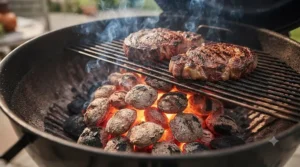
6. Pelle & Sol Charcoal BBQ Briquettes — best value fast-lighting option
For weeknight grilling where you don’t want to wait around, Pelle & Sol Charcoal BBQ Briquettes pitch themselves squarely at speed and value. The listed specs promise up to three hours of heat with fast lighting in around 20 minutes, positioning this as a genuine mid-market alternative to the bigger-name brands, typically sold in a substantial 10kg pack.
What most buyers overlook here is that fast ignition and low ash aren’t automatically at odds with affordability — this brand seems built around proving that point. It’s a sensible pick for anyone who barbecues regularly enough to burn through fuel quickly but doesn’t want to pay premium-brand prices every single time, particularly for casual midweek dinners rather than weekend showpieces.
Reviewers commonly highlight the balance between quick startup and reasonably clean burning, with the recurring theme being that it performs close to premium-brand briquettes without the premium-brand price tag — though, as with most budget-adjacent options, consistency between batches can vary slightly more than with the bigger manufacturers.
Pros:
- ✅ Genuinely fast 20-minute ignition time
- ✅ Large 10kg pack size gives strong value per kilogram
- ✅ Low-ash formulation for easier grate cleanup
Cons:
- ❌ Batch consistency reported as slightly more variable
- ❌ Shorter shelf-brand track record than legacy manufacturers
Typically priced in the £16-£22 range for the 10kg bag, this is a genuinely strong pick for anyone prioritising value without dropping to the very cheapest tier.
7. Green Olive Firewood Company Briquettes — best sustainable small-batch pick
Rounding out the list is a smaller, sustainability-focused British producer worth knowing about. Green Olive Firewood Company Briquettes are marketed around natural, sustainable sourcing with quick lighting and a long burn time, sold in more modest 4kg bags that suit smaller households or occasional grillers who don’t want a giant bulk bag sitting in the shed all winter.
Here’s what the spec sheet won’t necessarily spell out: smaller producers like this one often source wood more traceably than mass-market suppliers, and the smaller batch sizes can mean fresher stock with less variation between bags — genuinely relevant if you’ve ever bought a “long burn” briquette that mysteriously burned out in ninety minutes. It’s a solid pick for buyers who want to support smaller supply chains without sacrificing performance, and it pairs well with smaller kettle or portable barbecues rather than large-capacity smokers.
Reviewer sentiment is generally positive on burn consistency and natural smell, with several buyers specifically calling out that it doesn’t leave the acrid aftertaste sometimes associated with heavily processed briquettes.
Pros:
- ✅ Genuinely natural, traceable, sustainably sourced material
- ✅ Long burn time despite the smaller bag format
- ✅ Ideal portion size for smaller households and portable grills
Cons:
- ❌ Higher cost per kilogram than large bulk-bag alternatives
- ❌ Smaller pack size means more frequent repurchasing for big households
Expect to pay around £12-£16 for the 4kg bag — a premium per kilo, but reasonable for buyers who specifically value smaller-scale, sustainably sourced fuel.
Practical Usage Guide: Getting the Longest, Most Even Burn
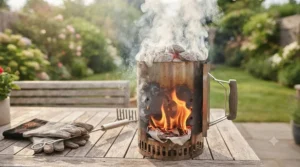
Buying good briquettes is only half the job — how you light and manage them determines whether you actually get that promised three-hour burn or a disappointing ninety minutes. Start by using a chimney starter rather than lighter fluid; it’s faster, avoids any chemical taste transferring to food, and gets briquettes glowing evenly within 15-20 minutes rather than in unpredictable patches. Fill it roughly two-thirds full for most cooks, and always light on a heatproof surface, following the safety guidance in the Food Standards Agency’s official BBQ food safety advice, which covers everything from safe ignition to avoiding cross-contamination once food hits the grate.
Once your coals are ashed-over grey (not still glowing orange, which means they’re not ready), arrange them according to what you’re cooking: banked to one side for two-zone cooking, or spread evenly for consistent all-over grilling. A common mistake in the first month of briquette ownership is closing the vents too early — airflow is what sustains combustion, so choking it off prematurely is the single fastest way to kill a long burn before its time.
For maintenance, always let ash cool completely (ideally overnight) before disposal, store unused briquettes somewhere genuinely dry since damp fuel lights unevenly and smokes more, and periodically brush down your grate to stop old residue affecting new cooks. None of this is complicated, but it’s exactly the sort of detail that separates a frustrating cookout from a genuinely great one.
Real-World Scenarios: Matching Briquettes to Your Barbecue Life
Not every barbecue session looks the same, so let’s match specific situations to specific fuels. If you’re a student or young professional grilling for two or three people on a small kettle barbecue once or twice a month, Pelle & Sol Charcoal BBQ Briquettes make sense — fast lighting, low commitment, and you won’t be sitting on half a bulk bag for a year.
If you’re the family that hosts every other weekend through summer, feeding six to ten people burgers, sausages and the occasional whole chicken, Big K Charcoal Briquettes in a 10kg bulk bag is the pragmatic choice — reliable, affordable, and available almost everywhere when you inevitably run out mid-season.
And if you’ve recently caught the low-and-slow smoking bug and you’re eyeing up an eight-hour pulled pork shoulder on a Saturday, Heat Beads BBQ Briquettes are worth the extra spend. The sustained, steady burn genuinely matters more than price once your cook time stretches past three or four hours, and running out of heat halfway through a brisket is a far more expensive mistake than the difference in briquette cost.
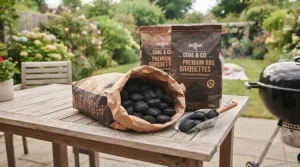
Solving the Top Charcoal Briquette Problems
Problem: coals burn out before the food’s ready. This is usually a fuel-choice issue rather than a technique failure — budget briquettes like Pelle & Sol Charcoal BBQ Briquettes are excellent for quick grilling but aren’t built for extended cooks. Switch to Heat Beads BBQ Briquettes or Ecoblaze Professional Charcoal Briquettes for anything over two hours.
Problem: uneven cooking, with one side of the grill hotter than the other. This is frequently caused by inconsistent briquette sizing creating patchy airflow. Ecoblaze Professional Charcoal Briquettes, specifically engineered for uniform burn, directly addresses this.
Problem: food tastes slightly acrid or chemical. Cheap fuel sometimes uses lower-quality binders. Look for briquettes with clearly stated natural binders, like Weber Charcoal Briquettes or Green Olive Firewood Company Briquettes, both marketed around chemical-free composition.
Problem: too much smoke drifting toward neighbours or washing lines. Swap to Big K Coconut Shell Charcoal Briquettes, which produce noticeably less visible smoke than wood-based alternatives.
Problem: running through fuel too quickly and spending more than expected. Buy in bulk with a long shelf life, like the 10kg Big K Charcoal Briquettes bag, and store it properly — damp storage is the single biggest cause of wasted, unusable charcoal.
How to Choose Charcoal Briquettes
- Match burn time to cook time. A 90-minute burn is fine for burgers; it’s a disaster for an overnight brisket. Check the stated burn window before anything else.
- Check the binder. Natural starch-based binders, as used in premium ranges, tend to produce cleaner-tasting food than cheaper coal-dust mixtures — more on this below.
- Look for shape uniformity. Consistently sized briquettes pack more evenly, giving more predictable, controllable heat across the grate.
- Consider ash output. If cleanup annoyance genuinely bothers you, prioritise low-ash formulations even if they cost a little more.
- Factor in certification. Products carrying FSC certification confirm the wood was sourced through an audited, sustainable chain of custody — worth checking if that matters to your buying decision.
- Buy the right bag size for your frequency. Occasional grillers waste money on giant bulk bags that go stale; regular hosts waste money buying small bags repeatedly.
- Weigh price per kilogram, not just sticker price. A 4kg bag at £15 and a 10kg bag at £30 aren’t the same value — always do the maths before assuming the bigger bag wins.
Common Mistakes When Buying Charcoal Briquettes
The single most common mistake is buying purely on price without checking burn time — a bargain bag that burns out in ninety minutes and needs topping up mid-cook often ends up costing more in frustration and re-lighting fuel than a slightly pricier long-burn option would have. A close second is ignoring bag size relative to actual usage; buyers regularly overbuy 10kg bags for occasional use, only for the remainder to absorb moisture in a shed over winter and light poorly the following spring. Finally, plenty of shoppers assume all briquettes are chemically similar, when in reality the binder composition varies meaningfully between manufacturers — a mistake we’ll unpack properly in the next section.
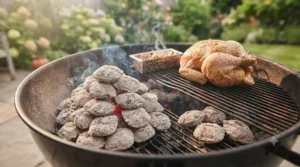
Charcoal Briquettes vs Lumpwood Charcoal
The briquette-versus-lumpwood debate comes up constantly, and honestly, the answer depends entirely on what you’re cooking. Lumpwood charcoal is just carbonised wood chunks with no binder, which means it lights faster and burns hotter initially — great for a quick, intense sear on a steak. But because the chunks vary wildly in size, lumpwood burns unevenly and unpredictably, and it’s genuinely difficult to sustain a sub-150°C temperature for a long, slow cook without constant vent adjustment.
Briquettes, by contrast, trade that initial blazing heat for consistency. Because every piece is roughly the same size and density, briquettes like Ecoblaze Professional Charcoal Briquettes or Weber Charcoal Briquettes burn at a steadier, more predictable rate — which is precisely why serious smokers and low-and-slow cooks almost universally prefer briquettes over lumpwood, despite lumpwood’s reputation for a more “authentic” smoky flavour.
| Factor | Briquettes | Lumpwood Charcoal |
|---|---|---|
| Burn consistency | High — uniform shape and size | Variable — depends on chunk size |
| Initial heat | Moderate, ramps up steadily | Very high, fast |
| Best For | Long, slow, controlled cooks | Quick, high-heat searing |
| Ash output | Generally lower with premium binders | Generally higher, more variable |
The takeaway from this comparison is straightforward: if your cooking style leans toward smoking, roasting, or extended sessions, briquettes are almost always the better tool, and if you’re purely after a fast fifteen-minute sear, lumpwood earns its keep instead. Plenty of experienced grillers actually keep both on hand and choose per session.
What to Expect: Uniform Burn and Grill Temperature Control
Uniform burn isn’t just a nice-to-have spec on a packet — it’s the single biggest factor separating a controllable barbecue from a stressful one. When briquettes are consistently sized, as with Ecoblaze Professional Charcoal Briquettes, they settle into the firebox without large air gaps or dense clumps, meaning oxygen reaches the fuel bed evenly and heat output stays stable rather than spiking and dropping unpredictably.
Grill temperature control, in practice, comes down to managing two things: fuel quality and airflow. Even a genuinely uniform-burning briquette can’t compensate for vents left fully open or fully closed — the sweet spot for most low-and-slow cooking sits with vents partially open, adjusted gradually rather than in big swings, since charcoal responds to airflow changes with a noticeable lag of several minutes. What most first-time users get wrong is overcorrecting: closing vents fully the moment temperature spikes, then panicking and opening them fully when it drops too far, creating a rollercoaster instead of a plateau.
Practically speaking, pairing a genuinely uniform product with a decent lid thermometer and patience with vent adjustments will get you far closer to that mythical “set it and forget it” barbecue experience than fuel alone ever could — but starting with well-made, evenly sized briquettes makes every subsequent adjustment far more predictable.
Briquette Binders Explained: What’s Actually Holding Your Charcoal Together
This is the section most product listings conveniently skip, and it’s genuinely worth understanding before you buy. Briquette binders are the substances that hold compressed charcoal dust or coconut-shell carbon together in that neat pillow shape — and not all binders are created equal. Premium manufacturers, including the makers of Weber Charcoal Briquettes and Heat Beads BBQ Briquettes, typically use natural starch-based binders, which burn cleanly without adding any noticeable chemical smell or taste to food.
Cheaper briquettes, particularly some imported budget ranges, have historically used coal-dust and mineral-based binders — sometimes including trace borax — to hold the shape together at lower manufacturing cost. While these products are still broadly safe when used as intended outdoors, reviewers and experienced grillers consistently report a faint chemical smell during early ignition with lower-grade binders, which is one of the most common reasons people switch brands after a disappointing first bag.
What most buyers overlook about binders specifically is that they also affect burn behaviour, not just taste — starch-based binders tend to burn down more gradually and predictably, while some mineral binders can cause briquettes to crumble or flare unevenly as they break down. If clean flavour and steady combustion both matter to you, checking whether a brand states “natural binder” or “chemical-free” on the packaging — as several products reviewed above explicitly do — is a genuinely useful shortcut when comparing options at the shelf.
Long-Term Cost & Value: Finding the Best Long-Lasting Briquettes for BBQ
Sticker price tells you almost nothing useful on its own — what actually matters is cost per hour of usable heat. A cheaper bag that burns out in ninety minutes and needs topping up mid-cook can end up costing more overall than a pricier bag that reliably lasts three or four hours without intervention, once you factor in the extra fuel and the hassle of relighting.
| Product | Approx. Price Band | Typical Burn Time | Rough Value Positioning |
|---|---|---|---|
| Big K Charcoal Briquettes | Under £20 (10kg) | ~3 hours | Best raw cost-per-kilo |
| Pelle & Sol Charcoal BBQ Briquettes | £16-£22 (10kg) | ~3 hours | Strong value, fast lighting |
| Weber Charcoal Briquettes | £25-£35 (8kg) | ~3 hours | Balanced, dependable |
| Ecoblaze Professional Briquettes | £20-£28 (10kg) | Long-burn rated | Good value for consistency |
| Heat Beads BBQ Briquettes | £30-£40 (10kg) | Up to 4 hours | Best for long-cook cost-efficiency |
Reading across this table, the products marketed as the best long-lasting briquettes for BBQ marathons — Heat Beads BBQ Briquettes in particular — actually make strong financial sense for anyone doing regular long smokes, because you genuinely use less fuel per hour of cooking. For quick weekend grilling, though, that premium simply isn’t worth paying, and the budget-to-mid options deliver equivalent real-world value.
Beyond the bag price, factor in storage: buying oversized bags you can’t use before the following season effectively wastes money on charcoal that absorbs moisture and lights poorly. Buying the right-sized bag for your actual barbecue frequency is, in the long run, a bigger cost lever than brand choice alone.
Safety, Sustainability & Regulations
Charcoal briquettes are a solid fuel, and solid fuel combustion produces carbon monoxide — a genuinely serious risk if barbecues are used or left smouldering in enclosed spaces like tents, caravans, or garages. UK fire services are consistent and emphatic on this point: always barbecue outdoors in a well-ventilated area, and never bring a lit or even recently-extinguished barbecue indoors, since it continues producing carbon monoxide as it cools. The Scottish Fire and Rescue Service’s guide to safer barbecues is a genuinely useful, practical read covering exactly this, alongside general fire safety around outdoor cooking.
On the sustainability side, look for products explicitly carrying FSC (Forest Stewardship Council) certification, which several brands reviewed above hold across at least part of their range. This certification confirms the wood was harvested and processed through an independently audited, responsibly managed supply chain — a genuinely meaningful distinction given how much charcoal sold in the UK is imported from regions with variable forestry standards. Coconut-shell products, like the option covered above, sidestep this issue entirely by using an agricultural waste by-product rather than timber at all.
Finally, always allow ash to cool fully — ideally overnight — before disposal, and never dispose of warm ash in general waste bins, since it can smoulder for far longer than it appears to and has been linked to bin fires.
Frequently Asked Questions
❓ What are the best charcoal briquettes for a beginner?
❓ How long do charcoal briquettes actually burn for?
❓ Are charcoal briquettes better than lumpwood charcoal?
❓ Do cheaper briquette binders affect food taste?
❓ How should I store charcoal briquettes to keep them working properly?
Conclusion
There’s no single “best” charcoal briquette that suits every barbecue, and honestly, anyone claiming otherwise is oversimplifying things. What matters is matching fuel to how you actually cook. For dependable, everyday grilling, Weber Charcoal Briquettes remain a genuinely sound default. For extended smoking sessions where consistent low heat matters more than anything else, Heat Beads BBQ Briquettes justify their higher price with real staying power. Budget-conscious hosts feeding a crowd regularly should look hard at Big K Charcoal Briquettes, while anyone chasing precise, uniform burn for temperature-sensitive cooking should give Ecoblaze Professional Charcoal Briquettes serious consideration.
Whichever you choose, the underlying principles hold steady: check the burn time against your actual cook time, understand what’s binding the briquette together, and never underestimate how much a genuinely uniform product simplifies everything downstream — from lighting to temperature control to cleanup. Get the fuel right, and the rest of the barbecue tends to take care of itself.
✨ Don’t Miss These Exclusive Deals!
🔍 Take your barbecue game to the next level with these carefully selected briquettes. Click through on any highlighted product to check current pricing and availability, and get ready for genuinely great, consistently cooked food all summer long!
Recommended for You
- 7 Best British Charcoal for BBQ 2026: Honest UK Buying Guide
- Large Lumpwood Charcoal for Smoking: 7 Best UK Bags (2026)
- Hardwood Lumpwood Charcoal for Pizza Oven: 7 Best Picks (2026)
Disclaimer: This article contains affiliate links. As an Amazon Associate, I earn from qualifying purchases. If you purchase products through these links, we may earn a small commission at no additional cost to you.
✨ Found this helpful? Share it with your friends! 💬🤗
