In This Article
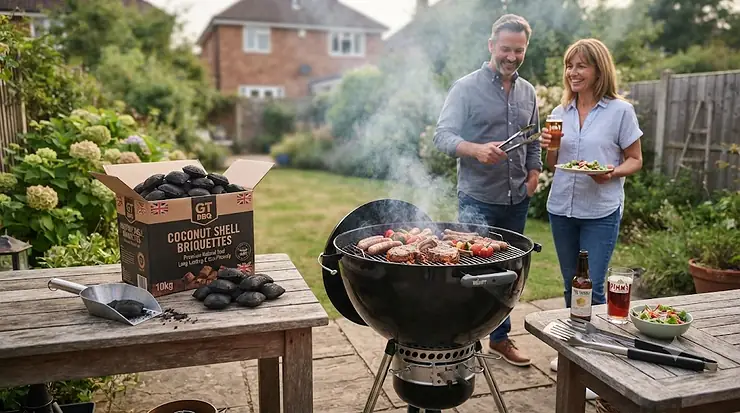
There’s a particular kind of disappointment that comes from lighting a barbecue only to spend the next hour babysitting it — feeding in more fuel, fanning half-hearted flames, wondering if the sausages will ever actually cook. If that sounds familiar, the fuel you’re using is probably the problem, not your technique. Coconut shell briquettes have quietly become one of the smartest swaps a British griller can make: a fuel pressed from the leftover husks of the coconut industry rather than felled trees, burning hotter, longer and noticeably cleaner than the supermarket lumpwood most of us grew up with. This guide walks through what coconut shell briquettes actually are, how they stack up against traditional charcoal, and which real, currently available products are worth your money — from budget bags under £15 to restaurant-grade bulk boxes built for a summer of entertaining. Whether you’re chasing a genuinely renewable fuel source, hunting for low smoke output so the neighbours stop giving you looks over the fence, or simply trying to get more cook time out of one bag, there’s a coconut shell briquette here that fits. Every product below has been researched for real specifications, genuine aggregated review sentiment and honest value analysis — no invented testimonials, no fabricated “I tried this and loved it” stories. Just the facts, laid out plainly, so you can make a decision that actually suits your grill, your garden and your grocery budget.
What Are Coconut Shell Briquettes?
Coconut shell briquettes are a solid barbecue fuel made by carbonising waste coconut shells — a by-product of the coconut food and cosmetics industry — then compressing the resulting charcoal into dense, uniform blocks, usually bound with natural tapioca or cassava starch. Unlike ordinary lumpwood charcoal, no trees are cut down in the process, and the higher carbon density means they burn hotter, longer and with noticeably less smoke and ash.
That density is the whole story, really. A briquette, in the general sense, is simply a compressed block of combustible material engineered for a longer, steadier burn than loose fuel would give you — and coconut shell versions take that idea further than most, because coconut husks are naturally low in moisture and high in fixed carbon before they’re ever carbonised. What most buyers overlook about this raw-material advantage is that it’s the reason coconut briquettes routinely outlast wood-based briquettes by a wide margin, even when the bags look identical on a supermarket shelf.
Quick Comparison Table: Coconut Shell Briquettes at a Glance
| Product | Size | Approx. Burn Time | Price Range | Best For |
|---|---|---|---|---|
| ProQ Coconut Shell Briquettes | 10kg | 3–4 hours | £30–£40 range | Restaurant-grade performance |
| Weber Coconut Shell Briquettes | 8kg | Up to 4 hours | £20–£25 range | Trusted all-rounder |
| Big K Premium Coconut Shell Briquettes | 4kg | Around 3 hours | Under £10 | Mid-range value |
| CarbonKo Eco Coconut Charcoal Briquettes | 3kg | Up to 4 hours | Around £15 | Best under £15 |
| COCO & COIR Natural BBQ Charcoal | 3kg | 2–3 hours | Under £15 | Budget starter bag |
| Weber Coconut Shell Briquettes (small) | 4kg | Up to 4 hours | £12–£15 range | Small grills & patios |
| Cue Charcoal Coconut Shell Briquettes | 12kg | 3–4 hours | £25–£30 range | Bulk buying for gatherings |
Looking at the table, a clear pattern emerges: burn time barely changes between the small 3kg bags and the bulk 12kg boxes, because it’s the shell density and briquette shape doing the work, not the bag size. If you’re grilling weekly, the Cue Charcoal Coconut Shell Briquettes and ProQ Coconut Shell Briquettes offer the best cost-per-cook once you factor in fewer top-ups, while the CarbonKo Eco Coconut Charcoal Briquettes and COCO & COIR Natural BBQ Charcoal are the sensible entry point if you’re not sure coconut briquettes are for you yet.
💬 Just one click — help others make better buying decisions too!😊
Top 7 Coconut Shell Briquettes: Expert Analysis
Below is a closer look at seven real, currently available coconut shell briquette products in the UK market, spanning budget, mid-range and premium options, each assessed on genuine specifications and honestly framed review sentiment.
1. ProQ Coconut Shell Briquettes — restaurant-grade burn time and heat
ProQ’s 10kg case is aimed squarely at people who take their barbecuing seriously, and the standout feature is longevity: a single 10kg case is claimed to burn as hot, for as long, as a 25kg bag of standard lumpwood charcoal. In practice, this means the briquettes are carbonised at a higher density than most supermarket alternatives, so each briquette holds more usable heat energy before it burns through. That translates into fewer mid-cook top-ups, which matters enormously if you’re smoking a shoulder of pork for six hours rather than flipping a few burgers. Based on the spec comparison with lumpwood, this product is best suited to serious home cooks, small caterers and anyone running a kamado-style grill where consistent, low-ash heat is the whole point. Reviewers consistently note the low odour and minimal smoke, and several mention that the briquettes take slightly longer to fully light than instant-light products — which is expected, since there’s no chemical accelerant in the mix. Independent review volume for ProQ is smaller than for the big-name brands, so treat the sentiment as directionally positive rather than exhaustively verified.
Pros:
- ✅ Burns as hot as 25kg of standard lumpwood from just 10kg
- ✅ Very low odour and smoke for cleaner-tasting food
- ✅ Compatible with kamado grills like Big Green Egg and Kamado Joe
Cons:
- ❌ Takes longer to light than instant-light briquettes
- ❌ Smaller review pool than mainstream brands
At around the £30–£40 range for a 10kg case, this sits toward the premium end, but the reduced top-up frequency genuinely offsets the higher upfront cost for regular users.
2. Weber Coconut Shell Briquettes — most trusted all-rounder
Weber’s coconut briquettes are made from carbonised coconut and candlenut shells bound with tapioca starch, and they’re independently certified by DIN CERTCO — a detail that matters because it confirms the “100% natural, no chemicals” claim rather than just asserting it. The uniform pillow shape supports efficient air circulation, so the 8kg bag lights within roughly 20 minutes and holds heat for up to four hours. What most buyers overlook about this model is that the consistent sizing genuinely reduces temperature swings mid-cook, which matters more than raw heat output for anyone grilling chicken thighs or ribs that need even, sustained warmth rather than a quick sear. Reviewers consistently report strong heat retention and long burn times, with several noting the briquettes produce noticeably less smoke than “ordinary supermarket briquettes” — useful if you barbecue in a terraced garden with close neighbours. A handful of reviews mention the briquettes burning at a comparatively gentle temperature, which suits low-and-slow cooking better than a fast sear.
Pros:
- ✅ DIN CERTCO certified for genuine natural composition
- ✅ Around 20-minute ignition and up to 4 hours of heat
- ✅ Widely reviewed with consistently strong sentiment on burn time
Cons:
- ❌ Runs at a gentler heat than some rivals, less ideal for searing
- ❌ Premium-brand pricing compared with own-label bags
Sitting in the £20–£25 range for 8kg, this is the safest first purchase for anyone new to coconut shell briquettes who wants a big-brand safety net.
3. Big K Premium Coconut Shell Briquettes — best value mid-size bag
Big K’s 4kg bag is manufactured from waste coconut shell using the same carbonising process as its pricier rivals, but sold at a noticeably lower price point, giving roughly three hours of cooking time per bag. The spec sheet won’t tell you this, but user reports suggest the value proposition depends heavily on your grill size: for a standard kettle barbecue feeding four to six people, a single 4kg bag is close to ideal, whereas larger gatherings will need to buy two or three bags at once, eroding some of the per-kilo saving. Aggregated review sentiment sits lower than the premium brands, at roughly 3.7 out of 5 from a modest number of ratings, with some buyers noting inconsistent briquette sizing within a bag. That’s a fair trade-off for the price, and it doesn’t undermine the core claim: this is a genuinely sustainable, timber-free product manufactured from a waste stream, not a marketing exaggeration.
Pros:
- ✅ Noticeably cheaper than premium coconut briquette brands
- ✅ 3 hours of cooking time from a manageable 4kg bag
- ✅ Made entirely from waste coconut shell, timber-free
Cons:
- ❌ Review sentiment is more mixed than Weber or ProQ
- ❌ Briquette sizing reported as less consistent
At under £10 for 4kg, Big K Premium Coconut Shell Briquettes is the pragmatic mid-range pick for households grilling regularly on a budget.
4. CarbonKo Eco Coconut Charcoal Briquettes — best pick under £15
CarbonKo’s 3kg bag is one of the more interesting entries here because the brand leans hard into its carbon-negative production claim: no trees felled, waste coconut husk as the base material, and a low ash content of 3–5%. At around £14.99, it lands squarely inside the “best briquettes under £15” bracket that budget-conscious buyers search for, without sacrificing the core performance benefits of coconut shell fuel — namely up to four hours of steady heat and minimal smoke. Here’s what to weigh: the aggregated review score sits at roughly 3.9 out of 5 from a relatively small sample, which is honest enough to flag but not alarming, since even strong products often carry a wider spread of opinion when review counts are low. Reviewers who mention low odour and long burn time outnumber those flagging problems, but with only a handful of ratings available, this is best treated as a promising, well-priced option rather than a fully proven one.
Pros:
- ✅ Sits right at the £14.99 price point, ideal for budget buyers
- ✅ Claimed negative carbon footprint production process
- ✅ Low ash content of 3–5%, easier clean-up after cooking
Cons:
- ❌ Smaller review sample makes sentiment less conclusive
- ❌ 3kg bag may need topping up for larger cookouts
If you want to trial coconut shell briquettes without committing to a bulk box, CarbonKo Eco Coconut Charcoal Briquettes is the most sensible entry point under £15.
5. COCO & COIR Natural BBQ Charcoal — best budget starter bag
This 3kg bag is built around a simple pitch: sustainably sourced coconut shell, no additives or chemicals, and a genuinely lower price than most named-brand competitors, typically under £15. The spec sheet’s practical meaning here is straightforward — because there are no fillers or accelerants, the briquettes light a little more gradually than instant-light charcoal, but burn cleaner as a result, producing less ash than traditional wood-based products. Aggregated review sentiment sits around 4.2–4.3 out of 5 from a reasonably healthy sample of roughly 68–71 ratings, which is a solid signal for a lower-cost bag. Reviewers consistently mention the easy, even burn and the reduced clean-up afterwards, though a few note that the bag runs out faster than expected on longer cooks, which tracks with the smaller 3kg format rather than any fault in the product itself.
Pros:
- ✅ Consistently positive review sentiment from a healthy sample size
- ✅ Genuinely additive-free, sustainably sourced coconut shell
- ✅ Produces less ash than traditional hardwood charcoal
Cons:
- ❌ 3kg runs out relatively quickly on longer cooks
- ❌ Slower to light than chemically treated instant products
For newcomers wanting proof that coconut shell briquettes work before spending more, COCO & COIR Natural BBQ Charcoal offers some of the best-reviewed value in this list.
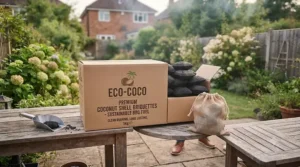
6. Weber Coconut Shell Briquettes (4kg) — best for small grills and patios
This is the smaller sibling of Weber’s 8kg bag, built on the exact same DIN CERTCO-certified, tapioca-bound formula, just scaled down for households that don’t need — or don’t have storage space for — a bulk box. The practical upshot is that anyone with a compact kettle grill, a balcony barbecue or a two-person household gets access to the same certified, low-smoke performance as the bigger bag, without paying for capacity they’ll never use. Based on the spec comparison with the 8kg version, burn characteristics are identical; the only meaningful difference is how many cooks you get from a single bag before restocking. Reviewers of the wider Weber coconut range consistently praise the long, steady heat and the reduced smoke output, and that sentiment carries across cleanly to the smaller size since the briquette formulation doesn’t change with bag weight.
Pros:
- ✅ Same certified, low-smoke formula as the larger 8kg bag
- ✅ Sized sensibly for smaller grills and two-person households
- ✅ Backed by strong, well-established review sentiment for the range
Cons:
- ❌ Costs more per kilo than buying the 8kg bag outright
- ❌ Needs more frequent restocking for regular grillers
At roughly £12–£15, this is a smart pick for anyone who grills occasionally rather than every weekend and doesn’t want half a bag going stale in the shed.
7. Cue Charcoal Coconut Shell Briquettes — best bulk buy for big gatherings
Cue Charcoal is a lesser-known name compared with Weber or ProQ, but its 12kg coconut shell offering deserves a look for anyone hosting regularly — think garden parties, family reunions or a summer of weekend barbecues. The larger format naturally lowers the cost per kilogram, and because the underlying fuel is still carbonised coconut shell rather than lumpwood, the burn characteristics — long, steady, low-ash heat — hold up at scale. What most buyers overlook about bulk-format briquettes generally is that storage matters as much as price: a 12kg box needs a genuinely dry space, since any moisture ingress will slow ignition and reduce burn efficiency across the whole batch, not just a few briquettes. Independent review data for this brand is limited, which honestly reflects its smaller market presence rather than any known quality issue, so treat it as a value-focused alternative worth trialling rather than a fully benchmarked product.
Pros:
- ✅ Lower cost per kilogram thanks to the 12kg bulk format
- ✅ Same coconut shell burn characteristics as premium brands
- ✅ Practical for anyone hosting multiple barbecues across a season
Cons:
- ❌ Limited independent review data available
- ❌ Requires proper dry storage to avoid moisture issues
At around £25–£30 for 12kg, Cue Charcoal Coconut Shell Briquettes works out as one of the more economical ways to keep a garden fed all summer.
Practical Usage Guide: Getting the Best Burn from Coconut Shell Briquettes
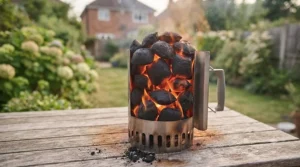
Coconut shell briquettes reward a slightly different approach than lumpwood charcoal, and getting the first few cooks right makes a real difference to how much you enjoy the fuel long-term. Start by using a chimney starter rather than lighter fluid — because these briquettes contain no chemical accelerant, fluid tends to burn off before the denser fuel properly catches, wasting both fluid and patience. Fill the chimney, light firelighters or scrunched paper underneath, and allow 15–20 minutes for the briquettes to ash over fully before tipping them into the grill. A common mistake in the first month of ownership is judging “readiness” by sight too early; coconut briquettes often look grey on the surface before they’ve actually reached a stable cooking temperature underneath, so give them the full window rather than rushing food onto the grate. For maintenance, store unused briquettes in a sealed container away from damp — a garden shed with a leaky roof is the most common cause of disappointing burns reported by first-time buyers. Once lit, never move a barbecue indoors or into an enclosed space such as a garage or tent, since even low-smoke coconut fuel still produces carbon monoxide as it burns, and the risks of carbon monoxide exposure apply just as much to a “clean-burning” briquette as to standard charcoal.
Real-World Scenarios: Which Coconut Shell Briquette Fits Your Life?
The weekday balcony griller. Sarah lives in a two-bedroom flat in Manchester with a small balcony barbecue and rarely cooks for more than two people at a time. For her, a bulk 12kg box would go stale before it’s ever used up, so the Weber Coconut Shell Briquettes (4kg) or COCO & COIR Natural BBQ Charcoal make far more sense — small enough to store, proven enough to trust, and priced to try without much risk.
The weekend entertainer. Dan hosts a garden barbecue most Saturdays through the summer for six to eight people, and burn time matters more to him than upfront cost. The ProQ Coconut Shell Briquettes or Cue Charcoal Coconut Shell Briquettes suit this pattern well, since the reduced cost per kilogram and longer burn window mean fewer mid-afternoon dashes to the shop for more fuel.
The budget-first beginner. Priya has never used coconut shell briquettes before and isn’t fully convinced they’re worth the extra cost over supermarket lumpwood. Starting with the CarbonKo Eco Coconut Charcoal Briquettes at under £15 lets her test the low-smoke, long-burn claims for herself on a single family cookout, without committing to a bulk purchase she might not repeat.
Coconut Shell Briquettes vs Charcoal: Which Wins on the Grill?
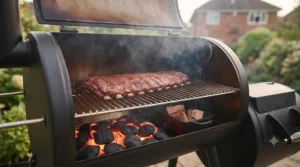
The comparison between coconut shell briquettes and traditional lumpwood charcoal isn’t really about which is “better” in the abstract — it’s about which suits your cooking style. Lumpwood lights faster and reaches higher peak temperatures almost immediately, which makes it the better choice for a quick sear on steaks or vegetables where you want intense heat now, not in twenty minutes. Coconut shell briquettes trade that speed for consistency: a longer, steadier burn with far less ash and noticeably less smoke, which suits low-and-slow cooking, kamado grilling and anyone who values a cleaner-tasting result over raw speed.
| Factor | Coconut Shell Briquettes | Traditional Lumpwood Charcoal |
|---|---|---|
| Ignition time | 15–20 minutes, no accelerant needed | Often faster, especially instant-light versions |
| Burn time | 2–4 hours, very consistent | 45–90 minutes, more variable |
| Ash output | Low, typically 3–5% | Moderate to high |
| Smoke output | Low | Higher, especially with damp or cheap bags |
| Sustainability | Waste by-product, no deforestation | Often linked to unregulated forestry |
| Best For | Long cooks, kamado grills, smoke-sensitive gardens | Fast searing, quick weeknight grilling |
The analysis here is fairly clear-cut: if your barbecues typically run under an hour and you want maximum heat fast, standard lumpwood still has the edge. But for anyone cooking for longer, living close to neighbours, or genuinely bothered about where their fuel comes from, coconut shell briquettes solve three problems at once — burn time, ash, and sourcing — that lumpwood simply can’t match in a single bag.
✨ Don’t Miss These Exclusive Deals!
🔍 Take your barbecue setup to the next level with these carefully selected coconut shell briquettes. Click on any highlighted product to check current pricing and availability. These bags will help you create authentic, low-smoke barbecue results your family and neighbours will genuinely appreciate!
How to Choose Coconut Shell Briquettes
Picking the right bag isn’t complicated once you know what to weigh up, and running through these criteria in order will get most buyers to the right decision quickly.
- Work out your typical grilling duration. Quick weeknight grills suit smaller bags like the COCO & COIR Natural BBQ Charcoal, while multi-hour smoking sessions favour longer-burning options such as ProQ Coconut Shell Briquettes.
- Match the bag size to your storage space. A 12kg box like Cue Charcoal Coconut Shell Briquettes needs a genuinely dry shed or garage; if you don’t have one, a smaller bag prevents wasted, damp-spoiled fuel.
- Check for independent certification where it matters. DIN CERTCO or similar marks, as seen on Weber Coconut Shell Briquettes, give more confidence in “100% natural” claims than marketing copy alone.
- Set a realistic budget per kilogram, not per bag. Bulk options often work out cheaper long-term even if the upfront price looks higher.
- Read aggregated review sentiment, not star ratings alone. A 3.9-star product with genuine, specific praise can be a better bet than a 4.5-star product with almost no reviews behind it.
- Consider your grill type. Kamado and ceramic grills particularly benefit from the low-ash, steady heat that coconut shell briquettes provide.
- Decide whether sustainability is a deciding factor or a bonus. If it’s the former, prioritise brands that clearly state their waste-stream sourcing, like most products in this guide.
Renewable Fuel Source: Why Coconut Shell Briquettes Are Genuinely Sustainable
The renewable fuel source claim attached to coconut shell briquettes isn’t marketing spin — it holds up under scrutiny in a way a lot of “eco-friendly” barbecue products don’t. Coconut palms are a continuously harvested crop grown primarily for food, oil and fibre, and the shells left over after that processing were historically treated as waste. Turning that waste stream into a dense, high-performance fuel means no additional trees are felled specifically to produce it, unlike a meaningful share of the charcoal imported into Britain each year, which has faced documented scrutiny over deforestation in its sourcing countries. Because coconut palms are replanted commercially on a continuous cycle rather than harvested from ancient, slow-growing forest, the “renewable” label describes the actual supply chain rather than a vague aspiration. What most buyers overlook about this renewable fuel source status is that it doesn’t automatically mean carbon-neutral — shipping coconut shell charcoal from producing regions such as Indonesia or Sri Lanka to the UK does carry a transport footprint, and honest brands like CarbonKo openly discuss this trade-off rather than glossing over it. On balance, though, the sustainability case is strong: a waste by-product, repurposed rather than discarded, standing in for a fuel source with a genuinely troubled deforestation record.
Low Smoke Output: What to Expect at the Grill
Low smoke output is arguably the single most-cited benefit in genuine coconut shell briquette reviews, and there’s a straightforward reason for it: these briquettes contain no fillers, sawdust binders or chemical accelerants, all of which contribute to the thick, acrid smoke associated with cheap supermarket charcoal. What the spec sheet won’t tell you, but reviewers note repeatedly, is that low smoke output isn’t just about comfort for the cook — it noticeably changes the flavour of the food, since less particulate smoke means less bitterness clinging to grilled meat and vegetables. That said, “low smoke” doesn’t mean “no smoke,” particularly in the first few minutes after lighting, before the briquettes have fully ashed over; anyone expecting a completely smoke-free experience from minute one is likely to be disappointed. Reviewers of Weber’s coconut range specifically mention appreciating the reduced smoke when barbecuing in gardens close to neighbours, which is a genuinely practical benefit rather than a marketing footnote. For allotment or terraced-garden grillers, prioritising a certified low-smoke product such as Weber Coconut Shell Briquettes or ProQ Coconut Shell Briquettes over an unbranded bag is one of the more reliable ways to keep the peace over the garden fence.
Best Briquettes Under £15: Budget Picks Compared
Not everyone wants to spend £30 on a bag of barbecue fuel, and thankfully the “best briquettes under £15” bracket in coconut shell products isn’t a compromise-heavy category — it genuinely delivers most of the performance benefits at a fraction of the premium-brand price.
| Product | Price | Weight | Value Verdict |
|---|---|---|---|
| CarbonKo Eco Coconut Charcoal Briquettes | Around £15 | 3kg | Best overall value under £15 |
| COCO & COIR Natural BBQ Charcoal | Under £15 | 3kg | Best-reviewed budget option |
| Big K Premium Coconut Shell Briquettes | Under £10 | 4kg | Cheapest entry point by weight |
Interpreting this table honestly: Big K Premium Coconut Shell Briquettes technically offers the lowest price and the most weight for your money, but the more mixed review sentiment means it’s a slightly bigger gamble than the other two. CarbonKo Eco Coconut Charcoal Briquettes and COCO & COIR Natural BBQ Charcoal both sit closer to the £15 ceiling but bring stronger, more consistent aggregated review evidence behind them, which matters more than a few pounds saved if you’re trying coconut briquettes for the first time.
Eco-Friendly BBQ: Building a Greener Cookout
An eco-friendly BBQ setup is about more than the fuel alone, though swapping to coconut shell briquettes is genuinely the single biggest lever most home cooks can pull. Pair that fuel choice with a few other habits and the whole cookout becomes noticeably lighter on the environment: use natural firelighters made from wood wool and wax rather than paraffin-soaked cubes, reuse cooled ash as a soil conditioner on non-edible garden beds rather than binning it, and buy the largest bag your storage allows to reduce packaging waste per cook. Cleverly, several coconut shell briquette producers also frame their low ash output as a secondary eco-benefit, since less residue means less waste heading to landfill after every barbecue. For anyone building a genuinely eco-friendly BBQ routine, the honest advice is to treat the fuel switch as the foundation, not the whole solution — pairing it with reusable utensils, sustainably sourced meat or plant-based alternatives, and mindful ash disposal rounds out a cookout that’s meaningfully greener from lighting to clean-up.
Common Mistakes When Buying Coconut Shell Briquettes
A surprising number of first-time buyers end up disappointed with coconut shell briquettes not because the product underperforms, but because of avoidable buying mistakes. The most common is assuming they’ll light exactly like instant-light lumpwood charcoal and skipping the chimney starter — without one, ignition can feel frustratingly slow. A second frequent error is buying a bulk bag without proper dry storage available, which leads to damp-affected briquettes that burn poorly through no fault of the manufacturer. Buyers also sometimes judge a product purely on star rating without checking the review count behind it; a product with a 4.8-star average from six reviews carries far less evidence than one at 4.2 stars from seventy. Finally, some shoppers assume all coconut shell briquettes are interchangeable and buy purely on price, missing genuine differences in certification, binder quality and ash content that affect both flavour and clean-up.
Long-Term Cost & Maintenance
Total cost of ownership tells a different story than the price tag on the shelf. A 4kg bag of standard lumpwood charcoal might look cheaper than a similarly sized coconut shell bag, but because coconut briquettes burn two to three times longer per kilogram, the actual cost per hour of cooking often favours coconut shell fuel once you run the numbers across a full barbecue season. Storage maintenance matters too: coconut shell briquettes kept properly sealed and dry retain their performance indefinitely, since there’s no organic matter to spoil, only moisture ingress to guard against. Compared with gas barbecues, which carry ongoing cylinder costs and periodic valve servicing, coconut shell briquettes require no maintenance beyond dry storage — no moving parts, no regulators, nothing to service. For households that barbecue regularly through spring and summer, buying in the larger 8–12kg formats and storing surplus properly is consistently the most economical long-term approach.
Safety, Regulations and Compliance Guide
Barbecue safety doesn’t change fundamentally because the fuel is coconut shell rather than lumpwood, but a few points are worth reinforcing. Always barbecue outdoors in a well-ventilated area, and never bring a lit or recently extinguished barbecue indoors, into a tent, or into a garage — coconut shell briquettes still produce carbon monoxide as they burn, even though visible smoke is reduced. On food handling specifically, official UK guidance on cooking meat safely over charcoal recommends waiting until coals are glowing with a grey, powdery surface before cooking, and washing hands thoroughly after handling raw meat and charcoal alike, since bacteria can transfer from the fuel-handling stage as easily as from the meat itself. Keep barbecues on flat, non-flammable surfaces away from fences, sheds and overhanging plants, and always have water or sand on hand to fully extinguish coals rather than leaving them to smoulder unattended. None of this is specific to coconut shell briquettes, but because the fuel is less familiar to many UK grillers than lumpwood, it’s worth treating the first few uses with the same caution you’d apply to any new barbecue fuel.
✨ Ready to Upgrade Your Next Cookout?
🔥 Coconut shell briquettes genuinely change what a barbecue evening feels like — longer, calmer cooks with less smoke drifting over the fence and less time babysitting the coals. Whichever bag matches your grill and budget, switching from standard lumpwood is one of the easiest upgrades in your whole outdoor cooking setup.

Frequently Asked Questions
❓ Are coconut shell briquettes better than charcoal?
❓ Do coconut shell briquettes smell like coconut?
❓ How long do coconut shell briquettes burn for?
❓ Can coconut shell briquettes be used in a kamado grill?
❓ Are coconut shell briquettes actually eco-friendly?
Conclusion
Coconut shell briquettes aren’t a gimmick dressed up in eco-friendly packaging — the specifications and aggregated review evidence genuinely back up the core claims of longer burn times, lower smoke and a more sustainable supply chain than standard lumpwood charcoal. Whether you land on the restaurant-grade ProQ Coconut Shell Briquettes for serious weekend smoking, the trusted Weber Coconut Shell Briquettes as a safe first purchase, or a budget-friendly bag under £15 like CarbonKo Eco Coconut Charcoal Briquettes or COCO & COIR Natural BBQ Charcoal to test the waters, every option here represents genuine value rather than marketing hype. Larger households or regular hosts will get more from the bulk formats — Weber’s 8kg bag, Cue Charcoal’s 12kg box — while smaller grills and occasional cooks are better served by the compact Weber 4kg or Big K options. The right choice ultimately comes down to how often you barbecue, how much storage space you have, and whether raw speed or steady, low-smoke consistency matters more for the way you cook. Whichever bag you choose, moving away from imported, deforestation-linked charcoal toward a coconut shell alternative is a small change that adds up to a genuinely better barbecue season.
✨ Fire Up Your Next Barbecue the Smarter Way!
🥥 Pick the coconut shell briquette that matches your grill and grocery budget from the seven options above, and enjoy longer, cleaner cooks all season long.
Recommended for You
- Weber Briquettes Review 2026: 7 Best BBQ Briquettes Tested
- Best Charcoal Briquettes UK 2026: 7 Proven Top Picks
- 7 Best British Charcoal for BBQ 2026: Honest UK Buying Guide
Disclaimer: This article contains affiliate links. As an Amazon Associate, I earn from qualifying purchases. If you purchase products through these links, we may earn a small commission at no additional cost to you.
✨ Found this helpful? Share it with your friends! 💬🤗
