In This Article
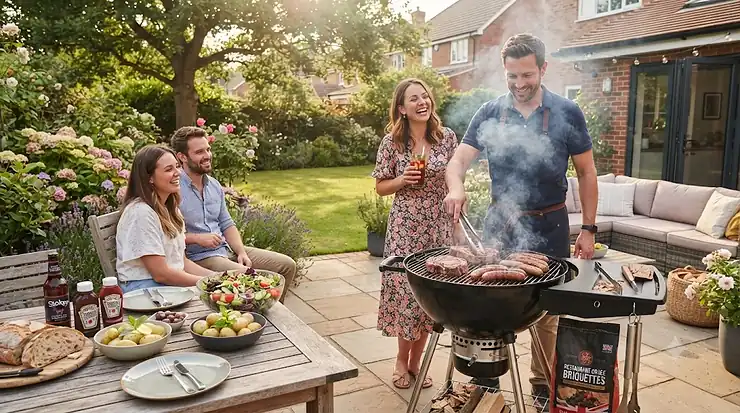
There’s a particular kind of disappointment that only a burnt-out barbecue can deliver: the coals go from “roaring inferno” to “sad grey whisper” right as the second batch of chicken thighs hits the grate. If you’ve ever wondered why the kebab shop down the road manages a screaming-hot, even fire for six hours straight while your garden BBQ taps out after forty minutes, the answer usually isn’t the grill. It’s the fuel. Restaurant quality briquettes for home BBQ have quietly become one of the most searched-for upgrades among UK garden cooks who’ve worked out that catering-grade charcoal isn’t just marketing fluff — it’s a genuinely different product, made to a tighter density and moisture spec than the supermarket bags most of us grew up with.
This guide digs into what “restaurant grade” actually means, tests that claim against real product specifications and aggregated review sentiment, and lines up seven genuine options you can actually buy on Amazon UK — from budget lumpwood through to premium hexagonal briquettes built for Kamado-style ovens. What is restaurant quality briquettes for home BBQ, in plain terms? It’s charcoal fuel manufactured to the same density, low-ash, high-heat specification that commercial kitchens rely on for consistent grilling, repackaged in bag sizes suited to a garden barbecue rather than a 40-cover restaurant.
We’ll also cover restaurant grade charcoal vs standard lumpwood, where commercial catering fuel differs from bagged supermarket charcoal, why consistent heat output matters more than most buyers realise, and how to bring a bit of professional grilling technique to your own back garden — without needing a chef’s whites or a walk-in fridge.
Quick Comparison Table
Before the deep dive, here’s the shape of the market at a glance. All prices are indicative ranges checked at the time of research — always confirm current pricing on the product page before buying.
| Product | Type | Bag Size | Price Range | Best For |
|---|---|---|---|---|
| Homefire Premium Restaurant Grade Charcoal | Lumpwood | 12kg | around £18-£20 | Budget-conscious first-timers |
| Big K Chilla-Grilla Restaurant Grade Charcoal | Lumpwood | 12kg | around £20-£23 | Reliable weekly grillers |
| Log-Barn Restaurant Grade Cooking Charcoal | Lumpwood | 12kg | around £16-£18 | Low-ash, minimal-spitting cooking |
| Alderline Natural Restaurant Grade Lumpwood | Lumpwood | 50L | around £17-£23 | Large gatherings, fast lighting |
| Big K El Cubano Restaurant Grade Charcoal | Lumpwood (Marabu) | 15kg | around £24-£27 | Long, dense burns |
| Globaltic HazelHex Restaurant-Grade Briquettes | Hexagonal briquette | 10kg | around £25-£30 | Kamado/Big Green Egg owners |
| Kamado Joe XL Natural Lump Charcoal | Premium lump | 9.1kg | around £30-£35 | Long low-and-slow cooks |
Looking at the spread, the range runs from roughly £16 up to the mid-£30s, and price doesn’t map neatly onto quality — Log-Barn Restaurant Grade Cooking Charcoal undercuts several “budget” options while still carrying the catering-grade low-ash claim. What you’re really paying for as prices climb is burn consistency and density: the Big K El Cubano Restaurant Grade Charcoal and Kamado Joe XL Natural Lump Charcoal both use denser wood species that hold heat for hours rather than minutes, which matters enormously if you’re smoking rather than flash-grilling. If you only ever cook burgers and sausages for twenty minutes at a time, that density premium is arguably wasted money.
💬 Just one click — help others make better buying decisions too!😊
Top 7 Restaurant Quality Briquettes for Home BBQ: Expert Analysis
1. Homefire Premium Restaurant Grade Charcoal — best entry point for skeptics
If you’ve never bought catering-grade fuel before and want to test the theory without committing serious money, Homefire Premium Restaurant Grade Charcoal is the sensible starting point. Sold in 12kg bags, it’s positioned squarely as a step up from bargain-bin lumpwood without asking premium prices for it.
The bag mixes medium-to-large lumpwood chunks rather than dust and offcuts, which in practice means fewer sparks and a steadier, less erratic burn than the cheapest supermarket alternatives. Because the pieces are more uniformly sized, airflow through the coal bed stays more predictable — smaller, mismatched chunks tend to collapse and choke a fire, which is exactly the kind of detail that separates “cheap charcoal” from something worth the word “restaurant” on the label.
Based on the spec comparison with entry-level bags, this is best suited to casual weekend grillers who cook for an hour or two at a time rather than all-day smokers — it’s not the densest fuel on this list, so expect a solid, dependable burn rather than the marathon endurance of pricier lumpwood. Reviewers consistently report decent value for the size of the bag, with a fair number of buyers specifically calling out reduced spitting compared to bargain bags, and a smaller minority flagging that bag contents can vary between batches — a known quirk of lumpwood generally, since it’s a natural product rather than a manufactured one.
Pros:
- ✅ Noticeably fewer sparks than bargain lumpwood bags
- ✅ Genuinely competitive price for a catering-grade claim
- ✅ Solid, dependable burn for one to two-hour cook sessions
Cons:
- ❌ Batch consistency can vary, as with all natural lumpwood
- ❌ Not dense enough for long, low-and-slow smoking sessions
At around £18-£20 for 12kg, it’s one of the cheapest ways on this list to find out whether restaurant-grade fuel actually changes your grilling — solid value if you’re testing the waters before committing to a premium bag.
2. Big K Chilla-Grilla Restaurant Grade Charcoal — best for consistent weekly grilling
Big K Chilla-Grilla Restaurant Grade Charcoal is one of the best-selling briquette and lumpwood products on Amazon UK for a reason: it’s the fuel most British households have actually heard of, and the 12kg heavy-duty bag is explicitly marketed toward professional-standard BBQ use rather than a one-off summer barbecue.
What most buyers overlook about this model is that “heavy-duty bag” isn’t just packaging trivia — thinner bags split in transit and let moisture in over a damp UK autumn, which ruins a fire before you’ve even lit it. The lumpwood chunks inside are large and dense enough to hold a hot bed of coals through a typical two-to-three-hour cook, delivering the kind of consistent heat output that makes cooking multiple courses (starters, mains, then dessert on the grill) genuinely realistic rather than a race against dying embers.
This is the fuel for someone who barbecues most weekends through the season rather than twice a year — the extra reliability pays for itself in fewer ruined cook-outs. Aggregated review sentiment sits solidly positive, with recurring mentions of “authentic wood-smoke flavour” and a heavy-duty bag that survives rough handling, though a consistent minority of reviewers note occasional smaller offcuts mixed through larger bags.
Pros:
- ✅ Heavy-duty bag resists tearing and damp during storage
- ✅ Large, dense chunks sustain heat for multi-course cooking
- ✅ Widely trusted brand with a large, verifiable review base
Cons:
- ❌ Occasional smaller offcuts mixed in with premium chunks
- ❌ Sits mid-pack on price rather than being the cheapest option
Priced in the low-to-mid £20s for 12kg, it’s the safe, well-reviewed middle-ground pick — not the cheapest, not the densest, but reliably good.
3. Log-Barn Restaurant Grade Cooking Lumpwood Charcoal — best low-ash, minimal-spitting option
Log-Barn Restaurant Grade Cooking Lumpwood Charcoal leans hard into its catering pedigree, explicitly marketing itself for “catering, hospitality, garden and camping use” — language that signals it was genuinely developed with commercial kitchens in mind rather than repackaged for a garden-centre shelf.
The standout practical feature here is low ash production paired with minimal spitting. Here’s what to weigh: excess ash chokes airflow through a coal bed over a long cook, gradually smothering your fire from the inside, while spitting sends sparks and embers flying — a real hazard if you’re cooking near decking, furniture, or excitable dogs. Large chunk sizing means a longer, hotter burn per kilogram compared with dustier bags, so you typically use less fuel per session than the numbers on the bag might suggest.
This makes it a strong pick for anyone who barbecues on a patio close to the house, or who’s simply tired of sweeping ash residue off garden furniture the next morning. Reviewers consistently flag the reduced spitting and lower ash mess as the standout benefit versus previous brands they’d used, with a smaller number noting the bag runs slightly under 12kg by the time settling and dust are accounted for — again, a known characteristic of natural lumpwood rather than a defect specific to this brand.
Pros:
- ✅ Genuinely low ash output over a full cooking session
- ✅ Minimal spitting — safer near decking and furniture
- ✅ Large chunks give a longer burn per kilogram
Cons:
- ❌ Smaller review pool than the bigger-name brands
- ❌ Settled bag weight can feel marginally under 12kg
At roughly £16-£18, this is genuinely one of the cheapest routes to catering-grade fuel on this whole list, and the ash/spitting profile alone justifies the switch for anyone cooking near soft furnishings.
4. Alderline Natural Restaurant Grade Lumpwood BBQ Charcoal — best for fast lighting and big gatherings
Sold in a generous 50-litre bag, Alderline Natural Restaurant Grade Lumpwood BBQ Charcoal is built around one specific promise: ready to cook in around ten minutes. For a garden full of hungry guests, that’s not a minor convenience — it’s the difference between people drifting off to raid the fridge and everyone still standing around the grill when the first burgers land.
The “natural, smokeless and odourless” claim refers to the charring process rather than the smoke your food picks up during cooking — this is pure lumpwood with no chemical accelerants baked in, so what you’re tasting on the food is genuine wood smoke rather than lighter-fluid residue. Large chunk sizing keeps the fire bed stable even when you’re cooking on and off for a few hours, which matters at a garden party where the grill rarely goes completely idle.
Based on the spec sheet, this suits hosts feeding a crowd more than a solo weeknight griller — a 50-litre bag is genuinely large, and buying it for a single dinner for two is overkill. Reviewer sentiment is strongly positive on the fast-lighting claim specifically, with a large number of verified purchases in the past month alone, though some buyers note the bag-to-weight ratio (litres rather than kilograms) makes direct price comparison against kilogram-priced bags slightly fiddly.
Pros:
- ✅ Genuinely fast to light — ready in around ten minutes
- ✅ Large 50L volume suits gatherings and multi-hour use
- ✅ No chemical accelerants; pure natural lumpwood
Cons:
- ❌ Sold by volume (litres), making price comparisons trickier
- ❌ Oversized for solo or twice-weekly small cooks
At around £17-£23, this is excellent value per litre for anyone regularly cooking for six or more people — less so if it’s usually just you and a couple of chops.
5. Big K El Cubano Restaurant Grade Charcoal — best for long, dense burns
Where the Chilla-Grilla is Big K’s everyday option, Big K El Cubano Restaurant Grade Charcoal is the brand’s step up into genuinely dense, long-burning territory, made from Marabu lumpwood — a hard, dense wood species widely used across professional Cuban and Latin American grilling traditions precisely because it burns so slowly and steadily.
What the spec sheet won’t tell you outright, but wood-density data strongly implies, is that Marabu charcoal typically runs hotter for longer than the softer lumpwood species used in cheaper bags, because denser wood simply contains more combustible mass per kilogram. In practice this means fewer top-ups mid-cook and a bed of coals that holds temperature through a proper low-and-slow session rather than fading after an hour.
This is the pick for anyone drifting toward smoking briskets, whole chickens, or pulled pork rather than quick sausages-and-burgers grilling — the density premium is genuinely wasted on a twenty-minute cook. Aggregated reviews consistently praise the long, hot burn and note it lights a little slower than softer lumpwood as a direct trade-off of that density, which lines up exactly with what the wood science would predict.
Pros:
- ✅ Dense Marabu wood sustains heat for hours, not minutes
- ✅ Fewer mid-cook top-ups needed on long sessions
- ✅ Strong reputation within a well-established UK brand
Cons:
- ❌ Takes noticeably longer to light than softer lumpwood
- ❌ Overkill (and pricier) for short, quick weeknight grilling
At around £24-£27 for 15kg, the per-kilogram cost sits mid-pack, but the extended burn time genuinely improves the cost-per-cook for anyone doing longer sessions regularly.
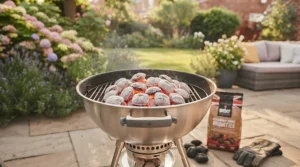
6. Globaltic HazelHex Restaurant-Grade Hexagonal Briquettes — best for Kamado and ceramic grills
This is the one true briquette (rather than lumpwood) entry on the list, and it shows in the shape: Globaltic HazelHex Restaurant-Grade Hexagonal Briquettes are compressed into uniform hexagons rather than irregular natural chunks, specifically engineered for high-heat, low-ash performance in Kamado-style ceramic ovens, Big Green Egg grills, and Weber kettles.
Uniform shape genuinely matters more than it sounds here — irregular lumpwood pieces leave uneven gaps in a coal bed, while tightly packed hexagons stack with minimal air gaps, giving more predictable, repeatable temperature control. That’s exactly what low-and-slow ceramic cooking demands: a small, stable air gap makes the difference between an 8-hour brisket cook holding steady at 110°C and one that spikes and crashes.
Here’s what to weigh: buyers running dedicated Kamado or ceramic ovens will likely find this the most temperature-predictable option on the whole list, while anyone using an open kettle or basic grill probably won’t notice enough of a difference to justify the premium over good lumpwood. Reviewer sentiment, while drawn from a smaller pool than the bigger lumpwood brands, consistently praises the low-ash, high-heat combination for ceramic grill setups specifically.
Pros:
- ✅ Uniform hexagon shape gives more predictable airflow
- ✅ Purpose-built for Kamado, Big Green Egg and ceramic grills
- ✅ Low ash output suits long, controlled temperature cooks
Cons:
- ❌ Smaller review base than the established lumpwood brands
- ❌ Premium price isn’t justified on a basic open kettle grill
Priced around £25-£30 for 10kg, this is a specialist buy — brilliant value if you own a ceramic grill, an unnecessary upgrade if you don’t.
7. Kamado Joe XL Natural Reusable Lump Charcoal — best for marathon low-and-slow sessions
Sitting at the premium end of this list, Kamado Joe XL Natural Reusable Lump Charcoal is built by a manufacturer whose entire business is ceramic Kamado grills, and it’s engineered accordingly — natural lump charcoal rated for burns up to roughly 18 hours in the right setup, a figure that would be almost unthinkable from standard lumpwood.
The “reusable” claim is the standout practical feature: because it’s genuinely natural lump rather than a chemically bonded briquette, unburned pieces can be safely extinguished, dried, and relit on a future cook rather than thrown away, which meaningfully improves the effective cost-per-use over time even though the bag price is the highest on this list. Consistent piece sizing also reduces the “hot spot, cold spot” problem that plagues cheap, dusty lumpwood.
This is unambiguously the pick for dedicated smokers running overnight briskets or all-day pork shoulders — for a Sunday afternoon burger session, it’s genuine overkill. With well over 6,000 aggregated ratings and a strong average score, this is by far the most reviewed product on this entire list, giving unusually high confidence in the consistency of buyer experience across a large sample.
Pros:
- ✅ Genuinely reusable — unburned pieces relight on future cooks
- ✅ Rated for up to 18 hours in the right ceramic setup
- ✅ Exceptionally large, consistently positive review base
Cons:
- ❌ Highest price point on this entire list
- ❌ Reusability benefit is wasted without a ceramic Kamado grill
At around £30-£35 for 9.1kg, this is the most expensive bag here in pure pounds-per-kilogram terms, but the reusability and marathon burn time genuinely change the total-cost-of-ownership maths for serious smokers.
Practical Usage Guide: Getting Restaurant-Grade Results at Home
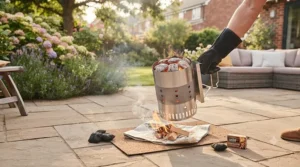
Buying better charcoal is only half the job — how you light and manage it determines whether you actually get the “restaurant” result. Start by resisting the urge to drown the coals in lighter fluid; a chimney starter (a simple metal cylinder with a firelighter cube underneath) gets restaurant-grade lumpwood glowing evenly in 15-20 minutes without any chemical residue affecting flavour. Load it loosely rather than packing it tight — airflow, not fuel density, is what actually gets a fire established quickly.
Once your coals show that classic grey, ash-covered surface, spread them into zones rather than one flat layer: a hot zone for searing, a cooler zone for gentler cooking or resting food, mirroring exactly what a professional kitchen does with a solid-fuel grill. This single habit does more for consistent heat output than any premium fuel purchase on its own.
Common mistakes in the first 30 days of owning better charcoal include closing the vents too early (which starves the fire and causes exactly the kind of temperature crash cheap fuel is blamed for) and storing opened bags somewhere damp — lumpwood is porous and pulls in moisture fast, which is why a sealed bin or the original heavy-duty bag, tightly rolled, matters more than people expect. A monthly check of your grill’s air vents for ash build-up also keeps airflow — and therefore heat consistency — where it should be.
Real-World Scenarios: Who Actually Needs Restaurant-Grade Fuel
Picture Sarah, a Bristol-based garden host who barbecues for eight to ten friends most warm weekends between May and September. Her priority is fast lighting and a big enough batch to avoid a mid-party charcoal run, which points squarely toward the Alderline Natural Restaurant Grade Lumpwood and its ten-minute lighting time and generous 50-litre volume — cost-per-gathering matters more to her than cost-per-kilogram.
Then there’s Dev, who bought a ceramic Kamado grill last year and has become mildly obsessed with overnight brisket. For him, standard lumpwood is genuinely the wrong product — inconsistent airflow through irregular chunks makes an 8-hour temperature hold nearly impossible. The Globaltic HazelHex hexagonal briquettes or the Kamado Joe XL Natural Reusable Lump Charcoal are built for exactly his use case, and the premium price reflects a real functional advantage rather than branding.
Finally, consider Priya, a first-time BBQ owner in a terraced house with a small patio close to her back door. Spitting sparks and thick ash aren’t just annoying for her — they’re a genuine safety and cleanliness concern near her decking. The low-ash, minimal-spitting profile of Log-Barn Restaurant Grade Cooking Lumpwood Charcoal solves a specific pain point that a cheaper, dustier bag simply wouldn’t.
Problem → Solution: Fixing the Most Common Home BBQ Fuel Complaints
Problem: the fire dies before the food’s ready. This is almost always an airflow and density issue rather than bad luck — switch to a denser lumpwood such as Big K El Cubano Restaurant Grade Charcoal and keep vents at least half-open throughout the cook rather than closing them down to “save fuel,” which paradoxically smothers the fire.
Problem: constant sparking near furniture or decking. Swap to a low-spitting product such as Log-Barn Restaurant Grade Cooking Lumpwood Charcoal, and avoid stirring or repositioning coals more than necessary once the fire’s established — every disturbance throws sparks.
Problem: uneven cooking, some food charred and some raw. This is a heat-zoning problem, not a fuel-quality one on its own, though uniform briquettes like Globaltic HazelHex Restaurant-Grade Hexagonal Briquettes make zoning noticeably easier than irregular lumpwood chunks. Bank coals to one side for a hot zone and leave the other side lighter.
Problem: thick, acrid smoke that ruins the flavour. This is typically unburned volatile compounds from cheap, damp, or chemically treated charcoal — genuine “smokeless and odourless” natural lumpwood such as Alderline Natural Restaurant Grade Lumpwood largely avoids this because there’s no chemical binder or accelerant residue to burn off.
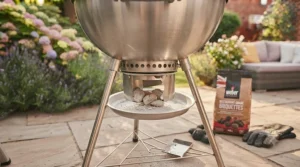
Problem: heavy ash smothering the coal bed on longer cooks. Choose a genuinely low-ash product and rake out accumulated ash every hour or so on long smoking sessions rather than letting it build up and choke airflow from beneath.
Your Buyer’s Decision Framework
If you barbecue fewer than once a fortnight and want the cheapest reliable upgrade, choose Homefire Premium Restaurant Grade Charcoal because it delivers the core catering-grade benefits without a premium price tag. If you host large groups regularly and hate waiting around for coals to light, choose Alderline Natural Restaurant Grade Lumpwood because its ten-minute lighting time is a genuine, measurable advantage at a party. If you own a ceramic Kamado-style grill, choose either Globaltic HazelHex Restaurant-Grade Hexagonal Briquettes or Kamado Joe XL Natural Reusable Lump Charcoal, because irregular lumpwood genuinely underperforms in that specific appliance. If your patio sits close to the house and ash mess or sparks are a real concern, choose Log-Barn Restaurant Grade Cooking Lumpwood Charcoal because its low-ash, minimal-spitting profile solves that exact problem. And if you’re smoking rather than grilling — long, slow, hours-not-minutes cooking — choose Big K El Cubano Restaurant Grade Charcoal or the Kamado Joe option, because density and burn duration matter more than anything else on your priority list.
Restaurant Grade Charcoal vs Standard Lumpwood: What Actually Changes
The phrase “restaurant grade” isn’t a legally regulated term in the UK the way, say, organic food labelling is — but it isn’t meaningless marketing either. Genuine restaurant-grade charcoal is typically selected for larger, more uniform chunk sizes, lower moisture content, and reduced dust and offcut proportion compared with the cheapest bagged lumpwood, because commercial kitchens can’t tolerate a grill that dies mid-service. Standard supermarket lumpwood, by contrast, is often a byproduct blend with a wider range of piece sizes, including a fair amount of fine dust at the bottom of the bag that burns fast, hot, and briefly rather than steadily.
In practice, this translates to three measurable differences: burn duration (restaurant-grade fuel typically holds temperature longer per kilogram), ash output (denser, more consistent wood tends to leave less residual ash), and lighting behaviour (larger, more uniform chunks catch more predictably than a mixed bag of large lumps and fine dust). None of this means standard lumpwood is unusable — for a quick Tuesday-evening grill, the difference may barely register. But for longer cooks, bigger gatherings, or anyone who’s been frustrated by unpredictable heat, the upgrade is a real, measurable one rather than a branding exercise. The idea of briquette manufacturing itself dates back well over a century, originally developed to make small, broken fuel fragments burnable again rather than wasted — and that same underlying logic, turning inconsistent scraps into a dense, reliable fuel, is exactly why density and consistency still matter so much today, as detailed in Wikipedia’s overview of briquette history and manufacture.
How to Choose Restaurant Quality Briquettes for Home BBQ
- Match fuel density to your typical cook length. Quick 20-30 minute grilling sessions don’t need the densest, slowest-burning charcoal on the market — save the premium density for longer smokes.
- Check the appliance compatibility. Ceramic Kamado-style grills genuinely perform better with uniform briquettes; open kettles and basic grills work fine with either lumpwood or briquettes.
- Weigh bag size against frequency of use. A 50-litre bag is excellent value if you host often, but stale, damp charcoal left half-used for months loses quality — buy what you’ll actually use within a season.
- Prioritise low ash and minimal spitting if you cook near soft furnishings. This is a genuine safety and cleanliness factor, not just a comfort preference.
- Read aggregated review sentiment, not star ratings alone. A 4.2-star product with thousands of reviews specifically praising consistent heat is a stronger signal than a 4.8-star product with a handful of reviews.
- Factor in reusability for premium lump charcoal. Genuinely natural lump (not chemically bonded briquettes) can often be extinguished and relit, meaningfully improving cost-per-use over a season.
- Confirm it’s suitable for your local smoke control status if relevant. Most gardens fall outside restrictions that affect chimney-vented appliances, but it’s worth a quick check if you live somewhere with tighter local air quality rules.
Commercial Catering Fuel vs Home BBQ Charcoal: Same Standard, Different Scale
Commercial catering fuel — the charcoal actually used inside restaurant kitchens on solid-fuel grills — is typically bought in bulk, often 20kg-plus sacks, prioritising consistency and cost-per-kilogram above all else, because a busy kitchen simply cannot afford unpredictable heat during service. Home BBQ charcoal marketed as “restaurant grade” is essentially the same manufacturing philosophy scaled down into more manageable 10-15kg bags, at a slightly higher per-kilogram price to reflect smaller-batch packaging and retail distribution costs.
The genuine overlap is in the underlying wood selection and processing standard, not the branding. A kitchen buying Big K El Cubano Restaurant Grade Charcoal in catering quantities and a home cook buying the same 15kg retail bag are, in most cases, getting fuel from the same production standard — the difference is purely packaging scale and price-per-unit, not quality. Where genuine commercial catering fuel sometimes differs is in bulk-only availability and occasionally coarser quality control, since restaurants prioritise raw heat output and cost over the more uniform, “prettier” chunk sizing that retail bags are curated for.
What to Expect: Real-World Performance and Consistent Heat Output
Specs on a bag rarely translate directly into what you’ll actually experience at the grill, so here’s the practical version. With a genuinely restaurant-grade lumpwood or briquette, expect coals ready to cook within 15-25 minutes of lighting (faster with a chimney starter), a stable cooking window of roughly 45 minutes to 2 hours for standard lumpwood, and 3 hours or more for denser options like Big K El Cubano Restaurant Grade Charcoal, extending to several hours for purpose-built products like Kamado Joe XL Natural Reusable Lump Charcoal in the right appliance.
Consistent heat output matters more than peak temperature for most home cooking — a fire that holds a steady 180-200°C for an hour produces far better, more even results than one that spikes to 250°C and then crashes to 120°C twenty minutes later. This is precisely the gap that separates cheap, dusty charcoal from a genuinely restaurant-grade product: it’s not about burning hotter, it’s about burning predictably, which is exactly what allows a chef — or a home cook — to actually plan and time a meal with any confidence.
Restaurant Quality Briquettes for Professional-Style Home Grilling
Bringing professional grilling habits home starts with treating your grill like a piece of cooking equipment rather than a novelty. Professional kitchens rest meat before and after cooking, use a probe thermometer rather than guesswork, and — critically — manage heat zones rather than cooking everything over one uniform fire. None of that requires professional-grade fuel specifically, but restaurant-grade charcoal makes those techniques dramatically easier to execute consistently, because you’re not fighting an unpredictable fire while also trying to manage timing and temperature.
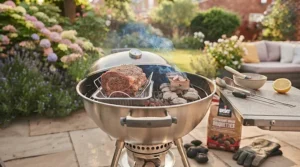
A two-zone setup, using something like Big K Chilla-Grilla Restaurant Grade Charcoal for its dependable burn, lets you sear over direct high heat and then move food to indirect heat to finish cooking through without burning the outside — exactly how professional grills handle thick cuts. Basting with reserved marinade only after it’s been boiled (never raw, unboiled marinade straight from the meat), turning food with tongs rather than piercing it with a fork to preserve juices, and letting the grill fully preheat before food goes anywhere near it are all small habits borrowed straight from commercial kitchens that cost nothing extra but noticeably lift results.
Safety, Regulations & Smoke Control Compliance Guide
For the vast majority of UK households, cooking with charcoal in an open garden barbecue involves no special legal restrictions — Smoke Control Areas, which do exist across many towns and cities, specifically govern smoke released through a chimney from an indoor appliance, not open-air barbecue use in a garden. The UK government’s official guidance on Smoke Control Areas confirms that the rules target fixed combustion appliances and chimneys rather than garden barbecues, chimeneas, or pizza ovens used outdoors.
Food safety is the area that genuinely deserves more attention than fuel choice. Regardless of how good your charcoal is, undercooked meat remains the single biggest risk at any barbecue — chicken, sausages, and burgers all need to reach a safe core temperature with no pink remaining, and it’s worth fully cooking poultry indoors first before finishing it on the grill for flavour if you’re feeding a crowd. The Food Standards Agency’s official BBQ food safety guidance covers cross-contamination, safe defrosting, and correct cooking temperatures in detail and is worth a genuine read before your next big garden gathering, not just a box-ticking glance. Beyond food handling, basic fire safety applies as it would to any solid-fuel cooking: keep the grill well away from sheds, fences, and overhanging branches, never leave it unattended while lit, and let ash cool fully — ideally overnight — before disposal.
✨ Don’t Miss These Exclusive Deals!
🔍 Take your restaurant-grade grilling game to the next level with these carefully selected products. Click on any highlighted item to check current pricing and availability. These briquettes will help you create authentic, professional-standard barbecue results your family and friends will genuinely notice!
Frequently Asked Questions
❓ Is restaurant grade charcoal actually better than regular charcoal?
❓ Can I use restaurant grade briquettes in any BBQ?
❓ How much restaurant grade charcoal do I need for a barbecue?
❓ Is restaurant quality charcoal worth it for occasional home use?
❓ What's the difference between briquettes and lumpwood charcoal?
Conclusion
The gap between a forgettable BBQ and one people still mention months later usually isn’t the grill, the marinade, or even the meat — it’s whether the fire underneath stayed hot and steady for as long as you needed it to. Restaurant quality briquettes for home BBQ genuinely deliver on that promise more often than standard bagged charcoal, not because of clever marketing, but because of real, measurable differences in density, moisture, and consistency that trace directly back to commercial kitchen standards.
Whether that means the budget-friendly reliability of Homefire Premium Restaurant Grade Charcoal, the crowd-pleasing speed of Alderline Natural Restaurant Grade Lumpwood, or the marathon endurance of Kamado Joe XL Natural Reusable Lump Charcoal for a dedicated smoker, matching the fuel to how you actually cook matters more than chasing the single “best” bag on the market. Start with your typical cook length and group size, weigh that against the seven honest breakdowns above, and you’ll land on a genuine upgrade rather than an expensive guess.
Recommended for You
- 7 Best Long-Lasting Briquettes for BBQ in 2026
- 7 Best Coconut Shell Briquettes for UK BBQs in 2026
- Weber Briquettes Review 2026: 7 Best BBQ Briquettes Tested
Disclaimer: This article contains affiliate links. As an Amazon Associate, I earn from qualifying purchases. If you purchase products through these links, we may earn a small commission at no additional cost to you.
✨ Found this helpful? Share it with your friends! 💬🤗
