In This Article
There’s a particular kind of heartbreak reserved for barbecue day: the coals are stubbornly grey, the guests are circling the garden like hungry gulls, and you’re crouched by the grill with a rolled-up newspaper wondering where it all went wrong. Nine times out of ten, the problem isn’t your technique. It’s the bag of charcoal you grabbed from the petrol station on the way home, half sawdust and half mystery.
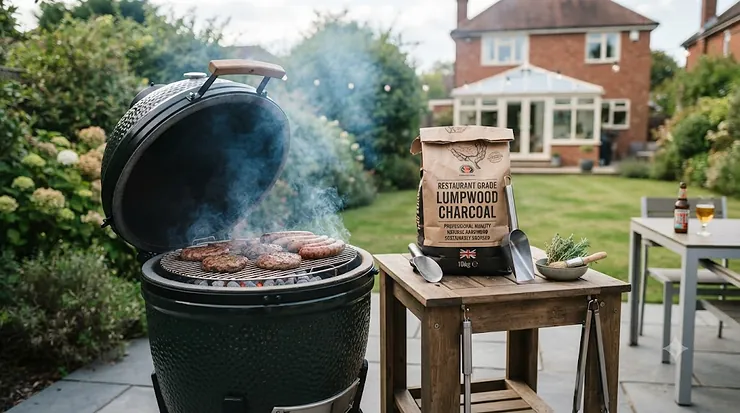
Finding the best lumpwood charcoal genuinely changes how your barbecue behaves — how fast it lights, how hot it gets, how long it holds that heat, and how much of your garden ends up dusted in fine grey ash. Lumpwood charcoal is pure carbonised wood, cut into irregular lumps rather than pressed into uniform pillows like briquettes, which means it lights quicker, burns hotter and carries a cleaner, more authentic wood-smoke flavour into your food. The trade-off is consistency: quality varies wildly between brands, bags and even batches, which is exactly why this guide exists.
We’ve dug through real UK product listings, manufacturer specifications, and aggregated customer feedback to shortlist seven genuine lumpwood charcoals available through amazon.co.uk, spanning budget bags for the odd weekend fry-up right through to premium restaurant-grade fuel for kamado grills and long smoking sessions. Along the way we’ll cover BBQ grilling temperature expectations, what natural hardwood charcoal actually means on a label, why ash content matters more than most buyers realise, and — because nobody wants a fine from the council — what the official rules on smoke control areas mean for your garden barbecue. This article contains affiliate links, and as an Amazon Associate we may earn a small commission from qualifying purchases, at no extra cost to you.
Quick Comparison Table
Before we get into the detail, here’s the shape of the market at a glance. Prices are shown as ranges rather than fixed figures, since Amazon pricing shifts constantly — always check the current price on the product page before buying.
| Product | Typical Bag Size | Burn Time | Price Range | Best For |
|---|---|---|---|---|
| Big K Chilla-Grilla | 12kg | Up to 2 hours | Mid-£20s | Best all-round restaurant-grade value |
| Log-Barn Restaurant Grade | 12kg | 2+ hours | Low-to-mid £20s | Long, low-and-slow smoking sessions |
| Weber Premium Lumpwood | 10kg | Up to 1.5 hours | Mid-£20s | Beginners and Weber kettle owners |
| Kamado Joe Big Block XL | 9.1kg | Up to 18 hours | Mid-£30s to £40s | Kamado and ceramic egg grills |
| Homefiire-CPL Restaurant Grade | 12kg | Around 2 hours | Under £20 | Budget bulk buying |
| Alderline Lumpwood | 50L (approx. 6-7kg) | Around 1-1.5 hours | Under £25 | Casual weekend grillers |
| Globaltic Birch Lumpwood | 10kg | Up to 2 hours | Low-to-mid £20s | Low-ash, lesser-known alternative |
Looking at the table, a clear pattern emerges: burn time and price rarely move in lockstep. Kamado Joe Big Block XL sits at the top of the price range but delivers by far the longest burn thanks to its dense South American hardwood, which suits overnight smoking rather than a quick Tuesday-evening grill. Meanwhile Homefiire-CPL Restaurant Grade and Alderline Lumpwood compete hardest on price, making them sensible starting points if you’re not yet sure how often you’ll actually fire up the barbecue this year.
💬 Just one click — help others make better buying decisions too!😊
Top 7 Lumpwood Charcoal Picks: Expert Analysis
1. Big K Chilla-Grilla — best all-round restaurant-grade value
Big K built its reputation supplying professional kitchens, and Chilla-Grilla is essentially that commercial-grade product repackaged for the home garden. It’s a genuinely sensible starting point if you want one bag that does most jobs well without overthinking it.
The 12kg bag carries FSC certification, meaning the wood is traced back to responsibly managed forestry rather than unregulated clearance, and it’s produced with no chemical additives. In practice, this translates to a charcoal that’s ready to cook on within around 30 minutes and holds a high, consistent heat for up to two hours — plenty for a full evening of burgers, chicken thighs and the inevitable last-minute halloumi someone always remembers. Based on the spec comparison with the rest of this list, Chilla-Grilla sits comfortably in the middle: not the longest burn time here, but a dependable all-rounder that won’t catch you out mid-cook.
This is the pick for someone who wants restaurant-grade performance without paying restaurant-grade prices, and who cooks often enough that consistency matters more than novelty. Reviewers consistently note the medium-sized pieces light evenly and produce a stable, high heat rather than the erratic flare-ups associated with cheaper supermarket bags. A recurring theme in aggregated feedback is appreciation for the minimal dust and mess when opening the bag — a small thing, but anyone who’s tipped charcoal dust down their trousers will understand why it matters.
Pros:
- ✅ FSC-certified, sustainably sourced hardwood with no additives
- ✅ Consistent, high heat output lasting up to two hours
- ✅ Trusted by professional kitchens, so quality control is tight
Cons:
- ❌ Burn time trails premium kamado-grade charcoals
- ❌ 12kg bag is heavy to store if space is tight
Priced in the mid-£20s for a 12kg bag, Chilla-Grilla represents solid value per kilo when you factor in the reliability — you’re not gambling on whether this particular bag will actually light.
2. Log-Barn Restaurant Grade — best for long, low-and-slow smoking sessions
If your ambitions run towards pulled pork rather than quick-fire sausages, Log-Barn’s restaurant-grade lumpwood is worth a proper look. Established in 2009, the brand has quietly built a following among home smokers who need fuel that won’t quit halfway through a six-hour brisket.
The standout feature here is piece size: Log-Barn deliberately favours large, chunky lumps over the mixed rubble found in cheaper bags, and larger pieces simply burn longer because there’s less surface area exposed to oxygen relative to their mass. What most buyers overlook about piece size is that it directly controls how often you need to top up the fire — fewer, bigger chunks mean fewer lid-openings, and every time you lift the lid on a kamado or kettle, you lose heat and add cooking time. The 12kg bag is also explicitly approved for smoke control areas, which matters if you live somewhere in England or Wales with these restrictions in force.
Log-Barn works across kettle BBQs, kamados, ceramic grills and barrel smokers, so it’s genuinely versatile rather than niche. Aggregated review sentiment is largely positive on burn duration and low ash residue, though a handful of buyers have flagged inconsistent bag weights — one common complaint in user reviews mentions receiving noticeably less than the stated 12kg, so it’s worth weighing the bag if that’s a dealbreaker for you.
Pros:
- ✅ Large, chunky pieces built for extended low-and-slow cooks
- ✅ Approved for use in UK smoke control areas
- ✅ Works across kettle, kamado, ceramic and barrel smoker setups
Cons:
- ❌ Some buyers report underweight bags versus the stated 12kg
- ❌ Large chunks can be harder to light without a chimney starter
At a price typically in the low-to-mid £20s, Log-Barn earns its place through sheer staying power rather than flashy branding.
3. Weber Premium Lumpwood — easiest lighting for beginners
Weber’s name carries weight for a reason, and its Premium Lumpwood charcoal is engineered to work seamlessly with Weber kettles specifically, though it performs perfectly well on any charcoal grill. If you’re newer to charcoal cooking and want the fewest possible variables to worry about, this is the sensible entry point.
The blend of beech, hornbeam, birch and oak — sourced from FSC-certified forestry across Poland and Ukraine, supplemented with Namibian acacia and mopane — is chosen specifically for how it holds its shape under heat, which keeps airflow consistent through the coal bed. Weber states the charcoal is ready in around 15 minutes and burns for up to 1.5 hours at roughly 180°C, and that speed is the whole point: less waiting around, more time actually cooking. Here’s what to weigh against that convenience: 1.5 hours is on the shorter side of this list, so it suits quick weeknight grilling far better than a lazy all-afternoon barbecue.
Aggregated customer sentiment sits around 4.5 to 4.8 out of 5 across UK retailers, with reviewers frequently praising how hot the charcoal burns and how little effort ignition takes. A minority of buyers have noted the bag can arrive slightly battered in transit with more broken pieces than expected — a packaging niggle rather than a quality issue with the charcoal itself.
Pros:
- ✅ Lights in around 15 minutes with minimal fuss
- ✅ Purpose-blended wood species for stable, even burning
- ✅ Strong, well-established brand with responsive customer support
Cons:
- ❌ Shorter 1.5-hour burn time versus rivals on this list
- ❌ Premium branding pushes the price above generic lumpwood
Expect to pay in the mid-£20s for a 10kg bag — a touch more than unbranded competitors, but you’re paying for consistency and Weber’s quality control as much as the wood itself.
4. Kamado Joe Big Block XL — best for kamado and ceramic grills
For owners of a kamado, Big Green Egg or similar ceramic cooker, the charcoal you choose matters more than on an open kettle, because these grills are designed to sip fuel slowly over very long sessions. Kamado Joe Big Block XL is purpose-built for exactly that use case.
Made from a blend of dense South American hardwoods — guayacan, guayaibi, mistal and white quebracho — the charcoal is genuinely reusable: because ceramic grills seal in oxygen when the vents are closed, partially burned Big Block can be snuffed out and relit for a second or even third cook. On paper this means a lower cost per use than the headline price suggests, since you’re not starting from scratch every session. Reviewers consistently report burn times stretching towards 18 hours in a well-sealed kamado, which is genuinely remarkable for an overnight brisket or a long cold-smoke session.
The honest trade-off is piece size consistency. Aggregated feedback is split: some buyers describe genuinely huge, dense chunks exactly as advertised, while others report bags arriving with more small pieces and dust than the “Big Block” name implies — this appears to vary by batch rather than being a universal complaint, so it’s worth going in with realistic expectations rather than assuming every bag will be flawless.
Pros:
- ✅ Reusable up to three times thanks to dense, slow-burning hardwood
- ✅ Genuinely long burn times, ideal for overnight low-and-slow cooks
- ✅ Sears at very high temperatures for restaurant-style crusts
Cons:
- ❌ Batch consistency on piece size has drawn mixed reviews
- ❌ Premium pricing versus standard UK lumpwood brands
At a price typically in the mid-£30s to £40s for around 9.1kg, this sits at the premium end — justified if you own a kamado and cook low-and-slow regularly, harder to justify for occasional kettle grilling.
5. Homefiire-CPL Restaurant Grade — best budget bulk-buy option
Not every barbecue needs premium fuel, and Homefiire-CPL Restaurant Grade charcoal exists precisely for the barbecues that don’t. It’s the sort of bag you buy in multiples for a summer of casual garden use without worrying too much about the finer details.
The 12kg restaurant-grade bag produces a high, stable heat and is manufactured in larger chunks than typical supermarket own-brand charcoal, which helps it hold temperature reasonably well across a standard grilling session. Based on the spec comparison, it doesn’t claim the extended burn times or premium wood species of the pricier entries on this list, and that’s a fair reflection of its position as a value option rather than a specialist product.
Aggregated review sentiment is genuinely mixed here, and honesty matters more than salesmanship: a common complaint in user reviews concerns wood quality, with some customers reporting flat, plank-like pieces that restrict airflow rather than true rounded lumpwood, while others praise the low dust content and describe it as the best charcoal they’ve used for extended cooks. What most buyers overlook is that restaurant-grade branding refers to the burn characteristics manufacturers aim for, not a guarantee of piece shape — if consistent chunk size matters to you specifically, this may not be the bag.
Pros:
- ✅ Genuinely low price point for a 12kg restaurant-grade bag
- ✅ High, stable heat suitable for standard grilling
- ✅ Widely stocked and easy to buy in bulk
Cons:
- ❌ Mixed reviews on wood shape and piece consistency
- ❌ Some reports of underweight or dusty bags
Typically priced under £20 for 12kg, this is the charcoal to reach for when you’re feeding a crowd on a budget and don’t need showroom-perfect lumps.
6. Alderline Lumpwood — best for casual weekend grillers
Alderline Lumpwood charcoal takes a slightly different approach: it’s sold by volume (a 50L bag) rather than a straightforward weight, which can initially confuse buyers used to comparing by the kilogram. Once you understand the format, though, it’s a genuinely appealing option for lighter, more occasional use.
Made from white alder — a fast-growing, sustainably managed species — the charcoal is described by the brand as smokeless and odourless when properly lit, and independent buyer questions confirm the 50L bag weighs somewhere around 6-7kg, roughly equivalent in volume to a 15kg bag of denser charcoal because alder is a lighter wood. The spec sheet won’t tell you this, but user reports suggest ignition is genuinely fast, often under 15 minutes with just a single sheet of paper and no fire-lighting fluid required, which matters if you’re grilling with children around and want to avoid chemical fumes near the food.
Reviewer feedback skews positive on ease of use and heat output, though one recurring theme in aggregated sentiment is that Alderline burns through relatively quickly compared with denser hardwood alternatives — several buyers note it’s “great for the odd BBQ” but less economical for weekly grilling. A smaller number of reviews mention higher-than-expected ash content on windier cooks.
Pros:
- ✅ Fast, fuss-free ignition without lighter fluid
- ✅ Lightweight bag is easy to store and carry
- ✅ Sustainably sourced from fast-growing alder
Cons:
- ❌ Burns faster than denser hardwood competitors
- ❌ Higher reported ash output on some cooks
Prices generally sit under £25 for a 50L bag, making it a reasonable pick for anyone who barbecues a handful of times a season rather than every weekend.
7. Globaltic Birch Lumpwood — best lesser-known low-ash pick
Rounding out the list is a genuine dark horse. Globaltic Birch Lumpwood doesn’t have the brand recognition of Weber or Kamado Joe, but it deserves a spot here because birch charcoal has a specific, useful characteristic: it burns notably clean, with lower residual ash than many mixed-species lumpwood bags.
The 10kg restaurant-grade bag is marketed specifically on high heat output paired with low ash — a combination that’s genuinely appealing if you’re tired of scraping out a thick grey layer after every cook. Birch is a dense, close-grained hardwood, and that density is precisely why it burns hot and holds its structure rather than crumbling into fine dust the way softer or more fibrous woods can. What the spec sheet won’t tell you, but the underlying wood science suggests, is that this makes birch charcoal particularly well suited to smokers and kamados where consistent, low-mess airflow through the coal bed genuinely affects cooking results.
Because Globaltic is a smaller, less established name in the UK market, verified review volume is lower than the bigger brands on this list — a fair and honest caveat rather than a mark against the product. Where reviews do exist, sentiment centres on the high heat and comparatively clean burn, echoing the brand’s own claims, though buyers should weigh the smaller review pool into their decision.
Pros:
- ✅ Birch wood burns notably cleaner with less residual ash
- ✅ High heat output suited to searing and smokers alike
- ✅ Competitively priced against bigger-name rivals
Cons:
- ❌ Smaller review pool than more established brands
- ❌ Less widely stocked, so availability can vary
Priced in the low-to-mid £20s for 10kg, Globaltic is worth considering if low ash and clean burning matter more to you than brand familiarity.
Lighting and Maintaining Your Lumpwood Charcoal: A Practical Usage Guide
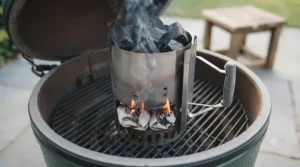
Buying good charcoal only gets you halfway there — how you light and manage it matters just as much. Start by building a loose pyramid rather than a flat, spread-out layer; concentrating the coals means the flame from your firelighter or chimney starter climbs upward and heats the whole pile evenly, rather than dying out at the edges. Natural firelighters made from wood wool work well with lumpwood specifically, since they avoid tainting the smoke with chemical residue the way lighter fluid can.
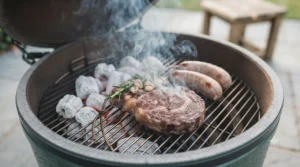
Resist the urge to start cooking the moment flames appear. Genuinely good lumpwood charcoal needs roughly 25-30 minutes before the coals develop that grey, ash-dusted surface that signals stable, even heat rather than unpredictable flare-ups — the same guidance echoed in official barbecue food safety advice, which specifically recommends waiting for coals to glow red with a powdery grey surface before cooking. During the first month of ownership, the most common mistake newer barbecue owners make is overloading the grate with charcoal from the outset; it’s far easier to add more coals partway through than to manage an overheated fire.
Maintenance between cooks matters too. Store your charcoal somewhere genuinely dry — a garage shelf rather than a shed floor — since damp lumpwood is notoriously difficult to light and can smoke excessively as trapped moisture escapes. Once a cook is finished, closing the vents on a kettle or kamado starves the fire of oxygen and effectively pauses combustion, letting you reclaim unburned charcoal for next time rather than wastefully burning through a full bag every session.
Which Lumpwood Charcoal Suits Your BBQ Style? Real-World Scenarios
The weekend family griller. If you’re cooking for four to six people every couple of weekends through the summer, prioritise reliability and moderate burn time over sheer duration. Big K Chilla-Grilla or Weber Premium Lumpwood both suit this profile well — consistent, well-reviewed, and sized to avoid excessive leftover charcoal going stale in the garage.
The kamado owner planning an overnight brisket. Long, unattended cooks demand dense, slow-burning fuel that won’t need topping up at 3am. Kamado Joe Big Block XL is purpose-built for exactly this scenario, and its reusability helps offset the higher upfront price across a season of regular smoking.
The budget-conscious occasional host. If barbecuing is more of an occasional summer treat than a weekly ritual, there’s little reason to pay premium prices for burn characteristics you’ll rarely need to exploit fully. Homefiire-CPL Restaurant Grade or Alderline Lumpwood deliver perfectly acceptable results at a noticeably lower cost per cook, particularly if you’re catering a garden party where volume matters more than precision.
Common Lumpwood Charcoal Problems, Solved
Charcoal won’t light, even with firelighters. This is almost always dampness, either from poor storage or a rainy delivery day. Spread the bag out somewhere warm and dry for 24 hours before your next attempt, and store future bags off the ground.
Too much smoke, and it tastes acrid rather than pleasant. This typically happens when food goes on before the coals have finished their initial burn-off. Wait the full 25-30 minutes until flames die down and the surface turns ash-grey; thick white or black smoke at that stage usually means impurities in a lower-quality bag rather than a lighting mistake.
Fire dies out mid-cook. Check piece size first — very small, dusty pieces burn through quickly and don’t hold heat well. Switching to a brand favouring larger chunks, such as Log-Barn Restaurant Grade or Kamado Joe Big Block XL, solves this for most low-and-slow cooking.
Excessive ash clogging airflow. Some wood species and lower-grade charcoals simply produce more residue than others. If this is a recurring issue, a lower-ash option like Globaltic Birch Lumpwood is worth switching to, alongside regularly emptying the ash tray between cooks rather than letting it build up.
How to Choose the Best Lumpwood Charcoal: 6 Expert Criteria
- Check the wood species and sourcing. Genuine natural hardwood charcoal made from a single traceable species, ideally FSC-certified, tends to burn more predictably than unlabelled blends of offcuts.
- Match burn time to your cooking style. Quick weeknight grilling needs less staying power than a six-hour smoke, so don’t overpay for endurance you won’t use.
- Consider piece size. Larger, denser lumps burn longer and produce less dust; smaller, crumbly pieces light faster but need more frequent topping up.
- Weigh price against bag size honestly. A cheaper bag that’s mostly dust and small fragments can end up costing more per usable cook than a pricier, denser alternative.
- Factor in ash content. Lower-ash charcoals mean less cleanup and steadier airflow, particularly important for smokers and kamados running long sessions.
- Confirm smoke control compliance if relevant. If you live in a designated smoke control area, check the product listing references approval, or consult the rules on smoke control areas directly before buying.
Lumpwood Charcoal vs Charcoal Briquettes: Which Natural Hardwood Fuel Wins?
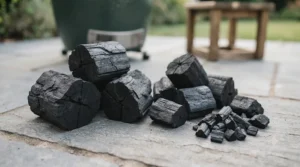
The lumpwood-versus-briquette debate comes down to what you value more: speed and flavour, or consistency and duration. Lumpwood charcoal, being pure natural hardwood charcoal with no binders, lights faster — typically 15-30 minutes versus 20-40 for briquettes — and reaches higher searing temperatures more quickly, which suits steaks and quick-cook proteins particularly well.
Briquettes, by contrast, are manufactured from compressed charcoal dust and a binding agent, giving them a uniform shape and noticeably longer, steadier burn. That consistency comes at a cost: many briquettes contain additives, and the compressed structure tends to produce more ash than natural lumpwood of comparable weight. For most home cooks prioritising genuine wood-fire flavour and fast turnaround, lumpwood remains the stronger everyday choice; briquettes earn their place specifically for extended, temperature-sensitive smoking where duration trumps flavour purity. Many experienced grillers keep both on hand, reaching for lumpwood on a Tuesday evening and briquettes for a weekend-long smoke.
BBQ Grilling Temperature: What to Expect from Lumpwood Charcoal
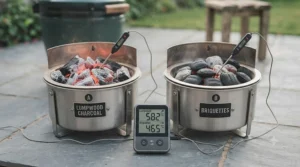
Understanding realistic BBQ grilling temperature ranges helps you match fuel to food rather than guessing. Freshly lit lumpwood charcoal, once past its initial flare and settled to a steady ash-grey glow, typically holds somewhere between 200°C and 300°C at the coal bed on an open kettle grill — plenty hot for searing steaks, burgers and vegetables directly over the coals.
Denser hardwoods, such as the South American blend in Kamado Joe Big Block XL, can push considerably higher inside a well-sealed ceramic grill, occasionally exceeding 350°C, which explains their popularity for restaurant-style crusts on thick cuts. For indirect, low-and-slow cooking — think whole chickens or pulled pork — you’re generally aiming to bank coals to one side and hold the indirect zone closer to 110-150°C, achieved by partially closing vents rather than choosing a different charcoal altogether. Whatever temperature you’re working at, always confirm doneness with a probe thermometer rather than relying on colour or char alone, and consult official barbecue food safety guidance for the correct internal temperatures for different meats.
Ash Content Explained: Why It Matters for Your BBQ
Ash content is one of those specs that rarely makes it onto the front of the bag, yet it quietly shapes your entire cooking experience. In simple terms, ash is the mineral residue left behind once the combustible carbon in charcoal has burned away — every charcoal produces some, but the amount varies significantly by wood species, production method and impurities in the original timber.
High-ash charcoal creates two practical problems. First, ash physically smothers the coal bed over time, restricting the airflow that keeps a fire burning hot and even, which is why long cooks on high-ash charcoal often need more frequent raking or stirring. Second, excessive ash simply means more cleanup, and more of your paid-for bag ending up in the bin rather than on your food as usable heat. Denser, cleaner hardwoods — birch being a notable example among the products on this list — generally produce noticeably less ash than mixed or lower-grade lumpwood, which is precisely why options like Globaltic Birch Lumpwood market themselves specifically on this characteristic. If you’re cooking for extended sessions or simply dislike the mess, ash content deserves as much attention as burn time when comparing bags.
Long-Term Cost & Maintenance: Getting Real Value from Your Charcoal
Sticker price alone is a poor guide to actual value. A £15 bag that’s 30% unusable dust costs more per genuine cook than a £22 bag of dense, well-formed lumpwood that burns cleanly through to the last piece. When comparing options, it’s worth mentally adjusting price per kilo by expected wastage — reusable options like Kamado Joe Big Block XL, which can be snuffed out and relit up to three times, shift this calculation further still, since a single bag effectively stretches across two or three separate cooking sessions rather than one.
Storage habits also affect long-term cost. Charcoal left in damp conditions doesn’t just fail to light well; repeated exposure to moisture gradually degrades the wood structure, increasing crumbling and dust over subsequent uses. A dry storage box or shelf is a small investment that protects the value of every subsequent bag you buy, regardless of brand.
Safety, Regulations and Smoke Control Compliance Guide
Charcoal barbecuing in the UK sits within a specific regulatory framework that’s worth understanding before you fire up the grill, particularly if you live in a town or city centre. Under the Clean Air Act, local authorities can designate smoke control areas where it’s an offence to burn unauthorised fuel from a fixed chimney or furnace, with fines of up to £1,000 for repeated or serious breaches, as set out in the rules on smoke control areas.
The good news for garden barbecues specifically is that outdoor grilling generally falls outside these restrictions, since the rules primarily target fixed indoor appliances with chimneys rather than portable outdoor equipment — though it remains good practice to avoid causing a genuine smoke nuisance to neighbours regardless of legal technicalities. If you do live in a designated area and want extra peace of mind, several products on this list, including Log-Barn Restaurant Grade, are explicitly marketed as approved for smoke control compliance.
Beyond emissions rules, basic food safety deserves equal attention. Always let coals reach that stable, ash-grey glow before cooking, use a probe thermometer to confirm meat has reached a safe internal temperature rather than judging by colour alone, and keep raw and cooked food on separate surfaces throughout. These aren’t complicated steps, but they’re the difference between a brilliant barbecue and a genuinely miserable following 48 hours.
✨ Don’t Miss These Exclusive Deals!
🔍 Take your BBQ setup to the next level with the picks above. Click through to check current prices and availability, and get that garden barbecue genuinely sorted before the weather turns again. 🔥
Frequently Asked Questions
❓ What is the best lumpwood charcoal for beginners?
❓ How long does lumpwood charcoal take to light?
❓ Is lumpwood charcoal better than briquettes?
❓ Why does my charcoal produce so much ash?
❓ Can I use lumpwood charcoal in a smoke control area?
Conclusion
Choosing the best lumpwood charcoal ultimately comes down to being honest with yourself about how you actually barbecue, rather than chasing the biggest bag or the flashiest branding. If you’re cooking a handful of times each summer for the family, Big K Chilla-Grilla or Weber Premium Lumpwood deliver dependable, well-reviewed performance without unnecessary expense. Kamado owners chasing genuinely long, low-and-slow sessions should look seriously at Kamado Joe Big Block XL, whose reusability helps justify the premium price tag over time. And if budget is the deciding factor, Homefiire-CPL Restaurant Grade and Alderline Lumpwood both prove that decent barbecuing doesn’t require a decent-sized dent in your wallet.
Whichever bag ends up in your trolley, remember that technique matters as much as fuel: give the coals time to settle to that steady, ash-grey glow, mind your BBQ grilling temperature for whatever you’re cooking, and keep an eye on ash content if long sessions and cleanup frustrate you. Get those fundamentals right, and even a modest bag of lumpwood charcoal will reward you with a proper, memorable barbecue.
🔥 Grab Your Bag Before the Next Garden Party!
🛒 Check today’s price on your favourite pick from the list above, and give your next barbecue the fuel it actually deserves. Your future self, standing over perfectly seared steaks, will thank you.
Recommended for You
- Portable Charcoal Pizza Oven UK: 7 Best Picks for 2026
- 7 Best Charcoal Pizza Ovens Under £150 in 2026 (Tested; Compared)
- Combination Pizza Oven BBQ: 7 Cracking Picks for 2026
Disclaimer: This article contains affiliate links. As an Amazon Associate, I earn from qualifying purchases. If you purchase products through these links, we may earn a small commission at no additional cost to you.
✨ Found this helpful? Share it with your friends! 💬🤗
