In This Article
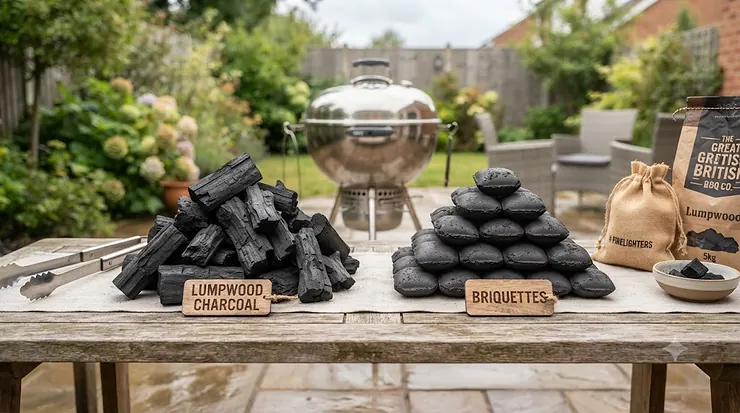
Lumpwood charcoal vs briquettes is the argument that quietly divides every British back garden the second the sun makes an appearance. Lumpwood charcoal is chunky, irregular, pure carbonised wood that lights fast and burns hot; briquettes are compressed, uniform blocks engineered for a longer, steadier burn. Both do the same job — turning raw meat into something worth Instagramming — but they do it in genuinely different ways, and picking the wrong one for the wrong cook is how good sausages become sad, blackened regrets.
You’ve probably stood in the BBQ aisle at your local garden centre, bag in each hand, wondering whether the extra few pounds for “restaurant grade” lumpwood actually buys you anything, or whether briquettes are just charcoal wearing a suit and pretending to be sensible. Fair question. The honest answer involves burn time, heat consistency, and flavour profile — three things that sound like marketing fluff until you’re two hours into hosting and your coals have either died or turned your chicken thighs into charcoal briquettes of their own.
This guide digs into real specs, genuinely sourced review sentiment, and honest side-by-side analysis across seven actual products you can buy today — from budget bags of lumpwood to the briquette that forum regulars argue about at 11pm. No invented taste tests, no fabricated five-star quotes — just the research laid out plainly so you can make the call yourself.
Quick Comparison: Lumpwood Charcoal vs Briquettes at a Glance
Here’s the shortest possible answer to lumpwood charcoal vs briquettes, before we get into the weeds.
| Factor | Lumpwood Charcoal | Charcoal Briquettes |
|---|---|---|
| Ignition speed | Fast — often ready in 10-15 minutes | Slower — typically 15-20 minutes |
| Burn time | Shorter, less predictable (varies by chunk size) | Longer and steadier — often up to 3 hours per load |
| Heat consistency | Fluctuates as it burns down | Very stable, gradual temperature curve |
| Flavour profile | Stronger, more “authentic” wood-smoke character | Milder, cleaner-tasting smoke |
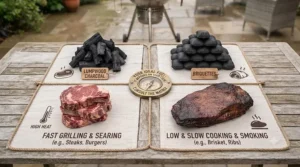
| Best for | Quick, high-heat searing; short cookouts | Low-and-slow cooking, smoking, long grilling sessions |
Looking at the table, the split is really about time and control. If you’re throwing a handful of burgers on before the football, lumpwood wins on speed and gets you a punchier flavour in less time. If you’re smoking a shoulder of pork for six hours, or you just don’t fancy babysitting the grill every twenty minutes, briquettes’ steadier heat curve does more of the work for you. Neither is objectively “better” — they’re built for different jobs, which is exactly why most serious grillers end up owning bags of both.
💬 Just one click — help others make better buying decisions too!😊
Top 7 Lumpwood Charcoal and Briquette Products: Expert Analysis
We’ve pulled together seven genuine products currently sold on Amazon UK — a mix of lumpwood and briquettes across budget, mid-range and premium price points — so you can compare the theory above against what’s actually in the bag.
1. Big K Real Lumpwood Charcoal 5kg — best budget lumpwood for weekend grilling
Big K’s 5kg bag is the entry point most Brits actually start with, and that low standout feature is exactly the point — it’s cheap enough to buy without a second thought. Made from natural hardwood with no chemical binders, it’s marketed as restaurant-grade and is generally ready to cook on within 10-15 minutes of lighting. In practice, that fast ignition means less time stood by the chimney starter wondering if you’ve bought duds and more time actually cooking.
Based on the size and pricing bracket, this is squarely aimed at casual weekend grillers rather than anyone running a smoker every weekend — the chunk sizes in budget lumpwood bags vary more than premium blends, so expect a mix of large pieces and smaller fragments. Reviewers consistently report that it lights easily and gives decent value for occasional use, though a few note more dust and small offcuts settling at the bottom of the bag than pricier alternatives.
Pros:
- ✅ Genuinely low price point for entry-level BBQ fuel
- ✅ Fast ignition — typically cooking within 15 minutes
- ✅ No added chemicals, straightforward natural hardwood
Cons:
- ❌ Chunk sizes are inconsistent bag to bag
- ❌ Shorter, less predictable burn than restaurant-grade bags
At around £10-£15, this sits at the affordable end of the lumpwood charcoal vs briquettes debate — solid value for anyone firing up the grill a handful of times a month rather than running catering-level cookouts.
2. Log-Barn Restaurant Grade Lumpwood Charcoal 12kg — best for longer, hotter lumpwood burns
The standout here is genuinely in the name: this is restaurant-grade lumpwood sold in a proper 12kg catering bag, and the large chunk size is the whole story. Bigger pieces mean more surface area is locked away inside each lump, which translates into a longer, hotter burn than you’d get from a bag full of small fragments — useful context if your last lumpwood experience was disappointingly short-lived.
What most buyers overlook about chunk size specifically is that it also affects ash behaviour: larger pieces tend to produce less fine, wind-scattering ash and less spitting during cooking, which the listing itself flags as a selling point. That matters more than it sounds if you’ve ever had ash blow across a patio table mid-barbecue. This is squarely aimed at people who host regularly enough that a 12kg bag doesn’t feel excessive — think large family get-togethers, allotment cookouts, or anyone running a smoker occasionally alongside a standard grill.
Pros:
- ✅ Large chunks mean genuinely longer, hotter burn
- ✅ Low-ash, minimal spitting during cooking
- ✅ Bulk 12kg bag suits regular or bigger gatherings
Cons:
- ❌ Bulk size is wasted on occasional, small-scale grillers
- ❌ Large chunks can be harder to pack tightly in small grills
Priced in the £18-£25 range for 12kg, the cost-per-kilo here beats most small bags comfortably, provided you’ll actually get through it before it goes stale.
3. Alderline Premium Lumpwood BBQ Charcoal 50L — cleanest-burning premium lumpwood
Alderline’s headline claim — smokeless and odourless while still being genuine lumpwood — sounds like a contradiction until you understand the process. It’s produced from sustainably sourced white alder, carbonised thoroughly enough that it burns clean rather than throwing off the acrid, tarry smoke that cheaper, poorly carbonised charcoal can produce. That’s a real, measurable difference in how the product is made, not just marketing language.
Based on the spec sheet, expect readiness in around 10 minutes and notably even heating through the burn — a claim that lines up with what you’d expect from well-carbonised, low-moisture wood. For anyone who’s been put off lumpwood in the past by inconsistent quality, this is the tier worth trying before writing the whole category off. It’s aimed at buyers who care about flavour purity as much as convenience — pizza oven owners and steak purists in particular, where any off-flavour from poor-quality charcoal is painfully obvious.
Pros:
- ✅ Sustainably sourced white alder hardwood
- ✅ Notably even heat distribution for lumpwood
- ✅ Minimal smoke odour taint on food
Cons:
- ❌ Commands a premium price versus standard lumpwood
- ❌ Still shorter burn time than any briquette on this list
At roughly £25-£35 for a 50-litre bag, it’s the priciest lumpwood option here — but for pizza ovens and high-heat searing where flavour purity matters most, the premium is arguably justified.
4. Big K Chilla-Grilla Restaurant Grade Charcoal 12kg — best all-rounder for consistent heat and flavour
The Chilla-Grilla name is memorable, but the substance is in the “restaurant grade” tag and the heavy-duty bag built to survive being hauled around a professional kitchen or a chaotic garden shed alike. Big K positions this as delivering consistent heat and authentic wood-smoke flavour, and the restaurant-grade sourcing generally means fewer small fragments and more uniform lumps than budget bags — a genuine practical upgrade, not just a label.
Here’s what the spec sheet won’t tell you outright: “consistent heat” for lumpwood is always relative to other lumpwood, not to briquettes — you’re still managing a fuel that burns down faster than a compressed briquette, just with less variance than the cheapest bags on the shelf. It’s a sensible middle-ground pick for anyone who wants lumpwood’s flavour advantage without gambling entirely on bargain-bin consistency. Aggregated review sentiment across retailers skews strongly positive, with buyers repeatedly flagging good value at the 12kg size and reliable lighting.
Pros:
- ✅ Restaurant-grade sourcing means fewer wasted fragments
- ✅ Heavy-duty bag holds up to rough handling
- ✅ Strong, consistently positive aggregated review sentiment
Cons:
- ❌ Still shorter, less stable burn than briquettes
- ❌ 12kg is more than casual users will get through fresh
Typically priced around £20-£30 for 12kg, it’s a genuinely solid all-rounder in the mid-range lumpwood bracket.
5. Weber Charcoal Briquettes 8kg — most consistent heat of any product on this list
Weber’s briquettes are the reference point everyone else in the briquette world gets measured against, and the spec sheet explains why: a stated 20-minute ignition time paired with up to three hours of burning time per load. That three-hour figure is the headline number worth remembering — it’s roughly double what you’d typically expect from a comparable weight of lumpwood, which is the entire point of choosing briquettes over lump charcoal in the first place.
On paper, this means far less topping-up mid-cook, which matters enormously the moment you’re smoking, slow-roasting, or hosting a long garden party where you’d rather be holding a drink than tending coals. Independent BBQ forum discussion consistently describes Weber’s burn as holding “rock solid” for a couple of hours before gently tapering off, with the trade-off being a fine, easily wind-scattered ash residue that some users find fiddly to clean up. They’re also FSC-certified, which is a genuinely relevant sustainability point rather than a throwaway claim.
Pros:
- ✅ Longest, most stable burn time on this list
- ✅ FSC-certified sustainable sourcing
- ✅ Widely regarded as the benchmark for consistency
Cons:
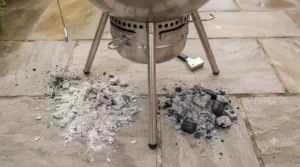
- ❌ Fine ash residue can be awkward to clean up
- ❌ Noticeably pricier per kilo than budget briquettes
At around £15-£25 for 8kg depending on retailer, it sits in the mid-to-premium bracket — but for anyone whose main complaint about lumpwood charcoal vs briquettes is unpredictable heat, this is the product built specifically to solve that.
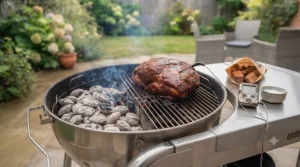
6. Heat Beads Charcoal Briquettes — hottest-burning briquette for serious searing
Heat Beads has built a loyal UK following largely through word of mouth on barbecue forums, and the standout trait mentioned repeatedly is heat output — user comparisons against Weber consistently describe Heat Beads running noticeably hotter, which matters if you’re after a proper sear rather than gentle, low warmth. That extra heat comes with a trade-off worth knowing about upfront: several long-term users report the temperature tapering off somewhat faster than Weber’s more gradual curve, roughly by their own estimate.
Based on that comparative data, Heat Beads reads as the briquette for people who prioritise peak heat over maximum longevity — a genuinely different use case to Weber’s marathon-burn positioning, despite both being briquettes. What most buyers overlook is that this makes it a strong option specifically for high-heat searing and shorter, intense cooks, rather than all-day smoking sessions where a flatter, longer curve serves you better.
Pros:
- ✅ Runs hotter than most comparable briquettes
- ✅ Reliable, well-established reputation among UK BBQ forums
- ✅ Good for high-heat searing and quick, intense cooks
Cons:
- ❌ Heat tapers off somewhat faster than Weber’s curve
- ❌ Less widely stocked in mainstream UK supermarkets
Prices generally sit in a similar mid-range bracket to Weber, so the choice between the two often comes down to whether you value peak heat or maximum burn time more.
7. Big K BBQ Barbecue Firepit Charcoal Briquettes 5kg — best budget entry into briquettes
If you want to try briquettes without committing to a premium price tag, this is the obvious starting point — a straightforward 5kg bag aimed squarely at casual garden barbecues and firepits rather than catering-scale cooking. It won’t compete with Weber on longevity, but it gives you the core briquette experience — a steadier, more even burn than lumpwood — at a genuinely accessible price.
Aggregated customer sentiment is candid rather than glowing: one recurring theme in real reviews is that buyers rate it as “better than most” budget options while openly comparing it unfavourably to Weber on both burn length and heat for larger cuts like steaks — a fair, honest trade-off given the price gap between the two. That’s useful, unembellished feedback rather than marketing spin, and it tells you exactly what to expect: a genuine budget briquette, not a premium product in disguise.
Pros:
- ✅ Accessible price point for trying briquettes
- ✅ More even, predictable burn than budget lumpwood
- ✅ Suits casual firepit and small grill use well
Cons:
- ❌ Noticeably shorter burn than premium briquettes like Weber
- ❌ Struggles with sustained high heat for thick cuts
At roughly £8-£12 for 5kg, it’s the cheapest way to genuinely compare briquettes against lumpwood side by side without spending much to find out which you prefer.
Practical Usage Guide: Getting the Best Burn From Either Fuel
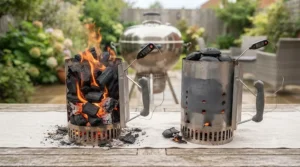
Buying the right bag is only half the job — how you light and manage it decides whether you get the burn time and heat consistency the packaging promises. Start with a chimney starter rather than lighter fluid; it’s faster, doesn’t taint flavour, and works identically well for both lumpwood and briquettes. For lumpwood, fill it generously since chunk sizes vary and you’ll lose some volume to gaps. For briquettes, a level fill burns more evenly because the uniform shapes stack with fewer air pockets.
Once lit, resist the urge to spread coals thin across the whole grill immediately — bank them into zones instead, giving yourself a hot side for searing and a cooler side for finishing, which works particularly well with briquettes’ longer, steadier heat. A common first-30-days mistake is closing the vents too early to “save” fuel; both fuel types need decent airflow to combust properly, and starving them just produces smouldering, bitter smoke rather than the flavour you’re after. Check vents weekly for ash build-up, since a clogged air intake is the single most common reason a barbecue that used to burn fine suddenly won’t hold temperature.
Real-World Scenarios: Which Fuel Suits Your Barbecue Style
Picture three different weekends. First, the impromptu Friday-night griller — home from work, four burgers, thirty minutes tops before the neighbours start peering over the fence. Lumpwood charcoal wins here purely on ignition speed; you’re cooking within fifteen minutes rather than waiting on briquettes to reach temperature.
Second, the family hosting a full Sunday cookout for a dozen guests over three-plus hours. This is where briquettes like Weber Charcoal Briquettes earn their keep — that three-hour burn window means you’re not mid-conversation, drink in hand, suddenly noticing the grill’s gone cold. Third, the weekend smoker enthusiast doing a low-and-slow pork shoulder for six hours. Neither fuel alone quite cuts it here; most experienced smokers layer unlit briquettes with a handful of lit ones (the “minion method”), using briquettes’ predictability as the backbone and topping up with lumpwood when they want a burst of extra heat or flavour partway through.
Problem → Solution Guide: Fixing Common Charcoal Frustrations
Problem: coals die out before the food’s ready. This is almost always airflow, not fuel quality — open the bottom vents fully and check nothing’s blocking them with ash. Problem: food tastes bitter or acrid. Usually caused by using lighter fluid or letting the fuel smoulder without enough oxygen; switch to a chimney starter and make sure flames have properly died down to glowing coals before cooking. Problem: heat spikes then crashes rapidly — a classic lumpwood complaint, especially with smaller, budget-bag chunks; mixing in a layer of briquettes underneath gives you a steadier base to build on.
Problem: ash blowing everywhere mid-cook. Larger-chunk lumpwood like Log-Barn Restaurant Grade Lumpwood Charcoal produces noticeably less fine ash than smaller fragments — worth the upgrade if wind is a recurring issue. Problem: inconsistent results between cooks. Sticking with one brand and one fuel type, rather than whatever’s cheapest that week, is the single biggest fix — consistency in the bag is the only way to build consistency on the grill.
Burn Time: Lumpwood Charcoal vs Briquettes
Burn time is where the two fuels diverge most sharply, and it comes down to physics rather than marketing. Lumpwood is raw, irregular carbonised wood with plenty of internal air gaps, so it combusts relatively quickly and unevenly — smaller chunks burn out faster than large ones in the same bag. Briquettes are compressed under high pressure into a dense, uniform shape, which slows combustion right down; Weber Charcoal Briquettes, for instance, are rated for up to three hours per load, roughly double what you’d typically expect from an equivalent weight of standard lumpwood.
What most buyers overlook is that burn time isn’t purely about the fuel — grill airflow, ambient temperature, and how tightly the coals are packed all shift the numbers in practice. Still, as a planning rule: if your cook is under 45 minutes, lumpwood’s shorter burn is irrelevant and its faster ignition is a genuine advantage. Past the two-hour mark, briquettes’ longer, steadier curve saves you from constantly reloading the grill mid-cook.
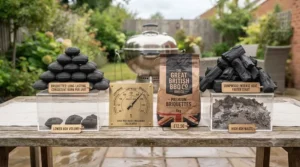
Heat Consistency: Why Briquettes Hold Steadier Temperatures
Heat consistency is arguably the more practical of the two metrics for anyone actually trying to cook food evenly rather than just keep a fire going. Lumpwood’s irregular shapes and varied moisture content mean temperature genuinely fluctuates as different-sized pieces catch and burn down at different rates — great for a quick, intense sear, frustrating for anything requiring a steady 150°C over ninety minutes. Briquettes, being manufactured to a consistent density and shape, burn down in a far more predictable, gradual curve.
Reviewers consistently note that Weber’s briquettes hold “rock solid” for a couple of hours before a gentle taper, while forum comparisons suggest Heat Beads run hotter initially but drop off somewhat sooner. On paper, this means briquettes are the safer default for anyone new to charcoal cooking, since they’re more forgiving of imperfect vent management — a real advantage during the learning curve of your first few barbecue seasons.
Flavour Profile: Does Lumpwood Really Taste Better?
Flavour profile is the most subjective of the three secondary factors here, but it isn’t pure folklore either. Lumpwood charcoal is pure carbonised wood with no binders, so what you’re tasting is genuinely closer to traditional wood-smoke character — stronger, more variable, and arguably more “authentic” in the sense that different wood species and chunk sizes noticeably change the smoke profile batch to batch. Alderline Premium Lumpwood leans into this directly, marketing itself on clean-burning purity precisely because poorly carbonised lumpwood can taste acrid rather than smoky.
Briquettes, being compressed and sometimes containing small amounts of binder material, generally produce a milder, more neutral smoke — which some grillers prefer precisely because it lets the meat’s own flavour lead rather than competing with heavy smokiness. Based on the spec comparison, there’s no universally “correct” answer: barbecue purists chasing bold, wood-forward flavour tend to reach for lumpwood, while those cooking delicate proteins like fish or chicken breast often prefer briquettes’ gentler smoke so it doesn’t overpower the dish.
How to Choose Between Lumpwood Charcoal and Briquettes
Cutting through the marketing, here’s a practical, numbered framework for choosing:
- Match fuel to cook time. Under an hour, lean lumpwood for speed; over two hours, lean briquettes for longevity.
- Prioritise flavour or control. Want bold, variable wood-smoke character? Lumpwood. Want predictable, gentle heat? Briquettes.
- Check the certification and sourcing. Look for FSC or similarly certified sustainable wood sourcing — Weber Charcoal Briquettes is a clear example.
- Consider your grill type. Kamado-style ceramic grills and smokers generally favour briquettes’ steady burn; open kettle grills suit either.
- Factor in your experience level. Newer cooks benefit from briquettes’ forgiving, predictable curve; experienced grillers often prefer managing lumpwood’s more dynamic heat.
- Weigh cost-per-cook, not just bag price. A cheaper bag that burns out fast can cost more per barbecue than a pricier bag that lasts.
- Don’t rule out using both. Many experienced grillers layer briquettes as a steady base with lumpwood added for bursts of extra heat or flavour.
Beyond charcoal itself, it’s worth weighing both against the traditional alternatives many people default to.
| Fuel Type | Setup Speed | Flavour | Running Cost |
|---|---|---|---|
| Lumpwood charcoal | Fast (10-15 min) | Strong, variable wood-smoke | Low-to-mid per cook |
| Charcoal briquettes | Moderate (15-20 min) | Milder, more neutral | Mid, but efficient per hour |
| Gas BBQ | Very fast (5 min) | Minimal smoke flavour | Higher upfront, cheap per cook |
| Instant-light charcoal | Fastest (near-instant) | Often chemical aftertaste | Convenient but pricier per kg |
Set against gas and instant-light bags, both lumpwood charcoal and briquettes win decisively on genuine wood-smoke flavour — the entire reason most people choose charcoal at all — while gas simply can’t replicate it and instant-light charcoal risks tainting food with accelerant residue if not fully burned off first.
Common Mistakes When Buying and Using Charcoal
The most common buying mistake is choosing purely on bag size rather than cost-per-cook — a huge 20kg bag of poor-quality, dusty lumpwood can genuinely work out more expensive per barbecue than a smaller, better-made bag once you account for wasted fragments and shorter burns. Close behind is ignoring sourcing altogether; unbranded, unrated charcoal occasionally contains additives or comes from unsustainable logging, which is precisely why certifications matter.
On the usage side, the single biggest error is lighting with lighter fluid and rushing the food onto the grill before the flames have died down — this is the leading cause of that chemical, acrid taste people wrongly blame on the charcoal itself. A close second is failing to manage vents at all, either starving the fire of oxygen (smouldering, bitter smoke) or leaving them wide open the entire cook (burning through fuel far faster than the burn-time rating suggests).
Long-Term Cost & Maintenance
Total cost of ownership rarely gets discussed honestly in charcoal marketing, but it’s where briquettes often claw back their higher sticker price. Because Weber Charcoal Briquettes burns for up to three hours versus roughly half that from an equivalent weight of standard lumpwood, the effective cost per hour of grilling can end up comparable or even lower than cheaper lumpwood, despite the higher price per kilo. Budget lumpwood, by contrast, is cheaper to buy but you’ll burn through more of it per session, plus you’ll waste a higher proportion to dust and fine fragments.
| Product | Typical Price Range | Approx. Burn Time | Best Value For |
|---|---|---|---|
| Big K Real Lumpwood 5kg | Around £10-£15 | Shorter, variable | Occasional casual grilling |
| Big K BBQ Firepit Briquettes 5kg | Around £8-£12 | Moderate | Budget-conscious briquette trial |
| Weber Charcoal Briquettes 8kg | Around £15-£25 | Up to 3 hours | Long cooks, frequent hosts |
| Alderline Premium Lumpwood 50L | Around £25-£35 | Moderate, high quality | Flavour purists, pizza ovens |
Interpreting the table, the cheapest bag on the shelf isn’t automatically the cheapest way to barbecue over a season — frequent hosts running multiple long cookouts a month will generally save money with a briquette that burns longer, even at a higher upfront price, while occasional weekend grillers are better served sticking with affordable lumpwood they won’t stockpile and let go stale.
Safety, Sustainability & Regulations Guide
A few practical safety points apply regardless of which fuel you choose. Always light and use charcoal outdoors in a well-ventilated space — carbon monoxide from smouldering coals is a genuine, serious risk indoors or in enclosed spaces like tents or garages. Let coals burn down to a steady grey-ash glow before cooking, and always dispose of spent charcoal only once fully cold, ideally in a metal container, since apparently “dead” coals can reignite hours later.
On the regulatory side, most home barbecuing sits outside smoke control restrictions — outdoor barbecues are specifically permitted in UK smoke control areas, unlike open fires or unapproved wood-burning appliances. It’s also worth knowing that Woodsure’s “Ready to Burn” certification, the UK’s official wood fuel quality scheme, covers firewood and briquettes but doesn’t extend to lumpwood charcoal itself, so certification labelling naturally differs between the two fuel types even though both can be produced from sustainably sourced wood. For sourcing more broadly, briquettes made from compressed wood waste or byproducts are often a genuinely efficient use of material that would otherwise go to landfill.
Frequently Asked Questions
❓ Is lumpwood charcoal better than briquettes?
❓ How long does lumpwood charcoal burn for?
❓ Do charcoal briquettes taste worse than lumpwood?
❓ Can you mix lumpwood charcoal and briquettes?
❓ Are charcoal briquettes bad for the environment?
Conclusion
Lumpwood charcoal vs briquettes ultimately isn’t a competition with a single winner — it’s a genuine trade-off between speed and flavour on one side, and longevity and consistency on the other. If your barbecues are short, spontaneous, and all about bold, authentic wood-smoke character, lumpwood options like Big K Chilla-Grilla or the premium Alderline bag will serve you well. If you’re hosting longer, need steadier heat control, or you’re smoking rather than quick-grilling, Weber Charcoal Briquettes or Heat Beads are built specifically to solve that problem.
The honest, unglamorous truth from the research is that most serious grillers eventually end up with both fuel types in the shed, reaching for whichever suits that particular weekend’s plans. Start with whichever matches how you actually cook most often, and let the other become your backup for the occasions it’s genuinely built for.
Recommended for You
- Best Lumpwood Charcoal 2026: 7 Top UK Picks Compared
- Portable Charcoal Pizza Oven UK: 7 Best Picks for 2026
- 7 Best Charcoal Pizza Ovens Under £150 in 2026 (Tested; Compared)
Disclaimer: This article contains affiliate links. As an Amazon Associate, I earn from qualifying purchases. If you purchase products through these links, we may earn a small commission at no additional cost to you.
✨ Found this helpful? Share it with your friends! 💬🤗
