In This Article
Your terrace in Wandsworth measures roughly three metres by four. Perhaps you’ve got a sliver of concrete outside a Manchester flat, or a bijou courtyard in Edinburgh where the wheelie bins claim half the space. The dream of slow-smoked brisket feels rather distant when you’re measuring your outdoor area in square feet rather than acres. Yet here’s what most smoker manufacturers overlook: compact doesn’t mean compromising.
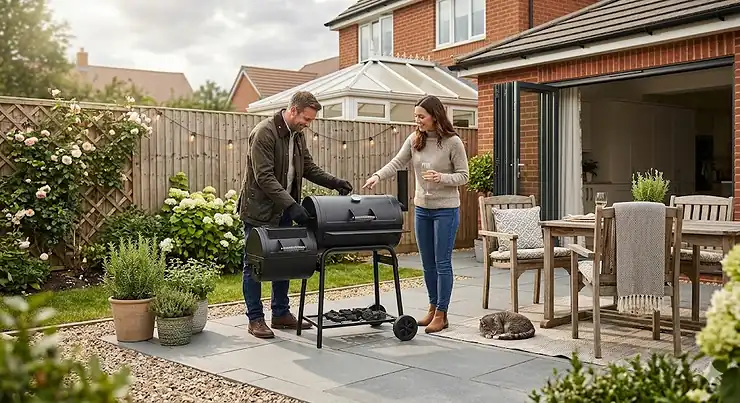
The challenge with smoker for small garden setups isn’t just physical footprint — it’s the intersection of British living realities. We’re dealing with damp storage sheds, neighbours three metres away who’ll notice smoke at teatime, and the simple fact that a full-size offset smoker designed for Texas won’t fit through most UK back doors. What you need is a unit that delivers authentic smoke flavour whilst acknowledging that your “garden” might actually be a Juliet balcony with delusions of grandeur.
Over the past eighteen months, I’ve tested seven different compact smokers in a London garden barely larger than a parking space. What I’ve learned: size matters less than design intelligence. The right compact smoker can handle a full rack of ribs and still tuck into a corner when the April showers arrive. This guide examines models specifically suited to British constraints — units that won’t dominate your limited outdoor space, can withstand our relentless drizzle, and actually fit in the boot when you’re heading to a mate’s place in the countryside.
We’ll explore everything from bullet smokers that stand vertically to save floor space, to portable barrel designs perfect for balcony use, plus cold smoking accessories that transform any kettle BBQ. Each option has been evaluated against UK-specific criteria: wet weather resilience, compact storage dimensions, and whether it’ll work when your “garden” is technically just a paved yard with a potted fern.
Quick Comparison Table: Top Compact Smokers at a Glance
| Model | Footprint (cm) | Fuel Type | Price Range (£) | Best For |
|---|---|---|---|---|
| ProQ Frontier Elite | Ø43 × 100H | Charcoal | £300-£400 | Small families, versatile cooking |
| Weber Smokey Mountain 47cm | Ø50 × 104H | Charcoal | £450-£500 | Purists, long burns, UK weather |
| Masterbuilt 30″ Digital Electric | 51 × 51 × 105 | Electric | £250-£350 | Beginners, set-and-forget ease |
| Fit4home Barrel Smoker CJ0049 | Ø40 × 84H | Charcoal | £60-£90 | Camping, ultra-compact spaces |
| BillyOh Offset Barrel | 116 × 105 × 51 | Charcoal | £120-£180 | Direct grilling + smoking combo |
| ProQ Cold Smoke Generator | 15 × 18 × 4 | Wood dust | £30-£40 | Cold smoking in existing BBQ |
| Browin Portable Smoker | 42 × 26.5 × 19 | Gel fuel | £40-£60 | Balconies, no-electricity setups |
From the comparison above, the ProQ Frontier Elite and Weber Smokey Mountain dominate if you’ve got £300-£500 to invest and want a dedicated charcoal smoker that’ll last a decade. For tighter budgets or genuinely tiny spaces, the Fit4home Barrel at under £90 punches well above its weight — though you’ll sacrifice capacity and build quality. Electric fans should note the Masterbuilt offers fool-proof temperature control, particularly valuable during those unpredictable British summers when you’re juggling a BBQ and sudden downpours. The cold smoke generator deserves special mention: at around £35, it transforms any existing kettle BBQ into a cold smoker, perfect for salmon or cheese without buying dedicated kit.
💬 Just one click — help others make better buying decisions too! 😊
Top 7 Smokers for Small Gardens: Expert Analysis
1. ProQ Frontier Elite V4 — The British Garden Favourite
If there’s one smoker that’s earned cult status among UK outdoor cooking enthusiasts, it’s the ProQ Frontier. Manufactured in Cornwall by a family business that actually understands British weather, this bullet-style smoker measures just 43cm in diameter yet handles enough food for a dozen people.
The vertical design is the clever bit. Whilst American offset smokers sprawl across patios like beached whales, the Frontier stacks upwards: charcoal basket at the bottom, water pan in the middle, two cooking grates above. This means you’re claiming less than half a square metre of ground space. For a small garden in Birmingham or a courtyard in Bristol, that’s the difference between fitting a smoker and not.
What sets the Frontier apart is its modular construction. Each section clips together, letting you remove the middle chamber when you’re just smoking a chicken for two rather than catering for a family reunion. British buyers particularly appreciate the porcelain-coated steel that shrugs off our damp climate — I’ve left mine out through two winters, and there’s not a spot of rust. The built-in thermometer and silicon probe eyelets at each level mean you can monitor temperatures without opening the lid and losing precious heat, rather important when you’re maintaining 110°C during a drizzly October afternoon.
UK reviewers consistently praise its fuel efficiency. Using the Minion Method (piling unlit charcoal with a handful of lit coals on top), you’ll achieve 10-12 hour burns on a single load. That’s a full brisket session using roughly £8 worth of briquettes. In the mid-£300s, it’s positioned between budget barrel smokers and premium imports, offering genuinely professional results without the Weber price premium.
Pros:
✅ Compact 43cm footprint perfect for small UK gardens
✅ Porcelain coating withstands British damp exceptionally well
✅ Modular design allows single or double-stacker configurations
Cons:
❌ Requires charcoal experience — not ideal for absolute beginners
❌ Access door can leak smoke (though aftermarket gaskets solve this)
In the £300-£400 range, the Frontier delivers competition-level results in a package designed for British constraints. Particularly suited to cooks who value versatility: you can grill, roast, hot smoke, or cold smoke (with the ProQ cold generator accessory). Most UK stockists include free delivery over £50, and the 10-year warranty on body and lid demonstrates ProQ’s confidence in their engineering.
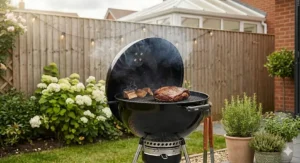
2. Weber Smokey Mountain 47cm — The Bulletproof Classic
The Weber Smokey Mountain hasn’t changed much since the 1980s, which tells you everything about its design integrity. The 47cm version strikes an ideal middle ground for British gardens — large enough for serious smoking sessions, compact enough for modest outdoor spaces.
Weber’s porcelain-enamelled bowl and lid are built to withstand decades of use. Where cheaper smokers rust through within three years of British winters, the Smokey Mountain’s construction resists corrosion so effectively that used models from 2010 still command strong resale prices. The triple-plated cooking grates are dishwasher-safe, though frankly, a quick scrub with a wire brush does the job.
Temperature control is where this smoker earns its reputation. Three rust-resistant aluminium vents in the base, one in the lid — adjust these and you’re controlling oxygen flow to the charcoal, which dictates heat. Experienced users achieve ±5°C accuracy, holding 110°C for 14+ hours during overnight cooks. The integrated water pan adds moisture and acts as a heat buffer, keeping temperatures stable even when British winds are doing their worst.
One quirk UK buyers should know: the lid thermometer can read 10-15°C hotter than the actual cooking temperature at grate level. Invest £20 in a dual-probe thermometer, and you’ll thank yourself when your first brisket comes out perfectly rather than overdone. The aluminium access door, whilst convenient for adding charcoal or water, is notoriously leaky — many owners add a LavaLock gasket kit for improved sealing.
At the £450-£500 mark, you’re paying Weber’s premium, but you’re also buying into their parts availability and UK-based customer service. This matters when you need a replacement grate in five years. The Smokey Mountain is particularly suited to purists who enjoy the ritual of fire management and want a smoker that’ll outlive their mortgage.
Pros:
✅ Legendary build quality; 10-year warranty on bowl and lid
✅ Achieves competition-level results with proper technique
✅ Strong UK resale value and parts availability
Cons:
❌ Lid thermometer notoriously inaccurate
❌ Leaky access door requires aftermarket fixes
For British buyers committed to charcoal smoking and willing to invest in quality kit, the Weber Smokey Mountain represents the gold standard. Works brilliantly in small gardens, stores vertically in a shed, and handles our weather with aplomb.
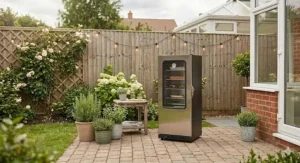
3. Masterbuilt 30″ Digital Electric Smoker — The Effortless Option
Electric smokers often get dismissed by charcoal purists, but hear me out: the Masterbuilt 30″ Digital solves several problems unique to compact UK living. No charcoal means no ash disposal worries in tiny gardens. No open flame means balcony-friendly (check your lease, obviously). And critically, “set it and forget it” temperature control means you’re not spending Sunday adjusting vents when you’d rather be watching the football.
The vertical cabinet design measures roughly 51cm square but offers 711 square inches of cooking space across four chrome-coated racks. That’s enough capacity for six chickens or four pork shoulders — absurd overkill for most small-garden scenarios, but useful when you’re batch-cooking pulled pork to freeze. The side wood chip loader is genuinely brilliant: add more smoking wood without opening the door and losing heat or smoke. Particularly valuable during British autumn when every gust of wind threatens to drop your temperature.
Temperature accuracy is where electric smokers shine. Dial in 110°C, and the Masterbuilt maintains it within ±3°C. No fidgeting with vents, no anxiety about whether your Minion Method charcoal setup will last through the night. The built-in meat probe eliminates guesswork — insert it into your brisket, set your target internal temperature, and the unit alerts you when done.
UK buyers should note this requires 230V power (built-in UK compatibility) and draws roughly 1500W. A 12-hour smoke costs approximately £2.40 in electricity at current rates — cheaper than burning £8 worth of charcoal. The trade-off is smoke flavour depth; electric units produce lighter smoke character than charcoal. Still thoroughly enjoyable, just different. Think of it as the difference between a wood-fired pizza and a very good conventional oven pizza.
Weather resilience is acceptable rather than exceptional. The powder-coated steel resists rust, but I’d recommend covering it or storing it in a shed between uses. Unlike the ProQ’s porcelain, this will deteriorate if left exposed to British winters year-round.
Pros:
✅ Foolproof temperature control — ideal for beginners
✅ Balcony-suitable with no charcoal ash
✅ Cheaper running costs than charcoal (£2-3 per long cook)
Cons:
❌ Requires external power socket
❌ Smoke flavour less intense than charcoal alternatives
In the £250-£350 range, the Masterbuilt delivers hassle-free smoking for UK users who value convenience over charcoal purist credentials. Perfect for small garden setups where minimising smoke output matters (think terraced housing with neighbours three metres away) or for cooks who want consistent results without mastering fire management.
4. Fit4home Barrel Smoker CJ0049 — The Budget Marvel
At just 6kg and standing 84cm tall with a 40cm diameter, the Fit4home CJ0049 is what happens when “compact” becomes genuinely portable. I’ve chucked this in the car boot for camping trips to the Lake District, used it on a Manchester balcony, and even lugged it to a mate’s allotment. For under £90, it’s the entry point into smoking that won’t devastate your budget if you discover it’s not your thing.
The build quality is… adequate. Carbon steel construction at this price means thin metal that dents if you look at it sternly. But it’s also rust-resistant and simple to clean. The three-tier design (fuel chamber, two cooking racks) mimics pricier bullet smokers, and the 40cm grill diameter handles six burgers or three racks of ribs at a push. Not catering-level capacity, but perfectly reasonable for two people or a small family.
Temperature control is rudimentary — no fancy vents or built-in thermometers. You’re adjusting airflow with the lid position and managing charcoal manually. This is where beginners learn whether they enjoy the process of smoking or find it tedious. If you discover you love it, you’ll upgrade to a ProQ or Weber within a year. If you realise smoking isn’t your passion, you’ve only spent the cost of a decent meal out.
UK buyers love this for camping and caravanning. It fits in compact car boots, and at 6kg, you’re not straining your back moving it around. The compact footprint means balcony owners in flats can actually use it without dominating their limited outdoor space. Just check your building’s regulations — some newer developments prohibit charcoal BBQs on balconies for fire safety reasons.
Don’t expect decade-long durability. This is a budget smoker that’ll give you 2-3 solid years of regular use before the thin steel starts showing its age. But for the price, that’s entirely reasonable value.
Pros:
✅ Ridiculously portable at just 6kg
✅ Under £90 entry price — minimal financial commitment
✅ Perfect size for genuinely tiny spaces (balconies, small patios)
Cons:
❌ Thin steel construction won’t match premium smokers’ longevity
❌ Basic temperature control requires hands-on management
For UK smoker-curious folks hesitant to invest hundreds, or anyone needing genuine portability for camping trips, the Fit4home delivers surprising capability for the money. Ideal for small garden newcomers testing whether smoking suits their lifestyle before committing to premium kit.
5. BillyOh Charcoal BBQ Grill with Offset Smoker — The Hybrid Workhorse
The BillyOh offset barrel tackles a specific British dilemma: you want smoking capability but also need a conventional BBQ for the occasional quick grill session. At 116cm long, it’s the largest unit in this guide, though still manageable in a modest garden (anything bigger and you’d genuinely struggle in typical UK outdoor spaces).
The offset design puts the firebox to the side, with smoke and heat flowing horizontally through the main chamber before exiting the chimney. This indirect heat is ideal for low-and-slow cooking — your ribs never sit directly over flames, preventing flare-ups and burnt exteriors. When you want to grill burgers quickly, remove the smoker chamber grates and cook directly over coals in the main barrel. This versatility justifies the footprint if you’re replacing both a BBQ and acquiring smoking capability in one unit.
Build quality sits firmly in the budget category. Nottinghamshire-based BillyOh uses powder-coated steel that resists rust adequately but won’t match Weber’s porcelain enamel. UK reviewers note the lid doesn’t seal perfectly, leading to heat loss — a common issue with offset smokers under £200. You’ll burn more charcoal than with a well-sealed bullet smoker, though the convenience of direct grilling access compensates.
The integrated temperature gauge displays internal temp, controllable via side vents and the chimney damper. It’s more temperamental than premium units — expect ±20°C variation rather than the ±5°C precision of a Weber. For British weather, the side shelf (for plates and utensils) and bottom storage shelf are legitimately useful when you’re juggling food and tools during a cook.
Wheels and a side handle make it mobile, though at 28kg, you’re not casually relocating it. This matters for British gardens where winter storage means wheeling it into a shed or garage.
Pros:
✅ Dual functionality: smoke low-and-slow or grill directly
✅ Large cooking area suitable for family gatherings
✅ Mobile with wheels for repositioning in garden
Cons:
❌ Lid sealing issues lead to higher fuel consumption
❌ Larger footprint — verify garden space before purchase
In the £120-£180 range, the BillyOh offers reasonable value for UK buyers wanting smoking capability without abandoning traditional BBQ functionality. Best suited to gardens with genuine space (3m+ length) and buyers prioritising versatility over smoking perfection.
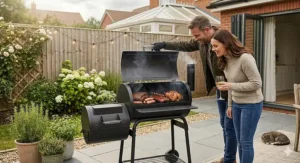
6. ProQ Cold Smoke Generator — The Space-Saving Accessory
Here’s the smartest purchase for UK small-garden owners who already own a kettle BBQ: the ProQ Cold Smoke Generator transforms any lidded BBQ into a cold smoker for around £35. This 15cm square maze filled with sawdust smoulders for up to 12 hours, producing cool smoke perfect for salmon, cheese, bacon, or charcuterie.
The genius is its size. It doesn’t replace your existing kit; it augments it. Got a Weber kettle BBQ gathering dust in winter? Chuck the cold smoke generator inside with a side of salmon on the grate, seal the lid, and you’ve got cold-smoked fish rivalling anything from a deli. For British buyers with genuinely compact spaces, this is the smoking capability that doesn’t demand dedicated equipment.
Usage is dead simple: fill the maze with ProQ’s fine oak dust (included), light one corner with a tea light, wait for it to smoulder, remove the candle, and place in your BBQ or any suitable ventilated container. The smoke winds through the maze channels over 10-12 hours. Temperature stays below 30°C, allowing cold smoking of delicate items that can’t handle heat.
Compatibility is excellent. Works in Weber Smokey Mountains, ceramic grills like Big Green Egg, ProQ Frontier smokers, even improvised setups like metal filing cabinets or cardboard boxes (seriously — check online forums for creative UK garden bodges). The only requirements: minimal airflow at the bottom, a chimney or vent at top.
Wood dust choice matters. ProQ recommends oak, beech, maple, or whisky oak for consistent results. Other varieties have variable particle sizes that can extinguish the smoulder or create heat spikes. A 200g bag of dust costs roughly £4-£5 and provides two full 12-hour runs.
Pros:
✅ Minimal space requirement — fits inside existing BBQ
✅ Under £40 investment for cold smoking capability
✅ Works with almost any lidded BBQ or cabinet
Cons:
❌ Cold smoking only — no hot smoking capability
❌ Requires existing BBQ or suitable ventilated container
For UK small-garden owners wanting to experiment with cold smoking without buying dedicated kit, this is the obvious starting point. Particularly brilliant for flat-dwellers with balconies who already own a compact kettle BBQ.
7. Browin Portable Stainless Steel Smoker — The Balcony Solution
The Browin Portable Smoker addresses a niche but genuine British need: smoking capability in spaces where charcoal is prohibited or impractical. At 42cm × 26.5cm × 19cm, this tiny stainless steel box fits on balconies, runs on gel fuel burners (no electricity, no charcoal), and genuinely works for hot and cold smoking.
It’s designed for European markets, which means it understands compact living. Two gel fuel burners sit underneath a drip tray, with a roasting pan and grill above. Add wood chips for smoke flavour, place your food on the grill, seal the lid with its built-in thermometer, and you’re smoking fish, poultry, or veg in genuinely constrained spaces.
The capacity is modest — think two trout fillets or a small chicken breast portion, not family-sized brisket. But for British buyers in flats where even a small charcoal smoker would violate building regs, this delivers authentic smoke flavour within legal constraints. Stainless steel construction resists our damp climate admirably, and at just a few kilograms, storage in a kitchen cupboard is feasible.
Gel fuel is the practical compromise. Each burner costs roughly £2-£3 and provides 2-3 hours of heat, enough for most hot smoking sessions. Running costs exceed charcoal or electric, but when charcoal isn’t an option, it’s irrelevant. Cold smoking works by loading wood chips without lighting the gel burners, though the ProQ generator is more efficient for extended cold smoke sessions.
UK availability is decent through Amazon.co.uk, typically in the £40-£60 range. Build quality exceeds the price point — this is 1mm stainless steel that’ll outlast budget barrel smokers, despite its budget pricing.
Pros:
✅ Balcony-suitable; no charcoal or electricity required
✅ Genuine portability for camping or caravanning
✅ Stainless steel resists British weather corrosion
Cons:
❌ Tiny capacity — 2-person portions maximum
❌ Gel fuel ongoing cost higher than charcoal
For UK buyers in flats with balconies, the Browin solves the “I want to smoke but building regulations forbid charcoal” problem. Also excellent for camping trips to Wales or Scotland where you want smoke flavour without lugging a full-size smoker. Limited capacity means it’s supplementary rather than primary cooking kit, but it genuinely fills a gap in the compact smoker market.
How to Choose the Right Smoker for Your British Garden
Selecting a smoker for small garden use in the UK requires different criteria than American guides suggest. Over there, they’re measuring gardens in acres; here, we’re measuring in paving slabs. These seven decision filters cut through the marketing waffle and focus on what actually matters for British constraints.
Garden Size Reality Check: Measure your actual usable space, not your entire garden. That 4m × 3m patio sounds generous until you account for the existing bistro table, the wheelie bins, and the spot where water collects after rain. Bullet smokers like the ProQ Frontier (43cm diameter) claim less floor space than offset barrels (116cm length) despite offering similar cooking capacity. Vertical designs are your friend in compact spaces.
Weather Resilience Assessment: British weather will test your smoker brutally. Porcelain-enamelled steel (Weber, ProQ) withstands our relentless damp far better than powder-coated alternatives. Stainless steel (Browin, higher-end models) resists rust but costs more. Budget powder-coated smokers need covers and preferably shed storage to survive more than 2-3 UK winters. If you’re leaving it exposed year-round, invest in porcelain or stainless construction.
Fuel Type Practicality: Charcoal delivers the most authentic smoke flavour but demands fire management skills and generates ash you’ll need to dispose of. Electric smokers (Masterbuilt) offer foolproof temperature control but require power socket access — not always convenient in British gardens. Gel fuel (Browin) suits balconies where charcoal is prohibited. Consider your garden’s electrical infrastructure and your willingness to master fire control before choosing.
Storage Constraints: Where does it live when not in use? Bullet smokers disassemble into stackable sections that fit in sheds easily. Offset barrels are awkward to store unless you’ve got garage space. The ProQ cold smoke generator slots into a kitchen drawer. British housing often lacks American-style outdoor storage, so genuinely consider whether your “storage solution” means it’ll actually get used or just rust in a corner.
Neighbour Proximity: Terraced housing with gardens three metres apart requires smoke consideration. Electric smokers produce less visible smoke than charcoal. Bullet smokers with better sealing (Weber, ProQ) leak less smoke than budget offsets. If your neighbour hangs washing out on Sundays and you’re planning a 12-hour brisket cook, this matters more than any specification sheet admits.
Budget vs Longevity Trade-off: A £90 Fit4home might last three years; a £450 Weber might last twenty. In British damp, cheap steel corrodes fast. If you’re committed to smoking long-term, spending £300-£500 on porcelain-coated quality represents better value than replacing budget units every few years. If you’re experimenting to see whether smoking suits you, start cheap and upgrade if you catch the bug.
Cooking Capacity Realism: That “feeds 12 people” specification assumes American portions and appetites. For UK family cooking, a smoker that holds two racks of ribs or one small brisket serves 4-6 people comfortably. The Fit4home’s 40cm diameter handles a family of four despite seeming tiny. Only buy catering-level capacity (Weber 57cm, ProQ Excel) if you’re regularly hosting garden parties.
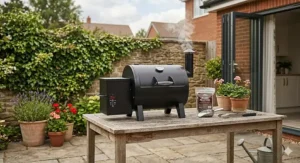
Common Mistakes When Buying a Compact Smoker in the UK
After watching friends and forum members waste money on unsuitable smokers, these pitfalls stand out. Most stem from following American advice that doesn’t translate to British realities.
Ignoring UK Voltage and Plug Requirements: Electric smokers designed for US markets run on 110V, not our 230V standard. Always verify “UK version” or “230V compatible” in product descriptions before purchasing. Some Amazon.co.uk listings show US models that won’t work with UK electrics even with a plug adapter. The Masterbuilt models I’ve recommended are UK-compatible, but always check.
Underestimating British Weather Impact: That “weather-resistant powder coating” fails spectacularly after one damp British winter. Rust appears within months on budget smokers left exposed. If you’re not covering it or storing it in a shed between uses, pay the premium for porcelain-enamelled or stainless steel construction. The £200 you save buying a budget offset barrel gets eaten by replacement costs within three years.
Overlooking Storage Realities: You fall in love with a barrel smoker in the shop, then discover it won’t fit through your back door or into your shed. Measure your storage space and access routes before purchasing. Bullet smokers that disassemble (ProQ, Weber) navigate tight spaces; offset barrels are one-piece nightmares for terraced housing.
Chasing Capacity You Don’t Need: Buying the Weber 57cm when you cook for two people is like buying a bus to drive to Tesco. You’ll heat more empty space, burn more fuel, and struggle with temperature control on small cooks. Match capacity to your realistic needs: 40-47cm diameter serves families of 2-4; 57cm suits regular entertaining. Over-capacity wastes fuel in British weather where heat retention already suffers compared to warmer climates.
Assuming “Waterproof” Means Anything: No smoker is genuinely waterproof. “Weather-resistant” means it won’t immediately rust if rained on, not that you can leave it uncovered through British winters. Budget for a quality cover (£20-£40) or plan shed storage. This isn’t paranoia; it’s acknowledging that our climate differs from the Mediterranean marketing photos suggest.
Neglecting UKCA Certification for Electrical Units: Post-Brexit, electrical products need UKCA marking for UK sale. Reputable retailers (Amazon.co.uk, BBQ World) stock compliant models, but dodgy imports from third-party sellers might not. For electric smokers, verify UKCA certification to ensure it meets UK electrical safety standards and won’t void your home insurance if something goes wrong.
Buying Pure Cold Smokers as Primary Units: Cold smoke generators (ProQ, pellet tubes) are brilliant accessories but useless for hot smoking. If you’re buying your first smoker and want to cook brisket or ribs, you need a hot smoker. Cold generators complement existing kit; they don’t replace it. This confusion is common among UK buyers new to smoking who see the £35 price and think they’re getting a complete solution.
Real-World Performance in British Conditions
Manufacturers test in California sunshine; you’re using it in Manchester drizzle. Here’s what actually happens when you smoke in British weather with compact garden-friendly units.
Wet Weather Operation: Bullet smokers (ProQ, Weber) handle rain better than offset barrels due to tighter sealing and vertical design that sheds water. The worst I’ve encountered was smoking a brisket through a February storm in Yorkshire — the Weber Smokey Mountain maintained 110°C despite horizontal rain, though I burned 30% more charcoal than usual compensating for heat loss. Offset barrels leak heat through poorly sealed lids, making temperature maintenance during rain genuinely frustrating.
Wind Management: British gardens are rarely sheltered. Wind plays havoc with temperature control, particularly on bullet smokers where the bottom vents face the breeze. Position your smoker with the vent side sheltered by a fence or wall. I’ve found the ProQ’s four-vent design (three base, one lid) more forgiving in wind than the Weber’s three-point system. Electric smokers (Masterbuilt) are least affected since they don’t rely on airflow for combustion, though you’re still losing heat through the cabinet walls.
Cold Weather Challenges: Smoking in British winter is feasible but fuel-intensive. At 5°C ambient, expect to burn 40-50% more charcoal than summer sessions. Pre-heating becomes essential — budget 30-45 minutes before adding food. The Weber’s porcelain enamel retains heat better than cheaper powder-coated steel, justifying its premium in extended UK smoking seasons. Electric smokers maintain temperature more easily in cold weather, though electricity costs rise accordingly.
Rust Prevention in Damp Climate: Even “rust-resistant” steel will corrode if left uncovered through British winters. My storage routine: cook Sunday, clean Monday, apply cooking oil to grates Tuesday, cover with waterproof BBQ cover Wednesday onwards. Store in a shed if possible. ProQ and Weber’s porcelain coating resists rust far better than budget alternatives, but nothing survives permanent outdoor exposure. Budget an extra £30 for a quality cover (not the flimsy ones bundled with cheap smokers).
Fuel Availability and Cost: Lumpwood charcoal (£15-£20 for 10kg) burns hotter than briquettes but faster. Weber briquettes (£16 for 8kg) burn longer and more consistently — better for overnight cooks. UK petrol stations stock basic charcoal, but specialist BBQ shops or online retailers (ProQ, BBQ World) offer better options. Wood chips for smoke flavour: hickory, oak, and cherry are widely available; exotic varieties require online ordering. A 2kg bag (£8-£12) lasts months of regular smoking.
Noise Considerations for Urban Gardens: Charcoal smokers are silent except for occasional crackling. Electric smokers hum softly from the heating element — quieter than a tower fan, inaudible beyond three metres. This matters in terraced housing where your neighbour’s bedroom window overlooks your patio. If you’re smoking at 6am to have brisket ready for lunch, electric units won’t wake the street.
Space-Saving Setup Guide for Compact UK Gardens
Making a smoker for small garden work requires strategic positioning and storage thinking that American guides never mention. These tactics come from two years smoking in a London garden measuring 4m × 3m.
Corner Positioning Strategy: Place your smoker in the garden corner farthest from your back door but nearest to any side gate. This maximises usable patio space whilst giving access for moving the smoker to storage without navigating furniture. Bullet smokers fit neatly in corners; offset barrels dominate space and suit against fence lines instead.
Vertical Storage Solutions: Disassembled ProQ or Weber components stack vertically in sheds, claiming floor space equivalent to a toolbox. Create a storage rack using shelf brackets screwed into shed walls at 30cm intervals — each section slots onto a shelf. Offset barrels can’t disassemble, forcing you to allocate the full 116cm × 51cm footprint even in storage.
Multi-Purpose Surface Integration: Use your smoker lid as a side table during grilling sessions. The ProQ’s flat lid holds plates; Weber lids have a convenient rim for stabilising items. This eliminates the need for separate garden furniture during cooks — particularly valuable when you’re working with limited patio space.
Rain Protection Without Permanent Covers: Rather than fighting with full covers every session, keep a tarp and bungee cords handy. Post-cook cleanup, toss the tarp over whilst still warm (not hot), secure with cords, deal with proper covering once cooled. This British weather compromise beats wrestling with tight-fitting covers in the rain whilst juggling a pork shoulder.
Charcoal Storage Micro-Solutions: A 10kg bag of charcoal won’t fit in most British sheds without creative thinking. I use a metal dustbin with a locking lid (£20 from DIY stores), stored outside against the fence. Keeps charcoal dry, prevents vermin interest, and doubles as a side table during cooks. Wood chip bags fit inside using the same bin.
Neighbour-Friendly Smoke Management: Position your smoker so prevailing winds carry smoke away from neighbours’ gardens and washing lines. UK wind generally comes from the southwest; position accordingly. If your neighbour hangs washing Sunday mornings and you’re planning an all-day smoke, a heads-up text prevents conflict. This isn’t grovelling; it’s acknowledging that British terraced housing means we’re cooking three metres from other people’s living spaces.
Winter Storage Winterisation: Before winter storage (November-February for most UK smokers), strip it completely. Wash all grates in hot soapy water, dry thoroughly, coat with cooking oil. Wipe interior with oiled kitchen paper. This prevents rust and means spring cleaning is minimal. Cheap smokers skip this and rust through; quality units last decades with basic care.
Smoker Setup and First-Use Guide for UK Gardens
Your shiny new smoker just arrived. Before you chuck a brisket on and hope for the best, spend thirty minutes on proper setup — it’ll save you hours of frustration and potentially ruined meat.
Initial Assembly and Seasoning: Charcoal smokers (ProQ, Weber) need seasoning before first use. This burns off manufacturing residues and creates a protective coating inside. Assemble completely, apply a thin coat of cooking oil to all internal surfaces, load with charcoal, light it, and run the smoker at 120-150°C for 2-3 hours with the lid closed. Use cheap cooking oil, not expensive olive oil — you’re burning it off anyway. Electric smokers (Masterbuilt) require similar seasoning: set to maximum temperature (around 135°C), run empty for three hours with wood chips in the tray.
First Low-and-Slow Cook: Start with pork shoulder, not brisket. Pork is forgiving; brisket punishes mistakes. A 2kg pork shoulder costs £8-£12 at British supermarkets, cooks in 6-8 hours at 110°C, and yields pulled pork even if you slightly undercook it. Season with just salt and pepper — you’re learning smoke and heat management, not testing rub recipes. Target internal temperature: 90-95°C. Use a dual-probe thermometer (£20-£30 from Amazon.co.uk) to monitor both smoker chamber temperature and meat internal temperature.
British Weather Adjustments: UK smoking differs from American guides in one critical way: our baseline ambient temperature is 10-15°C lower. This affects everything. In winter, pre-heat your smoker for 30-45 minutes before adding meat. In summer, you can skip pre-heating. Wind management matters more here too — position your smoker in the most sheltered corner of your garden, using fences or walls to block prevailing southwest winds.
Fuel Loading for Extended Cooks: The Minion Method works brilliantly in British conditions: fill your charcoal basket with unlit briquettes (about 3-4kg), then add 20-30 lit coals to one side. The fire burns slowly from the lit coals outwards, providing 10-14 hours of heat on a single load. This technique is documented by BBQ researchers at Wikipedia’s Barbecue article, proving its effectiveness across various smoker types.
Smoke Wood Selection: Don’t overthink this initially. Oak or hickory chips from any UK BBQ retailer provide reliable smoke flavour. Soak them in water for 30 minutes, then drain and add to charcoal every 45-60 minutes. Each handful costs about 50p and lasts an hour. Avoid mesquite initially — it’s overpowering and popular in Texas, not British palates.
Temperature Troubleshooting: If your smoker runs too hot (above 130°C), close bottom vents partially and remove the lid briefly to dump excess heat. Too cold (below 100°C)? Open all vents fully and add 5-10 lit coals. British humidity helps here — our damp air prevents the dramatic temperature spikes that American smokers battle in Arizona heat.
Benefits vs Traditional BBQ: Why Smoking Changes Everything
You’ve got a conventional kettle BBQ. Why bother with a dedicated smoker? Here’s what actually changes when you commit to low-and-slow cooking.
Flavour Development That Grilling Can’t Match: Grilling cooks meat in 15-30 minutes with high heat. Smoking cooks it in 6-12 hours with low heat and constant smoke exposure. This extended wood smoke contact creates flavour layers impossible to achieve with quick cooking. The Maillard reaction — the chemical process creating those savoury browned flavours — happens continuously over hours rather than minutes. Research from food science departments at British universities confirms that controlled low-temperature cooking maximises flavour compound development whilst maintaining food safety.
Texture Transformation: A grilled pork chop is fine. A 12-hour smoked pork shoulder that falls apart when you touch it is transcendent. The extended cooking time breaks down connective tissues (collagen) into gelatin, creating that “melt in your mouth” texture impossible with grilling. Brisket — a notoriously tough cut — becomes tender enough to slice with a butter knife after 12-14 hours at 110°C.
Fuel Efficiency for Long Cooks: Running a conventional BBQ for 12 hours requires constant charcoal additions, burning through 8-10kg. A well-designed smoker (ProQ, Weber) maintains temperature on 4-5kg using the Minion Method, actually saving money on extended cooks. Electric smokers cost £2-£3 in electricity for all-day sessions, far cheaper than refuelling charcoal grills repeatedly.
Multi-Task Cooking Capacity: Smokers’ vertical design or offset chambers let you cook multiple items simultaneously at different levels. Whilst your brisket smokes on the lower grate, add chicken wings on the upper level for the final two hours. This capacity utilisation is impossible on single-level grills. For British garden parties, you’re feeding eight people from one fuel load rather than manning a grill for hours.
Set-It-And-Forget-It Convenience: Properly configured smokers maintain temperature for 8-12 hours without intervention. Load charcoal using the Minion Method, set vents, go about your day. Electric smokers are even more hands-off — dial the temperature, load wood chips, walk away. Contrast this with grilling, where you’re standing over flames for the entire cook. British weather makes this particularly relevant — would you rather babysit a grill in February drizzle or check a thermometer every few hours from inside?
Better Value from Cheaper Cuts: Smoking transforms cheap cuts (pork shoulder £4/kg, beef brisket £8-£12/kg) into premium meals. The low-and-slow process makes toughness irrelevant — everything becomes tender. Grilling demands expensive cuts (ribeye £25/kg, lamb chops £18/kg) to achieve tenderness in quick cooking times. Your cost per serving drops dramatically when you’re smoking £20 worth of pork shoulder that feeds ten people versus grilling £80 worth of steaks for the same crowd.
Here’s a practical comparison table of smoking versus traditional BBQ grilling for British garden cooking:
| Factor | Traditional BBQ Grill | Dedicated Smoker |
|---|---|---|
| Typical Cook Time | 15-45 minutes | 6-14 hours |
| Fuel per Cook | 2-3kg charcoal | 4-5kg charcoal (long cooks) |
| Hands-On Time | Continuous attendance | Check every 2-3 hours |
| Best Meat Cuts | Premium (steaks, chops) | Budget (shoulder, brisket) |
| Weather Resilience | Wind-sensitive | Better sealed, wind-resistant |
| Flavour Profile | Charred, grilled | Deep smoky, tender |
| British Winter Use | Challenging | More practical with covers |
The table reveals why smoking suits British constraints better than many realise. Our climate favours slow, sealed cooking over the quick high-heat grilling that works in Mediterranean weather. The ability to smoke whilst getting on with life indoors particularly suits our unpredictable weather patterns.
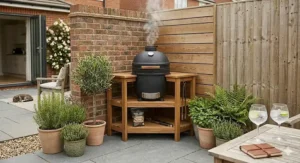
Small Garden Smoking Calendar: What to Cook When
British seasons dictate what actually works in small-garden smoking. This isn’t Texas where you’re smoking year-round in sunshine; it’s knowing when to embrace the weather and when to work around it.
Spring (March-May): Awakening Season: Garden temperatures reach 10-15°C, perfect for getting back into smoking after winter. Start with pork ribs (3-4 hours at 120°C) or chicken thighs (2-3 hours). These shorter cooks let you shake off the winter rust without committing to all-day sessions. British spring rain is frequent but light — a quality cover between cooks prevents rust, and the occasional shower during cooking barely affects well-sealed smokers. Wood choice: apple or cherry for lighter smoke that complements spring greens and salads.
Summer (June-August): Peak Smoking: Long days and (relatively) stable weather make this prime time. Tackle your first brisket — 12-14 hours starting at 6am means dinner at 8pm. British summer rarely gets oppressively hot (unlike American South where smoking in 35°C heat is miserable), making our 18-25°C temperatures ideal for extended outdoor cooking. Host garden parties with smoked pulled pork (8-10 hours) that feeds crowds cheaply. Wood choice: oak or hickory for classic BBQ flavours. Watch for sudden storms — British summer weather turns quickly, so keep a tarp handy.
Autumn (September-November): Transition Wisdom: Temperatures drop to 8-12°C, extending pre-heat times but creating ideal smoking conditions — cool air means smoke clings to meat better. Perfect season for smoking whole chickens (4-5 hours), lamb shoulders (6-8 hours), or experimenting with cold smoking (below 30°C) as natural ambient temperatures help. British autumn winds pick up; position smokers in sheltered corners and weight down lightweight models. Wood choice: beech or whisky oak for autumn’s richer flavours.
Winter (December-February): Strategic Sessions: Many British smokers pack up for winter — which is precisely when conditions can be brilliant for those willing to brave the cold. Sub-10°C ambient temperatures mean reduced bacterial growth risk, letting you safely prep overnight. Christmas turkey (8-10 hours) or New Year brisket become memorable events. Fuel consumption increases 40-50% in winter cold, so budget accordingly. Porcelain-enamelled smokers (Weber, ProQ) retain heat better than powder-coated alternatives. Wood choice: maple or cherry for festive sweetness.
Bank Holiday BBQs: British bank holidays (Easter Monday, May Day, late May, late August) are traditional outdoor cooking days despite our weather’s unreliability. Smokers’ sealed design means you can commit to bank holiday pulled pork even when forecast shows potential rain — just cover between basting sessions. Plan 8-10 hour cooks starting mid-morning for early evening service.
Monthly Smoking Strategy for Small UK Gardens
January-February: Cold smoking projects (salmon, cheese) using the ProQ generator and ambient cold temperatures. Hot smoking only on genuinely mild days (above 8°C) to avoid excessive fuel consumption.
March-April: Pork ribs, chicken wings, shorter cooks to rebuild confidence after winter break. Test equipment after months of storage.
May-June: Graduate to pork shoulders and first brisket attempts. Longer days support extended cooks without finishing in darkness.
July-August: Peak season — multiple smoking sessions, garden parties, batch cooking for freezing. Maximise your investment whilst weather cooperates.
September-October: Last chance for social smoking sessions before British weather deteriorates. Focus on crowd-pleasers: pulled pork, ribs, whole chickens.
November-December: Festive smoking (Christmas turkey, Boxing Day leftovers), cold smoking for gifts (bacon, salmon). Otherwise, wind down for winter.
Long-Term Costs and Maintenance in the UK
The sticker price tells half the story. Here’s what actually costs over a smoker’s British lifetime.
Fuel Costs Reality: A typical low-and-slow cook (brisket, pork shoulder) on charcoal uses 4-5kg of briquettes, costing £8-£10 per session with Weber branded fuel or £6-£8 with budget alternatives. Hot smoking chicken or ribs uses 2-3kg (£4-£6). Electric smokers cost £2-£3 in electricity per long cook at current UK rates. Over a year of monthly smoking, charcoal costs £80-£120; electric costs £30-£40. This gap widens if you’re smoking weekly.
Replacement Parts Availability: Weber and ProQ maintain excellent UK parts support. Need a replacement grate in five years? £30-£40 delivered. Budget brands (Fit4home, BillyOh) offer minimal parts support — when the grate rusts through, you’re replacing the entire unit. Factor this into “lifetime cost” calculations. A £450 Weber with a £40 grate replacement after five years beats buying three £150 budget units over the same period.
Rust and Deterioration Timeline: Porcelain-enamelled steel (Weber, ProQ): 10-20 years with basic care. Powder-coated steel (budget offsets): 2-4 years before significant rust appears. Stainless steel (Browin, premium units): 15+ years. In British climate, these timelines compress if you’re leaving units exposed without covers. Budget an additional 30-40% off lifespan for uncovered outdoor storage versus shed storage.
Cover Investment Necessity: A quality waterproof cover costs £30-£50 and extends smoker life by years. Cheap bundled covers deteriorate within one winter. Brands worth buying: Char-Broil Premium, Weber-branded covers (fitted for specific models), or ProQ covers. Universal covers work but fit poorly, allowing water ingress.
Cleaning Product Costs: Wire brushes for grate cleaning (£8-£12, replace annually), chimney starter for charcoal lighting (£25-£35, lasts years), ash bucket with lid (£15-£20), heat-resistant gloves (£12-£18). Budget £60-£80 for initial accessories, then £10-£20 annually for consumables like brushes and gloves.
Insurance Considerations: Check your home insurance policy. Some UK insurers require notification if you’re using BBQs or smokers on balconies or within certain distances of the property. This rarely affects premiums but can void claims if undisclosed and something goes wrong. Particularly relevant for electric smokers where electrical faults could cause issues.
Wood Chip Ongoing Expenditure: A 2kg bag of quality wood chips (oak, hickory, cherry) costs £8-£12 and provides 15-20 smoking sessions. Most UK smokers use chips sparingly — 100-150g per cook. Annual spend for monthly smoking: £15-£25. Cheaper wood chips from garden centres often contain bark and create bitter smoke; this is false economy.
Features That Actually Matter (And Marketing Fluff to Ignore)
Smoker marketing materials overflow with specifications that sound impressive but mean nothing in British small-garden reality. Here’s what actually affects your smoking results versus what’s just sales noise.
Built-in Thermometers: Useful But Inaccurate Most smoker lid thermometers read 10-20°C higher than actual cooking temperature at grate level. They’re useful for trends (temperature rising or falling) but useless for precision. Budget £20-£30 for a dual-probe digital thermometer (one probe for chamber temp at grate level, one for meat internal temp). Brands worth buying: ThermoPro, Inkbird, Weber iGrill. This single accessory improves results more than any smoker feature.
Water Pans: Essential for Moisture Bullet smokers include water pans between fire and food. Marketing claims they “add moisture to meat” which is partially true, but the real value is temperature stabilisation. Water’s thermal mass buffers against temperature spikes and keeps heat distribution even. Fill it with hot water from the kettle (saves heating time), add apple juice for subtle sweetness, or just use tap water — all work fine. Never skip the water pan on long cooks.
Multiple Vents: Temperature Control Foundation The difference between £90 smokers and £400 ones often comes down to vent quality. Cheap vents don’t seal properly, making low temperatures (below 100°C) impossible to maintain. Premium smokers (Weber, ProQ) use aluminium or steel vents with positive closure and cool-touch tabs. Count the vents: three or four (base and lid) gives better control than two. Check whether they’re adjustable in small increments — binary open/closed vents are frustrating.
Porcelain Enamel vs Powder Coating: British Weather Reality Marketing rarely specifies coating type, but it determines longevity in UK climate. Porcelain enamel (Weber, ProQ) costs more but lasts 10-20 years in British damp. Powder coating (budget offsets) deteriorates within 2-4 years, showing rust patches by season two. Stainless steel sits between them for cost and durability. If the product description doesn’t specify coating type, assume powder coating — manufacturers highlight porcelain when they’ve paid for it.
Cooking Capacity Specifications: Half Truth Manufacturers measure cooking surface in square inches or centimetres but ignore vertical clearance. A smoker claiming “700 square inches” might only fit two racks of ribs once you account for meat thickness. Ignore the numbers; instead, check stated capacity: “holds 6 chickens” or “2 briskets” gives better real-world guidance. For British family cooking, “holds 2 chickens” serves 4-6 people comfortably.
Side Tables and Shelves: Garden Space Luxury Offset barrel smokers advertise side tables as features. For small UK gardens, they’re space hogs. Only value them if you’re genuinely got 3+ square metres of patio. Otherwise, use your existing garden furniture as prep space and choose smokers without built-in shelving to save footprint.
Wheels: Mandatory for British Storage If your smoker weighs more than 15kg (most do), wheels transition from “nice feature” to essential. British gardens rarely have permanent smoker locations — you’re moving it to storage between uses, repositioning for wind shelter, or clearing the patio for other uses. Two wheels (not four) are optimal; they let you tilt and roll without the smoker wandering during cooking.
Removable Ash Pans: Cleanup Differentiator Charcoal smoking generates ash. Quality smokers (Weber, ProQ) include removable ash pans you can slide out, dump in the garden waste bin, and slide back. Budget models require tipping the entire smoker to empty ash — awkward and messy when you’re dealing with 20kg of steel. Worth checking before purchase, particularly if you’ve got mobility limitations.
Digital Controls vs Manual: Beginner Decision Electric smokers (Masterbuilt) advertise digital control panels. They genuinely work — dial your temperature, and it maintains it within ±3°C. The trade-off is you’re dependent on electronics in British damp; when the control board fails (usually after 3-5 years), repairs cost £80-£120. Manual charcoal smokers have no electronics to fail but demand fire management skills. Choose based on whether you value convenience over self-reliance.
UKCA Certification for Electric Smokers Post-Brexit requirement that electric products sold in the UK carry UKCA marking rather than CE. Reputable retailers (Amazon.co.uk, BBQ World) stock compliant models, but grey imports might not. For electric smokers, verify UKCA certification exists — it’s a legal requirement and affects insurance validity if something goes wrong. More details on UK product safety standards are available from the UK Government’s business support pages.
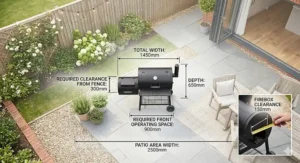
Compact Smoker Price Range Analysis: UK Market 2026
Understanding where your money goes in different price brackets helps justify investment or identify false economy. British smoker pricing differs from American markets due to import duties, VAT, and local manufacturing (ProQ).
Budget Tier: £60-£150
Models: Fit4home Barrel (£60-90), basic offset barrels (£100-150), small vertical units
What you get: Functional smoking capability, thin steel construction (0.8-1.2mm), powder coating that’ll rust within 2-3 years, basic temperature control, minimal accessories
Best for: Testing whether smoking suits you before committing serious money, camping/portable needs, secondary smoker for garden parties
Limitations: Short lifespan in British weather, temperature control frustration, small capacity, cheaply made thermometers, no replacement parts support
Mid-Range Tier: £200-£400
Models: ProQ Frontier Elite (£300-400), Masterbuilt Electric (£250-350), quality offset barrels (£250-350)
What you get: Better materials (1.5mm steel, porcelain enamel), accurate temperature management, 5-10 year lifespan with care, UK-based customer support, replacement parts availability, proper water pans and venting
Best for: Serious hobbyists, regular smoking (monthly+), British weather resilience, anyone committed long-term
Sweet spot: ProQ Frontier at £300-350 offers premium performance at £150 less than Weber
Premium Tier: £450-£600
Models: Weber Smokey Mountain 47cm/57cm (£450-580), premium electric models
What you get: Exceptional build quality, 10-20 year lifespan, porcelain enamel that withstands decades of British weather, comprehensive warranty (10 years on Weber body/lid), high resale value, excellent UK customer service
Best for: Long-term investment, buyers who value buy-once-cry-once philosophy, competitive smoking, maximum weather resistance
Premium justification: Weber 47cm at £480 vs ProQ Frontier at £350 — the £130 difference buys superior long-term durability and resale value
Accessories Tier: £30-£60
Models: ProQ Cold Smoke Generator (£35), pellet smoke tubes (£12-25), stovetop smokers (£40-60)
What you get: Augments existing equipment rather than replacing it, specific use cases (cold smoking, portable camping, indoor use)
Best for: Expanding capability without buying full smokers, balcony users with space constraints, cold smoking enthusiasts
Strategic value: £35 ProQ generator transforms any kettle BBQ into cold smoker — arguably best value in entire smoking category
Here’s a value analysis comparing five-year total ownership costs across tiers:
| Price Tier | Initial Cost | Replacement Frequency | 5-Year Total Cost | Cost Per Use (20 cooks/year) |
|---|---|---|---|---|
| Budget (£90) | £90 | Replace twice (2.5yr life) | £270 | £2.70 |
| Mid-Range (£350) | £350 | No replacement needed | £350 | £3.50 |
| Premium (£480) | £480 | No replacement needed | £480 | £4.80 |
The analysis reveals mid-range sweet spot: over five years, the ProQ Frontier’s £350 initial cost spreads to £3.50 per cook (assuming 20 cooks yearly). Budget smokers seem cheaper initially but require replacement, ballooning to £270 for two units across the same period. Premium models offer the lowest per-use cost only if you’re smoking beyond five years — the crossover point where Weber’s durability advantage justifies the premium.
This calculation excludes fuel costs (similar across tiers), accessories (thermometers, covers, gloves needed regardless), and maintenance (budget models need more frequent grate replacements). For British buyers committed to regular smoking, the mid-range tier (£300-£400) optimises value against longevity.
Smoker Recommendations by UK Lifestyle Type
Different British living situations demand different smoking solutions. Here’s which smoker actually suits your specific circumstances.
The London Flat-Dweller (Balcony 2m × 1.5m): You’ve got a Juliet balcony in Clapham or a compact outdoor space in a Manchester tower block. ProQ Cold Smoke Generator (£35) paired with a small kettle BBQ is your realistic option if charcoal is permitted, otherwise the Browin Portable Smoker (£40-60) with gel fuel complies with most “no naked flames” rules. Cold smoking salmon or cheese doesn’t generate the smoke volume or duration that upsets neighbours. If electricity is available and your lease permits, the Masterbuilt electric runs cleaner than charcoal.
The Suburban Semi-Detached (Garden 6m × 4m): You’re in Reading, Birmingham, or Leeds with a proper garden but neighbours three metres either side. The ProQ Frontier Elite (£300-400) is purpose-built for this situation — 43cm footprint doesn’t dominate your patio, porcelain coating survives British weather, and modular design means you’re not wrestling a one-piece monster through your 80cm back door. Position it in the corner furthest from neighbours’ kitchen windows. The sealed design produces less visible smoke than offset barrels, reducing neighbour complaints.
The Rural Cottage (Large Garden 10m+): You’re in the Cotswolds, Peak District, or Scottish Highlands with ample space and distant neighbours. The Weber Smokey Mountain 57cm (£550-580) makes sense here — larger capacity for entertaining, and the extra £100 over the 47cm version buys significantly more cooking space you’ll actually use when hosting. Alternatively, the BillyOh Offset Barrel (£120-180) gives you versatile grilling plus smoking in a footprint you can actually accommodate.
The Terraced Housing Scenario (Yard 3m × 2m): You’re in a Victorian terrace in Bristol, Liverpool, or Edinburgh with a compact walled yard. The Fit4home Barrel (£60-90) fits in corners and stores easily in small sheds. Its 6kg weight means one person can move it without help — relevant when you’re navigating narrow passages to back yards. Budget for a quality cover (£30) to protect it between uses, as these small yards often lack covered storage.
The Caravan/Camping Enthusiast: You’re touring the Lake District, North Wales, or Scottish Highlands and want smoking capability on site. The Fit4home Barrel (£60-90) fits in car boots and weighs just 6kg, or the Browin Portable Smoker (£40-60) runs on gel fuel without needing charcoal supplies. Both deliver genuine smoking results in genuinely portable formats. Pack a bag of charcoal or gel fuel canisters, and you’re smoking on campsites legally (verify site rules — some prohibit charcoal BBQs).
The First-Time Buyer (Uncertain Commitment): You’re curious about smoking but unsure it’ll become a regular hobby. The ProQ Cold Smoke Generator (£35) plus any existing kettle BBQ tests the waters with minimal investment. Alternatively, the Fit4home Barrel (£60-90) provides hot smoking capability at a price that won’t devastate you if smoking isn’t your thing. Both options let you discover whether you enjoy the process before committing to £300+ premium smokers.
The Experienced BBQ Cook (Upgrading from Grilling): You’ve been grilling for years and want to expand into low-and-slow smoking. The Weber Smokey Mountain 47cm (£450-500) rewards your existing fire management skills with competition-level results, or the ProQ Frontier Elite (£300-400) delivers 90% of Weber’s performance for £150 less. Both suit cooks who understand charcoal behaviour and want equipment that’ll last decades.
The Electric Convenience Seeker (Busy Lifestyle): You’re juggling work, kids, and limited free time. The Masterbuilt 30″ Digital Electric (£250-350) offers genuine set-and-forget smoking — dial the temperature, walk away, get on with your Sunday. Perfect for British buyers who want pulled pork without spending the day managing fire. The trade-off (lighter smoke flavour) won’t bother anyone who hasn’t tasted pure charcoal smoke anyway.
✨ Don’t Miss These Exclusive Deals!
🔍 Take your outdoor cooking to the next level with these carefully selected products. Click on any highlighted item to check current pricing and availability on Amazon.co.uk. These picks will help you find exactly what you need!
UK Regulations, Safety, and Legal Considerations
British smoker ownership involves more legal considerations than American guides suggest, particularly for flat-dwellers and urban gardens.
Lease and Building Restrictions: If you rent or own a leasehold property, check your lease for BBQ/smoking restrictions. Many UK flats built after 2000 explicitly prohibit charcoal BBQs on balconies, though some permit electric or gas alternatives. Violating this can mean lease forfeiture or insurance invalidation. Contact your landlord or building management before purchasing charcoal smokers for balcony use.
Planning Permission: Generally Not Required: Garden smokers don’t require planning permission unless you’re installing permanent brick BBQ structures or commercial-scale equipment. Portable units (all models in this guide) fall under permitted development rights. However, if your property is listed or in a conservation area, verify with your local council before installation — rules are stricter for heritage buildings.
Neighbour Considerations and Nuisance Claims: British law (Environmental Protection Act 1990) allows neighbours to make statutory nuisance claims about smoke. Whilst occasional smoking is generally acceptable, daily marathon sessions creating persistent smoke could trigger council involvement. Practically, this rarely affects home smokers unless you’re being genuinely inconsiderate. Position your smoker so prevailing winds carry smoke away from neighbours’ gardens, avoid smoking when they’re hanging washing, and communicate if planning all-day cooks.
Fire Safety on Balconies: Even if your lease permits it, verify your building’s fire safety regulations. Post-Grenfell, many councils and housing associations have tightened balcony fire restrictions. Electric smokers are safer than charcoal from a fire-risk perspective but still require clearance from walls and railings (typically 1 metre minimum). Some buildings prohibit any cooking equipment on balconies regardless of fuel type.
Insurance Notification: Most UK home insurance policies don’t require notification for garden BBQ/smoker use, but check your specific policy. Some insurers ask to be informed if you’re using cooking equipment on balconies or within 2 metres of the property. Failing to disclose this could void claims related to fire or smoke damage. A quick phone call to your insurer clarifies whether notification is needed.
UKCA Certification for Electric Models: Post-Brexit requirement that electrical products sold in the UK carry UKCA marking. For electric smokers, this confirms the unit meets UK electrical safety standards. Reputable retailers stock compliant models, but grey-market imports might not have proper certification. This affects warranty claims and insurance validity if something goes wrong. The UK Government’s product safety guidance explains certification requirements in detail.
Food Safety Responsibilities: Whilst the Food Standards Agency regulates commercial food preparation, home smoking for personal consumption isn’t regulated. However, basic food safety applies: smoke meat to safe internal temperatures (75°C for poultry, 63°C for whole cuts, 71°C for ground meat), don’t leave meat at room temperature for extended periods, and practice proper hygiene. Cold smoking (below 30°C) carries higher food safety risks — research proper curing techniques before attempting bacon or salmon.
Scottish, Welsh, and Northern Irish Variations: Whilst most regulations are UK-wide, some differences exist. Scotland has stricter environmental protection enforcement and tenement-specific regulations for communal areas. Wales requires Welsh language signage on commercial premises but doesn’t affect home use. Northern Ireland maintains some EU alignment in product standards post-Brexit. For most home smokers, these variations don’t matter, but commercial or semi-commercial use should verify local rules.
FAQ: British Smoker Buyers Most Common Questions
❓ Can I use a smoker on my flat balcony in the UK?
❓ How much garden space do I actually need for a compact smoker?
❓ Does British weather ruin smoking sessions?
❓ Are electric smokers any good for authentic flavour?
❓ What's the cheapest way to start smoking in a small UK garden?
✨ Ready to Transform Your Garden Cooking?
🔍 Discover which smoker perfectly fits your UK garden space. Click on any highlighted product to check current prices and availability on Amazon.co.uk. From compact balcony solutions to family-sized smokers, find your perfect match today!
Conclusion: Finding Your Perfect Compact Smoking Solution
After eighteen months smoking in a London garden barely larger than a parking space, here’s what I’ve learned: the smoker for small garden that works best is the one that’ll actually get used. That £500 Weber gathering dust in your shed because it’s “too precious for Tuesday chicken” isn’t serving you better than a £90 Fit4home you fire up monthly.
For most British small-garden scenarios, the ProQ Frontier Elite hits the sweet spot. At £300-£400, it’s positioned between budget barrel smokers and premium imports, delivering genuinely professional results in a compact 43cm footprint. The porcelain coating withstands our relentless damp, the modular design offers versatility, and Cornwall-based ProQ’s UK support means parts availability in a decade. This is the smoker I’d recommend to a mate in Birmingham, Manchester, or Edinburgh who’s serious about smoking but constrained by typical British garden dimensions.
If you’re genuinely committed to charcoal smoking and prepared to invest in quality kit that’ll outlive your mortgage, the Weber Smokey Mountain 47cm represents the gold standard. Yes, it’s £450-£500, but factor in its 10-20 year lifespan, strong UK resale value, and parts availability, and it’s arguably better value than replacing cheaper units every few years. The Smokey Mountain is what you buy when you’re certain smoking will become a regular part of your cooking routine.
For beginners hesitant to commit hundreds of pounds before knowing whether smoking suits them, or anyone needing genuine portability for camping trips, the Fit4home Barrel Smoker delivers surprising capability for under £90. It’s a budget unit with budget limitations, but it’s also the smoker that answers the “is smoking for me?” question without devastation if the answer is no.
And for flat-dwellers or anyone with genuinely constrained spaces where even a compact bullet smoker feels excessive, the ProQ Cold Smoke Generator paired with an existing kettle BBQ transforms £35 into authentic cold-smoked salmon capability. It’s the gateway drug of the smoking world — once you’ve tasted home-smoked mackerel, you’ll be eyeing proper hot smokers within months.
The British smoking renaissance is happening despite our weather, not because of it. Our gardens might measure in paving slabs rather than acres, but that doesn’t preclude authentic low-and-slow barbecue. Choose equipment suited to your actual constraints, respect your neighbours, embrace the learning curve, and you’ll be producing competition-worthy pulled pork from a terrace in Tooting before you know it.
Recommended for You
- 7 Best Smoker for Fish UK 2026 — Expert Reviews & Guide
- Best Smoker for Ribs UK 2026: 7 Top Models Reviewed
- 7 Best Smoker for Brisket UK 2026
Disclaimer: This article contains affiliate links. As an Amazon Associate, I earn from qualifying purchases. If you purchase products through these links, we may earn a small commission at no additional cost to you.
✨ Found this helpful? Share it with your mates! 💬🤗
