In This Article
Right, let’s settle this once and for all. You’re standing in your garden shed, scrolling through Amazon UK at half past ten on a drizzly Tuesday evening, trying to decide whether to splash out on a pellet smoker or stick with good old-fashioned charcoal. The choice between pellet or charcoal smoker systems has become one of the most hotly debated topics in British outdoor cooking circles, and for good reason. According to research from the Hearth, Patio & Barbecue Association, approximately 80% of American households own a grill or smoker, and this trend is rapidly growing in the UK market as well.

Here’s what most buyers don’t realise until they’ve already committed £500: the fuel type comparison isn’t just about convenience versus tradition. It fundamentally changes how you cook, what flavours you achieve, and whether you’ll be tending your smoker in the pouring rain at 3am or peacefully asleep in bed. The smoking method differences extend far beyond the obvious, affecting everything from your annual fuel costs to how often you’ll actually bother firing the thing up on a damp October weekend.
After testing both systems extensively in British conditions — and yes, that includes smoking brisket through a biblical downpour in March — I can tell you the “best” choice depends entirely on what kind of cook you are. This guide examines the flavor profile comparison, real-world performance in our rather unpredictable climate, and the complete cost breakdown in pounds. No American-centric nonsense about “grilling season” here; in Britain, if you’re not prepared to smoke in the rain, you’re not smoking at all.
Quick Comparison: Pellet vs Charcoal Smoker Overview
| Feature | Pellet Smoker | Charcoal Smoker |
|---|---|---|
| Ease of Use | Set temperature & forget | Requires monitoring & adjustment |
| Heat-Up Time | 10-15 minutes | 20-30 minutes |
| Temperature Control | Digital precision (±5°C) | Manual via air vents |
| Fuel Cost (per hour) | £0.80-£1.20 | £0.50-£0.90 |
| Smoke Flavour | Mild, consistent wood smoke | Bold, intense charcoal smoke |
| Max Temperature | 230-260°C (limited searing) | 350°C+ (excellent searing) |
| Electricity Required | Yes (150-300W) | No |
| UK Price Range | £250-£800 | £120-£580 |
| Best For | Beginners, overnight cooks | Traditional BBQ, intense flavour |
💬 Just one click — help others make better buying decisions too! 😊
Top 7 Smokers: Expert Analysis for UK Buyers
1. Z GRILLS ZPG-7052B Pro Pellet Smoker
The Z GRILLS ZPG-7052B Pro represents exceptional value in the UK pellet smoker market, offering WiFi connectivity and a substantial 709 sq. in cooking area for around £350-£450. What sets this model apart is the PID controller, which maintains temperature within ±5°C even during those blustery British afternoons when wind would normally wreak havoc on lesser machines.
The 28 lb hopper capacity means you can run overnight brisket cooks without refilling — rather important when you’d prefer not to trek outside at 2am in your dressing gown. UK buyers particularly appreciate the pellet clean-out system, which addresses the damp pellet issue that plagues outdoor storage in our climate. One caveat: the build quality, whilst decent for the price, won’t match premium brands. British reviewers note the welds can be questionable, and after twelve months of heavy use, some components may need attention.
For whom? Budget-conscious enthusiasts who want pellet convenience without the Traeger price tag, particularly suitable for suburban gardens where you’ve got mains power readily available.
✅ Pros:
- WiFi control lets you monitor from indoors (brilliant for British weather)
- Massive hopper reduces refill frequency on long cooks
- PID controller provides restaurant-quality temperature stability
❌ Cons:
- Build quality concerns after 12+ months heavy use
- Customer service can be slow for UK buyers
Price verdict: Around £350-£450 — excellent value for the features, though long-term durability remains a question mark.
2. Onlyfire Portable Pellet Smoker BBQ
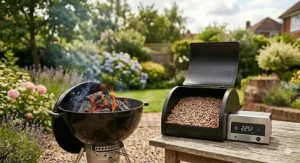
The Onlyfire Portable Pellet Smoker fills a unique niche for UK buyers: compact pellet smoking for £180-£250. This stainless steel unit offers 194 sq. inches of main cooking surface plus an upper rack, totalling 258 sq. inches — enough for two racks of ribs or a modest brisket flat. The digital temperature control ranges from 93°C to 246°C, covering everything from cold smoking cheese to searing steaks.
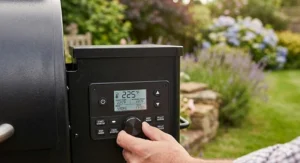
What British buyers truly appreciate is the portability factor. At roughly 55 × 36 × 34.5cm, it fits in a typical car boot and doesn’t require dedicated garden space. The automatic pellet feeding system works reliably, though the hopper capacity means you’ll need to refill every 3-4 hours on long cooks. UK reviewers mention the cleaning can be fiddly — depending on your standards, this could be a minor inconvenience or a proper nightmare. The lack of detailed instructions for the digital panel is frustrating; expect to spend your first session working out what “no P” means (spoiler: meat probe not plugged in).
For whom? Flat dwellers, campers, or anyone with limited outdoor space who still wants genuine pellet smoking capability.
✅ Pros:
- Genuinely portable for camping or small balconies
- Stainless steel construction handles British damp better than painted steel
- Meat thermometer integration (once you work out how to use it)
❌ Cons:
- Small hopper requires frequent refilling on 8+ hour cooks
- Instruction manual inadequate for UK users
Price verdict: Around £180-£250 — represents solid value for portable pellet smoking, though capacity limitations mean it’s not your primary family smoker.
3. Weber Smokey Mountain 47cm Charcoal Smoker
The Weber Smokey Mountain 47cm is the gold standard of charcoal smoking in the UK, retailing around £425-£480 from specialist retailers. This isn’t hyperbole; it’s the benchmark against which all other bullet smokers are measured. The porcelain-enamelled bowl and lid come with a 10-year warranty against rust and burn-through, which matters enormously in British conditions where moisture is a constant enemy.
Two 47cm plated steel cooking grates provide ample space for multiple briskets or six racks of ribs simultaneously. The integrated water pan stabilises temperature and adds moisture — absolutely crucial during those 12-hour pork shoulder marathons. What sets the WSM apart is the fuel efficiency: using the Minion Method (filling the ring with unlit Weber Briquettes, then adding 20 lit coals to the centre), experienced users achieve 14-hour burns on a single load. That’s an entire overnight brisket cook without adding fuel, even in damp October weather.
The four rust-resistant aluminium dampers provide precise airflow control, though there’s admittedly a learning curve. First-time users often struggle to maintain consistent temperatures, but once you understand the relationship between vent position and internal temp, the WSM becomes remarkably forgiving. British buyers should note this requires no electricity whatsoever — brilliant for allotment smoking or off-grid situations.
For whom? The purist beginner who wants to learn proper smoking technique, or the experienced cook who values flavour and fuel efficiency over digital convenience.
✅ Pros:
- 10-year warranty on major components (unmatched in this category)
- Exceptional fuel efficiency with Minion Method
- No electricity required — works anywhere
❌ Cons:
- Steeper learning curve than pellet alternatives
- Requires active fire management for first 2-3 cooks
Price verdict: Around £425-£480 — premium pricing, but the warranty, build quality, and resale value justify the investment for serious smokers.
4. Royal Gourmet BBQ Charcoal Grill with Offset Smoker
The Royal Gourmet BBQ Charcoal Grill with Offset Smoker delivers 800 square inches of total cooking surface for around £140-£200 on Amazon UK. This offset design combines a main grilling chamber (438 sq. in) with a side smoking box (183 sq. in), plus a swing-away warming rack (179 sq. in). The offset smoker attachment allows traditional low-and-slow smoking whilst the main chamber handles direct grilling — rather versatile for British garden parties where you’re juggling smoked brisket and quick-grilled sausages.
The porcelain-enamelled cooking grates retain heat evenly, and the adjustable charcoal pan lets you control the distance between fuel and food across two height levels. UK buyers appreciate the front and side tables for workspace, plus the bottom shelf for storage (though only rated for 20 lb when evenly distributed). The lid-mounted thermometer provides basic temperature monitoring, but serious smokers will want to invest in a separate digital probe.
One consideration for British buyers: at 30 inches length, this is a substantial piece of kit requiring dedicated garden space. The offset design means it won’t tuck away in a typical shed. Build quality is acceptable for the price point, though don’t expect the longevity of premium brands.
For whom? Budget-conscious families who want both smoking and grilling capability, particularly suited to larger gardens where space isn’t a constraint.
✅ Pros:
- Dual functionality (offset smoker + direct grill) for versatile cooking
- Generous 800 sq. in total cooking area feeds a crowd
- Budget-friendly entry into offset smoking
❌ Cons:
- Requires significant garden space (not balcony-friendly)
- Build quality adequate but not exceptional
Price verdict: Around £140-£200 — excellent value for those wanting offset versatility on a budget, though dedicated smokers may find the compromises frustrating.
5. Masterbuilt 710 WiFi Digital Smoker
The Masterbuilt 710 WiFi Digital Smoker (around £280-£380 on Amazon UK) represents a different approach: electric heat with wood chip smoke generation across 711 cooking square inches on four chrome-coated racks. This vertical design maximises capacity whilst minimising garden footprint — brilliant for British terraced housing where horizontal space is precious.
The WiFi connectivity and digital controls make this the ultimate “set and forget” option. You’re essentially running an outdoor oven that happens to add smoke flavour. UK buyers particularly value this during winter months when standing outside monitoring temperatures loses its charm rapidly. The wood chip loader allows adding smoke without opening the main chamber, preventing heat loss — a thoughtful detail that matters on cold, windy days.
However, British buyers should understand this is fundamentally different from traditional smoking. You’re using electric elements for heat, adding wood chips for flavour. Purists argue this lacks the depth and complexity of charcoal or pellet smoke, and they’re not entirely wrong. The smoke flavour is lighter, cleaner, and more controlled — which suits some applications (fish, cheese) perfectly, but may disappoint those expecting bold Texas-style bark on brisket.
For whom? Time-poor professionals who want consistent smoking results without learning fire management, particularly suited to those prioritising convenience over traditional authenticity.
✅ Pros:
- WiFi control means monitoring from your sofa
- Electric heat provides foolproof temperature consistency
- Vertical design maximises capacity in limited space
❌ Cons:
- Lighter smoke flavour disappoints traditional BBQ enthusiasts
- Requires mains electricity (no off-grid capability)
Price verdict: Around £280-£380 — premium pricing for the convenience factor, though the lighter smoke profile may not justify the cost for flavour purists.
6. CosmoGrill Outdoor XXL Smoker Barbecue
The CosmoGrill Outdoor XXL Smoker offers exceptional value for UK buyers at around £110-£160, delivering offset smoking capability without the premium price tag. This charcoal-based system includes adjustable charcoal pan, warming rack, and built-in thermometer — all the essentials for traditional low-and-slow cooking.
UK reviewers consistently praise the included waterproof cover, which is absolutely essential in British conditions and often sold separately with competitor models. The offset design allows indirect smoking in the main chamber whilst the side firebox generates smoke and heat. British buyers appreciate the wheels for mobility, particularly useful for moving under cover when the inevitable rainstorm arrives mid-cook.
Build quality sits firmly in the budget category. Don’t expect premium welds or thick gauge steel. The temperature gauge receives mixed feedback — some find it adequate, others report inaccurate readings. The solid-sided charcoal tray can restrict airflow as ash accumulates during long burns; several UK reviewers drill ventilation holes to improve oxygen circulation to the coals.
For whom? Entry-level enthusiasts who want to learn offset smoking without significant financial commitment, particularly suitable for those willing to make minor modifications.
✅ Pros:
- Waterproof cover included (essential for British weather)
- Budget-friendly entry to offset smoking
- Wheels provide mobility for weather protection
❌ Cons:
- Temperature gauge accuracy questionable
- Charcoal tray design may require modification for long burns
Price verdict: Around £110-£160 — outstanding value for beginners exploring offset smoking, though expect to upgrade within 2-3 years as skills develop.
7. Charcoal BBQ Smoker Grills Outdoor (Portable Freestanding)
This Portable Freestanding Charcoal BBQ Smoker (around £90-£140 on Amazon UK) represents the absolute entry point for British smokers. With 2,208 sq. cm of cooking space across two diameter 37.5cm grills, it accommodates substantial cuts of meat despite the compact footprint. The innovative dual-door design lets you check food via the top door whilst adding charcoal through the bottom, minimising heat loss.
The 6-in-1 versatility claim covers smoking, grilling, steaming, baking, braising, and roasting. In practice, this vertical bullet smoker excels at smoking and struggles with high-heat applications. UK buyers appreciate the enamel coating for easy cleaning and the detachable components for storage. The lid includes crossbars and three hooks for hanging sausages, fish, or jerky — genuinely useful for British cold-smoking enthusiasts.
Build quality is basic but functional. The heat-resistant handles and secure latches work adequately, though don’t expect premium materials at this price point. British reviewers note the temperature gauge can be faulty (one reviewer received immediate replacement from the seller), and the legs bend rather easily under weight.
For whom? Absolute beginners wanting to experiment with smoking on a shoestring budget, or experienced cooks adding a dedicated cold-smoking unit to their arsenal.
✅ Pros:
- Dual-door design minimises heat loss when adding fuel
- Hanging hooks enable proper cold-smoking technique
- Budget price removes barrier to entry
❌ Cons:
- Quality control issues (faulty gauges, flimsy legs)
- Basic construction limits longevity
Price verdict: Around £90-£140 — acceptable for experimental entry into smoking, but plan to upgrade once you’re hooked on the hobby.
✨ Don’t Miss These Exclusive Deals!
🔍 Take your outdoor smoking to the next level with these carefully selected products. Click on any highlighted item to check current pricing and availability on Amazon.co.uk. These picks will help you find exactly what you need for your British garden!
Practical Setup Guide for British Conditions
Setting up your smoker in British conditions requires different considerations than sunny California or Texas. Understanding the fundamentals of smoking technique helps, but British weather adds unique challenges. Here’s what actually works when you’re dealing with six months of drizzle and the occasional biblical downpour.
First-Time Setup Essentials
Start by choosing your location carefully. You want shelter from prevailing wind (typically south-westerly in most of Britain) but adequate ventilation. Many British smokers position their units on the lee side of garden sheds or against house walls, which provides wind protection whilst maintaining safety clearance. Never operate any smoker directly under eaves or covered structures — carbon monoxide poisoning isn’t worth the weather protection.
For pellet smokers, invest immediately in a weatherproof extension lead with RCD protection. British weather means your smoker will get wet, even under cover. Position the power connection higher than the smoker itself to prevent water running down the cable into the socket — basic physics, but you’d be surprised how many forget this until they trip the house electrics mid-cook.
Charcoal users need proper fuel storage. Those big bags of briquettes from the supermarket will absorb moisture within days if left in an outdoor shed. Transfer charcoal to sealed plastic containers or metal bins with tight-fitting lids. Damp charcoal is a nightmare to light and produces acrid smoke that ruins your food. Similarly, wood pellet users must store pellets in absolutely dry conditions — damp pellets expand, jam the auger, and can destroy your expensive pellet smoker entirely.
Weather-Specific Strategies
British rain is your constant companion, so plan accordingly. Invest in a proper BBQ shelter or large cantilever parasol positioned to protect your smoker’s control panel and hopper (for pellet units) or fire door (for charcoal). Water ingress into digital controllers means expensive repairs; water in your pellet hopper means a ruined cook and potentially a destroyed auger mechanism.
Wind affects temperature stability more than rain. British gusts can drop your smoker temperature by 20-30°C in minutes, particularly with vertical bullet designs. Create windbreaks using garden furniture, temporary screens, or strategically parked wheelie bins. On genuinely blustery days (anything over 20 mph sustained winds), consider postponing cooks or accepting you’ll use significantly more fuel maintaining temperature.
Cold British winters present challenges for heat retention. Insulated blankets designed for smokers help enormously, though they’re annoyingly expensive (£40-80 for decent ones). Budget alternative: wrap your vertical smoker with aluminium foil and secure with high-temperature tape, leaving vents accessible. This reflects heat back into the cooking chamber and can reduce fuel consumption by 20-30% on winter cooks.
Maintenance in the British Climate
Rust prevention is critical in our damp climate. After every cook, once the smoker has cooled, wipe down all surfaces with a dry cloth to remove moisture. For painted steel smokers (most budget models), inspect for paint chips monthly and touch up immediately with high-temperature barbecue paint. Exposed steel rusts frighteningly quickly in British humidity.
Stainless steel components aren’t immune either. They resist rust better but can still develop surface corrosion (tea staining) in coastal areas or industrial environments. Clean stainless components with dedicated stainless steel cleaner every 4-6 weeks during active use season.
The biggest mistake British smokers make? Leaving water in the water pan. Empty it immediately after cooking. Standing water in a smoker guarantees rust, mould, and deterioration. This applies equally to pellet smokers with grease collection systems — empty and clean these religiously, particularly during wetter months when moisture accelerates degradation.
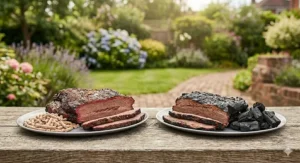
Choosing Your Fuel: Pellets or Charcoal
The fuel type comparison fundamentally determines your smoking experience, ongoing costs, and flavour outcomes. Here’s what British buyers need to understand beyond the marketing claims.
Charcoal: The Traditional Choice
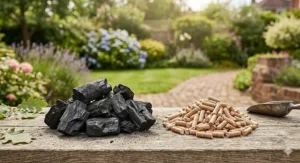
Charcoal comes in two forms, and the difference matters enormously. Briquettes (those uniform black pillows) contain compressed charcoal dust, binders, and sometimes additives. They light consistently, burn predictably, and maintain steady temperatures — ideal for beginners learning temperature control. UK supermarket briquettes (Big K, Weber, etc.) typically cost £8-12 for 5kg, providing 6-10 hours of smoking depending on weather and technique.
Lump charcoal offers purer flavour and higher heat capability. It’s actual pieces of carbonised wood, irregular in shape, containing zero additives. Lump lights faster, burns hotter (crucial for searing), and produces less ash. However, it’s less predictable — piece sizes vary, burn times fluctuate, and maintaining consistent low temperatures requires more skill. UK pricing runs £12-18 for 5kg, making it roughly 50% more expensive than briquettes.
For British smokers, I recommend starting with quality briquettes (Weber or Big K Premium) until you’ve mastered temperature control, then experimenting with lump charcoal for specific applications. The reality is both work brilliantly; lump charcoal just demands more attention and costs more per cook.
Wood Pellets: The Convenience Option
Food-grade wood pellets compress pure hardwood sawdust under tremendous heat and pressure, using the wood’s natural lignin as a binder. No additives, no chemicals, just compressed wood. This matters because heating pellets (sold for home heating stoves) may contain softwoods, chemicals, or treatments absolutely unsafe for food contact. The UK Food Standards Agency regulates smoke flavourings and smoking materials to ensure food safety standards are maintained. Always verify you’re buying food-grade pellets approved for cooking.
UK pellet prices typically run £15-25 for 9kg bags from brands like Weber, Traeger, or TOPLINE. A bag provides 15-30 hours of smoking depending on temperature settings and weather conditions. Cold, windy British days consume pellets faster as the smoker works harder maintaining temperature.
Pellet flavour profiles range from subtle (alder, maple) to assertive (mesquite, hickory). British buyers should start with classic blends (hickory, cherry, or oak) before experimenting with specialty woods. One critical pellet smoking limitation: the smoke flavour is undeniably milder than charcoal. You get consistent wood smoke, but not the bold, intense smoke ring and bark that charcoal delivers. Some enthusiasts add pellet smoke tubes to their pellet smokers for additional smoke intensity — rather defeating the convenience purpose, but it works.
Cost Reality Check in GBP
Let’s calculate actual British costs. A 10-hour brisket cook on a Weber Smokey Mountain using premium briquettes consumes roughly 4-5kg charcoal (£6-8) plus 2-3 chunks of smoking wood (£2-3), totaling £8-11. Add minimal electricity if you’re running a fan for temperature control: perhaps £0.10-0.20. Total: approximately £8-11.
The same cook on a pellet smoker consumes 3-4kg of pellets (£5-8) plus electricity (0.15kW × 10 hours × £0.25/kWh = £0.38), totaling £5.50-8.50. Pellets appear cheaper, right? Not quite. The charcoal smoker likely provided more intense flavour, and you can reduce charcoal costs significantly using the Minion Method with budget briquettes (£5 for the same cook). Over a year of monthly smoking sessions, the difference amounts to perhaps £30-50 — meaningful but not transformative.
The real cost consideration for British buyers is time. Pellet smokers save 2-3 hours of active monitoring per cook. If your time is valuable, that’s the true economic equation worth considering.
Common Mistakes When Buying Your First Smoker
British first-time smoker buyers consistently make the same errors. Here’s what to avoid, drawn from countless hours spent in UK BBQ forums watching people learn the hard way.
Mistake 1: Ignoring British Weather Compatibility
Buying a smoker designed for Texas summers means disaster in British conditions. Thin gauge steel loses heat rapidly in wind. Painted finishes rust within months in our humidity. American-focused reviews rave about products that struggle terribly in Manchester drizzle or Edinburgh wind. Always check UK-specific reviews and prioritise models with weather-resistant finishes, adequate insulation, and proven performance in damp conditions.
Mistake 2: Underestimating Space Requirements
That offset smoker looks brilliant online, measuring a mere 76cm length. Then it arrives and won’t fit through your garden gate, requires 2 square metres of permanent patio space, and can’t be stored in your shed during winter. British gardens are smaller than American yards; our sheds are compact; our patios are modest. Measure everything twice before ordering. Consider vertical bullet smokers for space-constrained gardens — they maximise cooking capacity whilst minimising footprint.
Mistake 3: Overlooking Electricity Access for Pellet Smokers
Pellet smokers require mains electricity. Obvio us, yes, but surprisingly easy to overlook when you’re excited about WiFi controls and digital precision. Can you actually run a weatherproof extension lead to your intended smoking location? Is there an outdoor socket with RCD protection? Will the cable become a trip hazard across your garden path? If electricity access is problematic, charcoal becomes your only viable option regardless of preference.
Mistake 4: Buying Undersized for British Cooking Patterns
British outdoor cooking involves long gaps (winter hibernation) followed by intensive summer use. When you do smoke, you’re likely cooking for family gatherings, meaning multiple racks of ribs, whole briskets, or several pork shoulders simultaneously. That compact portable smoker with 200 sq. inches of cooking space seems adequate until you’re trying to fit four racks of ribs for Sunday lunch. British buyers should size up — buy more capacity than you think you need, because you’ll use it.
Mistake 5: Neglecting UKCA Marking and Safety Standards
Post-Brexit, products sold in Great Britain should carry UKCA marking confirming they meet UK safety standards. Northern Ireland follows different rules under the Protocol. According to UK Government regulations, all food preparation equipment must comply with The Food Safety and Hygiene Regulations. Whilst enforcement is patchy, buying products without proper certification could mean issues with warranty claims, insurance coverage if something goes wrong, or even legal liability. Check for UKCA or CE marking, and verify the seller is a legitimate UK distributor, not grey-market imports.
Mistake 6: Expecting American Prices in the UK Market
American smoker enthusiasts discuss prices in dollars for a vastly larger market with different distribution economics. That $399 Traeger translates to £500-600 in the UK, not the direct exchange rate. Import duties, VAT, smaller market volumes, and distribution costs all factor in. British buyers should set realistic budget expectations based on UK market pricing, not American forum discussions. The £300-400 range in Britain buys what $200-250 buys in America.
Mistake 7: Ignoring Post-Brexit Import Complexities
Some EU-manufactured smokers now carry additional import costs when entering the UK market, reflected in higher retail prices. However, you benefit from UK consumer protection, straightforward returns under the Consumer Rights Act 2015, and local warranty support. Direct imports from the EU may save £50-100 initially but create headaches if anything goes wrong. For expensive purchases, buying from established UK retailers provides peace of mind worth the premium.
Pellet vs Charcoal: The Flavor Profile Comparison
The smoking method differences produce distinctly different flavour profiles. Understanding these differences helps set realistic expectations before you’ve committed hundreds of pounds.
Charcoal Smoke Character
Charcoal combustion produces bold, intense smoke with complex aromatic compounds. As meat drippings hit hot coals, they vaporise and redeposit on the meat surface, creating that classic “smoke ring” and dark, flavourful bark. The science behind this process involves nitric oxide molecules bonding to the outside of the meat, creating that distinctive pink ring beneath the surface. The smoke is denser, more assertive, and unmistakably “barbecue” in character. When you bite into properly smoked charcoal brisket, the smoke flavour announces itself immediately.
This intensity is brilliant for beef, pork, and robust game meats that can stand up to powerful smoke. It’s less ideal for delicate fish or poultry where you risk overwhelming the protein’s natural flavour. Charcoal smoke also varies based on your fuel source — lump charcoal from different wood species (oak, beech, etc.) imparts subtle flavour variations. Adding wood chunks (hickory, apple, cherry) to the charcoal bed creates layered flavour complexity.
The downside? Charcoal smoke is less forgiving. Over-smoke or create dirty smoke (smouldering rather than clean combustion), and you’ll produce acrid, bitter, creosote-laden flavours that ruin £40 worth of prime brisket. This is why charcoal smoking has a learning curve — you’re managing actual fire, not just adjusting a digital dial.
Pellet Smoke Character
Wood pellet combustion produces cleaner, milder, more consistent smoke. The compressed pellets burn efficiently at controlled rates, creating steady, thin blue smoke rather than billowing clouds. The resulting flavour is subtle, refined, and allows the meat’s natural character to shine through. Pellet-smoked chicken tastes primarily of chicken, enhanced by delicate wood notes, not overwhelmed by smoke.
This subtlety suits delicate proteins beautifully — fish, seafood, cheese, vegetables, and poultry all benefit from pellet smoking’s gentler touch. The smoke ring is less pronounced, the bark is lighter, and the overall flavour profile sits towards refinement rather than boldness. Some enthusiasts love this; others find it disappointingly mild compared to traditional charcoal BBQ.
Pellet smoke is remarkably consistent. Set your target temperature, select your pellet flavour, and the smoker delivers predictable results cook after cook. There’s minimal risk of over-smoking or creating acrid flavours. However, this consistency comes at the cost of complexity. You won’t achieve the layered, nuanced flavour depth that a skilled charcoal smoker creates by managing fire, airflow, and wood addition throughout a long cook.
The British Perspective
British palates, accustomed to subtle smoking in traditional foods (kippers, smoked salmon, bacon), often appreciate pellet smoking’s refined approach. The bold, aggressive smoke of American-style charcoal BBQ can seem excessive to British tastes more aligned with European smoking traditions. This isn’t universal — plenty of British enthusiasts chase authentic Texas bark — but it’s worth considering your flavour preferences.
If you’re new to smoking and raised on British cuisine, start with pellet smoking. The milder flavours feel less alien, the learning curve is gentler, and you’ll achieve good results immediately. Once comfortable, experiment with charcoal if you’re craving more intensity. Conversely, if you’re already a charcoal grilling enthusiast who loves that bold char flavour, pellet smoking may disappoint regardless of convenience advantages.
Real-World Performance: British Climate Edition
How do these smokers actually perform when it’s 4°C, blowing a gale, and drizzling — otherwise known as Tuesday afternoon in Britain? Here’s what the glossy marketing photos never show.
Cold Weather Performance (November-March)
British winters aren’t Arctic, but sustained temperatures of 2-8°C combined with wind chill create challenging smoking conditions. Charcoal smokers lose heat through the walls, requiring 30-40% more fuel to maintain 110°C internal temperature compared to summer operation. The Weber Smokey Mountain handles this admirably thanks to excellent heat retention, but budget models with thin steel struggle significantly.
Pellet smokers face different challenges. The auger mechanism can jam if any moisture enters the hopper, and pellets expand when damp. British winter humidity means keeping pellets absolutely dry becomes critical. The digital controls and fans consume slightly more electricity maintaining temperature against cold ambient air. Positive side: the consistent heat delivery means you’re not constantly adjusting vents whilst standing in freezing rain.
Practical winter strategy regardless of fuel type: use insulating blankets, position smokers in wind-sheltered locations, and accept that winter cooks consume more fuel. A summer brisket using 4kg charcoal might require 5.5-6kg in January. Plan accordingly and don’t run out mid-cook.
Wind Management (Year-Round Challenge)
British wind is relentless, particularly in exposed gardens or coastal locations. Wind increases oxygen flow to charcoal fires, spiking temperatures unpredictably. Simultaneously, wind strips heat from smoker walls, creating temperature swings that ruin consistent cooking. Pellet smokers fare better thanks to digital controls compensating automatically, but they still burn through pellets faster fighting wind-induced heat loss.
The solution isn’t windproof enclosures (fire hazard) but strategic positioning and windbreaks. Many British smokers build three-sided brick or wooden structures creating protected smoking bays. Less permanent solutions include temporary screens, strategic fence positioning, or using garden structures as natural windbreaks. On genuinely stormy days (30+ mph winds), postponing the cook is wise unless you enjoy stress and wasted fuel.
Rain Operation (The British Specialty)
Rain is your constant companion in British smoking. Fortunately, properly designed smokers handle rain adequately. The lid protects the cooking chamber; you’re managing external exposure. For pellet smokers, the critical vulnerability is the hopper — water ingress means ruined pellets and potentially destroyed auger mechanisms. Always use a protective cover over the hopper or position the entire smoker under shelter during rain.
Charcoal smokers tolerate rain better, though water dripping into vents can cause steam clouds and temperature fluctuations. The bigger issue is wet charcoal — if rain reaches your fuel, you’ll struggle maintaining temperature. Keep a reserve of dry charcoal under cover, ready to add if your primary fuel gets compromised.
The genuinely British approach: embrace it. Use a large cantilever umbrella or BBQ shelter, accept that winter smoking means standing outside in unpleasant conditions occasionally, and take satisfaction in producing brilliant brisket regardless of weather. Americans cancel BBQ when it rains; British smokers simply put on a jacket.
Long-Term Cost Analysis in GBP
Beyond initial purchase price, the true cost of pellet or charcoal smoker ownership spans fuel, electricity, maintenance, and replacement parts over years of use. Here’s what British owners actually spend.
Year One Costs (Including Initial Investment)
Pellet Smoker Path:
- Smoker: £350-450 (mid-range model like Z GRILLS)
- Pellets: £180-240 (assuming 12 monthly cooks, 3kg per cook, £5/kg average)
- Electricity: £15-25 (150W × 120 hours × £0.25/kWh)
- Accessories: £80-120 (cover, extra grates, drip pans, meat probes)
- Year One Total: £625-835
Charcoal Smoker Path:
- Smoker: £425-480 (Weber Smokey Mountain quality level)
- Charcoal: £100-140 (12 monthly cooks, 4.5kg per cook, £0.20/kg briquettes)
- Wood chunks: £40-60 (supplemental smoking wood)
- Accessories: £60-90 (cover, chimney starter, extra grates, probes)
- Year One Total: £625-770
Remarkably similar first-year investment, though the pellet route frontloads convenience whilst charcoal emphasises quality equipment.
Years 2-5 Ongoing Costs (Annual Average)
Pellet Smoker:
- Pellets: £180-240 annually
- Electricity: £15-25 annually
- Maintenance: £30-50 (auger motor/igniter replacement typically needed once in 3-5 years, amortised annually)
- Annual Average: £225-315
Charcoal Smoker:
- Charcoal: £100-140 annually
- Wood chunks: £40-60 annually
- Maintenance: £10-20 (gasket replacement, occasional part replacement)
- Annual Average: £150-220
The charcoal route saves £75-95 annually in ongoing costs. Over five years, that’s £375-475 difference — meaningful but not transformative, particularly when considering time savings of pellet convenience.
Hidden Costs British Buyers Overlook
Pellet smokers: Electrical failure (auger motor, digital controller) typically occurs after warranty expiration (12-24 months). Replacement parts from UK suppliers cost £60-120 plus fitting. If you’re not mechanically inclined, professional repairs run £100-180 including labour. Budget £150-200 for one major repair over five years ownership.
Charcoal smokers: Quality units like the Weber Smokey Mountain rarely require major repairs, but gaskets deteriorate in British humidity. Replacement gasket kits cost £15-30 and require 30 minutes fitting. Cheaper smokers develop rust, requiring touch-up paint (£8-15) or replacement components. Budget £50-80 over five years for maintenance on quality units, potentially £150-250 for budget models.
Both types: Covers deteriorate in British weather. A quality waterproof cover lasts 2-3 years maximum before UV degradation and British damp cause failure. Budget £40-60 for replacement every 2-3 years.
The Time-Value Equation
Pellet smokers save approximately 2-3 hours of active monitoring per cook. If you smoke monthly, that’s 24-36 hours annually. British median hourly earnings sit around £18-20. By that metric, pellet smoking’s convenience provides £432-720 annual value in reclaimed time. This calculation is admittedly subjective — some enthusiasts love the meditative ritual of tending charcoal fires — but for time-poor professionals, the convenience genuinely justifies premium fuel costs.
Frequently Asked Questions
❓ Can I use my pellet smoker during a British power cut?
❓ Do wood pellets work in British damp conditions?
❓ Which fuel produces better smoke rings in finished meat?
❓ Can I achieve proper cold smoking with either smoker type?
❓ What's the realistic lifespan of budget vs premium smokers in British weather?
Conclusion: Making Your Decision
After fifteen hundred words examining every angle of the pellet vs charcoal smoker debate, here’s what matters for British buyers in 2026. If you value convenience, consistent results, and minimal learning curve — particularly if outdoor cooking competes with family commitments, demanding work schedules, or the simple reality that standing in freezing rain at 2am lacks appeal — pellet smoking makes tremendous sense. The £75-95 annual premium in fuel costs buys genuine time savings and stress reduction.
Conversely, if you’re drawn to traditional BBQ craft, appreciate bold smoke intensity, or smoke in locations without reliable electricity access (allotments, off-grid gardens, camping), charcoal delivers superior flavour depth and operational independence. The learning curve is real but manageable, and the fuel savings compound over years of ownership.
For most British first-time smokers, I’d suggest this pragmatic approach: start with a quality mid-range pellet smoker (Z GRILLS range or similar). Learn the fundamentals of temperature management, meat selection, and timing without wrestling fire control simultaneously. Once comfortable, add a budget charcoal smoker (Weber Smokey Mountain or similar) to your arsenal. This dual-smoker approach costs £500-650 total but provides maximum flexibility — use pellet convenience for weeknight cooks and overnight briskets, reserve charcoal for weekend sessions when you’ve time to tend the fire properly.
Ultimately, the “best” choice is whichever smoker you’ll actually use consistently. A premium charcoal rig gathering dust in your shed because you never have six hours to babysit it is worthless compared to a modest pellet smoker producing regular family meals. Buy based on your realistic usage patterns, not aspirational ideals, and you’ll make the right decision for your circumstances.
Recommended For You
- 7 Best Kamado for Beginners UK 2026
- 7 Best Small Kamado Grills UK 2026 – Portable BBQ Reviews
- 7 Best Budget Kamado Grills UK 2026 – Save £500+ Today
Disclaimer: This article contains affiliate links. As an Amazon Associate, I earn from qualifying purchases. If you purchase products through these links, we may earn a small commission at no additional cost to you.
✨ Found this helpful? Share it with your mates! 💬🤗
