
In This Article
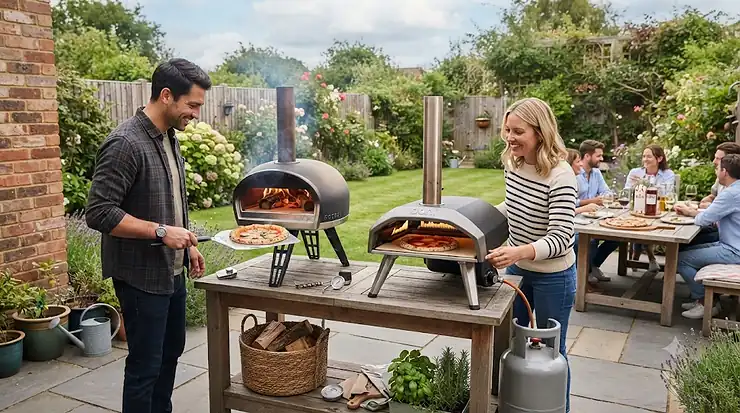
There’s a very specific kind of argument that happens in British back gardens every summer, usually somewhere around the third glass of wine, and it goes like this: is a proper pizza only a proper pizza if it’s kissed by actual flame, or does a hissing gas burner get you 90% of the way there for a fraction of the faff? That’s the wood-fired pizza oven vs gas pizza oven debate in a nutshell, and it’s not going away, because both camps are right about something. Wood gives you genuine smoke character and a slightly theatrical cooking ritual. Gas gives you a dial, a lighter, and a pizza on the table before your guests have finished their first drink.
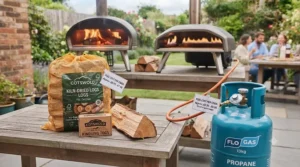
What is a wood-fired pizza oven vs gas pizza oven comparison really about? In short: heat source, flavour, speed to temperature, and ongoing running cost. A wood-fired oven burns logs or compressed pellets for smoky depth and higher peak heat retention, while a gas oven uses propane or natural gas for near-instant, consistent, low-maintenance cooking. Neither is objectively “better” — they suit different cooks, gardens and patience levels.
This guide skips the marketing fluff and gets into real specifications, genuine aggregated review sentiment, and honest analysis of seven ovens actually available to UK buyers right now, spanning budget tabletop models to handmade Yorkshire craftsmanship. We’ll dig into ignition time, running cost, and where a wood pellet pizza oven fits as the clever middle ground between the two extremes. Worth knowing upfront: even in England’s smoke control areas, outdoor pizza ovens are generally permitted, so location rarely rules out wood as an option. By the end, you should know exactly which fuel type — and which specific oven — belongs in your garden this year.
Quick Comparison Table
Before the deep dive, here’s the fast version for anyone short on time.
| Oven | Fuel Type | Heat-Up Time | Price Range | Best For |
|---|---|---|---|---|
| Ooni Koda 16 | Gas (propane/natural) | ~20 minutes | £400–£480 range | Gas convenience seekers |
| Gozney Roccbox | Dual fuel (gas + wood) | ~15–20 minutes | £400–£550 range | Buyers who can’t decide |
| Ooni Fyra 12 | Wood pellets | ~15 minutes | £250–£300 range | Authentic flavour on a budget |
| Dellonda Portable Wood-Fired 14″ | Wood/charcoal | ~20–25 minutes | £150–£200 range | First-time buyers |
| DeliVita Origin | Wood only | ~25–30 minutes | £1,000–£1,300 range | Long-term investment pieces |
| Cozze 13″ Classic Gas | Gas (propane) | ~20 minutes | £150–£220 range | Budget gas cooking |
| Ooni Karu 12 Multi-Fuel | Wood, charcoal or gas (with attachment) | ~15–20 minutes | £280–£350 range | Maximum flexibility |
Looking at this table, the split is fairly clean: gas ovens like the Ooni Koda 16 and Cozze 13″ Classic Gas cluster around a consistent 20-minute heat-up with no fuel-babysitting required, while wood options like the DeliVita Origin demand more patience and a bigger upfront outlay but deliver the smoky depth gas simply can’t replicate. The multi-fuel middle ground — Gozney Roccbox and Ooni Karu 12 — is where most indecisive buyers end up landing, because it postpones the wood-versus-gas decision indefinitely.
💬 Just one click — help others make better buying decisions too!😊
Top 7 Wood-Fired and Gas Pizza Ovens: Expert Analysis
We’ve picked these seven specifically to cover budget, mid-range and premium price points, plus every major fuel type — pure gas, pure wood, wood pellets, and dual/multi-fuel — so there’s a genuinely relevant option whichever side of the wood-fired pizza oven vs gas pizza oven fence you’re leaning towards.
1. Ooni Koda 16 — 60-second pizzas with true gas convenience
The standout here is speed with zero fuel management: twist a dial, get a flame, cook a pizza. The Ooni Koda 16 runs on propane or natural gas and reaches up to 500°C in around 20 minutes, then cooks a 16-inch pizza in roughly 60 seconds thanks to its L-shaped burner design. That burner shape matters in practice — it concentrates heat toward the back-left corner, so once you learn to rotate the pizza through that hot zone, you get an even, leopard-spotted crust without constant fiddling.
Based on the spec comparison, this is the most “point and shoot” oven of the seven: no wood to source, no ash to clean, no smoke to apologise to neighbours for. Reviewers consistently report that setup takes minutes out of the box, with the folding legs and pre-fitted stone requiring no tools. The main gap flagged repeatedly in aggregated feedback is the missing built-in thermometer — you’re eyeballing colour and timing rather than reading a dial, which newer cooks find less forgiving than expected.
Pros:
- ✅ Reaches cooking temperature in around 20 minutes
- ✅ L-shaped burner gives genuinely even heat distribution
- ✅ Folds down small enough for garden storage or transport
Cons:
- ❌ No built-in thermometer included as standard
- ❌ Natural gas and propane versions aren’t interchangeable
Expect to pay in the £400–£480 range depending on retailer and bundle; for buyers who want gas convenience without compromise, it’s worth the premium over cheaper gas alternatives.
2. Gozney Roccbox (Dual Fuel) — switch between wood and gas at will
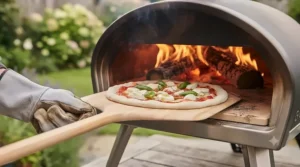
What most buyers overlook about the Gozney Roccbox is that it doesn’t force the wood-fired pizza oven vs gas pizza oven decision at all — you buy one oven and swap a detachable burner depending on your mood. The dual-fuel version ships with the gas burner fitted, and a separate wood-burning attachment clips on in seconds without tools, reaching up to 500°C on either fuel.
On paper this means genuine flexibility: gas for a quick Tuesday-night pizza, wood for a proper weekend garden session. Reviewers consistently praise the silicone-jacketed shell, which stays cool enough to touch even mid-cook, and the built-in thermometer, which several competitors on this list lack entirely. A common thread in aggregated feedback is that the wood burner’s small fuel capacity means you’re topping up with kindling roughly every five minutes, so it suits snacking-sized wood sessions rather than long, lazy fires.
Pros:
- ✅ Genuine gas-or-wood flexibility from one oven body
- ✅ Built-in thermometer, unlike most rivals here
- ✅ Cool-touch silicone jacket reduces burn risk
Cons:
- ❌ Wood burner needs refuelling roughly every 5 minutes
- ❌ Wood attachment typically sold separately, adding cost
Prices sit in the £400–£550 range depending on whether you buy gas-only or the full dual-fuel bundle; for buyers who genuinely can’t choose a side, this is the honest answer.
3. Ooni Fyra 12 — the wood pellet pioneer for real flame flavour
The Ooni Fyra 12 was one of the ovens that put the wood pellet pizza oven category on the map for home cooks, using a simple hopper that feeds compressed hardwood pellets into the firebox via gravity, so you’re not constantly feeding logs by hand. It reaches high heat in around 15 minutes and cooks a 12-inch pizza in roughly 60 seconds once it’s up to temperature.
Here’s what the spec sheet won’t tell you, but reviewers note repeatedly: pellets burn hotter and more consistently than raw logs, which flattens the learning curve most people associate with wood-fired cooking, while still producing genuine smoke aroma in the crust. It’s also the lightest and cheapest genuine wood-fired oven on this list, which is why it’s frequently recommended as the entry point for anyone curious about real flame flavour without committing to a premium handmade oven. The trade-off flagged consistently in aggregated feedback is that the hopper needs near-constant small top-ups during a longer cooking session, so it’s more hands-on than gas.
Pros:
- ✅ Genuine wood-fired flavour from an affordable, portable oven
- ✅ Gravity-fed pellet hopper simplifies fire management
- ✅ Reaches cooking temperature in around 15 minutes
Cons:
- ❌ Hopper requires frequent small top-ups mid-session
- ❌ No gas conversion option available on this model
Typically priced in the £250–£300 range, making it the most accessible genuine wood pellet pizza oven currently on the UK market.
4. Dellonda Portable Wood-Fired 14-Inch — unbeatable value for first-timers
The headline feature is simple: a full-size, genuinely wood-fired (or charcoal-fuelled) tabletop oven at a price point that undercuts almost everything else here. The Dellonda Portable Wood-Fired 14-Inch oven has been recognised by BBC Gardeners’ World Magazine as a best-buy for value, and it includes a pizza peel in the box — a detail several pricier ovens charge extra for.
Based on the spec comparison, the 12-inch stone capacity and long wooden handles (which keep hands well clear of hot metal) suggest this was designed by people who understood beginner pain points, not just cost-cutting. It’s also been named a best-value pick in BBC Gardeners’ World Magazine’s independent pizza oven testing, with testers reporting a well-browned base and properly bubbled cheese despite the modest price. What most buyers overlook is that the folding legs and internal chimney storage make this genuinely portable for camping or a friend’s garden, not just a permanent fixture — a flexibility premium ovens rarely offer.
Pros:
- ✅ Includes a pizza peel at no extra cost
- ✅ Folding legs and internal chimney storage aid portability
- ✅ Works with both charcoal and hardwood pellets
Cons:
- ❌ Smaller stone than most mid-range and premium rivals
- ❌ Thinner build means faster heat loss in windy gardens
At around £150–£200, this is the easiest recommendation on the list for anyone testing whether wood-fired cooking suits their lifestyle before spending serious money.
5. DeliVita Origin — handmade Yorkshire craftsmanship for life
The standout advantage is heritage build quality: the DeliVita Origin is handcrafted in Yorkshire with a clay-infused insulation core and stainless-steel inner chamber, reaching over 550°C in around 30 minutes and holding that heat for hours afterwards rather than bleeding it out the moment you stop feeding the fire.
What the spec sheet won’t tell you, but reviewers note, is that this heat retention genuinely changes how you cook — you can fire the oven once and comfortably cook a full sequence of pizzas, then roasted meat, then dessert, all on residual heat. The fibreglass shell is weather-resistant enough to live outdoors year-round, and the seven-colour range turns it into a genuine garden centrepiece rather than just an appliance. Aggregated customer feedback consistently praises the build quality and customer service, with several reviewers explicitly comparing it favourably to “the market leader” on finish and heat performance. The honest downside is cost — this sits in a different bracket entirely from the rest of this list.
Pros:
- ✅ Exceptional heat retention for multi-course cooking sessions
- ✅ Handmade in the UK with a five-year guarantee
- ✅ Weather-resistant fibreglass shell built for permanent outdoor use
Cons:
- ❌ Significant upfront investment compared to every rival here
- ❌ Wood-only, so no gas convenience for quick weeknight use
Prices typically fall in the £1,000–£1,300 range at the time of research — a premium that buyers treating this as a decade-plus garden fixture tend to see as justified rather than excessive.
6. Cozze 13″ Classic Gas — no-nonsense budget gas performer
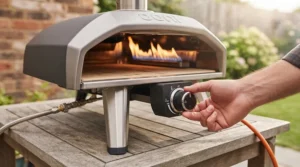
The Cozze 13″ Classic Gas oven’s standout feature is a genuinely punchy 6.0kW U-shaped burner in a budget-tier price bracket, which is unusual — most gas ovens this cheap compromise on burner power. It reaches cooking temperature in around 20 minutes and can turn out a pizza in roughly two minutes once hot.
Based on the spec comparison, the 34x34cm LFGB-certified cordierite stone is genuinely competitive with ovens costing twice as much, and the front-facing controls with integrated thermometer make temperature management far less guesswork-heavy than the pricier Ooni Koda 16 above, which lacks a gauge entirely. Reviewers consistently flag the electric ignition (requiring a single AA battery) as a small but appreciated convenience over manual lighting. The compromise, unsurprisingly, is size — this is a genuinely compact oven suited to smaller households or those without room for a full-size unit.
Pros:
- ✅ Strong 6.0kW burner for a budget-tier gas oven
- ✅ Built-in thermometer aids beginner temperature control
- ✅ Electric ignition removes the need for manual lighting
Cons:
- ❌ Smaller 34cm stone limits pizza size versus rivals
- ❌ Gas regulator sold separately on most listings
Sitting in the £150–£220 range, this is the clearest budget gas pick for anyone who wants a thermometer and real burner power without stretching to premium territory.
7. Ooni Karu 12 Multi-Fuel — the flexible all-rounder
The core appeal of the Ooni Karu 12 Multi-Fuel is that it runs on wood, charcoal, or gas (via a separately sold burner attachment), reaching up to 500°C and cooking a pizza in roughly 60 seconds regardless of which fuel you choose that day.
Here’s what most buying guides skip: while the base unit is genuinely cheaper than the Gozney Roccbox, adding the gas burner and a proper pizza peel brings the real-world total cost much closer to its rival, so the headline price is somewhat misleading if you want full multi-fuel capability from day one. What most buyers overlook is that, unlike the Roccbox, the Karu 12 has no built-in thermometer, which aggregated reviews cite as the single most requested missing feature. Where it wins outright is honest wood-fired performance — the firebox design handles small splits of hardwood well, giving a more traditional wood-fired pizza oven vs gas pizza oven contrast within one product than the Roccbox’s smaller wood attachment manages.
Pros:
- ✅ Genuinely runs on wood, charcoal or gas in one oven
- ✅ Compact footprint suits smaller patios and balconies
- ✅ Strong wood-fired performance for a multi-fuel design
Cons:
- ❌ No built-in thermometer on the standard bundle
- ❌ Gas attachment and peel are separate purchases
Base pricing sits around £280–£350, though buyers wanting full multi-fuel capability from the outset should budget higher once accessories are added.
Practical Usage Guide: Your First 30 Days
Whichever fuel type you land on, the first month determines whether an oven becomes a weekly ritual or an expensive garden ornament. Start by curing a new stone before your first proper cook — run any oven at a low temperature for 20–30 minutes, then higher for another 15–20, before launching your first pizza. This drives out residual moisture from manufacturing and prevents the stone cracking under thermal shock later.
For wood and pellet ovens, source kiln-dried hardwood with under 20% moisture content; damp or “green” wood smokes excessively, burns cooler, and leaves a bitter aftertaste on the crust rather than the sweet, smoky one you’re after. For gas ovens, always leak-test a new regulator connection with soapy water before first ignition — a habit borrowed from gas barbecue safety that applies equally here. A common first-30-days mistake across both fuel types is overloading the pizza with toppings; a thin, evenly stretched base cooks in the 60–90 seconds these ovens are built for, while an overloaded one steams rather than crisps.
Build a light maintenance rhythm early: brush ash and stone debris out after every wood session while the oven is still warm (it lifts far more easily than once cold), and wipe gas burner heads monthly to prevent grease build-up affecting the flame pattern. Get this rhythm established in month one and the oven stays reliable for years rather than degrading quietly in the background.
Real-World Scenarios: Which Oven Fits Your Life
The flat-dwelling flavour chaser. If you’re renting a flat with a small balcony and want authentic taste without hauling logs up three flights of stairs, the Ooni Fyra 12 or the wood attachment on a Gozney Roccbox makes far more sense than a full log-burning setup — pellets are compact, mess-free to store, and easy to carry.
The family who cooks weekly. A household feeding four-plus people every Friday night wants speed and consistency over ritual. The Ooni Koda 16 or Cozze 13″ Classic Gas removes the fuel-sourcing chore entirely — twist a dial, cook six pizzas back to back, done in under an hour including clean-up.
The garden entertainer with space and budget. If you host regularly, want a permanent centrepiece, and don’t mind the extra 10 minutes wood demands, the DeliVita Origin turns pizza night into an event in itself, while its heat retention means you can roast a joint of meat afterwards on residual warmth — something no gas oven on this list matches.
The undecided all-rounder. If you genuinely don’t know yet whether you’re a wood person or a gas person, both the Gozney Roccbox and Ooni Karu 12 Multi-Fuel let you experiment with both fuels using one oven body before committing to a dedicated model down the line.
Problem → Solution: Fixing Common Pizza Oven Frustrations
Problem: Pizza cooks unevenly, burnt on one side. This is almost always a rotation issue rather than a faulty oven — gas ovens like the Ooni Koda 16 have a hot corner from the L-shaped burner, so rotate the pizza every 15–20 seconds using the peel.
Problem: The base is soggy despite a hot oven. Usually too much flour or sauce moisture on the peel. Use semolina or fine polenta instead of plain flour for the final dusting before launching, since it slides more cleanly and doesn’t clump into a gluey layer under the dough.
Problem: Wood or pellets won’t maintain steady heat. This is typically fuel moisture. Store hardwood and pellets somewhere fully dry — a damp shed is not good enough — and always keep a stock of kiln-dried “Ready to Burn” certified fuel on hand rather than buying whatever’s cheapest at the petrol station on the day.
Problem: Gas flame keeps extinguishing mid-cook. Usually a low gas bottle or a poor regulator seal. Check the connection with soapy water for bubbles indicating a leak, and keep a spare bottle so you’re never caught mid-party with an empty tank.
Problem: Stone cracks after a few uses. Almost always thermal shock from skipping the curing process, or placing cold food (like a frozen base) directly onto a fully preheated stone. Always bring dough to room temperature first, and follow the manufacturer’s curing schedule on a brand-new oven.
Wood-Fired vs Gas Pizza Oven: The Real Difference in Flavour
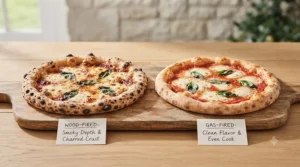
This is the section most buying guides gloss over, so let’s be precise about what actually changes the flavour of a pizza cooked in a wood-fired pizza oven vs gas pizza oven. Wood combustion releases aromatic compounds — phenols and guaiacol among them — that settle onto the dough’s surface and interact with the Maillard browning reaction, producing that faintly smoky, slightly charred complexity people associate with proper pizzeria pizza. Gas combustion, by contrast, is essentially odourless and flavourless; any char you get comes purely from stone and air temperature, not from the fuel itself.
Reviewers consistently note that the flavour difference is real but smaller than marketing suggests once you’re cooking a 90-second Neapolitan-style pizza — there simply isn’t much contact time for smoke compounds to penetrate deeply. Where the difference becomes obvious is with longer cooks: roasted vegetables, bread, or a joint of meat left in a wood-fired oven like the DeliVita Origin for 20–40 minutes picks up substantially more smoke character than a 90-second pizza ever could. On paper this means the flavour argument for wood is strongest for people who plan to cook more than just pizza.
| Factor | Wood-Fired | Gas |
|---|---|---|
| Flavour impact | Noticeable smoke character, stronger on longer cooks | Neutral, char comes from heat alone |
| Consistency | Varies with fuel quality and skill | Highly consistent, dial-controlled |
| Best For | Weekend cooks, longer roasts, ritual-lovers | Weeknight speed, low-maintenance cooking |
The consistency row matters as much as flavour: gas wins decisively for repeatable results because temperature is dial-controlled rather than dependent on fuel quality and fire management skill, which is precisely why professional pizzerias increasingly run gas or hybrid ovens even while marketing “wood-fired” heritage.
How to Choose a Wood-Fired or Gas Pizza Oven
What is the best way to choose between a wood-fired pizza oven vs gas pizza oven? Match the oven to how often you’ll realistically use it, how much fuel-management effort you enjoy, and whether smoky flavour or speed matters more to your cooking style — then confirm your garden has safe clearance and, if relevant, isn’t restricted by local smoke rules.
- Decide your priority: flavour or convenience. If smoky depth genuinely matters to you, lean wood or pellet. If you want pizza on the table in 25 minutes flat with zero fuss, lean gas.
- Check your outdoor space and local rules. Most gardens are fine for wood-fired cooking, but if your appliance vents smoke through a building chimney rather than an open oven mouth, authorised fuel or an exempt appliance becomes a requirement — worth a five-minute check via your local council. For a broader sense of how independent testers rank ovens on real-world performance, Ideal Home’s tested buying guide is a useful cross-reference alongside this article.
- Set a realistic budget including accessories. Factor in a pizza peel, fuel, and possibly a cover — several ovens on this list look cheaper until you add the extras bundled with pricier rivals.
- Consider cooking frequency. Weekly cooks favour gas for low friction; occasional weekend sessions suit wood’s extra ritual and clean-up time.
- Think beyond pizza. If you want to roast meat, bake bread, or char vegetables regularly, wood’s heat retention (like the DeliVita Origin‘s multi-hour holding) earns its keep faster than a pizza-only gas oven.
- Match size to your household. A 12-inch stone suits couples and small families; anyone regularly cooking for six or more should look at 14-inch-plus models.
- Read aggregated reviews for reliability, not just first impressions. Look specifically for comments on longevity after 6–12 months of use, not just unboxing enthusiasm.
A common mistake at this stage is buying the biggest, most expensive oven “to be safe” — but a DeliVita Origin sitting unused because gas would have suited your actual weekly habits better is a worse outcome than a modest Cozze 13″ Classic Gas that gets fired up every Friday.
Ignition Time Compared: How Fast Can You Actually Eat?
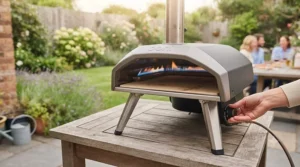
Ignition time is where the wood-fired pizza oven vs gas pizza oven gap is smallest on paper but largest in lived experience. Most ovens on this list — wood or gas — quote a heat-up window of roughly 15 to 30 minutes to reach cooking temperature, so the headline numbers look similar. The Ooni Fyra 12 reaches temperature in around 15 minutes on pellets, the Ooni Koda 16 takes about 20 minutes on gas, and the DeliVita Origin needs closer to 30 minutes on logs.
What the spec sheet won’t tell you, but reviewers note repeatedly, is that gas ignition time is passive — you light it, walk away, and come back to a ready oven — while wood ignition time is active. You’re feeding kindling, monitoring the flame, and adjusting airflow throughout that same 15–30-minute window. So while the clock time might be comparable, the actual hands-on effort required is meaningfully higher for wood and pellet ovens. This is the single biggest reason busy weeknight cooks lean gas even when they’d prefer wood’s flavour on paper.
There’s also a recovery-time factor worth flagging: once you’ve cooked a few pizzas, gas ovens like the Ooni Koda 16 return to peak temperature almost instantly since the burner never actually stopped, whereas wood and pellet ovens dip and need active refuelling to climb back — the Gozney Roccbox‘s wood attachment, for instance, needs topping up roughly every five minutes to hold temperature through a longer cooking session.
Running Cost Compared: Gas, Wood and Pellets Over a Year
Running cost is the part most buying guides skip entirely, yet it compounds significantly if you’re cooking weekly rather than a handful of times a year. A standard propane bottle typically fuels somewhere in the region of 15–25 pizza sessions on an efficient burner like the Ooni Koda 16 or Cozze 13″ Classic Gas, with bottle refills generally landing in the mid-£20s to low-£30s depending on supplier and region. Kiln-dried hardwood for ovens like the DeliVita Origin or Ooni Karu 12 Multi-Fuel tends to cost a broadly comparable amount per session once you account for the larger volume a full-size wood oven consumes versus a compact pellet hopper. Wood pellets for a pellet-only design like the Ooni Fyra 12, by contrast, are typically the cheapest per-session running cost of the three, since the hopper’s gravity-fed design is engineered for fuel efficiency rather than raw flame size.
On paper this means gas and wood land closer together on ongoing running cost than most people assume — the bigger financial gap is almost always upfront purchase price, not fuel. Here’s what most buyers overlook: gas has an efficiency advantage because none of the heat escapes up a flue the way it can with an open wood fire, so a well-designed gas burner often uses its fuel more efficiently pound-for-pound than an equivalent wood setup, even though bottled gas itself costs more per litre-equivalent than a bag of kiln-dried logs.
| Fuel Type | Typical Cost Per Refuel | Approx. Sessions Per Refuel | Running Cost Verdict |
|---|---|---|---|
| Propane gas bottle | Mid-£20s–low £30s | 15–25 sessions | Efficient, predictable, no waste |
| Kiln-dried hardwood | Similar range per bag/net | 8–15 sessions (full-size oven) | Comparable cost, more variable |
| Wood pellets | Lower cost per bag | 15–20 sessions (compact hopper) | Cheapest per-session for wood-fired flavour |
Reading the table, the practical takeaway is that a wood pellet pizza oven like the Ooni Fyra 12 often delivers the best running-cost value of the three fuel types for buyers who specifically want wood-fired flavour, while gas remains the most predictable and lowest-waste option overall. Genuine wood in a full-size oven like the DeliVita Origin is the most expensive to run consistently, though its multi-hour heat retention means fewer separate firings for households who batch-cook.
Wood Pellet Pizza Ovens Explained: The Middle Ground
A wood pellet pizza oven occupies a genuinely distinct niche between traditional log-burning ovens and gas — and it’s worth understanding on its own terms rather than lumping it in with either camp. Pellets are compressed sawdust and wood waste, kiln-dried to a very low, consistent moisture content, then fed into the firebox either by hand or via a gravity hopper, as seen on the Ooni Fyra 12.
Based on the spec comparison, the appeal is consistency: because pellets are manufactured to a uniform density and moisture level, they burn far more predictably than raw logs, which can vary wildly in dryness and density even within the same batch. What most buyers overlook is that this consistency doesn’t come at the cost of flavour — pellets still combust as wood, releasing the same aromatic compounds responsible for genuine smoke character, just in a more controlled, easier-to-manage form. Reviewers consistently note that a wood pellet pizza oven suits people who romanticise the idea of wood-fired cooking but, in reality, don’t want to become amateur fire-tenders every time they want dinner.
The honest trade-off is fuel storage and sourcing: pellets need to stay bone dry, and running out mid-cook means a hopper refill rather than simply grabbing another log from a wood pile, which some users find fiddlier in practice than expected. For anyone weighing a wood-fired pizza oven vs gas pizza oven decision and wanting a genuine third option, a pellet model is frequently the most balanced answer on the market today.
Common Mistakes When Buying a Pizza Oven
The most frequent mistake, based on aggregated review themes across every product researched for this guide, is underestimating footprint and clearance requirements — several buyers report ovens arriving larger than expected once folding legs and chimney height are accounted for, only to discover their intended patio spot doesn’t comfortably fit it. Measure the actual footprint including open doors and any chimney extension before buying, not just the boxed dimensions.
A second common error is skipping the pizza peel in the initial budget. Models like the Dellonda Portable Wood-Fired 14-Inch include one, but several premium options, including the Ooni Karu 12 Multi-Fuel, sell it separately — an oversight that leaves new owners scrambling on their first cook night. Third, buyers frequently choose based on Instagram aesthetics over genuine cooking needs — a beautiful oven that’s rarely used because it demands more fuel-tending time than the household actually has is a worse investment than a plainer one that gets fired up weekly. Finally, many first-time buyers skip reading the manufacturer’s curing instructions entirely, risking a cracked stone within the first few uses — a completely avoidable, and completely free, step.
Safety, Regulations & Compliance in the UK Garden
Safety around live-flame cooking equipment is straightforward but non-negotiable. Always site any pizza oven — wood or gas — on a stable, non-combustible surface at least a metre from fences, sheds, overhanging branches, or anything flammable, and never operate one indoors or in an enclosed space such as a garage, since both wood and gas combustion produce carbon monoxide.
For gas ovens like the Ooni Koda 16 or Cozze 13″ Classic Gas, always check hose and regulator connections with soapy water before first use each season, and store spare propane bottles upright, outdoors, and away from direct heat sources. For wood and pellet ovens, keep a metal bucket of sand or a suitable fire extinguisher nearby, and never leave an active fire genuinely unattended, even briefly.
On the regulatory side, most UK gardens have more flexibility than people assume. Outdoor barbecues, chimineas, fireplaces and pizza ovens can be used within smoke control areas, provided the appliance doesn’t vent smoke through a building’s chimney, in which case authorised fuel or an exempt appliance becomes a requirement (see DEFRA’s smoke control guidance for the full detail). Practically, this means a standalone garden oven like the DeliVita Origin or Ooni Fyra 12 is generally unaffected even in a smoke control zone, as long as you’re burning it in the open rather than through a summerhouse flue. It’s still worth using kiln-dried, “Ready to Burn” certified fuel regardless of location — damp or unseasoned wood, including most garden waste, produces significantly more smoke, which matters both for neighbourly relations and for genuine cooking performance, since damp fuel burns cooler and less consistently.
Frequently Asked Questions
❓ Is a wood-fired pizza oven vs gas pizza oven really that different in taste?
❓ What is a good ignition time for a pizza oven?
❓ Are wood pellet pizza ovens worth it over logs?
❓ What's the average running cost of a gas pizza oven per year?
❓ Can I use a wood-fired pizza oven in a UK smoke control area?
Conclusion
There’s no universal winner in the wood-fired pizza oven vs gas pizza oven debate, and honestly, anyone promising you one is oversimplifying. Gas — represented well here by the Ooni Koda 16 and budget-friendly Cozze 13″ Classic Gas — wins decisively on convenience, ignition time, and weeknight practicality. Genuine wood, from the accessible Dellonda Portable Wood-Fired 14-Inch right up to the heirloom-quality DeliVita Origin, wins on ritual, longer-cook flavour depth, and sheer garden theatre. A wood pellet pizza oven like the Ooni Fyra 12 splits the difference nicely, delivering real smoke character with a genuinely manageable running cost and far less fire-tending effort than raw logs demand. And if you simply can’t decide, the Gozney Roccbox and Ooni Karu 12 Multi-Fuel let you run the experiment yourself before committing fully to either camp.
The right choice ultimately comes down to how you actually cook, not how you imagine cooking on your best day. Be honest about whether you’ll tend a fire on a wet Tuesday in October, and choose accordingly. Whichever oven you land on, get the fuel right, cure the stone properly, and the rest — genuinely — takes care of itself.
Recommended for You
- 7 Best Portable Wood-Fired Pizza Ovens UK 2026 (Don’t Buy Blind)
- Built-In Wood-Fired Pizza Oven: 7 Best Picks for 2026
- 7 Best Wood-Fired Pizza Ovens Under £300 in 2026
Disclaimer: This article contains affiliate links. As an Amazon Associate, I earn from qualifying purchases. If you purchase products through these links, we may earn a small commission at no additional cost to you.
✨ Found this helpful? Share it with your friends! 💬🤗
