In This Article
Standing in your local garden centre or scrolling through Amazon.co.uk, you’ve likely noticed those distinctive egg-shaped ceramic grills commanding premium prices and considerable attention. Perhaps you’ve tasted the impossibly tender pulled pork at a mate’s barbecue, or you’re simply tired of your metal grill rusting away after three British winters. Whatever brought you here, you’re about to discover why kamado for beginners represents one of the smartest outdoor cooking investments you’ll ever make.
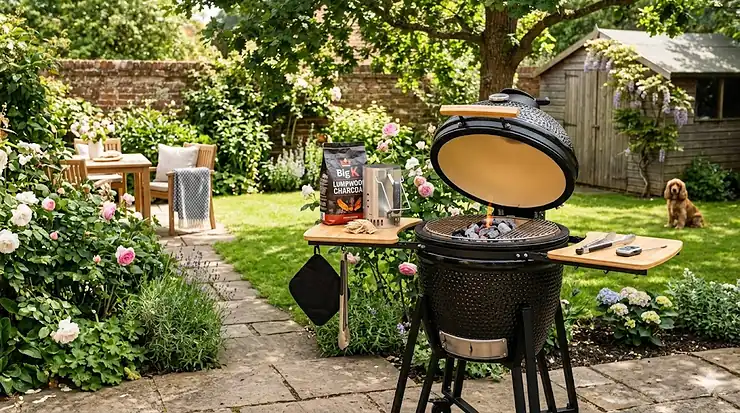
Unlike conventional barbecues that excel at precisely one thing—grilling burgers on a sunny afternoon—a kamado transforms your garden into a year-round outdoor kitchen. The thick ceramic walls lock in moisture and heat with such efficiency that you can smoke a brisket for 14 hours on a single basket of charcoal, then crank the temperature to 400°C the next day for authentic Neapolitan pizza. Kamado-style grills trace their heritage back over 3,000 years to ancient Japanese cooking vessels, but modern ceramic engineering has transformed these traditional clay pots into precision outdoor cooking instruments. What most beginners don’t realise until their first cook is just how forgiving these ceramic beauties are. The heat retention means your food won’t dry out even if you’re learning temperature control, and the sealed environment creates a self-basting effect that makes mediocre cooks look rather brilliant.
The British climate actually suits kamado cooking perfectly. Whilst our American cousins enjoy endless summer barbecue weather, we need equipment that performs brilliantly in drizzle, wind, and the occasional surprise hailstorm. The ceramic construction maintains stable temperatures regardless of whether it’s 5°C or 25°C outside, and that rain-resistant top vent means you won’t be frantically covering your grill mid-cook. For UK buyers navigating the kamado market in 2026, the selection has never been better—or more confusing. Premium brands like Kamado Joe deliver exceptional quality, whilst budget-friendly options from KAMADO BONO and Tower bring ceramic cooking within reach of most households.
This comprehensive guide walks you through seven carefully selected kamado grills available on Amazon.co.uk, from compact 13-inch models perfect for balcony cooking to substantial 25-inch beasts that feed a football team. More importantly, I’ll share the practical knowledge that Amazon product listings won’t tell you: which size actually fits in a typical British garden, why some £200 models deliver 90% of the performance of £1,400 alternatives, and the beginner mistakes that waste both charcoal and money. By the time you finish reading, you’ll know exactly which kamado suits your space, budget, and cooking ambitions—and you’ll understand why experienced kamado owners rarely go back to conventional grills.
Quick Comparison: Top 7 Kamado Grills for UK Beginners
| Model | Cooking Diameter | Best For | Feeds | Price Range (£) | Prime Delivery |
|---|---|---|---|---|---|
| KAMADO BONO 13″ Picnic | 13 inches | Couples, balconies, first kamado | 2-3 | £170-£190 | Yes |
| Fire Mountain 15″ Mini | 15 inches | Budget-conscious beginners | 2-4 | £90-£120 | Yes |
| Kamado Joe Joe Junior | 13.5 inches | Premium portable option | 2-4 | £480-£490 | Yes |
| Tower Kamado Maxi | 13 inches | Mid-range compact choice | 3-5 | £240-£500 | Yes |
| KAMADO BONO 21″ Green Egg | 21 inches | Growing families | 8-10 | £700-£800 | Yes |
| KAMADO BONO 25″ Grande | 25 inches | Large gatherings | 15+ | £890-£950 | Yes |
| Kamado Joe Classic II | 18 inches | Premium all-rounder | 6-8 | £1,399-£1,499 | Yes |
💬 Just one click — help others make better buying decisions too!😊
Top 7 Kamado for Beginners: Expert Analysis
1. KAMADO BONO 13″ Picnic — Outstanding Value for First-Time Kamado Owners
The KAMADO BONO 13″ Picnic represents the most sensible entry point into ceramic cooking for UK beginners. This compact 13-inch kamado delivers authentic egg-shaped performance whilst keeping your investment in the £170-£190 range—roughly the cost of a decent Weber kettle, but with capabilities that leave conventional grills looking rather pedestrian.
What makes this model particularly clever for beginners is the included stand and the genuinely portable design. Weighing approximately 25kg (the ceramic body is surprisingly manageable for one person), you can shift this kamado from patio to shed without requiring a crane operator’s licence. The ceramic construction is thick enough to maintain stable temperatures for hours, which means your first attempts at low-and-slow ribs won’t end in disaster if you’re still learning vent control. The built-in thermometer provides reasonably accurate readings, though experienced kamado cooks eventually upgrade to digital probe thermometers for precision.
The 13-inch cooking surface accommodates three good-sized burgers or a small chicken, which suits couples and small families perfectly. One UK buyer mentioned smoking a beef brisket for 8 hours with excellent results, whilst another successfully cooked a whole birthday chicken—both tasks that would challenge cheaper ceramic grills. The dual-zone cooking capability (using the included heat deflector) lets you practice indirect cooking from day one, which is where kamados truly shine compared to conventional barbecues.
Real-world performance in British conditions: The ceramic body handles our damp climate admirably. Unlike metal grills that rust after one rainy season, this BONO model simply needs a quick wipe-down after wet weather. The rain cover (included) provides additional protection during extended storage. Temperature stability remains excellent even in February drizzle—something that rather impresses when you’re smoking ribs whilst your neighbours huddle indoors.
Pros:
✅ Exceptional value under £200 with Prime delivery
✅ Genuinely portable at 25kg—fits in car boots for camping trips
✅ Includes stand, heat deflector, ash remover, and waterproof cover
Cons:
❌ Limited capacity (2-3 people maximum)
❌ Basic warranty compared to premium brands (1 year on metal parts, lifetime on ceramics)
At around £170-£190 on Amazon.co.uk, this represents outstanding value for beginners wanting authentic kamado cooking without the premium brand tax. Check current pricing and Prime delivery availability on the product page.
2. Fire Mountain 15″ Mini Ceramic Kamado — The Budget Champion
The Fire Mountain 15″ Mini pushes kamado accessibility to new levels with pricing that typically hovers around £90-£120 on Amazon.co.uk. For many UK beginners, this represents the perfect “test the waters” purchase before committing to more expensive models.
The 15-inch cooking diameter provides slightly more surface area than the 13-inch alternatives, accommodating four burgers comfortably or a small joint of pork shoulder. The ceramic body delivers the signature kamado heat retention, maintaining low-and-slow temperatures (around 110-150°C) for extended smoking sessions. UK buyers consistently praise the value proposition—one verified purchaser noted it performs 80% as well as their mate’s £1,200 kamado at one-tenth the price.
What you’re sacrificing at this price point is primarily build quality refinement and longevity. The ceramic is thinner than premium models (you’ll notice this when carrying it), the vents feel less substantial, and the included thermometer requires verification with a separate probe. The bamboo lid handle and steel stand are functional rather than premium, but they do the job perfectly well for occasional weekend cooking. The included weatherproof cover is a thoughtful touch that many budget grills omit.
Practical UK considerations: The 36kg weight makes this heavier than it looks—you’ll want two people for assembly and positioning. The compact 48 x 48 x 60cm footprint suits balconies and small patios brilliantly, and it’s genuinely portable for beach barbecues or camping trips if you’ve got strong mates and a sturdy car. British buyers should note that rust prevention matters less with ceramic grills, but the metal stand benefits from an occasional wipe-down during our wet months.
Pros:
✅ Remarkable value around £100—perfect starter investment
✅ Compact size suits small outdoor spaces and storage
✅ Includes tailored cover for UK weather protection
Cons:
❌ Thinner ceramic means slightly less heat retention
❌ Basic accessories and warranty
Around £90-£120 makes this an incredibly affordable introduction to kamado cooking for UK beginners on tight budgets. Availability varies on Amazon.co.uk, so check current stock and pricing.
3. Kamado Joe Joe Junior 13.5″ — Premium Portable Excellence
The Kamado Joe Joe Junior occupies fascinating territory in the kamado market—it’s a genuinely premium 13.5-inch grill that costs around £480-£490 on Amazon.co.uk, positioning it between budget models and full-sized classics. What you’re paying for is unmistakable Kamado Joe engineering quality in a portable package.
The thick-walled ceramic shell locks in moisture and smoke with the same efficiency as larger Kamado Joe models, creating that distinctive self-basting environment that makes mediocre cooks produce restaurant-quality results. The 304 stainless steel cooking grate resists rust far better than cheaper alternatives—crucial in Britain’s damp climate. The cast-iron air vent provides precise temperature control from 110°C for low-and-slow smoking through to 400°C for searing steaks, and the mechanism feels smooth even after hundreds of adjustments.
What beginners particularly appreciate is the included ceramic heat deflector and ash tool. The deflector transforms direct grilling into indirect cooking instantly, which is essential for roasting chicken or smoking ribs. UK buyers switching from Weber kettles consistently mention how much easier temperature control feels—the ceramic mass stabilises heat naturally, reducing the constant vent fiddling that conventional grills demand.
Why this costs £300 more than budget 13-inch models: The build quality differences become obvious within the first few cooks. The lid closes with a satisfying precision fit, the gasket seals tightly (reducing smoke leakage), and the heavy-duty cast iron stand feels bombproof. British buyers particularly value the powder-coated finish that resists our climate’s corrosive tendencies. One UK reviewer noted their Joe Junior still looks showroom-fresh after three years of year-round outdoor storage—something cheaper ceramics rarely achieve.
Pros:
✅ Kamado Joe’s legendary build quality in portable form
✅ Lifetime ceramic warranty with UK support
✅ Premium materials resist British weather brilliantly
Cons:
❌ Expensive for the cooking capacity (2-4 people maximum)
❌ Heavy at 31kg despite “portable” designation
In the £480-£490 range on Amazon.co.uk, this suits beginners who value premium quality over maximum capacity. Check current pricing and UK delivery options.
4. Tower Kamado Maxi — Mid-Range British Favourite
The Tower Kamado Maxi has become something of a cult favourite among UK kamado beginners, offering that distinctive ceramic egg aesthetic at prices ranging from £240-£500 depending on Amazon deals. Tower, a respected British brand, engineered this model specifically for UK consumers who want kamado capabilities without premium brand pricing.
The 13-inch grilling surface (approximately 23.5cm cooking diameter) caters for 3-5 people—enough for typical family barbecues without overwhelming smaller British gardens. The ceramic body with powder-coated steel frame delivers excellent heat retention, maintaining steady temperatures whether you’re slow-roasting a shoulder of lamb at 135°C or searing steaks at 350°C. The insulated lid seal locks air tightly, preserving those natural juices that make kamado-cooked meat distinctly superior to conventional grill results.
British buyers particularly appreciate the included waterproof cover and integrated wooden handles. Those wooden handles remain cool to touch even during extended cooks—crucial for safety when cooking in confined patio spaces. The built-in thermometer provides adequate temperature guidance for beginners, though experienced cooks typically supplement with digital probes for precision smoking work.
Real UK user experiences: One London-based reviewer mentioned using their Tower Kamado on a small balcony throughout winter, producing excellent results in genuinely miserable weather conditions. Another buyer in Manchester noted the ceramic stood up brilliantly to six months of outdoor storage with just the included cover for protection. The quality control receives mixed feedback—some units arrive in perfect condition whilst others show minor cosmetic imperfections, suggesting Tower’s manufacturing consistency could improve.
Pros:
✅ Competitive mid-range pricing with frequent Amazon deals
✅ British brand with UK-focused customer service
✅ Includes waterproof cover—essential for British weather
Cons:
❌ Quality control inconsistency across batches
❌ Limited accessory ecosystem compared to Kamado Joe
Pricing varies considerably on Amazon.co.uk (£240-£500 range depending on sales), making this worth monitoring for deals. Check current availability and Prime delivery status.
5. KAMADO BONO 21″ Green Egg — The Family Favourite
The KAMADO BONO 21″ Green Egg represents the sweet spot for growing British families, delivering substantial 21-inch cooking capacity in the £700-£800 price range. This mid-sized ceramic grill comfortably feeds 8-10 people, making it ideal for weekend gatherings without requiring a second mortgage.
The dual-zone cooking system is where this model truly shines for beginners. You can sear sausages directly over coals on one half whilst simultaneously slow-roasting vegetables using indirect heat on the other—something conventional barbecues simply cannot replicate. The included ceramic chicken sitter ensures perfectly roasted poultry every time (the vertical positioning promotes even cooking and natural basting), whilst the substantial cooking area accommodates everything from pizza stones to cast-iron skillets.
What sets KAMADO BONO apart in the UK market is the remarkable value proposition. You’re getting professional-grade ceramic construction, lifetime warranty on ceramics, and comprehensive accessories (dual heat deflectors, side tables, chicken sitter, rain cover) at roughly half what premium brands charge for equivalent capacity. British buyers switching from other kamado brands consistently mention the quality feels identical to grills costing £1,200+, just without the designer badge.
Practical considerations for UK buyers: The 21-inch diameter suits typical British gardens perfectly—large enough for proper entertaining but compact enough to fit beside sheds or in corner positions. The included side tables (a feature often missing from budget models) provide valuable prep space, particularly useful when you’re juggling tongs, meat, and that unexpected rain shower. Temperature control from 100°C to 400°C covers everything from overnight brisket smoking to high-heat pizza baking.
Pros:
✅ Excellent capacity-to-price ratio (feeds 8-10 for under £800)
✅ Comprehensive accessory package included
✅ Lifetime ceramic warranty provides peace of mind
Cons:
❌ Heavy unit requires permanent positioning
❌ Takes up significant patio space (consider dimensions before purchasing)
Around £700-£800 on Amazon.co.uk positions this as serious value for families needing substantial cooking capacity. Verify UK delivery options and current stock availability.
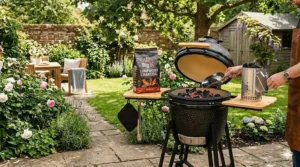
6. KAMADO BONO 25″ Grande Limited — For Serious Entertainers
The KAMADO BONO 25″ Grande Limited is frankly excessive for most British households, but if you regularly host large gatherings or simply enjoy having maximum cooking flexibility, this £890-£950 beast delivers kamado capabilities at truly impressive scale.
The 25-inch (64cm) cooking diameter is genuinely vast—you can simultaneously cook 12 whole chickens, smoke four pork shoulders, or feed 15+ people with ease. For UK buyers running small catering operations, hosting cricket club barbecues, or simply blessed with enormous friend circles, this capacity transforms outdoor cooking from limiting factor to creative playground. The dual-zone grilling system operates at this scale beautifully, letting you manage multiple temperature zones for complex menu planning.
One basket of quality lumpwood charcoal runs this kamado for over 24 hours at low-and-slow temperatures—remarkable efficiency given the cooking capacity. British buyers should note this model weighs approximately 128kg with packaging, requiring two strong people for positioning and absolutely ruling out any portability. You’re choosing a permanent garden fixture, so measure your patio space carefully before ordering.
Why this makes sense despite the size: For experienced outdoor cooks upgrading from smaller kamados, the Grande eliminates capacity constraints entirely. You’re no longer splitting cooks across multiple sessions or limiting menu ambitions. The ceramic construction maintains identical heat retention principles as smaller models—temperature stability remains excellent whether cooking in February drizzle or August sunshine. UK users mention the build quality justifies the £900 investment, with thick ceramics and robust metal framework suggesting decades of service life.
Pros:
✅ Massive 25-inch capacity feeds 15+ people easily
✅ Professional-grade construction at non-professional pricing
✅ 24+ hour cooking capability on single charcoal fill
Cons:
❌ Enormous weight (128kg) means permanent positioning only
❌ Overwhelming capacity for typical households
In the £890-£950 range on Amazon.co.uk, this suits serious outdoor cooking enthusiasts needing maximum capacity. Check delivery restrictions and assembly requirements.
7. Kamado Joe Classic II 18″ — The Premium Standard-Bearer
The Kamado Joe Classic II represents the gold standard that other kamado manufacturers benchmark against, with pricing around £1,399-£1,499 on Amazon.co.uk. For beginners wondering whether premium pricing delivers proportional performance improvements, this model provides a rather persuasive answer.
The 18-inch cooking diameter feeds 6-8 people comfortably—ideal for established families and regular entertainers. What separates this from cheaper alternatives is the engineering refinement throughout. The divide-and-conquer flexible cooking system transforms that humble grill grate into the most powerful cooking tool in your arsenal, with revolutionary multi-level half-moon design letting you cook different foods at different temperatures simultaneously. The kontrol tower top vent maintains consistent air settings during dome opening and closing, whilst the patented slide-out ash drawer eliminates the messy cleanout process that plagues cheaper kamados.
British buyers particularly value the air-lift hinge, which reduces dome weight by 96%—crucial when you’re checking food every 30 minutes during low-and-slow cooks. The advanced multi-panel firebox retains heat brilliantly whilst the segmented design prevents the catastrophic cracking that occasionally affects single-piece fireboxes. The galvanised steel rolling cart with locking wheels (included) provides mobility and stability, with side shelves offering genuine workspace.
Is the premium pricing justified? After using budget kamados for comparison, the Classic II’s quality differences become obvious. The gasket seals perfectly (reducing heat loss), the thermometer reads accurately without verification, and every component feels precision-engineered rather than merely adequate. UK buyers mention the lifetime ceramic warranty and responsive customer service providing genuine peace of mind. One British reviewer noted their Classic II performs identically in year five as day one—something cheaper ceramics rarely achieve.
Pros:
✅ Best-in-class engineering and innovative features
✅ Comprehensive cart, shelves, and premium accessories included
✅ Lifetime ceramic warranty with excellent UK support
Cons:
❌ Premium pricing around £1,400-£1,500
❌ Heavy investment for kamado beginners (consider starting smaller)
Around £1,399-£1,499 on Amazon.co.uk makes this a significant investment, but one that delivers exceptional performance and longevity. Check current UK stock and Prime delivery availability.
✨ Don’t Miss These Exclusive Deals!
🔍 Take your outdoor cooking to the next level with these carefully selected kamado grills. Click on any highlighted item above to check current pricing and availability on Amazon.co.uk. These picks will help you find exactly what you need for your British garden!
First-Time Setup: Your 30-Minute Kamado Preparation Guide
Most kamado beginners assume setup means hours of complex assembly, but the reality proves far simpler. Your new ceramic grill arrives mostly assembled—the egg-shaped body is complete—requiring just stand attachment and accessory placement.
Step 1: Unboxing and Inspection (10 minutes) Remove all packaging carefully. Ceramic is remarkably durable once in position, but impacts during unpacking can cause chips or cracks. Verify all components against the included checklist: ceramic body, stand (or cart), cooking grates, heat deflector, ash tool, and any brand-specific accessories. British buyers should check for UKCA marking, confirming UK regulatory compliance. Inspect the ceramic body for shipping damage—hairline cracks are rare but worth identifying before your first cook.
Step 2: Stand Assembly (15 minutes) Most stands require simple bolt-together construction. Position your stand on level ground first—you’re about to add 40-130kg of ceramic, and repositioning afterwards requires Herculean effort. British patios and gardens benefit from paving slabs or dedicated barbecue pads beneath the stand, protecting grass and improving stability. Ensure adequate clearance from fences, sheds, and overhead structures. The ceramic doesn’t get as externally hot as metal grills, but proper spacing (minimum 60cm from combustibles) remains sensible.
Step 3: Ceramic Body Positioning This step absolutely requires two people. Lift the ceramic body using the integrated handles or bottom rim (never the lid or top vent). Lower it gently onto the stand, ensuring the mounting points align properly. British buyers using cart-mounted models should verify the locking wheel mechanisms engage before releasing your grip—discovering wobbly wheels whilst supporting 80kg of ceramic creates memorable moments for entirely wrong reasons.
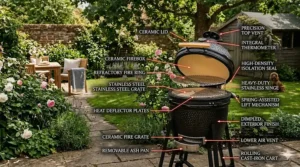
Step 4: Internal Components Installation (5 minutes) Insert the firebox (if separate), charcoal grate, and cooking surfaces according to your model’s instructions. The heat deflector typically stores inside when not needed. Modern kamados use modular designs—components stack rather than requiring tools or fasteners. Verify the gasket (felt seal around the lid rim) sits flush and undamaged. This gasket creates the airtight seal essential for temperature control and smoke retention.
UK Climate Preparation: Apply a thin coat of cooking oil to all cast-iron components (charcoal grates, certain cooking surfaces) before first use. British dampness accelerates rust formation, and this initial seasoning provides protective coating. Consider purchasing a fitted waterproof cover immediately—British weather punishes outdoor equipment year-round, and proper covers extend kamado life considerably. Position your kamado considering prevailing wind direction (our westerlies can affect vent performance) and rain exposure (whilst weather-resistant, sheltered positions reduce cleaning frequency).
Your Crucial First Burn: Before cooking food, run an empty burn at 150°C for 30-60 minutes. This cures the gasket, burns off manufacturing residues, and lets you practice temperature control without risking dinner. Fill the firebox one-third with lumpwood charcoal, light 2-3 firelighters in the centre, close the lid, and open both vents fully. Monitor the temperature climb, then practice adjusting vents to hold 150°C steady. This first burn teaches your specific kamado’s behaviour—each model has quirks—without pressure.
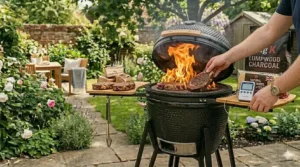
Temperature Mastery: The 15-Minute Guide That Transforms Beginners Into Confident Cooks
Temperature control separates kamado cooking from conventional barbecuing, and it’s simultaneously the most intimidating and surprisingly simple aspect for beginners. Unlike gas grills with twist-and-forget dials, kamados require understanding airflow principles—but once grasped, you’ll achieve rock-solid temperatures that gas simply cannot match.
The Two-Vent System Explained Every kamado uses bottom and top vents controlling airflow through your charcoal bed. More air equals hotter fire; less air equals cooler temperatures. The bottom vent (typically a sliding door or daisy wheel) provides coarse adjustment—wide open for maximum heat, nearly closed for low-and-slow smoking. The top vent (often called the daisy wheel or cap) offers fine-tuning. Think of the bottom vent as your accelerator and the top vent as cruise control.
Target Temperature Chart for British Cooking:
- Low & Slow (110-135°C): Pulled pork, brisket, ribs—overnight smoking that British weather suits perfectly
- Indirect Roasting (160-190°C): Whole chickens, pork shoulders, Sunday roasts with authentic wood-smoke flavour
- Standard Grilling (230-260°C): Burgers, sausages, chicken portions—conventional barbecue territory
- High-Heat Searing (315-400°C): Steaks, tuna, vegetables requiring char and caramelisation
The Startup Sequence (Works Every Time):
- Fill firebox three-quarters with lumpwood charcoal (never briquettes—they contain binders unsuitable for ceramics)
- Light 2-3 natural firelighters in the centre only (never use lighter fluid—it contaminates ceramic permanently)
- Leave lid open for 3-5 minutes whilst fire establishes, then close
- Open both vents fully and monitor temperature climb
- When thermometer reads 20°C below target, close bottom vent to 50% and top vent to 30%
- Wait 10 minutes for temperature to stabilise—kamados respond slowly but reliably
- Fine-tune using top vent only: open slightly to raise temperature, close slightly to lower
The British Weather Advantage: Ceramic kamados maintain temperature stability regardless of external conditions. Whilst your neighbour’s metal barbecue struggles in February drizzle (cold rain sapping heat constantly), your kamado holds 135°C effortlessly. Wind affects vent performance slightly—strong westerlies may require minor bottom vent adjustment—but the thick ceramic mass resists temperature fluctuation beautifully. One UK user mentioned smoking ribs overnight in November rain; the kamado maintained 120°C for 12 hours whilst conventional smokers would have failed entirely.
Common Beginner Mistakes (And How to Avoid Them): Mistake 1: Opening the lid constantly to check food. Each opening drops temperature 20-30°C, requiring 10 minutes recovery. Solution: Trust the process. Check once hourly maximum during low-and-slow cooks.
Mistake 2: Adjusting vents impatiently. Kamados respond slowly—changes take 10-15 minutes to register. Solution: Make small adjustments, wait, observe.
Mistake 3: Forgetting to “burp” before opening. Rapid oxygen influx can create flashback (sudden flame whoosh). Solution: Crack lid 5cm, pause 5 seconds, then open fully. British safety consciousness appreciates this precaution.
Mistake 4: Using cheap charcoal. Poor-quality fuel produces excessive ash, blocking airflow and making temperature control frustrating. Solution: Invest in restaurant-grade lumpwood charcoal—it costs more but performs incomparably better.
Real-World Kamado Scenarios: Matching Grills to British Lifestyles
Scenario 1: The London Flat Dweller (Small Balcony, Weekend Cooking) Meet Sarah, living in a Shoreditch flat with a modest 2m × 3m balcony. Her building allows barbecues but space is precious. The KAMADO BONO 13″ Picnic (£170-£190) fits perfectly—compact footprint, genuinely portable for winter storage in her hallway cupboard, and the ceramic produces minimal smoke compared to conventional grills (crucial for avoiding neighbour complaints). Sarah cooks for herself and her partner most weekends, occasionally hosting one couple for dinner. The 13-inch capacity proves ideal—two ribeye steaks and a portion of asparagus fit comfortably. She particularly values the low charcoal consumption; one bag lasts three months of regular cooking, important when lugging supplies up three flights of stairs.
Scenario 2: The Manchester Suburb Family (Garden Space, Regular Entertaining) James and Emma live in Chorlton with two children, a decent-sized garden, and frequent family gatherings. The Kamado Joe Classic II (£1,399-£1,499) became their investment after years of disappointing metal grills. The 18-inch cooking surface feeds their family of four with leftovers, scales up effortlessly for entertaining Emma’s parents and James’s brother’s family (8 people total). The divide-and-conquer system proves invaluable—cooking chicken drumsticks for the kids at 180°C whilst simultaneously smoking salmon for the adults at 120°C. James mentions the air-lift hinge justifies the premium pricing alone; checking on overnight brisket smokes no longer requires weightlifter strength. The galvanised cart with locking wheels lets them reposition the kamado seasonally—closer to the kitchen door in winter, out to the patio in summer.
Scenario 3: The Rural Cornwall Enthusiast (Space Unlimited, Year-Round Cooking) David retired to a Cornish village with substantial garden space and genuine passion for outdoor cooking. The KAMADO BONO 25″ Grande (£890-£950) satisfies his ambitious projects—whole legs of lamb for village fêtes, multiple pork shoulders for charity events, elaborate multi-course dinners for visiting family. The massive 25-inch capacity eliminates constraints entirely. David particularly appreciates the 24-hour cooking capability; his signature brisket cooks overnight using one charcoal basket, and the ceramic maintains 125°C effortlessly despite Cornish coastal winds. The permanent garden positioning suits his situation perfectly—it’s a garden feature as much as cooking equipment.
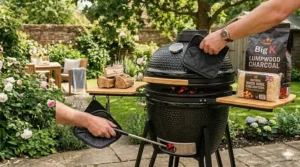
Common Kamado Mistakes (And How Beginners Can Avoid Them)
Mistake 1: Buying Too Small (Then Immediately Regretting It) The most frequent beginner error is underestimating required capacity. That cute 13-inch kamado looks perfect until you’re hosting six people and realising you can fit exactly four burgers at once, requiring staggered cooking whilst guests wait hungrily. Consider your realistic maximum guest count, then size up one level. If you typically cook for four but occasionally entertain eight, choose 18-21 inches rather than 13-15 inches. The larger kamado handles small cooks perfectly (just use less charcoal) whilst providing capacity headroom when needed.
Mistake 2: Ignoring UK Weather Protection from Day One British buyers sometimes skip purchasing proper covers, assuming ceramic withstands anything. Whilst technically true, exposed kamados accumulate grime, develop mould inside during wet months, and suffer accelerated gasket deterioration. Quality fitted covers (around £30-£50) extend kamado life measurably and reduce cleaning frequency dramatically. Position your kamado considering shelter—under patio overhangs or beside walls that block prevailing rain reduces weathering considerably.
Mistake 3: Using Briquettes Instead of Lumpwood Charcoal Conventional charcoal briquettes contain binders and additives that produce excessive ash in kamados, clogging airflow and making temperature control frustrating. They also impart chemical flavours that ceramic absorbs and transfers to food over time. Restaurant-grade lumpwood charcoal burns cleaner, produces minimal ash, and costs only marginally more. British suppliers like Big K or locally-sourced oak lumpwood deliver excellent results. Yes, it’s £15 per bag rather than £8 for briquettes, but each bag lasts dramatically longer in kamados due to superior combustion efficiency.
Mistake 4: Attempting Complex Cooks Before Mastering Basics Beginners sometimes dive straight into 18-hour brisket smokes or high-heat pizza without understanding their specific kamado’s behaviour. Start simple: grill burgers at 230°C, smoke chicken thighs at 150°C, roast a joint at 180°C. These straightforward cooks teach temperature control, vent adjustment, and charcoal consumption patterns without risking expensive ingredients or marathon cooking sessions. Master holding steady temperatures for 2-3 hours before attempting overnight smokes.
Mistake 5: Neglecting the “Burp” (Hello, Singed Eyebrows) Opening a hot kamado lid rapidly introduces oxygen explosively, creating flashback—sudden flame eruption that removes facial hair efficiently. Always burp: crack the lid 5cm, pause 5 seconds whilst heat escapes gently, then open fully. This simple habit becomes automatic after the first forgotten burp (which every kamado owner experiences exactly once). British buyers particularly appreciate this safety measure given our tendency towards overgrown gardens and flammable surroundings.
Mistake 6: Storing Kamados Empty During Winter Counterintuitively, leaving small amounts of fresh charcoal in your kamado during storage periods helps—charcoal absorbs moisture, preventing that musty smell and mould growth British winters encourage. Remove ash (moisture attracts) but leave a shallow charcoal layer. This small detail transforms spring startup from cleaning project into immediate cooking readiness.
UK Regulations, Safety Standards, and Legal Requirements
British kamado owners must navigate fewer regulations than our American cousins, but several considerations ensure legal compliance and safe operation.
UKCA Marking and Product Safety: Since Brexit, products sold in Great Britain require UKCA (UK Conformity Assessed) marking, replacing the previous CE marking. Reputable kamado brands sold through Amazon.co.uk display appropriate certification. This confirms compliance with UK safety standards for consumer products. Whilst kamados don’t require UKCA for the ceramic body itself (ancient cooking technology predates modern safety standards), electrical components (rotisserie motors, digital thermometers) must comply. Verify UKCA presence if purchasing accessories with electrical elements.
Local Authority Regulations: Most British councils permit domestic kamado use without special permissions. However, flats, terraces, and high-rise buildings often have specific rules. Check your lease terms and building regulations before purchasing—some developments prohibit all open-flame cooking on balconies due to fire safety concerns. Ground-floor gardens typically face no restrictions, but verify with property management if renting.
Smoke Nuisance Regulations: The Environmental Protection Act 1990 addresses smoke nuisance, though kamados rarely trigger complaints. The sealed ceramic design produces less smoke than conventional barbecues, and using quality lumpwood charcoal (not briquettes or treated wood) minimises smoke production further. British neighbourly relations benefit from considerate positioning—avoid placing vents directly facing neighbours’ gardens, and perhaps mention your new kamado to adjacent properties before first use. Smoke becomes legally actionable nuisance only if “substantial and unreasonable”—occasional weekend smoking sessions don’t qualify.
Carbon Monoxide Safety: Never operate kamados indoors or in enclosed spaces. Carbon monoxide (CO) from charcoal combustion is odourless and lethal. British buyers sometimes consider garage cooking during winter—absolutely forbidden. Partially enclosed spaces like gazebos or pergolas require caution; ensure substantial open sides allowing CO dispersal. The general rule: if you wouldn’t operate a petrol generator there, don’t use your kamado there.
Insurance Considerations: Home insurance policies typically cover kamado grills as garden equipment without additional premiums. However, inform your insurer if you’ve purchased premium models (£1,000+) exceeding standard contents coverage limits. Some policies specifically exclude barbecue-related damage (grease fires, accidental property damage), so verify your coverage includes outdoor cooking equipment. British insurers occasionally request photos of kamado positioning relative to buildings—demonstrating safe clearances from structures and combustible materials.
Food Safety Standards: Whilst not legally mandated for domestic use, British food safety awareness has increased considerably. Use food-safe thermometers verifying internal temperatures (the Food Standards Agency recommends 75°C for poultry, 70°C for two minutes for beef burgers). Kamados’ moisture-retaining environment actually improves food safety—the extended low-temperature cooking (above 60°C for hours) thoroughly pasteurises meat whilst keeping it tender.
Long-Term Ownership: Maintenance Costs and ROI in British Pounds
Year One Investment Breakdown:
- Kamado grill: £170-£1,499 (depending on model choice)
- Quality lumpwood charcoal: £60-£80 annually (based on monthly cooking)
- Accessories starter pack: £50-£100 (pizza stone, heat deflector if not included, quality tongs, thermometer)
- Weatherproof cover: £30-£50 (essential UK purchase)
- Total Year One: £310-£1,729
Ongoing Annual Costs:
- Lumpwood charcoal: £60-£80 (kamados use 70% less fuel than conventional grills)
- Gasket replacement: £15-£25 every 3-5 years
- Deep clean supplies: £10-£15 annually
- Total Annual Running: £70-£95 (after year one)
Compared to Conventional Barbecuing: A decent metal barbecue costs £200-£400 but lasts 3-5 years in British climate before rusting beyond repair. Replacement cycle means £600-£1,200 over 15 years. Quality kamados last 20+ years with basic maintenance, delivering superior cooking throughout. The ROI calculation tilts decisively kamado-ward after year five.
The British Climate Dividend: Our wet weather actually advantages kamado owners financially. Metal grills deteriorate rapidly (rust, warped components, degraded paint) requiring constant replacement. Ceramic proves essentially weatherproof—British buyers report 10-year-old kamados performing identically to new units. This durability transforms the higher upfront investment into remarkable long-term value.
Charcoal Consumption Reality Check: British buyers accustomed to conventional barbecues often underestimate kamado efficiency. A typical Weber kettle requires fresh charcoal for each cook session. Kamados reuse unburned charcoal indefinitely—close both vents after cooking, and remaining coals extinguish for reuse next time. One £15 bag of restaurant-grade lumpwood lasts 6-8 cooking sessions (versus 2-3 sessions for conventional grills). Annual fuel costs drop dramatically despite using premium charcoal.
Accessory Ecosystem Costs: Premium brands (Kamado Joe) offer extensive accessory ranges—rotisseries (£180-£220), pizza attachments (£120-£160), cast-iron griddles (£60-£80). Budget brands provide basic accessories only. British buyers should factor accessory availability into purchase decisions. The KAMADO BONO range offers decent accessory selection at reasonable prices, whilst Fire Mountain models rely on universal-fit alternatives. Kamado Joe’s accessories cost premium prices but integrate seamlessly and last indefinitely.
Insurance Against Food Waste: Kamados’ forgiving nature saves money through reduced cooking failures. The moisture-retaining sealed environment makes overcooking and drying-out remarkably difficult. Beginners routinely produce restaurant-quality results that would challenge conventional grills. This reliability means less wasted expensive meat and more consistent success—difficult to quantify but genuinely valuable for British households watching food budgets.
FAQ: Your Kamado Questions Answered
❓ Are kamado grills suitable for British weather year-round?
❓ What size kamado do I need for a family of four in the UK?
❓ How much does it cost to run a kamado grill in the UK?
❓ Can beginners use kamados successfully without prior BBQ experience?
❓ Do I need planning permission or special permits for kamado grills in the UK?
Conclusion: Your Next Steps in the Kamado Journey
Standing at the threshold of kamado cooking, you’ve absorbed considerable knowledge—from understanding ceramic heat retention principles through to matching specific models with British lifestyles. The decision ultimately crystallises around three factors: budget, cooking capacity requirements, and quality expectations.
For UK beginners testing kamado waters without major financial commitment, the KAMADO BONO 13″ Picnic (£170-£190) or Fire Mountain 15″ Mini (£90-£120) deliver authentic ceramic cooking at remarkably accessible pricing. You’ll discover whether kamado cooking suits your style without risking £1,000+, and both models perform genuinely well for couples and small families. The compact footprint suits British gardens perfectly, and the portability means winter storage in sheds or garages poses no problems.
Mid-range buyers seeking balance between capacity and investment should examine the KAMADO BONO 21″ Green Egg (£700-£800) seriously. This model represents exceptional value—premium ceramic construction, comprehensive accessories, lifetime warranty, and capacity serving 8-10 people comfortably. British families growing into outdoor cooking find this sweet spot delivers professional results without premium brand taxation. The dual-zone cooking system unlocks versatility that transforms weekend barbecuing into year-round outdoor kitchen capability.
Premium buyers valuing ultimate quality and innovation will find the Kamado Joe Classic II (£1,399-£1,499) justifies every pound. The engineering refinement, divide-and-conquer cooking system, and lifetime ceramic warranty deliver measurable performance advantages. British buyers mention this model still performs flawlessly after 5+ years of intensive use—longevity that transforms the upfront investment into remarkable long-term value. The comprehensive cart, shelves, and premium accessories eliminate accessory shopping entirely.
Whichever model you choose, remember that kamado cooking rewards patience and practice. Your first few cooks teach your specific grill’s personality—how quickly it climbs to temperature, how sensitively it responds to vent adjustments, how long charcoal lasts under various conditions. British weather actually advantages this learning process; our moderate climate (rarely extreme cold or heat) provides forgiving conditions for developing skills without battling environmental challenges.
The kamado community in the UK continues expanding rapidly, with excellent online forums, Facebook groups, and local enthusiast clubs sharing recipes, techniques, and troubleshooting advice. British kamado owners prove remarkably generous with knowledge—post questions about temperature control or recipe modifications, and expect detailed helpful responses within hours. This community support transforms solitary learning into collaborative discovery.
Your ceramic grill will fundamentally change outdoor cooking in your household. The moisture-retaining sealed environment produces results that make conventional barbecues look frankly primitive. That first perfectly smoked rack of ribs—tender, juicy, with authentic smoke ring—converts sceptical family members instantly. The ability to cook year-round (British winter smoking sessions feel peculiarly satisfying) extends outdoor cooking from seasonal novelty into genuine lifestyle element.
Start simple, practice patience, and embrace experimentation. Your kamado journey begins the moment you light that first fire and watch the temperature climb steadily. The charcoal flavour, the ceramic heat, the perfectly cooked meat—this is outdoor cooking evolved for British conditions and sensibilities. Welcome to the kamado community.
Recommended for You
- 7 Best Small Kamado Grills UK 2026 – Portable BBQ Reviews
- 7 Best Budget Kamado Grills UK 2026 – Save £500+ Today
- 7 Best Kamado Grills UK 2026 – Expert Reviews & Buying Guide
Disclaimer: This article contains affiliate links. As an Amazon Associate, I earn from qualifying purchases. If you purchase products through these links, we may earn a small commission at no additional cost to you.
✨ Found this helpful? Share it with your mates! 💬🤗
