
In This Article
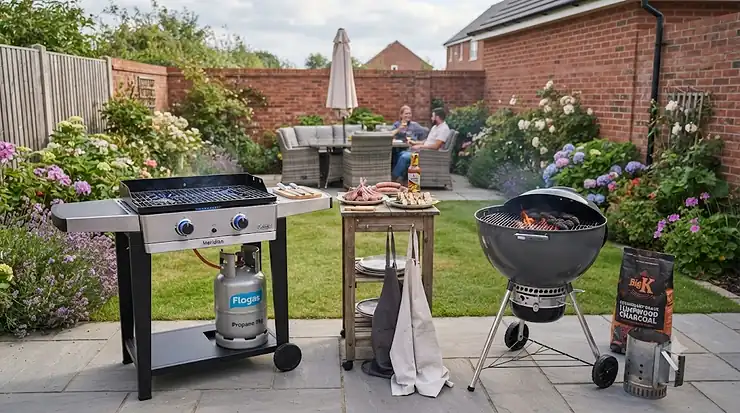
Somewhere between the first sunny bank holiday and the third disappointing rain shower, most of us end up staring at a barbecue in a garden centre car park, wondering whether we’re about to buy a money pit. That hesitation is fair. gas vs charcoal bbq running costs is one of those questions that sounds simple until you actually try to answer it with real numbers, and most retail listings won’t help you — they’re too busy selling you the grill to mention what feeding it will cost for the next five years. This piece does the unglamorous maths instead.
We’ve pulled together current UK propane pricing, real-world charcoal bag costs, and the actual burn rates reported by owners and independent testers, then applied all of it across seven genuine, currently available Amazon UK barbecues spanning budget to premium. Charcoal itself has a surprisingly long history as a fuel — as Wikipedia’s overview of charcoal explains, it’s produced by heating wood with minimal oxygen to leave behind a dense, efficient carbon fuel, which is part of why it burns hotter and more predictably than raw firewood ever could. You’ll get honest commentary on what each model is like to run, not just what it costs to buy. Somewhere in the mix, you’ll probably also want to know about fuel cost comparison bbq maths per session, not just per year, because that’s usually where the real surprises hide. By the end, you should be able to make a decision based on your actual grilling habits rather than a guess. Let’s get into it.
Quick Comparison Table
| Fuel Type | Typical Upfront Cost | Estimated Cost per 2–3hr Session | Annual Running Cost (20-25 sessions) | Best For |
|---|---|---|---|---|
| Gas | £150-£650+ | £3-£6 | £70-£130 | Convenience, weeknight cooking |
| Charcoal | £60-£400+ | £2-£5 | £50-£100 | Flavour, occasional slow-cooking |
| Dual-Fuel | £250-£600 | Varies by zone | £60-£120 | Households split on preference |
Looking at the table, charcoal edges out gas on pure fuel spend for most casual users, but the margin is smaller than the “charcoal is dirt cheap” folklore suggests once you factor in decent-quality briquettes rather than the cheapest bag on the shelf. Gas narrows the gap further if you buy a 13kg bottle rather than repeatedly topping up a small one, since the per-kilogram rate improves with bottle size. The real differentiator, as we’ll see, isn’t the fuel at all — it’s how often you actually fire the thing up.
💬 Just one click — help others make better buying decisions too!😊
Top 7 Gas and Charcoal BBQs: Expert Running Cost Analysis
Rather than reviewing grills in isolation, we’ve picked seven real models that represent the practical spread UK buyers actually choose from — three gas, four charcoal — so you can compare like-for-like running costs rather than just sticker prices. Coverage spans entry-level to serious kit, because the cheapest barbecue to buy isn’t always the cheapest one to feed over a decade of use.
1. Weber Spirit II E-310 — best long-term value despite the higher entry price
The three-burner Weber Spirit II E-310 justifies its higher purchase price precisely because of how the maths plays out over years, not months. Three stainless steel burners deliver around 9.38 kW of combined output across porcelain-enamelled cast iron grates, which in practice means even heat from edge to edge rather than the hot-and-cold patchwork you get on cheaper models. Running a 13kg propane bottle, this grill will comfortably manage 15-20 hours of medium-heat cooking, which for a typical family works out to somewhere between 10 and 15 full barbecue sessions per bottle.
Based on the spec comparison with budget alternatives, the value case here isn’t about the gas being cheaper — propane costs the same regardless of which grill burns it — it’s about longevity and consistency reducing waste. Reviewers consistently note that the burners and ignition system keep working reliably well past the point where cheaper grills have started rusting through or losing ignition reliability, which matters because a barbecue you replace every five years effectively doubles your real running cost through repurchases. This is the pick for anyone who grills often enough that reliability actually compounds.
Pros:
- ✅ 10-year warranty reduces long-term replacement costs
- ✅ Even heat distribution wastes less gas per cook
- ✅ Reviewers report reliable ignition after years of use
Cons:
- ❌ Higher upfront cost than most budget gas grills
- ❌ Porcelain grate coating can chip after years without proper drying
Prices for the Weber Spirit II E-310 currently sit in the £550-£650 range on Amazon UK; check current price for exact figures. Given the warranty and burner longevity, this represents strong long-term value despite the steep entry point.
2. CosmoGrill Pro Deluxe 4+1 — best budget gas option for casual grillers
For buyers who want gas convenience without the premium price tag, the CosmoGrill Pro Deluxe 4+1 delivers four main burners plus a dedicated side burner, mounted on four castor wheels for easy repositioning around a patio. The cooking area comfortably handles around 10 burger patties or 18 sausages at once, which covers most family gatherings without needing to cook in batches.
What most buyers overlook about this model is that its lower purchase price doesn’t automatically translate into cheaper long-term running costs — it burns the same propane at broadly similar rates to premium grills, so your fuel spend per session is comparable to the Weber above. Where it saves you money is purely on the initial outlay and, for occasional users, that’s often the smarter trade-off. Aggregated reviewer sentiment describes the CosmoGrill brand as having built a loyal UK following for producing usable grills at sensible prices, though the thinner steel construction means it won’t match a Weber’s multi-decade lifespan.
Pros:
- ✅ Low upfront cost keeps total spend down for occasional use
- ✅ Generous cooking space for the price point
- ✅ Built-in temperature gauge aids fuel-efficient cooking
Cons:
- ❌ Thinner steel construction than premium alternatives
- ❌ Shorter expected lifespan increases long-term replacement risk
The CosmoGrill Pro Deluxe 4+1 typically sits in the £250-£350 range, making it one of the more accessible ways into gas grilling without a big commitment.
3. Char-Broil Performance 340S — best mid-range gas BBQ under £400
Sitting neatly between budget and premium, the Char-Broil Performance 340S uses TRU-Infrared cooking technology across its burners, which genuinely reduces flare-ups compared with conventional open-flame gas grills. Four burners plus a side burner give independent zone control, letting you sear on one side while keeping food warm on the other without wasting gas running every burner at full blast simultaneously.
Here’s what the spec sheet won’t tell you, but user reports suggest: the infrared plates reduce direct flame contact with dripping fat, which means less flare-up-driven gas wastage from constantly adjusting the flame down. Independent testers found this model delivers roughly 80% of a premium Weber’s cooking performance for around 60% of the price, which is a genuinely useful benchmark if you’re trying to work out where your money is best spent. Reviewers do flag that assembly instructions could be clearer, particularly around the firebox step, so budget extra time on setup day.
Pros:
- ✅ TRU-Infrared technology reduces flare-up gas wastage
- ✅ Independent burner zones improve cooking efficiency
- ✅ Side burner adds versatility without a second appliance
Cons:
- ❌ Assembly instructions are reportedly unclear in places
- ❌ Not as durable long-term as premium stainless steel models
Expect the Char-Broil Performance 340S to sit under £400, positioning it as one of the strongest mid-range gas picks for buyers weighing fuel cost comparison bbq decisions against upfront spend.
4. Weber Compact Kettle 47cm — best budget entry into charcoal grilling
The classic kettle shape needs little introduction, and the Weber Compact Kettle 47cm brings Weber’s reputation for reliable, even-burning charcoal cooking to a genuinely affordable price point. Assembly takes around 30 minutes, and the tri-leg design with wheels strikes a sensible balance between stability and portability for smaller UK gardens and patios.
Based on the spec comparison with pricier kettle models, what you’re really paying extra for further up the range is refinement rather than core function — this compact kettle still delivers the same fundamental heat retention and even cooking that Weber kettles are known for. Reviewers consistently praise how comfortably it caters for four to six people with room to spare for indirect cooking, and the porcelain-enamelled bowl resists rust reasonably well through UK weather. For anyone testing whether they actually enjoy charcoal grilling before committing further, this is the sensible low-risk entry point.
Pros:
- ✅ Low purchase price minimises testing-the-waters risk
- ✅ Enamelled bowl and lid retain heat efficiently, reducing charcoal waste
- ✅ Simple mechanics mean very little that can break
Cons:
- ❌ Smaller cooking area limits capacity for larger gatherings
- ❌ No ash catcher on some variants, making cleanup slower
The Weber Compact Kettle 47cm generally falls in the £100-£150 range, making it one of the cheapest ways to start genuinely comparing gas vs charcoal bbq running costs from personal experience rather than guesswork.
5. George Foreman Kettle BBQ — best value alternative for first-time charcoal buyers
If even the compact Weber feels like too much commitment, the George Foreman Kettle BBQ mimics the classic kettle design at a noticeably lower price, with an integrated thermometer removing some of the guesswork that puts newcomers off charcoal. Adjustable vents give reasonable temperature control, and the chrome cooking grill holds up well enough for regular weekend use.
The honest analytical take here is that this grill won’t match a Weber’s decades-long lifespan, but for buyers unsure whether charcoal grilling suits their lifestyle at all, that’s not really the point. Reviewers report typical service lives of three to five years with proper care, which for many casual users is entirely adequate before any upgrade urge kicks in. What most buyers overlook is that a cheap grill used regularly can work out better value than an expensive one left in the shed, purely because the fuel-cost side of the equation is identical regardless of which kettle the charcoal sits in.
Pros:
- ✅ Very low upfront cost lowers the barrier to charcoal grilling
- ✅ Integrated thermometer helps avoid wasted charcoal from guesswork
- ✅ Straightforward 30-45 minute assembly
Cons:
- ❌ Shorter typical lifespan than premium kettle grills
- ❌ Chrome grill less robust than cast iron alternatives
Priced typically under £90, the George Foreman Kettle BBQ is squarely aimed at buyers prioritising low commitment over long-term running cost analysis.

6. CosmoGrill Outdoor XXL Smoker — best for large gatherings on a budget
Stepping up in capacity, the CosmoGrill Outdoor XXL Smoker handles fifteen or more burger patties and sausages simultaneously, making it a sensible pick for households who host regularly rather than grilling for two. The adjustable charcoal pan and built-in thermometer give more precise control than basic kettles, which matters because imprecise heat management is one of the fastest ways to burn through charcoal unnecessarily.
Reviewers appreciate the excellent value proposition relative to the cooking capacity on offer, though several mention that assembly requires patience — typically around two hours with basic tools. What the spec sheet won’t tell you is that larger charcoal grills like this one can actually cost less per portion cooked than smaller models, since you’re heating one larger bed of coals for a crowd rather than running multiple smaller sessions back to back. For anyone regularly feeding eight or more people, that efficiency genuinely changes the fuel cost comparison bbq maths in this grill’s favour.
Pros:
- ✅ Large capacity reduces cost-per-portion for bigger groups
- ✅ Adjustable charcoal pan improves heat control and reduces waste
- ✅ Genuinely competitive price for the cooking area offered
Cons:
- ❌ Assembly takes roughly two hours and needs patience
- ❌ Bulkier footprint requires more garden or patio space
The CosmoGrill Outdoor XXL Smoker typically retails in the £150-£220 range, offering serious capacity without premium-grill pricing.
7. Weber Master-Touch GBS E-5755 — best premium charcoal grill for serious cooks
At the top of our charcoal selection sits the Weber Master-Touch GBS E-5755, which builds on the standard kettle formula with the Gourmet Barbecue System — a hinged grate design that accepts interchangeable inserts like griddles, pizza stones and woks. The One-Touch cleaning system sweeps ash into a removable catcher in seconds, and the thick enamel coating resists rust even in coastal, damp UK gardens.
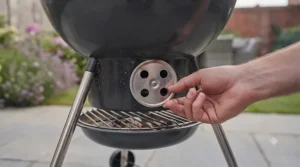
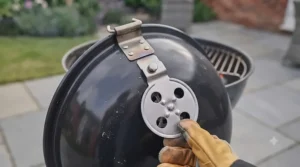
Here’s what genuinely justifies the premium here: the built-in thermometer and adjustable dampers give far more precise airflow management than budget kettles, and precise airflow control is directly linked to charcoal efficiency — a poorly managed vent setup can waste a third or more of a bag of charcoal to unnecessary flare-up and over-burning. Reviewers particularly praise its weather-resistant construction, with several long-term owners reporting well over a decade of reliable service. For anyone who grills often enough that fuel waste from poor temperature control actually adds up, this precision pays for itself over time.
Pros:
- ✅ Precise vent control reduces charcoal waste significantly
- ✅ GBS accessory system adds versatility without extra grills
- ✅ Exceptional weather resistance extends usable lifespan
Cons:
- ❌ Premium price relative to basic kettle grills
- ❌ GBS accessories sold separately add to total cost
Expect to pay in the £300-£400 range for the Weber Master-Touch GBS E-5755, positioning it as the long-term running cost analysis winner for frequent charcoal grillers who value control over convenience.
Practical Usage Guide: Cutting Your BBQ Running Costs From Day One
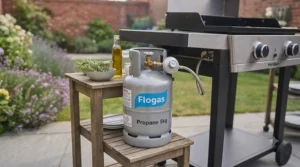
Getting the most out of either fuel type starts before you even light the first flame. For gas grills, always check your regulator and hose connections are seated properly — a slow leak doesn’t just waste money, it’s a genuine safety issue, and gas escaping unburned is gas you’ve paid for and gained nothing from. Preheat only as long as necessary; most gas grills reach cooking temperature within 10-15 minutes, and leaving burners running on full while you finish prepping food indoors is one of the most common sources of wasted propane in the first month of ownership.
For charcoal, the single biggest cost-saving habit is using a chimney starter rather than lighter fluid. It lights charcoal faster, more evenly, and without the acrid taste lighter fluid can leave on food, meaning less wasted charcoal from uneven burns. Only light the amount of charcoal you actually need for the session — a common first-30-days mistake is filling the entire charcoal bed regardless of how much food is being cooked. For gas, a maintenance schedule of checking burner ports for blockages every few months and giving grates a light oil after cleaning will meaningfully extend a grill’s working life, which is ultimately the biggest lever on your long term bbq expenses regardless of fuel type.
Real-World Scenario: Which Fuel Suits Your Lifestyle
Consider three households. First, a young professional in a flat with a small balcony who grills twice a month for one or two people — for this person, a compact charcoal kettle like the George Foreman Kettle BBQ or Weber Compact Kettle 47cm makes sense, since low session frequency means the convenience premium of gas is hard to justify, and a small bag of charcoal lasts for several sessions.
Second, a family of five hosting weekend barbecues throughout summer — here, the Weber Spirit II E-310 or Char-Broil Performance 340S earn their keep through consistent, fast turnaround cooking that doesn’t eat into precious weekend time, and the higher session frequency means the 13kg propane bottle’s per-kilogram economics start working properly in your favour.
Third, a household that regularly entertains eight-plus guests and enjoys slow-cooked ribs or pulled pork — the CosmoGrill Outdoor XXL Smoker or Weber Master-Touch GBS E-5755 suit this pattern best, since large-capacity charcoal cooking genuinely reduces cost-per-portion at scale, and the extended low-and-slow cooking charcoal enables simply isn’t gas’s strongest territory.
Problem → Solution: Common BBQ Running-Cost Pain Points Solved
Problem: Running out of gas mid-cook. Solution — keep a spare, correctly sized bottle on hand rather than relying on a single cylinder, and learn to gauge remaining gas by weighing the bottle rather than guessing from flame strength.
Problem: Charcoal burning out too fast for long cooks. Solution — use the minion method, arranging unlit briquettes with a small quantity of lit coals on top, so the fire spreads gradually rather than burning hot and fast from the start.
Problem: Overbuying fuel “just in case.” Solution — track how many sessions a typical bottle or bag actually lasts for your household, then buy closer to that quantity rather than defaulting to the largest size available.
Problem: High food waste from uneven heat. Solution — invest in a simple oven thermometer for charcoal grills lacking a built-in gauge, since consistent temperature control reduces both fuel waste and ruined food, which is its own hidden running cost.
Problem: Underestimating total cost of ownership. Solution — factor in covers, cleaning tools, replacement parts and fuel storage solutions from the outset, since these routinely add 10-15% to a barbecue’s true annual running cost beyond fuel alone.
What Is the Real Difference in Gas vs Charcoal BBQ Running Costs?
gas vs charcoal bbq running costs essentially comes down to two different cost structures: gas involves a higher-value, longer-lasting bottle purchase with predictable per-hour burn rates, while charcoal involves smaller, more frequent purchases with variable burn efficiency depending on technique. Neither fuel is dramatically cheaper across the board — the honest answer depends heavily on how often you cook and how efficiently you manage the fire.
How to Choose Between Gas and Charcoal Based on Running Costs
- Estimate your actual session frequency. Weekly grillers benefit more from gas’s per-kilogram bottle economics; occasional users rarely recoup gas’s higher upfront outlay.
- Factor in cook duration, not just frequency. Long, slow cooks favour charcoal’s ability to sustain low heat over hours without constant fuel top-ups.
- Account for grill lifespan, not just fuel price. A cheaper grill replaced every five years can cost more overall than a pricier one lasting fifteen.
- Weigh convenience against your actual free time. Gas saves 20-30 minutes per session on lighting and cooling, which adds up over dozens of uses per year.
- Consider storage and safety requirements. Gas bottles need secure, ventilated storage; charcoal needs dry storage but carries fewer regulatory considerations.
- Price fuel per session, not per kilogram. A cheaper-per-kilo fuel can still cost more per cook if your grill burns through it inefficiently.
- Test before committing to premium kit. Start with a budget model in your preferred fuel type before investing in a long-term flagship grill.
Gas BBQ vs Charcoal BBQ vs Other Alternatives: The Full Picture
Weighing gas charcoal pros cons in isolation misses a growing middle ground: dual-fuel and pellet grills. Which?’s comparison of gas and charcoal barbecues notes that charcoal models tend to be considerably less efficient and produce more smoke than gas, a trade-off worth weighing alongside pure running costs if air quality or neighbours are a concern. Gas wins decisively on convenience and precision — dial-in temperature control genuinely matches a kitchen hob, and there’s no waiting around for coals to reach cooking temperature. Charcoal wins on flavour and versatility for smoking, searing at higher temperatures, and the ritual many grillers simply enjoy. According to industry sales data, both gas and charcoal BBQs have seen sales rise sharply since 2020, suggesting British households aren’t settling the debate one way or the other — they’re investing more in both.
Dual-fuel grills, which pair separate gas and charcoal cooking zones in one unit, suit households genuinely split on preference, though they typically cost more upfront than a single-fuel equivalent and require you to maintain both fuel types’ logistics simultaneously. Pellet grills sit somewhat outside this comparison, using compressed wood pellets and electric ignition for a hybrid of convenience and smoke flavour, but they represent a different running-cost model entirely with pellet prices that don’t map neatly onto either gas or charcoal economics.
Long-Term Cost & Maintenance: The Running Cost Analysis That Actually Matters
Here’s where a genuine running cost analysis needs to look past the sticker price entirely. A £450 Weber gas grill lasting 10-15 years with basic maintenance works out to roughly £30-£45 per year in depreciation alone, before fuel. A £150 budget gas model managing five to seven years works out similarly once you include a likely mid-life replacement of worn burner components. The gap narrows more than most buyers expect.
| Cost Factor | Gas (Weber Spirit II E-310) | Charcoal (Weber Master-Touch) |
|---|---|---|
| Purchase Price | £550-£650 | £300-£400 |
| Expected Lifespan | 10-15 years | 15-20+ years |
| Annual Depreciation | ~£30-£45 | ~£15-£25 |
| Annual Fuel Cost | £70-£130 | £50-£100 |
| Estimated Total Annual Cost | £100-£175 | £65-£125 |
The table shows charcoal maintaining a modest but consistent edge on total annual cost, largely driven by the Weber Master-Touch’s exceptional build longevity rather than charcoal itself being dramatically cheaper. Buyers should note that these figures assume 20-25 sessions per year; frequent users who cook 40+ times annually often see the gap narrow further as gas’s per-kilogram efficiency improves with heavier bottle use. Long term bbq expenses are ultimately driven more by build quality and maintenance habits than by fuel choice alone.
Common Mistakes When Buying and Running a BBQ
The most frequent mistake is buying based on burner count or grill size alone without considering realistic usage frequency, leading to an oversized gas grill guzzling propane for a household of two. A close second is neglecting basic maintenance, letting rust or blocked burner ports force an early replacement that erases any running-cost savings from a cheaper initial purchase. Buyers also commonly underestimate charcoal quality differences — cheap, low-density briquettes burn faster and less evenly than premium options, meaning the bargain bag isn’t always the bargain it appears once you account for how much more of it you need per session. Finally, many overlook accessories entirely, only to discover a cover, spare regulator or chimney starter adds meaningfully to first-year costs.
Fuel Cost Comparison BBQ: Gas vs Charcoal Per Cooking Session
Breaking fuel cost comparison bbq figures down to a single session gives the clearest real-world picture. A 13kg propane bottle currently costs somewhere in the £30-£40 range for a refill and delivers roughly 15-20 hours of medium-heat cooking on a three-burner grill, working out to around £2-£2.50 per hour of active cooking. A 10kg bag of quality charcoal briquettes typically costs £10-£15, and a single 2-3 hour grilling session generally uses 1-1.5kg, putting charcoal at roughly £1.50-£2.25 per session depending on briquette quality and how tightly you manage the vents.
| Session Type | Gas Cost | Charcoal Cost |
|---|---|---|
| Quick weeknight grill (45 min) | £1.50-£2 | £1-£1.50 |
| Standard weekend BBQ (2-3 hrs) | £3-£5 | £2-£3.50 |
| Long slow-cook (5+ hrs) | £6-£9 | £4-£7 |
The analysis here confirms charcoal’s edge holds fairly consistently across session lengths, though it narrows for quick weeknight grilling where gas’s near-zero preheat waste closes the gap. Buyers doing frequent short sessions may find the practical difference genuinely marginal once convenience and time savings are weighed in.
Safety, Storage and Regulations for Gas and Charcoal BBQs
Running costs aren’t the only consideration — both fuels carry genuine safety responsibilities that UK buyers shouldn’t skip past. Gas bottles must be stored upright, outdoors, and in a well-ventilated area away from ignition sources; the HSE’s guidance on safe LPG use sets out the core principles for handling and storing cylinders safely at home. Never change a gas bottle indoors, and always check hose and regulator connections before each use, since even a small leak represents both wasted fuel and genuine fire risk.
Charcoal carries its own hazards, particularly around carbon monoxide from smouldering coals and fire risk from improper positioning. The London Fire Brigade’s BBQ safety advice recommends positioning any barbecue on level, non-decked ground, well away from sheds, fences or trees, and never lighting one in an enclosed space. Both fuel types should never be used on balconies, and disposable barbecues in particular pose ongoing fire risk even after the food is done, since embers can stay dangerously hot for hours.
BBQ Fuel Economics for Different Buyer Types
For students and first-time renters, bbq fuel economics favour cheap, portable charcoal grills like the George Foreman Kettle BBQ, where low upfront cost and infrequent use make gas’s convenience premium hard to justify. For busy families juggling weeknight dinners, the calculation shifts toward gas, where the 10-15 minute time saving per session compounds meaningfully across a summer of regular use, even if the raw fuel cost runs slightly higher. For serious hobbyist cooks pursuing low-and-slow smoking, charcoal remains the only sensible economic choice, since gas simply can’t sustain the extended low temperatures needed without excessive fuel waste. Retirees and empty-nesters hosting occasional larger gatherings tend to find the best value in mid-capacity charcoal grills like the CosmoGrill Outdoor XXL Smoker, where cost-per-portion improves meaningfully at scale.
Frequently Asked Questions
❓ Is charcoal cheaper than gas for a BBQ in the UK?
❓ How long does a 13kg gas bottle last on a BBQ?
❓ What is the average annual running cost of a gas BBQ in the UK?
❓ Does charcoal quality affect running costs significantly?
❓ Is a dual-fuel BBQ worth the extra cost?
Conclusion
There’s no single winner in the gas vs charcoal bbq running costs debate, and honestly, anyone promising you a clean-cut answer is probably trying to sell you something. Charcoal holds a modest, fairly consistent cost edge per session, particularly for longer cooks, but gas claws much of that back through speed, convenience and — in the case of well-built models like the Weber Spirit II E-310 — genuine long-term durability that lowers depreciation per year.
What actually determines your real running cost is less about the fuel itself and more about how often you grill, how well you maintain your equipment, and whether you’re buying quality that matches your usage. A £150 grill fired up thirty times a summer will always beat an £800 model gathering dust in the shed, regardless of fuel type. Match the grill to your genuine habits, budget for the fuel type accordingly, and you’ll come out ahead either way.
✨ Don’t Miss These Exclusive Deals!
🔍 Take your outdoor cooking to the next level with these carefully selected gas and charcoal BBQs. Click on any highlighted item to check current pricing and availability on Amazon.co.uk. These grills will help you create authentic barbecue flavours your family will love this summer!
Recommended for You
- 7 Best BBQ for Large Family Picks in 2026: Feed 10+ Easily
- 7 Best BBQ for Small Garden Picks UK 2026
- BBQ for Beginners: 7 Easy Starter Grills to Buy in 2026
Disclaimer: This article contains affiliate links. As an Amazon Associate, I earn from qualifying purchases. If you purchase products through these links, we may earn a small commission at no additional cost to you.
✨ Found this helpful? Share it with your friends! 💬🤗
