In This Article
There’s a specific kind of heartbreak that arrives every April, when you drag last summer’s barbecue out from behind the shed and lift the lid to find orange freckles spreading across the grates. A rust resistant bbq is supposed to prevent exactly that scene, but here’s the uncomfortable truth: “rust resistant” gets printed on an awful lot of grills that genuinely aren’t, because the phrase describes a spectrum rather than a guarantee. Thin chrome-plated steel, budget mild steel, and genuine 304-grade stainless steel can all carry similar-sounding marketing copy while ageing at wildly different speeds once they meet a typical British garden.
This guide cuts through that. We’ve researched seven real barbecues, spanning affordable stainless steel builds through to ceramic kamados that shrug off damp winters entirely, and we’ve grounded every claim in actual metallurgy rather than listing copy. You’ll learn what separates genuinely corrosion resistant construction from a shiny finish that won’t survive two seasons, how UK weather specifically stress-tests these materials, and exactly which spec details are worth paying extra for. By the end, you’ll be able to look past the word “stainless” on a box and know precisely what you’re getting.
Quick Comparison Table
| Category | Product | Material | Best For |
|---|---|---|---|
| Best Overall | Landmann Triton PTS 2.0 | 304 stainless steel | All-round durability, multi-zone cooking |
| Best Budget | VonHaus 4+1 Burner Gas BBQ | Stainless steel + powder coating | First-time buyers on a budget |
| Best Classic | Weber Original Kettle 57cm | Porcelain-enamelled steel | Charcoal purists, small gardens |
| Best Premium | Napoleon Rogue 425 | 304 stainless steel | Long-term investment, entertaining |
| Best Never-Rust | PK Grills PK300 | Cast aluminium | Coastal or exposed gardens |
Reading down this table, the clearest signal is that “best” splits by material rather than by brand loyalty — a coastal garden genuinely calls for a different construction to a sheltered suburban patio, and no single product wins every category. Price rises fairly predictably with the corrosion resistance of the core material, though as you’ll see below, that’s not always a straight line.
💬 Just one click — help others make better buying decisions too!😊
Top 7 Rust Resistant BBQs: Expert Analysis
1. VonHaus 4+1 Burner Gas BBQ — stainless steel build, budget price
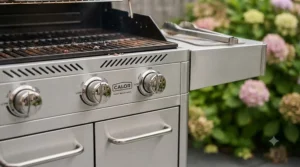
The standout feature here is straightforward: genuine stainless steel components at a price point where many competitors substitute painted mild steel instead. Based on the spec comparison with other sub-£250 gas grills, the stainless steel burner box and lid give this a real head start on longevity, even though the cart and trolley sections use powder-coated steel to keep costs down. What most buyers overlook is that the powder-coated parts aren’t a weakness so much as a sensible cost trade-off — as long as the coating stays intact, painted steel resists moisture reasonably well, and it’s only once it chips or scratches that bare metal gets exposed. Reviewers consistently note the assembly is straightforward and the stainless steel top section holds up well through a first season, with the free 2-year warranty offering useful reassurance for anyone nervous about buying budget. The honest analytical take is that this suits first-time buyers or anyone testing whether they’ll actually use a barbecue regularly before committing to a premium purchase.
Pros:
- ✅ Genuine stainless steel burner box, not just painted steel
- ✅ Free 2-year warranty backs the build quality claim
- ✅ Budget-friendly entry point into real stainless steel construction
Cons:
- ❌ Powder-coated cart and legs are less corrosion resistant than the burner box
- ❌ Thinner gauge steel than mid-range and premium alternatives
Expect a price in the £150-£220 range. For a first barbecue, or a second unit for a caravan or allotment, it represents strong value precisely because the parts that matter most for cooking are genuinely stainless.
2. Weber Original Kettle 57cm — porcelain enamel that resists rust
What separates this from a typical steel kettle grill is the porcelain enamel finish baked onto both the bowl and the lid — a glass-like coating fused to the steel at high temperature, which is genuinely different from paint or powder coating in how it bonds to the metal beneath. On paper, this construction is specifically engineered to withstand repeated heat cycling without cracking, and Weber pairs it with a rust-resistant aluminium damper, since aluminium doesn’t rust in the way steel does, even on the small moving parts that see the most weather exposure. Based on the spec comparison with painted steel kettles, porcelain enamel’s main advantage is that it doesn’t rely on an unbroken paint film the way powder coating does — it’s fused into the surface rather than sitting on top of it. Reviewers consistently describe Weber kettles lasting a decade or more of typical UK garden use, and the brand’s own product pages back this up, noting the finish is designed to resist chipping and rust across seasons of outdoor storage. The honest trade-off is that this is a charcoal-only design, so anyone wanting instant gas ignition will need to look elsewhere on this list.
Pros:
- ✅ Porcelain enamel resists rust better than painted steel
- ✅ Rust-resistant aluminium damper on a genuinely wear-prone part
- ✅ Decades-long reputation for surviving UK weather
Cons:
- ❌ Charcoal only, no gas convenience
- ❌ Enamel can chip if knocked hard, exposing bare steel beneath
Pricing typically sits around £110-£160 for the 57cm version. Given how consistently this exact model gets recommended across UK gardening and outdoor living retailers, it’s genuinely strong value for a barbecue many owners keep for ten-plus years.
3. Char-Broil Advantage PRO S 3 — rust resistant cast iron grates
The standout advantage is the split-material approach: stainless steel burners paired with cast iron cooking grates, each material doing the job it’s genuinely best suited to. Cast iron isn’t naturally rust resistant on its own, but here it’s manufacturer-treated specifically to resist corrosion while retaining the superior heat retention and searing performance cast iron is known for over thinner stainless steel grates. Here’s what to weigh: Char-Broil backs the stainless steel burners with a notably long 10-year warranty, while the cast iron grates and emitter plates carry a shorter 3-year cover — a fairly honest signal from the manufacturer about which component they expect to outlast the other. Reviewers consistently praise the even heat distribution the SureFire ignition system and stainless burners provide, while some note that cast iron grates do need a light oiling after cleaning to maintain their rust resistance, unlike stainless steel grates which need none. The honest analytical take is that this suits cooks who prioritise searing performance and are willing to spend two extra minutes on grate maintenance in exchange for it.
Pros:
- ✅ 10-year warranty specifically on the stainless steel burners
- ✅ Cast iron grates deliver superior heat retention for searing
- ✅ SureFire ignition lights each burner individually and reliably
Cons:
- ❌ Cast iron grates need occasional oiling to stay rust resistant
- ❌ Shorter 3-year warranty on grates versus 10 years on burners
Expect to pay in the £250-£350 range. For anyone who genuinely cares about sear marks and is happy with a slightly higher maintenance routine on the grates, this represents good value against similarly priced all-stainless alternatives.
4. Landmann Triton PTS 2.0 — multi-zone stainless steel engineering
The feature that earns this its spot is the three independently controlled heat zones across four burners delivering 13.5kW combined, engineered in genuine 304-grade stainless steel throughout the main cook box. Based on the spec comparison with lower grades, 304 stainless steel’s higher nickel content is what gives it meaningfully better corrosion resistance than the 430-grade steel found in cheaper competitors, at the cost of a higher price point. What most buyers overlook about multi-zone systems is that they’re not just a cooking convenience — running zones independently means you’re not blasting the entire cook box to maximum heat every session, which reduces the thermal cycling stress that eventually causes metal fatigue and micro-cracking in coatings. Reviewers consistently describe the heat distribution as remarkably even, with one UK owner specifically praising the ability to sear on one zone while holding food warm on another, and several note the build quality feels premium relative to the mid-range price. The honest verdict is that this occupies a genuine sweet spot between budget stainless builds and true premium grills.
Pros:
- ✅ Genuine 304-grade stainless steel throughout the cook box
- ✅ Three independent heat zones reduce thermal stress over time
- ✅ 13.5kW output across four burners for serious cooking sessions
Cons:
- ❌ Higher price than entry-level stainless steel competitors
- ❌ Larger footprint needs a reasonably sized patio or garden
Prices generally fall around £399-£450. Against the jump in stainless steel grade and genuine multi-zone engineering, this is strong value for anyone planning to keep a barbecue for many seasons rather than replacing it every couple of years.
5. Napoleon Rogue 425 — premium stainless steel grilling
The standout here is consistency: Napoleon builds the Rogue 425’s grids, burners, and major cook-box components from stainless steel throughout, rather than mixing in painted or budget-grade parts to hit a lower price point. On paper, this whole-unit approach to stainless steel construction is what separates genuinely premium grills from mid-range models that use stainless steel only where it’s most visible. The honest analytical take, based on the spec comparison against the Landmann and Char-Broil models above, is that the Rogue 425’s advantage isn’t dramatically different chemistry — it’s consistency of material choice across every component that typically sees weather exposure, including areas cheaper grills often cut corners on, like the side shelves and battery-free ignition housing. Reviewers consistently rate Napoleon’s build quality highly, and the brand has built a long-standing reputation in the UK barbecue community specifically around components that hold up across many seasons of outdoor storage. The trade-off is straightforwardly financial: this is a genuine step up in price for a genuine, if incremental, step up in build consistency.
Pros:
- ✅ Stainless steel used consistently across nearly every component
- ✅ Locking caster wheels and battery-free ignition add practical durability
- ✅ Long-standing brand reputation for multi-season reliability
Cons:
- ❌ Premium price relative to mid-range stainless steel competitors
- ❌ Overkill for occasional or once-a-month grillers
Expect a price around £550-£700 depending on retailer and configuration. For anyone entertaining regularly and wanting to buy once rather than replace every few years, the consistency of materials genuinely justifies the outlay.
6. PK Grills PK300 — cast aluminium that will never rust
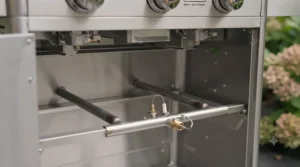
The genuinely standout feature is the material itself — cast aluminium physically cannot rust, because rust is iron oxide, and aluminium contains no iron. This sidesteps the entire corrosion question that every steel grill, however well-treated, still has to manage. Based on the spec comparison with stainless steel alternatives, cast aluminium also retains heat exceptionally well and the PK300’s distinctive capsule shape is specifically engineered to create natural two-zone cooking without needing separate burner controls. What most buyers overlook is that this makes the PK300 arguably the single best choice for coastal or heavily exposed gardens, where even good stainless steel can eventually develop surface pitting from salt-laden air. Reviewers consistently highlight how the PK300 performs in exposed, windy conditions specifically, retaining heat where thinner steel grills would struggle, and several note that the total absence of a rust risk removes an entire category of maintenance worry other barbecues carry for their whole lifespan.
Pros:
- ✅ Cast aluminium physically cannot rust, ever
- ✅ Exceptional heat retention, even in exposed or windy gardens
- ✅ Capsule shape enables natural two-zone cooking
Cons:
- ❌ Premium price for a relatively compact cooking area
- ❌ Distinctive shape and aesthetic won’t suit every garden style
Pricing generally sits around £600-£750. For coastal households specifically, where salt air genuinely accelerates corrosion on even good stainless steel, this represents excellent long-term value despite the upfront cost.
7. Kamado Joe Classic — ceramic built for British weather
The standout advantage is a complete material break from every other product on this list — thick ceramic construction that contains essentially no exposed ferrous metal to corrode in the first place. On paper, ceramic ovens like this hold temperatures for twelve-plus hours during long, slow cooks, and the thick walls provide exceptional insulation against both heat loss and the damp, cold conditions that a typical British winter throws at anything left in the garden. Here’s what to weigh: ceramic construction is genuinely excellent in cold, damp UK conditions specifically because moisture struggles to penetrate or corrode the material the way it does painted or lower-grade steel, but the trade-off is weight, fragility if dropped or knocked hard, and a significantly higher upfront cost than any steel alternative on this list. Reviewers consistently praise the accessory ecosystem built up around Kamado Joe over the years and the versatility for both quick grilling and long, low-and-slow smoking sessions. The honest analytical take is that this suits committed home cooks who grill and smoke year-round rather than occasional summer users, since the price only makes sense against genuinely heavy use.
Pros:
- ✅ Essentially no ferrous metal to corrode at all
- ✅ Exceptional heat retention for cold, damp British conditions
- ✅ Versatile for grilling, roasting, and long smoking sessions
Cons:
- ❌ Significantly heavier and more fragile than steel alternatives
- ❌ Highest upfront price of any product on this list
Expect to pay around £900-£1,100. For year-round cooks who want to essentially eliminate the corrosion question altogether, the value case rests on how often you’ll actually use it — for regular cooks, it’s a genuinely sound long-term investment.
✨ Don’t Miss These Exclusive Deals!
🔍 Take your outdoor cooking setup to the next level with these carefully selected barbecues. Click on any highlighted item to check current pricing and availability. The right material choice today means years fewer battles with rust and far more relaxed summer evenings ahead!
Practical Usage Guide: Durable Bbq Construction Habits That Prevent Rust
Even genuinely corrosion resistant materials benefit enormously from a few consistent habits, and durable bbq construction only delivers its full lifespan when it’s paired with sensible use. Start by fitting a breathable, waterproof cover the moment cooking finishes and the grill has cooled — trapping condensation under an unsuitable plastic sheet can actually accelerate corrosion compared with leaving a barbecue uncovered in dry weather. In the first 30 days of ownership, the most common mistake is skipping the manufacturer’s seasoning or initial burn-off instructions, which are specifically designed to condition grates and surfaces before regular cooking begins. Build a light monthly habit of wiping down exposed metal with a damp cloth and drying it thoroughly, since it’s standing moisture rather than brief rain exposure that actually causes rust to take hold. For cast iron grates specifically, a thin coat of cooking oil after cleaning maintains the protective layer that keeps rust at bay, while stainless steel grates need only a wipe-down. Finally, store the barbecue on a stand or paving slabs rather than directly on soil or grass where ground moisture wicks upward into legs and undersides that owners rarely think to check.
Real-World Scenarios: Choosing a Long Lasting Outdoor Grill for Your Garden
Consider three different households. First, a young couple with a small paved courtyard garden in Manchester, cooking a handful of times a month — for them, the Weber Original Kettle 57cm makes excellent sense: porcelain enamel that shrugs off typical rainfall, a compact footprint, and a price point that doesn’t demand heavy year-round use to justify itself. Second, a family in a coastal town in Cornwall or Norfolk, where salt-laden air genuinely accelerates corrosion on ordinary stainless steel — here, the PK Grills PK300‘s cast aluminium construction earns its higher price by sidestepping the corrosion question entirely, delivering a genuinely long lasting outdoor grill in conditions that would visibly age steel within a couple of seasons. Third, a keen home cook in a suburban garden who grills and smokes most weekends year-round — for this household, either the Landmann Triton PTS 2.0 or, for those ready to invest properly, the Kamado Joe Classic rewards frequent use with genuinely excellent long-term durability, since the cost per use falls dramatically for anyone cooking outdoors most of the year rather than a handful of times each summer.
What Is a Rust Resistant Bbq?
A rust resistant bbq is a barbecue built from materials — genuine stainless steel, porcelain-enamelled steel, cast aluminium, or ceramic — specifically chosen to resist the oxidation process that turns exposed iron and low-grade steel into rust when they meet moisture and oxygen. Genuine rust resistance depends on the specific grade and thickness of material used, not simply the presence of the word “stainless” on the packaging.
Weatherproof Barbecue — What the Label Actually Means
“Weatherproof barbecue” is one of the more loosely applied phrases in outdoor cooking marketing, and it’s worth being precise about what it should mean. A genuinely weatherproof barbecue combines corrosion resistant core materials with sealed or gasketed joints that keep standing water from pooling in seams, plus components like dampers and hinges made from metals — such as aluminium — that don’t rust even where paint or coating inevitably wears thin first. According to Wikipedia’s overview of stainless steel, the material’s corrosion resistance comes specifically from a thin, self-repairing chromium oxide layer on its surface, which is why scratches in genuine stainless steel tend to reseal themselves given exposure to oxygen, unlike a scratch in painted steel, which exposes bare metal permanently.
Corrosion Resistant Grill — Which Parts Matter Most
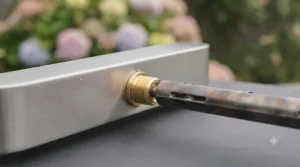
Not every component of a barbecue needs the same level of corrosion resistance, and a genuinely corrosion resistant grill prioritises the right parts. The cook box, burners, and grates see the most direct heat and moisture cycling, so these benefit most from stainless steel or enamel; legs, carts, and side shelves see less direct thermal stress and can reasonably use powder-coated steel to control cost, provided the coating stays intact. Small moving parts — dampers, hinges, wheel axles — are worth checking specifically, since these are exactly the components most likely to be made from a cheaper, less resistant metal even on an otherwise well-built grill.
How to Choose a Rust Resistant Bbq
- Check the stated stainless steel grade, not just the word “stainless.” 304-grade offers meaningfully better corrosion resistance than 430-grade, and reputable manufacturers will state which one they use.
- Look at where stainless steel is actually used. Some budget grills use it only on visible panels while the structural frame and cart remain painted steel.
- Match the material to your local climate. Coastal or exposed gardens genuinely benefit from cast aluminium or the highest stainless grades; sheltered inland gardens have more flexibility.
- Check warranty length on individual components, not just the headline figure. A 10-year warranty on burners paired with a 2-year warranty on grates tells you which parts the manufacturer expects to age faster.
- Consider porcelain enamel as a genuine alternative to stainless steel. It’s not inferior, just different — excellent rust resistance at a typically lower price than premium stainless.
- Factor in a breathable cover as part of the purchase, not an afterthought. Even the best materials benefit from one, and it’s usually a small fraction of the barbecue’s total cost.
- Read aggregated review sentiment for multi-season reports, not just first-impressions. A barbecue that looks great on unboxing tells you little about how it performs after two winters outdoors.
Weather Resistant Materials & Stainless Steel Bbq Durability
Understanding weather resistant materials starts with recognising that “rust resistant” and “waterproof” aren’t quite the same claim — a barbecue can resist rust while still needing a cover to protect its finish, control panel, or any electronic ignition components from direct weather exposure. British conditions specifically stress-test outdoor metal: Met Office UK climate data shows a national average of well over 150 wet days per year, which means most gardens see repeated wetting-and-drying cycles rather than sustained dry spells, and it’s precisely those repeated cycles — not a single downpour — that accelerate corrosion on inadequately protected metal.
Stainless Steel Bbq Durability by Grade
Stainless steel bbq durability comes down almost entirely to chromium and nickel content. 304-grade stainless steel contains around 18% chromium and 8-10% nickel, and that nickel addition is specifically what gives it superior long-term corrosion resistance over 430-grade steel, which contains chromium but little to no nickel. In practice, this means a 304-grade barbecue like the Landmann Triton PTS 2.0 or Napoleon Rogue 425 will typically outlast a 430-grade equivalent by a meaningful margin under identical outdoor conditions, even though both are legitimately described as “stainless” on their packaging. Porcelain-enamelled steel, used on the Weber Original Kettle 57cm, takes a different but equally valid approach — rather than relying on the metal’s own chemistry, it fuses a glass-like protective layer onto the surface, which performs excellently as long as that layer stays intact.
Solving Common Rust Problems on an Outdoor Grill
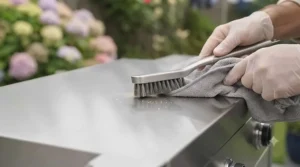
Even a well-chosen barbecue occasionally develops rust spots, and knowing how to respond matters as much as the initial purchase. If light surface rust appears on stainless steel grates, a stainless steel scouring pad and warm soapy water typically lifts it without damaging the underlying chromium oxide layer, since surface staining on genuine stainless steel is usually superficial rather than structural. If rust appears on cast iron grates, a light sanding followed by reseasoning with cooking oil restores the protective layer that keeps moisture out. If rust appears on painted or powder-coated cart legs, sand back to bare metal, apply a rust-inhibiting primer, and repaint before the exposed metal has a chance to pit — catching this early prevents a small chip becoming a structural weak point. If an entire grate or panel has rusted through structurally rather than superficially, most reputable brands, including several featured above, sell direct replacement parts rather than requiring a whole new barbecue. Finally, if rust keeps recurring in the same spot despite good maintenance, it’s often a design flaw — a seam where water pools, or a joint without adequate drainage — worth raising with the manufacturer under your consumer rights rather than treating as routine wear.
Common Mistakes When Buying a Rust Resistant Bbq
The most common mistake is trusting the word “stainless” alone without checking which grade is used, since 430-grade and 304-grade are both legitimately marketed as stainless steel despite a real difference in long-term corrosion resistance. A close second is assuming a heavier barbecue automatically means better build quality — weight can reflect genuinely thicker, more durable steel, but it can equally reflect a bulky cart or unnecessary features rather than material quality where it counts. Buyers also frequently skip checking which specific components are stainless versus painted, discovering only after a season outdoors that the visible top panel was stainless while the structural frame underneath was ordinary steel. Another overlooked mistake is buying based on looks alone — polished stainless steel looks premium in a showroom, but a slightly duller brushed finish or matte powder coating can be just as durable while resisting fingerprints and water spotting better in daily use. Finally, many buyers treat a protective cover as optional rather than essential, when in reality even premium materials benefit from one, and skipping this cheap accessory is a genuinely false economy against a barbecue costing several hundred pounds.
Stainless Steel Bbqs vs Painted Steel and Budget Grills
| Material | Rust Risk | Typical Lifespan | Upfront Cost | Best For |
|---|---|---|---|---|
| 304 stainless steel | Very low | 10-20+ years | High | Long-term investment, frequent use |
| 430 stainless steel | Low-moderate | 5-10 years | Medium | Budget-conscious buyers wanting real stainless |
| Porcelain-enamelled steel | Low | 10+ years | Medium | Charcoal traditionalists, classic styling |
| Powder-coated mild steel | Moderate-high | 2-5 years | Low | Occasional use, tight budgets |
| Cast aluminium | None | 15-25+ years | High | Coastal or heavily exposed gardens |
| Ceramic | Very low | 20+ years | Very high | Committed year-round cooks |
The comparison makes an uncomfortable truth plain: the cheapest barbecues, built from powder-coated mild steel with no stainless components, genuinely do rust fastest, often within two or three UK winters of typical outdoor storage. That’s not necessarily a reason to avoid them entirely — for someone cooking three times a summer who’s happy to replace a barbecue every few years, the low upfront cost may still make sense. But anyone wanting a barbecue they won’t be replacing on a two-year cycle should treat this table as a genuine buying filter rather than a nice-to-have reference.
Long-Term Cost & Maintenance
Calculated over a decade of typical UK garden use, a genuinely rust resistant bbq built from 304 stainless steel or cast aluminium usually works out cheaper per year than repeatedly replacing budget powder-coated models, even though the upfront cost is higher. A £600 barbecue lasting fifteen years costs roughly £40 a year; three £150 budget grills replaced every three to four years across that same period cost a broadly similar amount overall, but with the added hassle of repeated assembly, disposal, and the inevitable gap while a replacement is sourced. Ongoing maintenance costs are genuinely low across every material on this list — a breathable cover (£25-£50), occasional cooking oil for cast iron grates, and a stainless steel scouring pad cover most owners’ entire annual outlay. Under the Which? guide to the Consumer Rights Act, durability is explicitly treated as part of what counts as “satisfactory quality” for goods sold in the UK, which is worth knowing if a premium-priced barbecue develops structural rust unusually early in its expected lifespan.
Features That Actually Matter (And Those That Don’t)
Genuinely worth paying for: a stated and verifiable stainless steel grade, porcelain enamel or cast aluminium construction on core components, and manufacturer warranties that separately cover the parts most exposed to weather. Largely cosmetic rather than functional: mirror-polished stainless finishes, which look striking new but show water spots and fingerprints more readily than brushed finishes without offering any additional corrosion resistance. Genuinely useful but often overlooked: drainage design — barbecues with deliberate gaps or slopes that let rainwater run off rather than pool in seams last noticeably longer regardless of the metal grade used. The honest takeaway is that the barbecues succeeding on this list, from the budget VonHaus 4+1 Burner Gas BBQ to the premium Kamado Joe Classic, all earn their place by getting fundamental material choices right rather than by piling on features that don’t change how well they survive a British winter.
FAQ
❓ What is the most rust resistant material for a bbq?
❓ Does stainless steel bbq durability really depend on the grade?
❓ Is a weatherproof barbecue cover still needed if the grill is rust resistant?
❓ How long should a long lasting outdoor grill actually last?
❓ Can rust on a corrosion resistant grill be fixed, or does it mean the bbq is ruined?
Conclusion
The honest verdict on choosing a rust resistant bbq is that material grade matters more than almost any other spec on the box. Among the seven products covered here, the Landmann Triton PTS 2.0 stands out as the best all-round balance of genuine 304-grade stainless steel and sensible pricing, the Weber Original Kettle 57cm remains an excellent, proven choice for charcoal traditionalists thanks to its porcelain enamel finish, and the PK Grills PK300 earns its premium price specifically for coastal or heavily exposed gardens where salt air punishes ordinary steel. Whichever you choose, pair it with a breathable cover, a few minutes of monthly wipe-down maintenance, and — for cast iron grates specifically — a light coat of oil after cleaning. Get the material right from the start, and the annual ritual of scraping rust off your grates before the first barbecue of summer becomes something you simply never have to do again.
Recommended for You
- Weber vs Char Broil: 7 BBQ Brands Compared for 2026
- Gas vs Charcoal BBQ Running Costs 2026: 7 Grills Compared
- 7 Best BBQ for Large Family Picks in 2026: Feed 10+ Easily
Disclaimer: This article contains affiliate links. As an Amazon Associate, I earn from qualifying purchases. If you purchase products through these links, we may earn a small commission at no additional cost to you.
✨ Found this helpful? Share it with your friends! 💬🤗
