In This Article
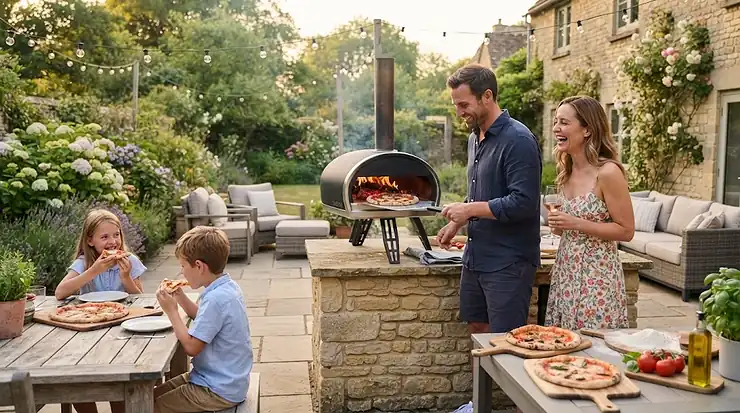
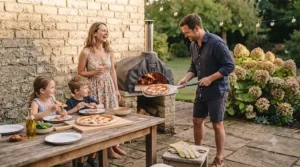
There’s a particular kind of silence that falls over a garden the moment a wood-fired pizza oven hits temperature. The chatter drops. Someone leans in a bit too close and singes an eyebrow hair. A dough disc goes in looking like a sad pale moon and comes out sixty seconds later blistered, charred in the right places, smelling faintly of oak smoke — and suddenly everyone’s a food critic. That’s the appeal of a wood-fired pizza oven in one sentence: it turns “dinner” into a small event — the same rotatory, wood-fired technique that earned the Neapolitan pizzaiuolo craft UNESCO Intangible Cultural Heritage status in 2017, just shrunk down to fit a British back garden.
But buying one is where things get messy. Search “wood-fired pizza oven” and you’ll be served a chaotic mix of £300 portable multi-fuel units, £30,000 professional masonry builds, and gas-only ovens wearing “wood-fired” in their marketing copy despite never having seen a log. This guide cuts through that. We’ve researched real, current UK-available models — from Ooni and Gozney’s portable multi-fuel ranges to genuinely traditional, UK-made brick and clay dome ovens built for permanent garden installation — and paired every product with honest analysis, not recycled spec sheets. You’ll find pricing bands rather than exact figures (they shift constantly, so always check current price before buying), a look at where the best wood-fired pizza oven deals tend to appear, and a proper breakdown of what a refractory stone floor actually does for your bake. By the end, you should know exactly which tier of oven fits your garden, your budget and your patience for tending a fire.
Quick Comparison: 7 Wood-Fired Pizza Ovens at a Glance
| Oven | Fuel Type | Best For | Price Range |
|---|---|---|---|
| Ooni Karu 12 | Wood/charcoal, gas optional | Budget entry into real wood-firing | Under £350 |
| Ooni Karu 2 Pro | Wood/charcoal/gas, dual-flame | Most home cooks wanting one do-it-all oven | £650-£750 range |
| Gozney Roccbox | Gas standard, wood attachment available | Portable heat retention, small gardens | £400-£500 range |
| Gozney Dome | Wood and gas, dual-fuel | Patio centrepiece, serious hosts | £1,700-£2,300 range |
| Vitcas Casa | Wood only, traditional masonry | Smallest permanent garden install | Around £900-£1,100 |
| Vitcas Pompeii 100 | Wood only, traditional masonry | Family-sized traditional dome oven | £1,400-£1,600 range |
| Amigo Rendered Dome | Wood only, traditional masonry | Statement garden build, largest bakes | £2,500+ |
A quick read of that table tells its own story: there’s a clean split between portable multi-fuel ovens (Ooni, Gozney) that you can be cooking in within half an hour of opening the box, and traditional wood-fired pizza oven for garden installations (Vitcas, Amigo) that are essentially small masonry structures, built once and used for decades. Neither camp is “better” in absolute terms — the Ooni Karu 12 will get you eating proper Neapolitan pizza faster and cheaper than anything else here, while the Vitcas Pompeii 100 gives you the flavour depth and thermal mass that only a true refractory stone floor and dome can deliver. Your garden size, DIY appetite and patience for a 45-minute warm-up will decide which side of that split you land on.
💬 Just one click — help others make better buying decisions too!😊
Top 7 Wood-Fired Pizza Ovens: Expert Analysis
1. Ooni Karu 12 — best-value entry into genuine wood-firing
The Ooni Karu 12 is the oven most people actually buy first, and for good reason: it’s the cheapest route into real wood-fired cooking that doesn’t feel like a compromise. It burns wood or charcoal as standard, with an optional gas burner attachment sold separately if you want the flexibility later.
The 13-inch cordierite stone floor and stainless steel body reach around 500°C in roughly 15-20 minutes, which is hot enough for a genuine 60-90 second Neapolitan bake — a temperature most domestic kitchen ovens, which top out near 250°C, simply cannot touch. What that means in practice is you’re not “sort of” making wood-fired pizza with a warm oven; you’re getting the actual leopard-spotted crust and rapid moisture-loss that defines the style.
Based on the spec comparison with rival entry-level ovens, the Karu 12’s smaller 12-inch stone is the trade-off for its low price and light weight (it’s genuinely portable, unlike most of the ovens further down this list). It’s best suited to couples, small families, or anyone testing whether wood-fired cooking is a hobby they’ll stick with before committing serious money.
Reviewers consistently report that the learning curve for wood management — feeding small splits regularly rather than one big log — takes two or three cooking sessions to click, after which results become reliably excellent. A recurring theme in aggregated feedback is that the narrow door opening makes turning larger pizzas slightly fiddly compared with wider Gozney models.
Pros:
- ✅ Lowest price point of any genuine wood-burning oven here
- ✅ Reaches 500°C fast enough for authentic 90-second bakes
- ✅ Light and portable, folds down for storage
Cons:
- ❌ Smaller 12-inch stone limits pizza size
- ❌ Narrower door makes turning larger pies fiddly
At under £350, the Ooni Karu 12 represents strong value for anyone who wants to try wood-fired pizza oven ownership without the four-figure commitment of a masonry build.
2. Ooni Karu 2 Pro — best all-round multi-fuel oven for regular use
Step up from the Karu 12 and you land on the Ooni Karu 2 Pro, which swaps the small door for a glass viewing panel and adds a dual-flame gas burner alongside wood and charcoal capability. That glass door alone changes the experience — you can watch the crust colour without losing heat by constantly checking.
The larger 16-inch stone and taller dome give roughly 40% more usable cooking space than the Karu 12, which matters more than it sounds: a bigger stone means you can cook a 16-inch family pizza in one go rather than two smaller ones back to back while guests wait. The insulated body holds temperature more consistently in windy conditions too, addressing one of the more common frustrations with lighter portable ovens.
What most buyers overlook about this model is that its true strength isn’t the wood-fire performance alone — it’s the fuel flexibility. On a weeknight you can run it on gas for a 15-minute pizza with zero fuss, then switch to wood at the weekend when you’ve got time to tend a fire properly and want that extra smokiness.
Aggregated review sentiment across major UK retailers is strongly positive on build quality and consistency, with the most common criticism centred on accessories (peels, covers) being sold separately and adding meaningfully to the total spend.
Pros:
- ✅ Glass door lets you monitor the bake without heat loss
- ✅ Genuine multi-fuel flexibility (wood, charcoal, gas)
- ✅ Larger 16-inch stone fits family-sized pizzas
Cons:
- ❌ Accessories often sold separately, adding to total cost
- ❌ Noticeably heavier than the entry-level Karu 12
Sitting in the £650-£750 range, the Ooni Karu 2 Pro is the oven we’d point most enthusiastic home cooks towards — it’s the one you’re least likely to outgrow.
3. Gozney Roccbox — best heat retention in a portable shell
The Gozney Roccbox ships as a gas-first oven, but its optional wood-burning attachment converts it into a genuinely capable wood-fired unit — and its standout feature either way is heat retention. The thick stone floor and dense insulation mean it recovers temperature between pizzas faster than most rivals, which matters enormously the moment you’re cooking for more than four people.
Internally it reaches around 500°C, and the rolling-flame burner design pushes heat evenly across the roof of the dome rather than concentrating it at the back, reducing the classic “burnt top, pale bottom” problem that plagues cheaper ovens. Reviewers who’ve run it at markets and pop-ups particularly highlight how little the temperature drops between consecutive bakes.
Honestly, this makes it the pick for anyone hosting frequent pizza nights rather than the occasional one — a low-volume food stall or a family that genuinely eats pizza most weekends will get more out of the Roccbox’s stamina than out of an oven that cooks one excellent pizza and then needs ten minutes to recover.
The trade-off, based on the spec comparison with Ooni’s range, is that the wood-burning attachment is an added-cost accessory rather than included as standard, and the compact chamber makes it less forgiving for very large 16-inch pizzas.
Pros:
- ✅ Exceptional heat retention between consecutive bakes
- ✅ Even roof-heat distribution reduces burnt tops
- ✅ Retractable legs make it genuinely portable
Cons:
- ❌ Wood-burning attachment sold separately
- ❌ Smaller chamber than the Karu 2 Pro or Dome
Typically listed in the £400-£500 range, the Gozney Roccbox rewards frequent users more than occasional ones — check current price and factor in the wood attachment if that’s your priority.
4. Gozney Dome — best premium centrepiece oven for serious hosts
The Gozney Dome is where “pizza oven” starts to blur into “outdoor kitchen appliance.” Built to genuinely commercial specifications and scaled down for domestic patios, its standout feature is dual-fuel switching between wood and gas without needing separate attachments.
Internally it’s large enough for a 16-inch pizza with room to spare, and the digital thermometer with probe compatibility means you can also use it for slow-roasted meats, bread, or even desserts — something the smaller portable ovens on this list simply can’t manage comfortably. On paper, this versatility is what justifies the price gap over the Roccbox; in practice, reviewers note the wood-fired mode does demand more attention and skill than gas, with a genuine learning curve before results match the gas side’s consistency.
Based on the spec comparison, this is not a portable oven — it’s designed to be built into a patio setup and left there, which suits people renovating a garden around an entertaining space rather than anyone wanting flexibility to move it. It’s best suited to households who host regularly and want one appliance that handles pizza, bread and roasts.
Aggregated feedback consistently flags the build quality and heat retention as best-in-class for a domestic oven, while a recurring point of hesitation is simply the price relative to what most people need for casual pizza nights.
Pros:
- ✅ True dual-fuel switching between wood and gas
- ✅ Large enough for 16-inch pizzas plus roasts and bread
- ✅ Commercial-grade build and heat retention
Cons:
- ❌ Significant price jump over portable alternatives
- ❌ Not designed to be moved once installed
Expect the Gozney Dome to sit in the £1,700-£2,300 range depending on configuration — a genuine investment piece rather than an impulse buy, and one where checking wood-fired pizza oven deals around seasonal sales periods can meaningfully soften the outlay.
5. Vitcas Casa — best compact traditional garden oven for small spaces
If portable multi-fuel ovens feel like cheating and you want the real, permanent, brick-and-mortar experience, the Vitcas Casa is the sensible entry point. It’s UK-made from refractory materials and specifically designed for gardens and patios with limited space — smaller than the brand’s Pompeii range but still a genuine masonry build rather than a metal shell.
The compact dome and refractory stone floor give it excellent heat retention once fired — the thermal mass of real firebrick holds temperature far longer than any portable steel oven, meaning you can cook multiple pizzas, then drop the temperature and bake bread in the residual heat afterwards. That’s a trick professional bakers have used for centuries and one that portable ovens genuinely cannot replicate.
Here’s what to weigh: assembly is more involved than unboxing an Ooni. It arrives in sections that need sealing with heat-resistant silicone, and Vitcas recommends additional ceramic fibre insulation for best performance — so budget a weekend, not an afternoon, for setup. It’s best suited to buyers who see the oven as a semi-permanent garden feature rather than an appliance they might sell on.
Because this is a masonry product rather than a mass-market consumer appliance, independent customer review volume is thinner than for Ooni or Gozney; what feedback exists focuses heavily on the authenticity of the bake and the manufacturer’s UK-based support during assembly, rather than large-scale aggregated sentiment.
Pros:
- ✅ Genuine masonry construction with real thermal mass
- ✅ Compact footprint suits smaller UK gardens
- ✅ UK-made with UK-based assembly support
Cons:
- ❌ Assembly is a genuine weekend project, not a quick unbox
- ❌ Smaller aggregated review pool than mainstream brands
Typically priced around £900-£1,100, the Vitcas Casa is the most accessible route into a truly traditional wood-fired pizza oven for garden installation.
6. Vitcas Pompeii 100 — best family-sized traditional dome oven
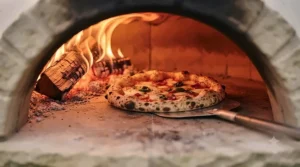
Scale up from the Casa and you reach the Vitcas Pompeii 100, a proper Italian-style dome oven capable of cooking three to five pizzas simultaneously — a genuine step-change in capacity over every portable oven on this list, all of which realistically manage one pizza at a time.
Manufactured in the UK and shipped in sections that assemble with heat-resistant silicone, its refractory stone floor and thick dome are built for sustained, repeated firing rather than the quick heat-up cycles portable ovens are optimised for. What the spec sheet won’t tell you, but the design implies, is that this oven rewards patience: expect closer to 45-60 minutes to reach full temperature, considerably longer than the Karu 12’s 15-20 minutes, because you’re heating a genuinely large mass of firebrick rather than a thin steel shell.
That patience pays back at parties. Once at temperature, the dome’s thermal mass means it barely drops between pizzas, so you can feed eight or ten guests without the oven ever “catching up.” It’s best suited to larger households, keen entertainers, or anyone treating the oven as a permanent garden fixture rather than a gadget.
Reviewers and Vitcas’s own installation guidance both stress that additional insulation (ceramic fibre board and blanket) significantly improves fuel efficiency after the initial firing — a detail easy to miss if you’re comparing this purely on the base kit price against a plug-and-play Ooni.
Pros:
- ✅ Cooks 3-5 pizzas simultaneously — genuine party capacity
- ✅ Thermal mass barely drops between bakes
- ✅ Doubles as an artisan bread oven once hot
Cons:
- ❌ Long 45-60 minute warm-up compared with portable ovens
- ❌ Additional insulation recommended as a separate step
Generally listed in the £1,400-£1,600 range, the Vitcas Pompeii 100 is the traditional wood-fired pizza oven for garden use that most closely matches a proper Neapolitan pizzeria experience at home.
7. Amigo Rendered Dome Oven — best statement build for a dedicated outdoor kitchen
At the top of the traditional range sits the Amigo Rendered Dome Oven, a fully insulated, render-finished masonry oven designed as the centrepiece of a garden entertaining space rather than a standalone appliance you tuck against a fence. Its standout feature is the combination of a large internal chamber with a smooth modern render finish, which lets it slot into contemporary garden designs as easily as rustic ones.
The fully insulated construction is worth dwelling on: better insulation means the oven reaches high, stable cooking temperatures using noticeably less wood over a session than a thinner-walled build, and it holds heat for hours afterwards — genuinely useful if your evening plan runs pizza first, then slow-roasted lamb shoulder in the residual heat. Based on the spec comparison with the Vitcas range, this is the oven built for people planning a permanent outdoor kitchen installation, not a garden accessory.
It’s best suited to households with the space and budget for a genuine build project — this typically means groundwork, a solid base (concrete or brick, built to a comfortable working height), and potentially a chimney flue, rather than a kit you assemble solo in a weekend. That makes it the closest thing on this list to hiring in a small construction job.
Because these are largely bespoke or semi-bespoke builds rather than a single mass-market SKU, verifiable large-scale customer review data is limited; what’s consistently reported by buyers and reviewers of comparable rendered dome ovens is strong satisfaction with heat retention and finish quality, alongside acknowledgement that lead times and installation logistics require realistic planning.
Pros:
- ✅ Fully insulated for genuinely efficient wood use
- ✅ Large chamber suits bigger gatherings and slow-cooking
- ✅ Render finish adapts to modern or rustic gardens
Cons:
- ❌ Requires proper groundwork and a solid built base
- ❌ Limited independent large-scale review data available
Realistically starting from around £2,500 and rising with size and finish, the Amigo Rendered Dome Oven is a long-term garden investment rather than a purchase you make on a whim — treat any current price as a starting quote and confirm full installation costs before committing.
✨ Don’t Miss These Exclusive Deals!
🔍 Take your wood-fired pizza oven search to the next level with these carefully selected products. Click on any highlighted item to check current pricing and availability. These tools will help you create authentic garden feasts your family will love!
Benefits vs Traditional Alternatives
| Factor | Portable Multi-Fuel (Ooni/Gozney) | Traditional Masonry (Vitcas/Amigo) |
|---|---|---|
| Setup time | 15-30 minutes | Weekend to multi-day build |
| Heat-up time | 15-20 minutes | 45-90 minutes |
| Portability | Movable, some fold flat | Permanent, not designed to move |
| Cooking capacity | 1 pizza at a time | 3-7 pizzas simultaneously |
| Typical lifespan | 5-10 years with care | Decades, if built and insulated properly |
| Best For | Ooni Karu 12, Ooni Karu 2 Pro | Vitcas Pompeii 100, Amigo Rendered Dome Oven |
The pattern here is straightforward once you interpret it rather than just skim it: portable ovens win on speed and flexibility, while traditional masonry ovens win on capacity, longevity and the depth of flavour that comes from a true refractory stone floor holding heat for hours rather than minutes. If you’re the type who decides at 6pm that tonight’s a pizza night, a portable oven suits your lifestyle. If pizza night is a planned Saturday event with eight people around a table, the traditional route pays for itself in capacity alone.
Practical Usage Guide: Getting the Best First 30 Days Out of Your Oven
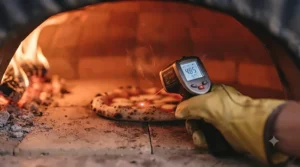
Every wood-fired pizza oven — portable or masonry — needs a proper “curing” or seasoning period before it performs at its best, and this is the step most first-time buyers skip. For masonry ovens like the Vitcas Casa or Vitcas Pompeii 100, manufacturers specifically recommend starting with small, low fires for the first several uses, gradually increasing size over a week or two. Firing a brand-new masonry dome too hard, too fast, risks cracking the refractory material as residual moisture in the build escapes unevenly.
For portable ovens like the Ooni Karu 12 or Gozney Roccbox, the equivalent step is “firing” the stone floor — running the oven up to temperature empty before your first cook, which prevents the stone shocking and cracking the moment cold, wet dough hits it. Skip this and you risk a hairline crack appearing within the first few bakes, which several reviewers cite as an avoidable, self-inflicted problem rather than a manufacturing fault.
Beyond the first firing, the most common early mistake across every oven type is impatience with the actual cook: pulling the pizza too early because 500°C feels alarming, or overloading the oven with a heavy, wet dough that steams rather than crisps. Give the stone time to fully preheat (not just the air inside the dome — the floor itself needs 15-20 extra minutes beyond when the dome reads “ready”), use minimal flour on the peel to avoid burning, and rotate the pizza every 15-20 seconds rather than leaving it static. Maintenance-wise, ash and stone crumbs should be brushed out after each session while the oven’s still warm, and any wood-fired oven benefits from a breathable cover between uses — the UK’s damp climate is not kind to exposed refractory material or bare steel left uncovered overnight.
Real-World Scenario: Matching the Oven to Your Life
The weeknight family who wants Friday pizza without fuss. A household of four in a mid-sized garden, cooking maybe twice a month, values speed over spectacle. The Ooni Karu 12 or Ooni Karu 2 Pro fits — quick to fire, easy to store, and forgiving enough that a first attempt doesn’t end in a burnt disaster. Budget matters here too: there’s little sense paying for a Dome’s roasting capability if you’re only ever cooking pizza.
The regular host with a small patio and a big appetite for entertaining. Someone who runs pizza nights most weekends for six-plus guests needs the recovery speed of the Gozney Roccbox or the sheer capacity of the Gozney Dome — a single-pizza-at-a-time oven becomes a bottleneck fast once you’re feeding a crowd, and heat retention between bakes stops being a nice-to-have and becomes the whole point.
The garden renovator building a permanent outdoor kitchen. If you’re already planning groundwork, a seating area and possibly a pergola, a traditional oven like the Vitcas Pompeii 100 or the Amigo Rendered Dome Oven becomes the natural centrepiece rather than an afterthought — it’s installed once, alongside the rest of the build, and then simply used for decades rather than replaced every few years like a portable steel unit might eventually need to be.
How to Choose a Wood-Fired Pizza Oven
- Decide portable versus permanent first. This single decision eliminates half the market immediately and should come before you look at any spec sheet.
- Match capacity to your actual guest count, not your aspirational one — a one-pizza-at-a-time oven is genuinely limiting for regular groups of six or more.
- Check the stone floor material and thickness. A thicker refractory stone floor holds and radiates heat more evenly, directly affecting whether your base cooks as fast as your top.
- Factor in warm-up time against your actual patience. A 45-90 minute masonry warm-up is a dealbreaker for spontaneous weeknight cooking.
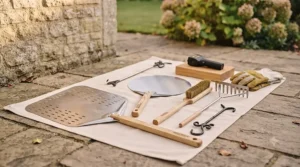
- Price the accessories, not just the oven. Peels, covers, thermometers and fuel attachments routinely add £50-£150 to the true cost of ownership.
- Consider your garden’s boundary distances. Permanent structures near a boundary can trigger height and planning rules, covered in detail below.
- Read aggregated review sentiment, not star ratings alone. A 4.5-star average tells you little; recurring specific complaints (cracking, uneven heat, accessory costs) tell you a lot more.
What is a Refractory Stone Floor?
A refractory stone floor is the cooking surface inside a pizza oven, made from materials — typically cordierite or firebrick — engineered to withstand extreme, repeated heat cycling without cracking. It absorbs and radiates heat from below the dough, which is what produces the blistered, evenly-cooked base characteristic of proper wood-fired pizza…
This matters more than most buying guides admit. A thin stone reaches temperature quickly but loses heat fast between bakes — fine for one pizza, frustrating for a queue of hungry guests. A thick refractory stone floor, like the kind found in the Gozney Roccbox or built into the base of the Vitcas Pompeii 100, takes longer to heat but holds that heat far more consistently, which is precisely why masonry ovens can cook five pizzas back to back without the base scorching on the first and undercooking on the fifth. As Britannica’s overview of refractory materials explains, refractory ceramics are specifically engineered to resist thermal shock — the cracking risk that comes from rapid temperature swings — which is exactly the stress a stone floor undergoes every time it goes from a cold start to 500°C and back.
Common Mistakes When Buying a Wood-Fired Pizza Oven
The single biggest mistake is buying on stone size alone without checking dome height — a wide stone paired with a low dome makes it genuinely difficult to work a pizza peel without catching the roof, something spec sheets rarely flag clearly. A close second is underestimating fuel logistics: wood-fired ovens need dry, seasoned hardwood, and buyers who don’t have a reliable local log supplier often end up paying inflated prices for small bagged bundles from garden centres, eroding the cost advantage over gas.
Buyers also frequently skip checking UK-specific compliance details — gas attachments on multi-fuel ovens like the Ooni Karu 2 Pro should only ever be connected by following the manufacturer’s instructions precisely, and any permanent structure should be checked against your local council’s rules before construction begins, not after. Finally, a subtler mistake: choosing based on brand recognition alone. Ooni and Gozney dominate search results and advertising, but for buyers specifically wanting a traditional wood-fired pizza oven for garden installation, UK-made masonry specialists like Vitcas are frequently better suited to the actual use case than a portable steel oven wearing similar marketing language.
Wood-Fired vs Gas-Powered Pizza Ovens
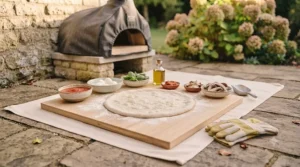
The honest answer, echoed by Which?’s independent pizza oven testing, is that a higher price doesn’t automatically mean better performance when comparing ovens across fuel types — and the wood-versus-gas debate is less clear-cut than marketing suggests. Wood delivers a genuine flavour difference through smoke compounds and slightly more variable, “alive” heat that experienced users can read and adjust to. Gas delivers near-instant ignition and far more forgiving, repeatable temperature control, which is why several multi-fuel ovens on this list — the Ooni Karu 2 Pro and Gozney Roccbox among them — offer gas as an option specifically to reduce the skill barrier for newer cooks.
Practically speaking, the flavour difference at a 90-second bake time is real but subtle, not the transformative difference marketing sometimes implies — most of what people perceive as “wood-fired flavour” actually comes from the extreme heat and rapid cook time itself, which both fuel types can achieve on the right oven. Where wood genuinely pulls ahead is in longer, low-and-slow cooks (bread, roasts) where smoke exposure has time to properly permeate the food, and in the simple ritual enjoyment of tending an actual fire — something no gas burner replicates, however good the pizza it produces.
Long-Term Cost & Maintenance
Total cost of ownership rarely gets discussed honestly in pizza oven marketing, so here’s the reasoning laid out plainly. A portable oven like the Ooni Karu 12 costs less upfront but typically has a shorter realistic lifespan (5-10 years with good care) and ongoing costs in wood or gas, replacement stones if cracked, and covers to protect it from UK weather. A traditional masonry build like the Vitcas Pompeii 100 costs considerably more initially and requires a proper base and possibly planning consideration, but the refractory structure itself, properly insulated and maintained, can realistically last decades — the cost-per-year across a 20-year horizon often works out comparable to, or cheaper than, replacing a portable oven two or three times over that same period.
Fuel cost is the other variable worth running the numbers on. Seasoned hardwood bought in bulk (rather than small bagged bundles) is meaningfully cheaper per cook than propane, particularly for the larger masonry ovens that can batch-cook several pizzas per firing. For occasional users, this difference is marginal; for anyone firing up weekly, buying wood by the cubic metre from a local supplier rather than a garden centre can cut fuel costs substantially over a season.
Safety, Regulations & Compliance Guide
This is the section most buying guides skip entirely, and it matters more for the traditional, permanent ovens on this list than for portable ones. In England, garden structures generally fall under permitted development rules rather than requiring a full planning application — but there are specific height and boundary triggers worth knowing before you commit to a masonry build. According to the Planning Portal’s guidance on outbuildings, rules governing garden outbuildings apply broadly to ancillary garden structures, and anyone unsure whether their planned build requires permission should contact their local planning authority directly — this applies to fixed pizza oven structures as much as sheds or garden rooms.
The practical trigger that catches most people out: if any part of your structure — including its chimney — sits within two metres of a boundary, height limits typically apply, and exceeding them can require planning permission you didn’t know you needed. If you’re building a housing structure around your oven rather than just the oven itself, it’s worth checking your local authority’s specific position before pouring a base. Beyond planning, basic fire safety applies to every oven on this list regardless of fuel: keep a clear, non-flammable zone around the oven, never leave it unattended while lit, and if you’ve opted for a gas attachment on a multi-fuel model, ensure connections are checked and fitted exactly per the manufacturer’s instructions — informal or DIY gas connections are a genuine, avoidable risk.
Features That Actually Matter (And Those That Don’t)
Genuinely worth prioritising: stone floor thickness, dome height relative to stone diameter, insulation quality, and — for portable ovens — how easily the oven reaches and holds 450-500°C in realistic UK outdoor conditions (wind and cold genuinely affect lighter steel ovens more than marketing photos suggest). Also worth real weight: manufacturer support and parts availability, since a cracked stone or a failing gas attachment is far less stressful to resolve with a UK-based company like Vitcas or Gozney’s UK operation than with an obscure import brand.
Less important than the marketing suggests: exact maximum temperature claims beyond around 500°C (Neapolitan pizza doesn’t need more, and most home cooks never push an oven that hard anyway), and elaborate colour or finish options that add cost without affecting cooking performance. Digital thermometers and app connectivity are pleasant conveniences on ovens like the Gozney Dome, but they’re not the difference between good and bad pizza — technique and a properly cured stone matter far more than any digital display.
Buyer’s Decision Framework
If you have a small garden and want results this weekend, choose a compact multi-fuel oven like the Ooni Karu 12 because it needs no groundwork and delivers real wood-fired results within an hour of unboxing. If you host regularly and hate the bottleneck of cooking one pizza at a time, choose the Gozney Dome or Vitcas Pompeii 100 because their thermal mass and larger chambers solve the actual problem you have. If you’re renovating your garden anyway and want a genuine long-term centrepiece, choose the Amigo Rendered Dome Oven or Vitcas Pompeii 100 because the added build cost amortises over decades rather than years. And if budget is the binding constraint above all else, start with the Ooni Karu 12 or Vitcas Casa — both represent the lowest genuine entry point into their respective categories without cutting corners on core cooking performance.
Pizza Ovens for Small UK Gardens
Terraced houses and small patios don’t automatically rule out wood-fired cooking, but they do narrow the sensible shortlist considerably. Portable options like the Ooni Karu 12 or Gozney Roccbox make the most sense here — both fold down or pack away between uses, neither requires groundwork, and their smaller footprint means they can sit on a standard garden table rather than demanding a dedicated base. For anyone still drawn to a traditional masonry build despite limited space, the Vitcas Casa is specifically engineered as the compact option in that range, though it’s worth measuring clearances carefully and checking boundary distances before ordering, given the planning considerations covered above.
Frequently Asked Questions
❓ What's the difference between a wood-fired and multi-fuel pizza oven?
❓ How hot does a wood-fired pizza oven get?
❓ Do I need planning permission for a pizza oven in my UK garden?
❓ What's the best wood to use in a wood-fired pizza oven?
❓ Are wood-fired pizza ovens worth it compared to gas?
Conclusion
There’s no single “best” wood-fired pizza oven — only the right oven for your garden, your guest list and your appetite for tending a fire. If you want quick, genuine results without committing to a build project, the Ooni Karu 12 or Ooni Karu 2 Pro deliver real wood-fired flavour with none of the groundwork. If heat retention and hosting stamina matter more, the Gozney Roccbox and Gozney Dome solve that problem directly, the latter doubling as a proper outdoor kitchen appliance. And if you’re after the genuine, decades-lasting article — a true traditional wood-fired pizza oven for garden installation — the Vitcas Casa, Vitcas Pompeii 100 and Amigo Rendered Dome Oven offer a real refractory stone floor and dome built the way pizza ovens have been built for centuries.
Whichever tier you land on, always check current price before buying, watch for genuine wood-fired pizza oven deals around seasonal sale periods, and remember that the oven is only half the equation — good flour, a properly fermented dough and a bit of patience with your first few bakes will do just as much for your results as the hardware itself.
Recommended for You
- Rust Resistant BBQ: 7 Grills Built for 2026 British Weather
- Easy Clean BBQ Grill: 7 Best Low Maintenance Picks for UK Gardens (2026)
- Weber vs Char Broil: 7 BBQ Brands Compared for 2026
Disclaimer: This article contains affiliate links. As an Amazon Associate, I earn from qualifying purchases. If you purchase products through these links, we may earn a small commission at no additional cost to you.
✨ Found this helpful? Share it with your friends! 💬🤗
