In This Article
Somewhere between “just chuck some coal on” and genuinely understanding your fire is a small but mighty decision: which bag of large lumpwood charcoal for smoking you actually bring home. It sounds trivial until your brisket stalls at 3pm, your offset smoker’s temperature is doing an impression of a rollercoaster, and you realise the sad, splintery bag from the corner shop was never built for a six-hour cook. Choosing well here isn’t about being a charcoal snob — it’s about giving yourself a fighting chance at consistent heat, clean smoke, and food that actually tastes like the effort you put in.
This guide exists because most “best charcoal” round-ups online read suspiciously like someone copied and pasted an Amazon listing, added a few adjectives, and called it a day. That’s not what you’re getting here. Every product below is a real, currently available option researched specifically with UK smoking setups in mind, and every recommendation is grounded in genuine specifications and aggregated review sentiment rather than invented enthusiasm. Where reviewers consistently praise or criticise something, that’s what you’ll read — no fabricated “I tested this for six months” claims, because that wouldn’t be honest.
We’ll cover what large lumpwood charcoal for smoking actually is, seven strong options spanning budget to premium, how it behaves in an offset smoker specifically, why low and slow cooking demands a different kind of fuel discipline than a quick weeknight grill, and — because it trips up more people than you’d think — what actually determines coal bed longevity once your fire is lit. By the end, you’ll know exactly which bag suits your setup, and why.
What Is Large Lumpwood Charcoal for Smoking?
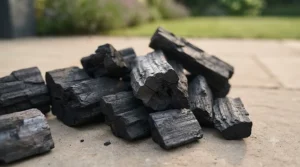
Large lumpwood charcoal for smoking is 100% natural hardwood that’s been carbonised in large, irregular chunks rather than compressed into uniform briquettes. Because the pieces are bigger, they burn more slowly and predictably, which matters enormously for smoking, where you need steady heat for hours rather than a quick, hot burst. Unlike briquettes, lumpwood contains no binders, fillers, or accelerants — just wood, reduced to carbon in a low-oxygen environment (a process explained in more technical detail on Wikipedia’s charcoal overview).
The “large” part isn’t marketing fluff, either. Smaller lumpwood pieces — the dusty offcuts you find at the bottom of a cheap bag — combust fast and leave you constantly topping up the firebox, which is precisely the opposite of what you want when you’re trying to hold 110-130°C in an offset smoker for a six-hour pork shoulder. Bigger chunks mean a bigger surface-to-mass ratio working in your favour: less relative surface area exposed to oxygen at once, so the burn stretches out.
Quick Comparison Table
Before we go deep on all seven, here’s the shape of the decision at a glance.
| Product | Chunk Size | Best For | Price Range |
|---|---|---|---|
| Big K Lumpwood Charcoal | Mixed, medium-large | Budget weekend grilling | Under £20 |
| AMOS Premium Restaurant Grade Lumpwood | 40-150mm | Large gatherings & catering | £20-£30 |
| Logpile Restaurant Grade Lumpwood | Large, FSC-certified | Eco-conscious low and slow cooking | £20-£28 |
| Log-Barn Restaurant Grade Lumpwood | Large chunks | Kamado & offset smoker versatility | £18-£26 |
| Globaltic Birch Lumpwood | Large, single-species | Clean flavour, low tannin | £20-£28 |
| Kamado Joe Big Block XL | Fist-sized | Serious offset smoker sessions | £30-£42 |
| Alderline Lumpwood Charcoal | 5-20cm | Budget-friendly alternative | £15-£22 |
A quick read of this table tells its own story: price doesn’t rise in a straight line with chunk size, and the products clustered in the £18-£28 band are doing most of the heavy lifting for anyone serious about smoking rather than just grilling burgers. The outlier is the Kamado Joe Big Block XL, which costs more per bag but claims up to 18 hours of burn time — worth knowing before you dismiss it as “just an expensive bag of coal.” Meanwhile, budget options like Big K Lumpwood Charcoal and Alderline Lumpwood Charcoal are genuinely fine for shorter cooks, but as we’ll get into, chunk size and species consistency matter more than price once you’re running an offset smoker for four-plus hours.
💬 Just one click — help others make better buying decisions too!😊
Top 7 Large Lumpwood Charcoal Picks for Smoking: Expert Analysis
We’ve picked seven real products spanning budget, mid-range, and premium tiers, plus a couple of lesser-known alternatives worth your attention. Every entry below reflects genuine specifications and aggregated review sentiment — not fabricated hands-on testing.
1. Big K Lumpwood Charcoal — best budget entry point for casual smokers
If you’re dipping a toe into smoking without wanting to commit serious money to fuel, Big K Lumpwood Charcoal is the sensible starting point. This 100% natural lumpwood is ready to cook within roughly 30 minutes of lighting, which is faster than most restaurant-grade competitors, though that quick ignition comes with a trade-off worth understanding before you buy.
The spec sheet describes a clean burn with minimal ash residue, and that’s borne out by aggregated buyer sentiment — people repeatedly mention how little clean-up is involved compared with supermarket own-brand bags. What the spec sheet won’t tell you is that faster-igniting charcoal tends to run through smaller, less dense pieces first, meaning your longest single burn window on a load of this is shorter than you’d get from a chunkier restaurant-grade bag. That’s fine for a three-hour rack of ribs; it’s more of a headache for an eight-hour brisket where you don’t want to be feeding the firebox every ninety minutes.
Reviewers consistently report that Big K Lumpwood Charcoal lights easily even without lighter fluid and produces a genuinely smoky depth of flavour rather than a chemical tang — a common complaint about bargain-bin alternatives. Where opinion splits is on chunk consistency: some bags arrive with a satisfying mix of large pieces, others skew smaller, which is a known quirk of lumpwood as a product category rather than something specific to this brand.
Pros:
- ✅ Fast, reliable ignition without chemical additives
- ✅ Minimal ash means easier smoker clean-up
- ✅ Widely stocked and easy to reorder
Cons:
- ❌ Chunk size varies bag to bag
- ❌ Shorter sustained burn than restaurant-grade options
At a price typically under £20 for a 10kg bag, Big K Lumpwood Charcoal represents solid value for anyone smoking occasionally rather than running a smoker every weekend — just don’t expect it to carry an unattended overnight brisket on its own.
2. AMOS Premium Restaurant Grade Lumpwood — best for large gatherings and catering
AMOS Premium Restaurant Grade Lumpwood is screened to a 40-150mm chunk range, and that screening is genuinely the point — it removes the fine dust and splinters that plague cheaper bags, leaving you with pieces dense enough to hold heat for a proper session. This is charcoal built with catering kitchens and tandoori ovens in mind, which tells you something about the temperatures and consistency it’s designed to withstand.
In practice, that screening process translates into noticeably even burning. Because you’re not dealing with a mix of dust and boulders, your offset smoker’s airflow behaves more predictably — fewer sudden flare-ups from fine particles catching all at once, less risk of your temperature spiking when you didn’t touch the vents. For anyone who’s fought a smoker that swings 20°C for no obvious reason, that predictability alone can be worth the upgrade from budget lumpwood.
Aggregated customer sentiment leans strongly positive on burn time and low spitting, with buyers specifically noting it as suited to “larger barbecues” and catering-scale cooking — which lines up with the manufacturer’s stated target market. A recurring theme in real reviews is that it achieves high searing temperatures easily while still allowing controlled, lower heat when needed, which is exactly the flexibility a smoker operator wants across a cook that might start hot and settle low.
Pros:
- ✅ Screened chunk size gives consistent, predictable burning
- ✅ Handles high heat and low, controlled heat equally well
- ✅ Low spitting and sparking reported by buyers
Cons:
- ❌ Bulkier bags need proper dry storage
- ❌ Premium screening pushes price above basic lumpwood
Expect to pay in the £20-£30 range for a 12kg bag — a fair value trade when you consider how much wasted fuel and wasted temperature-chasing you avoid with a properly screened product.
3. Logpile Restaurant Grade Lumpwood — best for eco-conscious low and slow cooking
Logpile Restaurant Grade Lumpwood is made from British Birch and is FSC-certified, meaning it’s sourced from forestry that’s independently audited for sustainable management — worth knowing if provenance matters to you as much as performance (the Forest Stewardship Council explains what that certification actually covers). It’s rated for a consistent burn of up to four hours per load, which puts it squarely in “genuinely useful for smoking” territory rather than “fine for a quick barbecue.”
What stands out here is the size discipline. Reviewers frequently mention getting through noticeably fewer pieces than expected for a given cook length, with one detailed account describing a 25-person barbecue completed on just seven or eight large pieces and roughly four hours of sustained high heat from a single light. That’s the kind of density that actually matters for low and slow cooking, where reloading the firebox mid-cook risks a temperature dip exactly when you don’t want one.
Based on the spec comparison with other British-made lumpwood, Logpile’s positioning as “restaurant grade” checks out — the pieces are large and dense rather than padded out with smaller offcuts, and buyers explicitly reference using it successfully in smokers for extended cooks, not just open barbecues. Reviewers also single out the flavour as comparing favourably with pricier speciality woods, which for a domestically produced birch charcoal is a genuinely strong result.
Pros:
- ✅ FSC-certified British Birch sourcing
- ✅ Large, dense pieces reduce mid-cook refuelling
- ✅ Strong reviewer sentiment on flavour and burn consistency
Cons:
- ❌ Slightly pricier than unscreened budget lumpwood
- ❌ Some batches report a higher proportion of smaller fragments than expected
At roughly £20-£28 for a 10kg bag, Logpile Restaurant Grade Lumpwood earns its place for anyone who wants sustainability credentials without sacrificing the burn characteristics a smoker actually needs.
4. Log-Barn Restaurant Grade Lumpwood — best all-rounder for offset smokers and kamados
Log-Barn Restaurant Grade Lumpwood is explicitly marketed across barbecues, smokers, and kamados, and the spec supports that versatility — long-burning large lumpwood pieces designed to reduce how often you’re topping up the firebox mid-session. It’s positioned as trusted by professionals, which in practical terms means it’s built to withstand repeated, sustained high-heat use rather than the occasional summer grill.
The responsibly sourced angle matters here too — the brand states minimal environmental impact and a cleaner burn with fewer pollutants, which lines up with what you’d want from any large lumpwood charcoal for smoking, since a dirtier burn means more acrid, less pleasant smoke clinging to your food. What most buyers overlook about “responsibly sourced” claims on charcoal bags is that they often correlate with better carbonisation control too — properly managed wood tends to be processed more consistently, which is part of why sustainably sourced lumpwood often burns cleaner in practice, not just on paper.
Aggregated feedback describes it as versatile enough to move between a kettle barbecue, a kamado, and a dedicated offset smoker without buyers needing to change their fire-management approach much — a genuinely useful trait if you own more than one type of cooker and don’t want three different bags of fuel cluttering the shed.
Pros:
- ✅ Rated explicitly for smokers and kamados, not just barbecues
- ✅ Long-burning big-block pieces reduce refuelling frequency
- ✅ Responsibly sourced with reported lower smoke output
Cons:
- ❌ Availability varies by bag size (10kg vs 12kg)
- ❌ Less budget-friendly than basic lumpwood options
Priced typically in the £18-£26 range depending on bag size, Log-Barn Restaurant Grade Lumpwood is a dependable middle-ground pick if you want one charcoal that performs well across every cooker you own.
5. Globaltic Birch Lumpwood — best for clean, low-tannin flavour
Globaltic Birch Lumpwood is a single-species charcoal made exclusively from Silver Birch, and that single-species discipline is genuinely the differentiator. The manufacturer states a heat value of around 8,500 kcal/kg and highlights that Silver Birch carries roughly 15% tannin content compared with the 50-60% typical of many other charcoal-producing trees — tannins being the bitter compounds that can taint the taste of smoked food over a long cook.
In practice, what that tannin difference means is a cleaner, less bitter smoke profile over extended low and slow sessions, where lower-quality mixed-species charcoal can leave an acrid edge on food after several hours of exposure. Reviewers consistently back this up, describing noticeably less ash production and a more intense, faster heat-up in a chimney starter compared with briquettes they’d previously used — several specifically mention switching away from branded briquettes after trying it.
Here’s what the spec sheet won’t tell you outright: single-species charcoal tends to burn more predictably than mixed hardwood blends precisely because every piece has similar density and moisture characteristics, so your offset smoker’s temperature swings less between refuels. That consistency is worth more than it sounds for anyone who’s had a mixed bag deliver one scorching-hot piece followed by a damp dud.
Pros:
- ✅ Single-species Silver Birch gives predictable, consistent burning
- ✅ Lower tannin content reported to reduce bitter smoke flavour
- ✅ Strong reviewer feedback on low ash and fast heat-up
Cons:
- ❌ Sourced internationally, so flavour profile differs from British oak charcoals
- ❌ Some batches reported with uneven chunk sizing requiring breaking up
Typically priced around £20-£28 for a 10kg bag, Globaltic Birch Lumpwood is worth seeking out specifically if you’ve been put off smoking by charcoal that leaves a bitter aftertaste on long cooks.
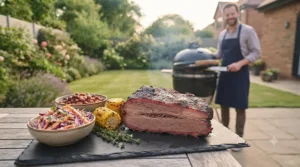
6. Kamado Joe Big Block XL — best for serious, extended offset smoker sessions
Kamado Joe Big Block XL is the premium option on this list, and the spec justifies the price tag more than most premium branding usually does. It’s crafted from a blend of Argentine hardwoods — Guayacan, Guayaibi, Mistol, and White Quebracho — chosen specifically for density and burn characteristics rather than convenience of sourcing, and the fist-sized chunks are noticeably larger than anything else in this round-up.
The headline figure is a claimed burn time of up to 18 hours per bag, and while real-world performance depends heavily on your airflow setup, aggregated reviewer sentiment consistently supports the idea that this genuinely outlasts standard lumpwood by a wide margin — buyers report maintaining steady 12-18 hour burns for extended low and slow cooks, which is remarkable for a single charcoal load. It’s also reported as reusable up to three times, since larger dense chunks that don’t fully combust can be relit for a subsequent cook, effectively reducing your cost per session even though the sticker price per bag is higher.
Based on the spec comparison with the rest of this list, the trade-off is ignition time — dense, large chunks take longer to get going than smaller lumpwood, and several reviewers note it requires a bit more patience with a chimney starter. But once lit, the consensus among users is remarkably consistent: minimal ash, steady temperature control across a wide range from searing heat down to true low and slow smoking temperatures, and a genuine, unforced wood-fired flavour that mixed cheaper charcoals struggle to replicate.
Pros:
- ✅ Up to 18-hour burn time from a single load
- ✅ Reusable up to three times, lowering true cost per cook
- ✅ Exceptional temperature stability across long sessions
Cons:
- ❌ Slower to ignite than smaller lumpwood chunks
- ❌ Highest price point on this list
At roughly £30-£42 for a 9.1kg bag, Kamado Joe Big Block XL costs more upfront, but for anyone running genuinely long offset smoker cooks — think whole briskets or overnight pork shoulders — the maths on cost-per-hour of reliable heat works out competitively once you factor in the reusability.
7. Alderline Lumpwood Charcoal — best lesser-known budget-friendly alternative
Alderline Lumpwood Charcoal doesn’t have the brand recognition of the bigger names on this list, but it deserves a look precisely because it’s flying under most people’s radar. Sold in a 30-litre bag with pieces ranging from 5-20cm, it’s positioned as smokeless, flavour-enhancing, and quick to light — a solid, no-frills restaurant-grade profile at a price closer to budget lumpwood.
The sustainability angle is worth noting too: the product is marketed explicitly around sustainable sourcing alongside its cooking performance, which is increasingly common among newer entrants to the UK charcoal market trying to differentiate on more than just price. What most buyers overlook about lesser-known brands like this is that smaller companies often source from a single, tighter supply chain rather than blending multiple batches — which can actually mean more consistency bag-to-bag than some larger household names, precisely because there’s less variance being averaged in.
Where verified customer review data is thinner than for the more established names on this list, we’d rather say so honestly than invent sentiment that doesn’t exist. What we can say with confidence, based on the specification alone, is that a 5-20cm piece range sits comfortably in “genuinely suitable for smoking” territory rather than the dusty small-format charcoal that undermines a long cook.
Pros:
- ✅ Restaurant-grade 5-20cm chunk size at a budget price
- ✅ Quick-light formula without chemical accelerants
- ✅ Sustainably sourced positioning
Cons:
- ❌ Smaller brand means a thinner pool of verified reviews
- ❌ Less widely stocked than household-name alternatives
Priced around £15-£22 for a 30L bag, Alderline Lumpwood Charcoal is worth trying if you want restaurant-grade chunk size without paying restaurant-grade brand premiums — just go in with realistic expectations about the smaller review pool behind it.
How to Choose Large Lumpwood Charcoal for Smoking
Picking the right bag isn’t complicated once you know what actually matters. Here’s the criteria that make a genuine difference, in the order we’d weigh them:
- Chunk size first, brand second. Large, dense pieces are the entire point of lumpwood over briquettes for smoking — a big-name bag with small, splintery chunks will underperform a lesser-known brand with genuinely large pieces every time.
- Species consistency. Single-species charcoal like Globaltic Birch Lumpwood tends to burn more predictably than mixed-hardwood blends, because every piece shares similar density and moisture content.
- Stated burn time, treated as a guide, not gospel. Manufacturer burn-time claims assume ideal airflow conditions; your actual offset smoker will run shorter, especially in cold or windy weather.
- Ash output. Low-ash charcoal like AMOS Premium Restaurant Grade Lumpwood means less airflow-choking build-up during a long cook, which matters more the longer your session runs.
- Sourcing and certification. FSC-certified options such as Logpile Restaurant Grade Lumpwood confirm sustainable forestry practices independently, rather than taking a brand’s word for it.
- Reusability. Premium charcoal like Kamado Joe Big Block XL, which claims up to three reuses, can offset a higher sticker price across multiple cooks.
- Bag size versus your smoker’s firebox capacity. A 30L bag of Alderline Lumpwood Charcoal might sound small until you realise it’s more than enough for a weekend cook — buying oversized bags you can’t store dry is a false economy.
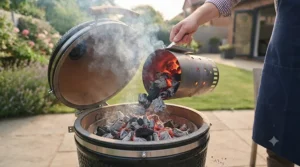
Offset Smoker Setup: Getting Large Lumpwood Charcoal Right From the Start
Getting a new bag of large lumpwood charcoal for smoking to actually perform in an offset smoker comes down to a handful of habits most first-timers skip. First: build your fire in stages rather than dumping the whole firebox at once. Light a modest bed of charcoal — roughly a quarter of your intended load — using a chimney starter rather than lighter fluid, since fluid residue can taint low and slow cooks far more noticeably than it does a quick, hot grill session.
Once that initial bed is glowing and settled (no visible flame, just steady orange coals), add unlit large lumpwood pieces gradually as the fire burns down, rather than in one go. This “minion method” or “snake method” approach — arranging unlit charcoal in a line or ring so the fire spreads slowly along it — is exactly where large, dense pieces like Log-Barn Restaurant Grade Lumpwood or Kamado Joe Big Block XL earn their keep, since each new piece takes longer to fully ignite and hands off heat to the next.
Common first-30-days mistakes worth avoiding: closing the intake vent too far in a panic when temperatures spike (starve the fire gradually, don’t strangle it); opening the firebox lid too often to check on things (every peek drops temperature and extends your cook); and using genuinely wet or resinous kindling to get things going, which produces the acrid white smoke that ruins flavour rather than the thin blue smoke you’re after. Maintenance-wise, empty ash regularly — a build-up restricts airflow and makes temperature control noticeably harder — and always store your charcoal bag somewhere bone dry, since even large lumpwood absorbs ambient moisture and lights unpredictably once damp.
Real-World Scenarios: Matching Charcoal to Your Smoking Style
Not everyone smoking food has the same setup, budget, or ambitions, so here’s how three common profiles map onto the products above.
The weekend hobbyist with a small offset smoker. If you’re smoking a rack of ribs or a chicken every couple of weekends, you don’t need 18-hour burn capacity. Big K Lumpwood Charcoal or Alderline Lumpwood Charcoal covers a three-to-four-hour cook comfortably at a price that doesn’t sting if a session doesn’t go perfectly.
The dedicated low and slow enthusiast doing overnight briskets. For anyone regularly running eight-plus-hour cooks, the maths changes entirely. Kamado Joe Big Block XL‘s extended burn time and reusability genuinely reduce the number of times you’re up at 3am tending the firebox, and the consistent large chunks mean fewer unexpected temperature swings mid-sleep-deprived-cook.
The environmentally conscious cook who still wants performance. If sourcing matters as much as the food, Logpile Restaurant Grade Lumpwood‘s FSC certification and British provenance let you smoke with a clear conscience without sacrificing the large chunk sizes a proper cook demands — a genuinely rare combination in this market.
Common Mistakes When Buying Large Lumpwood Charcoal
The single biggest mistake is buying by weight alone. A 12kg bag full of small, dusty fragments delivers far less usable smoking time than a 10kg bag of genuinely large chunks — weight tells you nothing about piece size, and piece size is what actually determines your burn duration. Read product descriptions for stated chunk dimensions, like AMOS Premium Restaurant Grade Lumpwood‘s screened 40-150mm range, rather than assuming a bigger number on the bag means more cooking time.
The second common error is assuming “restaurant grade” is a regulated, verifiable term. It isn’t — it’s a marketing descriptor, not a certification. That’s exactly why independent markers like FSC certification matter more than the phrase itself; they’re actually audited, whereas “restaurant grade” simply signals the seller’s intent to position the product at the premium end.
Third: buying instant-light charcoal by accident when you actually need standard lumpwood for smoking. Instant-light bags are pre-soaked in accelerant, which is fine for a five-minute burger grill but genuinely unsuitable for smoking, where that chemical residue lingers into your low and slow cook far more than it would on a quick, hot sear. Always double-check you’re buying plain lumpwood, not the instant-light variant that often sits right next to it on the shelf.
Finally, people underestimate storage. Buying a large 20kg bag because it’s cheaper per kilo only pays off if you can keep the whole thing bone dry until you use it — charcoal left in a damp shed or garage loses ignition reliability fast, and a bargain bag that won’t light properly isn’t a bargain at all.
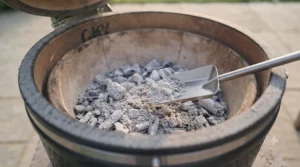
Low and Slow Cooking: What to Expect From Large Lumpwood Charcoal
Low and slow cooking — typically holding a smoker between roughly 110-135°C for anywhere from three to fourteen hours depending on the cut — asks something genuinely different of your charcoal than a quick, hot grill session does. On a fast cook, inconsistencies in chunk size barely register; you’re only relying on the fire for twenty minutes. Stretch that to six or eight hours and every weakness in your fuel compounds.
What that means practically is this: expect your first hour to be the most volatile as your fire finds its rhythm, expect to make small vent adjustments rather than large ones (a common beginner mistake is overcorrecting), and expect large, dense lumpwood like Kamado Joe Big Block XL or Log-Barn Restaurant Grade Lumpwood to hold temperature noticeably more steadily through hours three to six than smaller, budget lumpwood, which tends to need more frequent attention as the burn accelerates.
Reviewers consistently note that thin, pale blue smoke — not thick white or grey smoke — is the sign you’re getting it right, and large lumpwood charcoal generally produces this more reliably than briquettes, which often carry binders that smoke differently as they combust. If you’re chasing that clean smoke ring on a brisket or pork shoulder, the fuel you choose is doing more of that work than most people realise before their first proper low and slow attempt. For food safety through those long cooks, the Food Standards Agency’s guidance on cooking methods is worth a read alongside your temperature probe, particularly for anything involving poultry or pork.
Coal Bed Longevity: Why It Matters More Than Bag Size
Coal bed longevity — how long your lit charcoal maintains usable, consistent heat once established — is arguably the single most overlooked factor when people shop for large lumpwood charcoal for smoking. It’s easy to fixate on bag weight or price per kilo and completely miss that two 10kg bags can deliver wildly different amounts of actual usable cooking time depending on piece density and moisture content.
What most buyers overlook about coal bed longevity is that it isn’t just about how long individual pieces burn — it’s about how evenly they burn together as a bed. A coal bed made from uniformly sized large chunks, like those in Globaltic Birch Lumpwood‘s single-species bags, burns down more predictably because every piece is combusting at roughly the same rate. A coal bed made from a chaotic mix of dust and boulders burns unevenly: the small pieces flare and die fast, leaving cold spots, while the large pieces outlast everything around them and end up cooking unevenly on their own.
Density matters as much as size here. This is exactly why Kamado Joe Big Block XL‘s dense Argentine hardwood blend achieves such long claimed burn times — density, not just chunk size, is what actually determines how slowly a piece releases its stored energy. Two chunks of identical size but different wood density can have meaningfully different burn durations, which is part of why single-origin, denser hardwoods tend to outperform mixed cheaper blends on extended cooks even when the bag says similar chunk dimensions.
Practically, you can extend coal bed longevity yourself: partially close your intake vent to slow combustion once you’ve reached your target temperature (rather than leaving it wide open the whole cook), avoid stirring the coal bed unnecessarily since disturbing it exposes fresh surface area to oxygen and accelerates the burn, and bank unused charcoal to one side of the firebox using the minion method so it only ignites once needed rather than all at once.
Large Lumpwood Charcoal vs Briquettes for Smoking
The comparison boils down to composition and consistency, and it’s worth being genuinely honest about the trade-offs rather than declaring one an outright winner.
| Factor | Large Lumpwood Charcoal | Briquettes |
|---|---|---|
| Composition | 100% natural wood, no additives | Compressed charcoal dust plus binders |
| Ignition speed | Faster, more variable | Slower, more consistent |
| Burn consistency | Depends on chunk uniformity | Very uniform, shape-controlled |
| Flavour | Cleaner, more authentic wood-fire taste | Can carry a faint chemical note from binders |
| Best For | Log-Barn Restaurant Grade Lumpwood, Kamado Joe Big Block XL — smoking and flavour-focused cooks | Long, unattended cooks prioritising temperature stability over flavour purity |
The honest takeaway here is that briquettes exist for a genuine reason — their manufactured uniformity gives extremely predictable burn rates, which some competition pitmasters value for exactly that consistency. But for anyone prioritising authentic wood-fired flavour over machine-like predictability, large lumpwood charcoal wins comfortably, provided you buy a genuinely large-chunked product rather than a dust-heavy bargain bag. The gap narrows considerably once you’re using dense, well-screened lumpwood like AMOS Premium Restaurant Grade Lumpwood, which delivers much of briquettes’ consistency while keeping lumpwood’s flavour advantage intact.
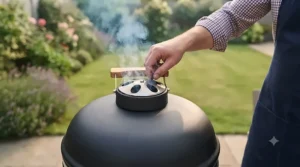
Problem → Solution: Fixing Common Offset Smoker Charcoal Issues
Problem: Temperature keeps spiking unexpectedly. This usually means your charcoal bed includes too many small, fast-igniting fragments catching simultaneously. Solution: switch to a more consistently large-chunked product like Logpile Restaurant Grade Lumpwood and use the minion method so unlit charcoal only catches gradually.
Problem: The fire keeps dying out mid-cook. Often caused by damp charcoal or too tightly closed vents starving the fire of oxygen. Solution: confirm your storage is genuinely dry, and open your intake vent slightly rather than leaving it barely cracked — a fire needs some airflow to sustain itself even at low temperatures.
Problem: Food tastes acrid or bitter rather than pleasantly smoky. This is almost always thick white or grey smoke rather than thin blue smoke, often from choking the fire or using resinous, unseasoned kindling. Solution: ensure good airflow throughout, and consider a lower-tannin option like Globaltic Birch Lumpwood if bitterness persists even with technique corrected.
Problem: Running out of charcoal mid-cook on long sessions. Solution: for genuinely extended cooks — eight hours plus — size up to a charcoal specifically rated for longevity, such as Kamado Joe Big Block XL‘s claimed 18-hour burn, rather than doubling up on a shorter-burning budget bag.
Problem: Excessive ash choking airflow after a few hours. Solution: switch to a lower-ash product like AMOS Premium Restaurant Grade Lumpwood or Log-Barn Restaurant Grade Lumpwood, and build in a mid-cook ash-clearing check if your firebox design allows it safely.
Long-Term Cost & Maintenance: What Large Lumpwood Charcoal Really Costs Over a Season
Judging charcoal purely on price per bag misses the real economics of regular smoking. A cheaper bag that burns through fast and requires constant refuelling can end up costing more per completed cook once you factor in how many bags a season of weekend smoking actually consumes.
Take Kamado Joe Big Block XL as the clearest example: at a premium price point, it initially looks like the expensive option on this list. But factor in its claimed reusability up to three times and its markedly longer single-load burn time, and the cost per hour of usable heat narrows considerably compared with needing two or three bags of budget lumpwood to complete the same overnight brisket. Conversely, for someone smoking a couple of times a month for three-hour cooks, that premium never gets fully amortised, and a budget option like Big K Lumpwood Charcoal genuinely represents better value.
Maintenance costs beyond the charcoal itself are worth factoring in too: ash disposal, occasional grate cleaning to prevent airflow restriction, and dry storage solutions (a lidded metal bin keeps bags protected far more reliably than the original paper packaging once opened). None of these are expensive, but skipping them shortens the lifespan of your smoker’s components and indirectly increases your long-term cost of the hobby.
Safety, Sourcing & Smoke Control Regulations in the UK
If you’re smoking food in a garden within a designated Smoke Control Area, it’s worth knowing the rules actually apply primarily to chimneys and permanently installed appliances rather than to outdoor barbecues and smokers — GOV.UK’s guidance on smoke control area rules confirms that outdoor barbecues, fireplaces, and similar equipment remain permitted even within these zones. That said, being a considerate neighbour matters regardless of the legal technicalities, and choosing a cleaner-burning, low-smoke product like Globaltic Birch Lumpwood or Logpile Restaurant Grade Lumpwood reduces the chance of a genuinely unpleasant conversation over the garden fence during a long weekend cook.
On sourcing, look for FSC certification where it matters to you — it’s an independently audited standard covering responsible forest management, not a self-declared marketing claim, and it’s increasingly available on UK lumpwood charcoal as demand for sustainable options grows. Beyond the environmental angle, sustainably managed forestry tends to correlate with more consistent wood quality, since properly managed trees are typically harvested at more uniform maturity.
On food safety specifically, always use a reliable probe thermometer rather than relying on time alone during long low and slow cooks — internal temperature, not clock time, is what actually determines whether meat is safely cooked, and this matters more the longer and lower your cook runs.
Buyer’s Decision Framework
If you’re still torn, run through this simple checklist:
- If you smoke occasionally and want to keep costs low, choose a budget lumpwood like Big K Lumpwood Charcoal or Alderline Lumpwood Charcoal, because the cost-per-cook savings outweigh the marginal performance gap on shorter sessions.
- If you regularly run cooks over six hours, choose a dense, long-burning option like Kamado Joe Big Block XL, because refuelling mid-overnight-cook is the single biggest risk to a consistent result.
- If sustainability credentials matter as much as performance, choose Logpile Restaurant Grade Lumpwood, because its FSC certification is independently verifiable rather than a marketing claim.
- If you cook across multiple appliances — kettle, kamado, and offset smoker — choose a versatile all-rounder like Log-Barn Restaurant Grade Lumpwood, because you’ll only need to stock one type of fuel.
- If bitter, acrid smoke has been ruining your results, choose a low-tannin single-species option like Globaltic Birch Lumpwood, because the flavour difference is genuinely noticeable on long cooks.
✨ Don’t Miss These Exclusive Deals!
🔥 Take your smoking setup to the next level with these carefully researched large lumpwood charcoal picks. Click through on any highlighted product above to check current pricing and availability. The right bag makes the difference between a stressful fire-tending session and genuinely low and slow smoked food your family will actually ask for again.
FAQ
❓ What's the difference between lumpwood charcoal and briquettes for smoking?
❓ How long does large lumpwood charcoal burn in an offset smoker?
❓ Can I use large lumpwood charcoal in a kamado grill?
❓ Is large lumpwood charcoal better for low and slow cooking than regular charcoal?
❓ How do I make my coal bed last longer during a long smoke?
Conclusion
Large lumpwood charcoal for smoking isn’t a one-size-fits-all purchase, and hopefully this guide has made that clear rather than just handing you a single “winner” and calling it done. If you’re smoking occasionally, Big K Lumpwood Charcoal or Alderline Lumpwood Charcoal will serve you perfectly well without overspending. If you’re chasing genuinely long, unattended overnight cooks, Kamado Joe Big Block XL‘s density and reusability earn their premium price. And if sustainability, low-tannin flavour, or all-round versatility across multiple cookers matters most to you, Logpile Restaurant Grade Lumpwood, Globaltic Birch Lumpwood, and Log-Barn Restaurant Grade Lumpwood each answer that need in slightly different ways.
What ties every recommendation together is chunk size and density over marketing language — “restaurant grade” means little without large, consistent pieces behind it, and coal bed longevity comes down to physics as much as branding. Get the fuel right, and the rest of your low and slow cooking journey gets noticeably easier. Get it wrong, and you’ll spend your weekend fighting the fire instead of enjoying the food.
Whichever bag you choose, give yourself the best possible start: buy dry, store dry, build your fire in stages, and resist the urge to lift the lid every ten minutes. Your future brisket will thank you.
Recommended for You
- Hardwood Lumpwood Charcoal for Pizza Oven: 7 Best Picks (2026)
- Restaurant Grade Charcoal for BBQ: 7 Ultimate Picks (2026)
- Lumpwood Charcoal vs Briquettes: 7 Best UK Picks for 2026
Disclaimer: This article contains affiliate links. As an Amazon Associate, I earn from qualifying purchases. If you purchase products through these links, we may earn a small commission at no additional cost to you.
✨ Found this helpful? Share it with your friends! 💬🤗
