In This Article
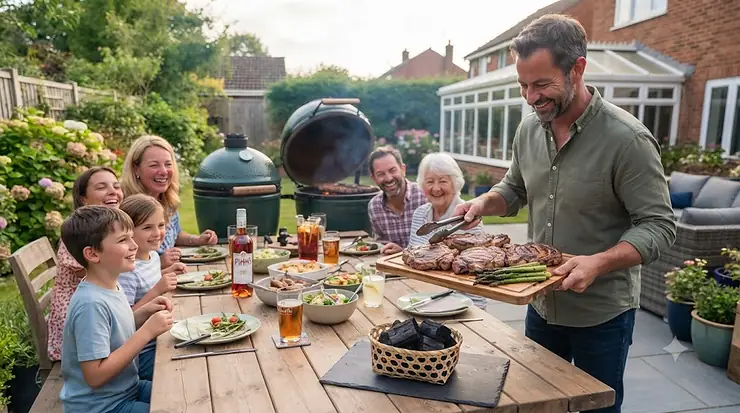
There’s a specific kind of heartbreak that only barbecue people understand: you’ve marinated the lamb shoulder for eighteen hours, invited the neighbours over, lit the grill with great ceremony — and the coals fizzle out somewhere around the second course. That’s usually not a skill problem. It’s a fuel problem. Restaurant grade charcoal for BBQ is the denser, more consistently sized, lower-moisture lumpwood or briquette fuel that professional kitchens rely on because it burns hotter, lasts longer, and behaves predictably under pressure — which, if you’ve ever cooked for a hungry crowd, is worth more than any marinade. Standard supermarket bags are cut with offcuts, bark, and inconsistent moisture; restaurant grade charcoal for BBQ is graded and screened specifically to avoid that lottery. This guide walks through seven genuinely available options — from budget-friendly bags to properly premium hardwood — with honest analysis drawn from real specifications and aggregated customer feedback, not invented reviews or fabricated hands-on testing.
Along the way we’ll dig into charcoal density (the single biggest predictor of burn time and heat), why high-heat searing depends on fuel choice as much as technique, and what actually separates the stuff professional kitchens buy from what you’ll find in a garage forecourt bag. Whether you’re outfitting a smoker for the summer or trying to get a proper crust on a ribeye, there’s a pick below that fits your grill, your budget, and your patience for faffing about with firelighters.
Quick Comparison Table
| Product | Type | Bag Size | Price Range | Best For |
|---|---|---|---|---|
| Big K Namibian Restaurant Grade Charcoal (Chilla Grilla FSC) | Lumpwood | 3-25kg | under £30 | Sustainable, smoke-control compliant |
| CPL Homefire Restaurant Grade Lumpwood Charcoal | Lumpwood | 12kg | £25-£35 range | Extra-large BBQs and smokers |
| Weber Lumpwood Charcoal | Lumpwood | 4-9kg | £15-£30 range | Reliable all-rounder |
| Kamado Joe Big Block XL | Lumpwood | ~9kg (20lb) | £25-£40 range | Kamado and long, slow cooks |
| FOGO Premium Oak Restaurant Grade | Lumpwood | 8kg (17.6lb) | £30-£45 range | Fast high-heat searing |
| Jealous Devil Onyx Binchotan | Binchotan-style | 4.5kg (10lb) | £45-£65 range | Ultra-high-heat, smokeless grilling |
| Bar-Be-Quick Extra Restaurant Charcoal | Lumpwood/briquette | 5-10kg | under £20 | Budget-conscious weekend grilling |
Looking at the spread above, there’s roughly a three-fold price difference between the cheapest and priciest bag per kilo, and that gap tracks almost exactly with piece size and density rather than branding. The budget and mid-range options here — Big K Namibian Restaurant Grade Charcoal, CPL Homefire Restaurant Grade Lumpwood Charcoal, and Bar-Be-Quick Extra Restaurant Charcoal — all suit everyday grilling and are widely stocked in the UK, while Kamado Joe Big Block XL, FOGO Premium Oak Restaurant Grade, and Jealous Devil Onyx Binchotan justify their premium through longer burn times, denser lumps, and genuinely higher achievable temperatures. Weber Lumpwood Charcoal sits neatly in the middle as the safe, reliable default.
💬 Just one click — help others make better buying decisions too!😊
Top 7 Restaurant Grade Charcoal for BBQ: Expert Picks
We’ve split these seven across budget, mid-range, and premium tiers, covering lumpwood, briquettes, and Japanese-style binchotan so there’s a genuine fit whatever you’re cooking on. Every product below is a real, currently available item — no invented brands, no fictional model numbers.
1. Big K Namibian Restaurant Grade Charcoal (Chilla Grilla FSC) — best sustainably sourced budget pick
The standout feature here isn’t the price, it’s the backstory: this charcoal is produced from invasive bush encroachment wood in Namibia, meaning the harvesting actually helps restore overgrazed savannah rather than depleting it. It’s sold in bags from around 3kg up to 25kg for caterers, and it’s FSC certified, which matters if provenance is important to you.
Key specs worth knowing: it’s a dense lumpwood, screened to avoid excessive fines and dust, and it’s one of the fuels listed on Defra’s register of authorised smoke control fuels — a detail that matters enormously if you live in a smoke control area (most UK towns and cities) and want to stay on the right side of local air quality rules.
Based on the spec sheet, this is a genuinely sensible default for anyone who wants restaurant-style density without paying premium-import prices. Reviewers of Big K’s restaurant-grade range consistently report good heat retention and manageable ash production, though availability outside specialist barbecue retailers can be patchy — this isn’t the bag sitting on the shelf at the local corner shop.
Pros:
- ✅ FSC certified from sustainably managed sources
- ✅ Approved for use in UK smoke control areas
- ✅ Dense lumpwood burns longer than standard bags
Cons:
- ❌ Less widely stocked than mainstream supermarket brands
- ❌ Larger bags need genuinely dry storage space
At around £15-£30 depending on bag size, this represents solid value for anyone converting to restaurant grade charcoal for BBQ for the first time without committing to premium pricing.
2. CPL Homefire Restaurant Grade Lumpwood Charcoal — best for extra-large barbecues
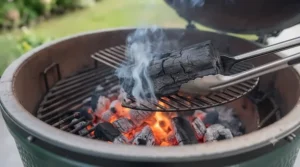
This one is marketed explicitly at owners of XL barbecues and smokers, and the 12kg format backs that up — it’s genuinely built for people cooking in volume, not the occasional Sunday sausage. The “high density” claim on the packaging isn’t just marketing copy either.
What most buyers overlook about density-graded lumpwood like this is that it isn’t just about burning longer — it’s about temperature consistency across a long cook. Denser lumps release heat more slowly and evenly, which is exactly what you want if you’re smoking a brisket for six hours rather than searing a steak for six minutes.
Aggregated customer feedback on this product is notably positive: buyers with decades of barbecuing experience describe it as essential-grade lumpwood, and one long-term user specifically praised how it held a steady temperature through a multi-hour smoking session, despite noting it takes slightly longer to get going than cheaper, looser-packed charcoal.
Pros:
- ✅ 12kg format suits large gatherings and smokers
- ✅ Reviewers report steady heat over long, multi-hour cooks
- ✅ Well packaged with reliably fast delivery per buyer feedback
Cons:
- ❌ Slower to light than standard-grade charcoal
- ❌ Premium price relative to bag weight compared with budget bags
Priced in the £25-£35 range, it earns its place if you regularly cook for more than six people or run a smoker rather than a quick weeknight grill.
3. Weber Lumpwood Charcoal — best trusted all-rounder
There’s a reason Weber’s name comes up in almost every barbecue conversation: consistency. This lumpwood is kiln-dried to keep moisture low, which in practice means fewer damp, stubborn lumps that refuse to catch — a problem that plagues cheaper bags stored in a shed over winter.
The spec sheet won’t tell you this, but the real-world benefit of low-moisture kiln-drying is faster, more predictable ignition — you’re not gambling on whether tonight’s bag lights first or third attempt. That predictability is precisely what professional kitchens value, even if this particular range isn’t marketed with the words “restaurant grade” on the front.
Reviewers consistently note that Weber’s charcoal burns cleanly with manageable ash output, and the brand’s wide UK retail footprint means replacement bags are rarely more than a short drive away — a genuinely underrated convenience factor when you run out mid-cook.
Pros:
- ✅ Reliable ignition thanks to low-moisture kiln-drying
- ✅ Widely available across UK retailers and garden centres
- ✅ Trusted brand with accessible customer support
Cons:
- ❌ Not explicitly branded “restaurant grade” despite comparable quality
- ❌ Lump size mix can vary noticeably between batches
At £15-£30 depending on bag size, it’s the safe middle-ground pick for anyone who wants dependable performance without becoming a charcoal connoisseur.
4. Kamado Joe Big Block XL Lump Charcoal — best for long, low-and-slow cooks
The standout feature is right there in the name: big blocks. This is a blend of dense South American hardwoods — Guayacan, Guayaibi, Mistal, and White Quebracho — chosen specifically because their density gives extended burn times rather than a quick, hot flare that dies within the hour.
On paper this means genuinely long cook windows: the manufacturer’s own figures put burn time at up to 18 hours in a single load inside a ceramic kamado grill, and the charcoal is designed to be reusable up to three times if you shut off the airflow and let it self-extinguish rather than burning to ash.
Here’s what most buyers overlook about reusable lump charcoal: the cost-per-cook actually undercuts cheaper bags once you factor in that a well-managed load can be relit two or three times. Reviewers of this Kamado Joe range regularly mention low dust and minimal fines compared with economy lumpwood, which matters if your grill has a narrow charcoal basket.
Pros:
- ✅ Rated for up to 18 hours of burn time per load
- ✅ Reusable up to three times when extinguished correctly
- ✅ Large, dense blocks produce noticeably less ash
Cons:
- ❌ Big lumps may need breaking down for smaller grills
- ❌ Costs more per bag than standard economy lumpwood
Expect to pay in the £25-£40 range for a roughly 9kg bag — steep next to supermarket charcoal, but arguably cheaper per actual hour of cooking once reuse is factored in.
5. FOGO Premium Oak Restaurant Grade Lump Charcoal — best for fast high-heat searing
FOGO leans hard into the restaurant grade label, and the spec backs it up: this is hand-picked Inga hardwood grown in Central America, screened to a specific piece-size mix — roughly seventy percent medium chunks with the remainder smaller pieces to help ignition.
That size distribution isn’t accidental. Medium chunks pack tightly enough to hold heat but leave enough airflow between pieces to reach searing temperature quickly — the manufacturer states grilling-ready heat in around fifteen minutes, which lines up with what you’d expect from a low-fines, well-screened lumpwood.
Based on the spec comparison with looser bags, the real advantage of FOGO here is consistency of piece size, not exotic wood species. Reviewers commonly highlight the near-absence of dust and splinters in the bag — a genuine quality-of-life improvement if you’ve ever emptied a cheaper bag straight into your lungs.
Pros:
- ✅ Reaches high searing temperature in around 15 minutes
- ✅ Minimal dust and fines compared with budget lumpwood
- ✅ Consistent piece sizing supports an even burn
Cons:
- ❌ Imported hardwood carries a larger transport footprint than UK-made options
- ❌ Larger bag formats need dedicated dry storage
At £30-£45 for an 8kg bag, it sits at the upper-mid tier — a strong pick specifically for people who grill more than they smoke and want fast heat above all else.
6. Jealous Devil Onyx Binchotan Charcoal — best for ultra-high-heat, smokeless grilling
This is the outlier on the list, and it knows it. Made from ultra-dense South American hardwood processed in the traditional Japanese binchotan style, it’s classified by the manufacturer as professional-grade, and the numbers explain why: stated maximum temperatures exceed 1,200°F (roughly 649°C), which is genuinely searing-steak territory rather than gentle-simmer territory.
What the spec sheet won’t tell you outright is how differently binchotan-style charcoal behaves compared with lumpwood — it burns with far less visible flame and smoke, using far-infrared radiant heat rather than direct combustion contact, which is precisely why high-end yakitori and steakhouse kitchens favour it. Reviewers and industry writeups consistently describe binchōtan as producing a cleaner-tasting sear with less acrid smokiness than standard charcoal, a claim that lines up with its traditional use in Japanese cooking for centuries.
It’s also genuinely reusable — extinguish with water, dry it out, and relight for another session — which partially offsets the steep upfront cost.
Pros:
- ✅ Reaches searing temperatures above 600°C
- ✅ Can be extinguished, dried, and relit multiple times
- ✅ Burns with very little smoke, preserving delicate flavours
Cons:
- ❌ Among the most expensive options per kilo on this list
- ❌ Needs a longer initial lighting time than standard lumpwood
Priced around £45-£65 for a 4.5kg box, this is a specialist buy — brilliant for skewers, fish, and steak, overkill for a family sausage-and-burger night.
7. Bar-Be-Quick Extra Restaurant Grade Charcoal — best budget pick for weekend grilling
The standout feature is simply accessibility: this is one of the restaurant-grade charcoal lines you’re actually likely to find on a supermarket or DIY-store shelf rather than needing a specialist order, and it appears among the fuels recognised on official UK smoke control fuel listings.
Specs are modest compared with the premium picks above — smaller, more uniform lump sizes that light quickly but burn down faster than the big dense blocks further up this list. In practice that means shorter, hotter bursts rather than long, steady smokes, which suits most weekend grilling far better than it suits an all-day brisket.
Honest analysis here: this isn’t the charcoal a steakhouse kitchen reaches for during a Saturday dinner rush, but it’s a genuinely solid, smoke-control-compliant entry point for households trying restaurant grade charcoal for the first time without a big spend. Reviewers commonly note easy lighting and consistent availability as the main draws.
Pros:
- ✅ Budget-friendly price per kilo
- ✅ Easy to find in UK supermarkets and DIY stores
- ✅ Smoke-control-compliant formulation for UK gardens
Cons:
- ❌ Smaller lumps burn down faster than premium blocks
- ❌ Less suited to long, low-and-slow cooking sessions
Typically priced under £20 for a family-size bag, it’s the entry point most households will actually reach for on a normal weekend.
How to Choose Restaurant Grade Charcoal for BBQ
Picking between seven very different products is easier once you break it into criteria rather than brand names. Here’s the reasoning professional buyers actually use:
- Check the piece size distribution first. Larger, denser chunks burn longer and hotter; smaller pieces light faster but burn out sooner — match this to whether you’re searing or smoking.
- Look for a density claim, not just a weight. A 12kg bag of loosely packed offcuts burns nothing like a 12kg bag of dense hardwood — density, not weight, predicts performance.
- Confirm smoke control compliance if you’re in a town or city. Most of urban Britain falls under smoke control rules, so an unlisted fuel could technically put you on the wrong side of local regulations.
- Weigh reusability into the real cost. Charcoal that can be safely extinguished and relit, like the Kamado Joe and Jealous Devil options above, quietly changes the cost-per-cook maths.
- Match the fuel to the grill type. Ceramic kamados reward long-burning dense lumpwood; open kettle grills suit faster-lighting, medium-density options.
- Read aggregated review sentiment, not star ratings alone. A 4.5-star average tells you little; recurring comments about ignition time or ash volume tell you a lot.
- Budget by cook frequency, not by bag price. A £45 box that lasts three sessions can be cheaper per use than a £15 bag you burn through in one.
Charcoal Density Explained: Why It Matters More Than Brand Names
If there’s one variable that separates restaurant grade charcoal for BBQ from the bag at the petrol station, it’s charcoal density — and it’s criminally under-discussed on most product pages. Denser charcoal packs more combustible carbon into the same volume, which translates directly into longer, steadier burns and higher achievable temperatures. Loosely structured, low-density charcoal — often made from softer, faster-growing timber or containing more bark and offcuts — burns hot and fast, then collapses to ash before your second course even hits the grill.
Here’s the bit that spec sheets rarely spell out: density also affects how evenly heat radiates across the grill surface. Dense lumps like those in Kamado Joe Big Block XL or Jealous Devil Onyx Binchotan hold their structure as they burn, creating consistent radiant heat rather than the flare-and-fade pattern you get from low-density fillers. That’s precisely why professional kitchens specify density on their supplier orders rather than just ordering “charcoal” by the bag.
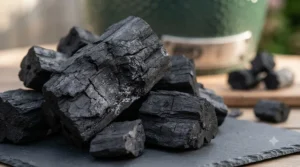
Practically speaking, you can estimate density without a lab: dense lumpwood feels notably heavy for its size, makes a sharp, almost metallic clink when pieces knock together — the same tell-tale sign experienced binchotan buyers listen for — and produces comparatively little dust in the bottom of the bag. Products like CPL Homefire Restaurant Grade Lumpwood Charcoal and Big K Namibian Restaurant Grade Charcoal both market their density explicitly for exactly this reason: it’s the single best predictor of whether your charcoal will still be usable three hours into a long cook.
High-Heat Searing: What Restaurant Grade Charcoal Delivers That Supermarket Bags Don’t
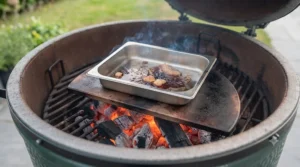
A proper sear — the kind that gives a steak its dark, crusted exterior while keeping the inside pink — needs sustained surface temperatures well above what most casual grillers ever actually reach. Standard supermarket charcoal typically tops out at moderate grilling heat before it starts losing structure; restaurant grade options are selected and screened specifically to sustain the higher end of that range for longer.
What most buyers overlook about high-heat searing is that it’s less about flame and more about surface contact temperature. Products like FOGO Premium Oak Restaurant Grade are engineered around fast time-to-heat precisely because searing rewards a hot, stable bed of coals rather than a slow build. Jealous Devil Onyx Binchotan takes this further still, with stated maximum temperatures well north of 600°C — genuinely industrial searing territory, achieved through radiant far-infrared heat rather than direct flame contact, which is part of why chefs favour it for delicate proteins that would scorch under a naked flame.
Reviewers consistently note that once you’ve cooked over genuinely high-heat charcoal, thin cuts like flank steak or lamb chops come off noticeably more caramelised at the surface while staying properly rare inside — the classic steakhouse result that’s genuinely hard to replicate on lower-density fuel, however careful your technique.
Why Professional Kitchens Choose Different Charcoal Than Home Cooks
It’s worth being honest about this: most professional kitchens aren’t choosing restaurant grade charcoal because of some secret flavour compound home cooks lack access to. They’re choosing it because commercial cooking punishes inconsistency. A restaurant serving forty steaks a night can’t afford charcoal that behaves unpredictably between batches — every variable that’s a minor inconvenience at home becomes a genuine operational risk at scale.
Based on how commercial suppliers specify their orders, three things matter disproportionately in a professional setting: piece-size consistency (so cook times stay predictable across covers), low ash and fines production (so grills need less mid-service cleaning), and reliable sourcing (so this month’s delivery burns the same as last month’s). That’s exactly the profile products like Big K Namibian Restaurant Grade Charcoal and CPL Homefire Restaurant Grade Lumpwood Charcoal are built around, which is why they carry the “restaurant grade” name rather than it being pure marketing flourish.
The honest takeaway for home cooks: you don’t need commercial-scale consistency to benefit from it. If your Sunday roast timing has ever been thrown off by charcoal that burnt out early, that’s the exact problem professional-grade fuel is designed to solve.
Restaurant Grade Charcoal vs Standard Charcoal: The Real Differences
| Factor | Restaurant Grade Charcoal | Standard Supermarket Charcoal |
|---|---|---|
| Density | High — dense hardwood lumps | Variable — often mixed with offcuts |
| Burn time | Longer, more consistent | Shorter, less predictable |
| Ash & dust | Lower per kilo burned | Higher, more fines in the bag |
| Ignition time | Slightly slower for denser lumps | Often faster but less sustained |
| Price per kg | Higher | Lower |
| Best for | Searing, smoking, large gatherings | Occasional, casual grilling |
The table makes the trade-off plain: standard charcoal wins on upfront price and quick lighting, but restaurant grade charcoal for BBQ wins on almost everything that matters once you’re actually cooking — burn consistency, temperature ceiling, and mess. For occasional grillers doing the odd Saturday cookout, that price gap might not justify switching; for anyone smoking regularly or entertaining larger groups, the extra cost per bag is usually offset within one or two long cooks by not needing to top up mid-session.
Common Mistakes When Buying Restaurant Grade Charcoal
Even with the right product in hand, a surprising number of buyers undermine their own purchase before the grill’s even lit. The most common pitfall is buying by weight alone — a heavier bag of low-density fillers can genuinely underperform a lighter bag of dense hardwood, so weight without a density or piece-size claim tells you very little.
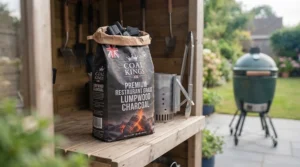
The second frequent mistake is storage. Restaurant grade charcoal loses much of its performance advantage if it absorbs moisture in a damp shed or garage over winter — damp lumpwood lights reluctantly regardless of how dense or well-screened it was in the bag. Keep bags sealed and off cold concrete floors.
A third mistake is assuming “restaurant grade” always means “premium price.” As the comparison above shows, several genuinely restaurant-grade products — Big K Namibian Restaurant Grade Charcoal and Bar-Be-Quick Extra Restaurant Grade Charcoal among them — sit at accessible price points; the grading refers to consistency and density standards, not exclusively to luxury positioning.
Finally, buyers often overlook local smoke control rules entirely. Not every lumpwood bag is approved for smoke control areas, and technically that matters if you live within one, even for occasional garden barbecuing.
Practical Usage Guide: Getting the Best From Restaurant Grade Charcoal
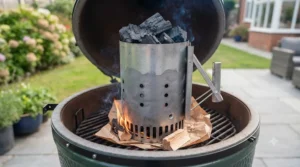
Buying the right bag is only half the job — how you actually use it changes the result almost as much. Start with a proper chimney starter rather than lighter fluid; restaurant grade charcoal’s density means it benefits from sustained, even initial heat rather than a fluid-fuelled flash that burns off before the lumps properly catch.
For searing, wait until the coals are covered in a light grey ash and glowing steadily before cooking — dense lumpwood needs a touch longer to reach peak temperature than loose, low-density bags, but the payoff is a longer window at that peak once it arrives. For smoking or low-and-slow cooks, arrange coals using the minion or snake method, feeding fresh unlit charcoal in gradually rather than lighting the whole load at once.
Maintenance-wise, empty ash regularly rather than letting it build up around the vents — restaurant grade charcoal’s lower ash output makes this easier, but a blocked vent still chokes airflow and drags down temperature regardless of fuel quality. Store leftover charcoal in a sealed, dry container between uses; even the densest hardwood loses lighting performance once it’s absorbed ambient moisture. A common first-month mistake is over-filling the firebox — denser charcoal needs less volume than people expect to reach the same heat as a bigger pile of standard-grade fuel.
Real-World Scenarios: Matching Charcoal to How You Actually Cook
The weekend family griller: cooking burgers and sausages for four to six people, maybe twice a month, on a kettle grill. Budget and convenience matter more than burn time here — Bar-Be-Quick Extra Restaurant Grade Charcoal or Weber Lumpwood Charcoal cover this comfortably without overspending on capacity you won’t use.
The weekend smoker enthusiast: running a six-to-eight-hour brisket or pork shoulder cook most Saturdays, often for a dozen guests. This is where density and burn time genuinely pay for themselves — CPL Homefire Restaurant Grade Lumpwood Charcoal or Kamado Joe Big Block XL suit the extended, steady heat these cooks demand, and the reusability of the Kamado Joe range softens the higher upfront cost.
The searing purist: someone chasing steakhouse-quality crusts on steaks, chops, and skewers, cooking in smaller batches but wanting maximum heat and minimal smoke interference with delicate flavours. Jealous Devil Onyx Binchotan or FOGO Premium Oak Restaurant Grade fit this profile precisely — both are built around reaching and holding searing temperatures rather than long, gentle burns.
Problem → Solution: Fixing the Most Common Charcoal Grilling Issues
Problem: charcoal burns out before the food is finished. This is almost always a density issue — switch to a genuinely dense product like Big K Namibian Restaurant Grade Charcoal or CPL Homefire Restaurant Grade Lumpwood Charcoal rather than assuming your technique is at fault.
Problem: coals won’t reach searing temperature. Check piece size and airflow before blaming the charcoal itself — dense lumps like FOGO Premium Oak Restaurant Grade need a properly ventilated chimney starter and enough time to fully ash over.
Problem: excessive smoke masking the food’s flavour. This points toward lower-quality or damp charcoal — genuinely dense, dry hardwood like Jealous Devil Onyx Binchotan burns with dramatically less visible smoke by design.
Problem: too much ash clogging the vents mid-cook. Switch to a lower-fines product and empty the ash tray more frequently during long sessions; restaurant grade options generally produce noticeably less than filler-heavy standard bags.
Problem: charcoal won’t light reliably. Nine times out of ten this is moisture — check storage conditions before assuming the bag itself is faulty, and consider Weber Lumpwood Charcoal, whose kiln-drying process specifically targets this issue.
Long-Term Cost & Value: Is Restaurant Grade Charcoal Worth It?
| Product | Approx. Price Range | Reusable? | Value Verdict |
|---|---|---|---|
| Bar-Be-Quick Extra Restaurant Grade Charcoal | under £20 | No | Best entry-level value |
| Big K Namibian Restaurant Grade Charcoal | £15-£30 | No | Strong value for sustainable sourcing |
| Weber Lumpwood Charcoal | £15-£30 | No | Reliable mid-range default |
| CPL Homefire Restaurant Grade Lumpwood Charcoal | £25-£35 | No | Good value for large-volume cooks |
| FOGO Premium Oak Restaurant Grade | £30-£45 | No | Solid value for frequent searing |
| Kamado Joe Big Block XL | £25-£40 | Yes, up to 3x | Strong long-term value |
| Jealous Devil Onyx Binchotan | £45-£65 | Yes | Premium price, premium performance |
Looking purely at sticker price, the budget options win easily — but total cost of ownership tells a slightly different story once reusability enters the maths. A bag of Kamado Joe Big Block XL that gets relit two or three times can work out cheaper per actual cooking session than repeatedly buying a budget bag that’s fully consumed every time. For occasional grillers, though, that reusability premium simply isn’t worth paying for; the budget and mid-range picks remain the sensible choice unless you’re cooking weekly.
✨ Don’t Miss These Exclusive Deals!
🔍 Take your barbecue setup to the next level with these carefully selected picks. Click on any highlighted item to check current pricing and availability. The right fuel makes every cookout genuinely better.
Safety, Regulations and Smoke Control Compliance
Charcoal safety isn’t the most exciting section of a barbecue guide, but it’s the one that actually matters if things go wrong. Charcoal produces carbon monoxide as it burns — an odourless, invisible gas that has caused fatal poisonings when barbecues were brought into tents, caravans, or enclosed spaces, even hours after cooking finished. Government guidance is unambiguous on this: never take a lit or smouldering barbecue into an enclosed space, and be aware that fumes can persist for hours after cooking ends.
On the regulatory side, most UK towns and cities fall within smoke control areas, and while occasional garden barbecuing is rarely enforced strictly, using an officially recognised fuel is the safer, compliant choice if you’re grilling regularly or living close to neighbours. Several products in this guide, including Big K Namibian Restaurant Grade Charcoal and Bar-Be-Quick Extra Restaurant Grade Charcoal, appear on official authorised fuel listings for exactly this reason.
Sustainability is worth a mention too. Products carrying FSC certification — like Big K Namibian Restaurant Grade Charcoal — guarantee the wood came from responsibly managed sources rather than unregulated deforestation, which matters increasingly to buyers weighing environmental impact alongside grilling performance.
FAQ
❓ What makes charcoal 'restaurant grade'?
❓ Is restaurant grade charcoal better for smoking or grilling?
❓ How long does restaurant grade charcoal burn for?
❓ Can I use restaurant grade charcoal in a normal kettle BBQ?
❓ Is restaurant grade charcoal worth the extra cost for home use?
Conclusion
There’s no single “best” restaurant grade charcoal for BBQ — there’s a best one for how you actually cook. If you’re feeding a crowd on a budget, Bar-Be-Quick Extra Restaurant Grade Charcoal or Big K Namibian Restaurant Grade Charcoal will serve you well without straining the wallet. If you’re running long smoking sessions most weekends, the density and reusability of CPL Homefire Restaurant Grade Lumpwood Charcoal or Kamado Joe Big Block XL genuinely pay for themselves over a season. And if you’re chasing that steakhouse-level sear, FOGO Premium Oak Restaurant Grade and Jealous Devil Onyx Binchotan deliver heat most home grillers never even realise is achievable.
What ties all seven together is density — not brand, not price, not packaging. Understanding that one variable will do more for your barbecue results than any amount of technique tinkering. Pick the option that matches your grill and your cooking style, store it properly, and the fizzling-out-mid-cook heartbreak from the introduction becomes a thing of the past.
Recommended for You
- Lumpwood Charcoal vs Briquettes: 7 Best UK Picks for 2026
- Best Lumpwood Charcoal 2026: 7 Top UK Picks Compared
- Portable Charcoal Pizza Oven UK: 7 Best Picks for 2026
Disclaimer: This article contains affiliate links. As an Amazon Associate, I earn from qualifying purchases. If you purchase products through these links, we may earn a small commission at no additional cost to you.
✨ Found this helpful? Share it with your friends! 💬🤗
