
In This Article
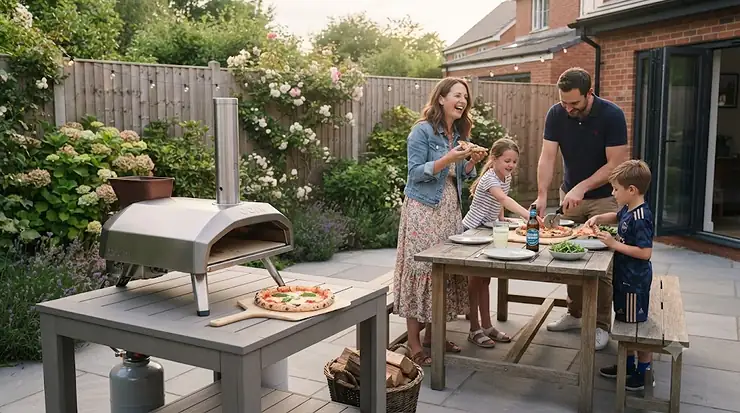
There’s a specific kind of kitchen envy that comes from watching a neighbour flip a bubbling, char-flecked pizza out of their garden in under 90 seconds. Get close enough and you’ll usually spot the secret: a dual fuel pizza oven, not a single-trick appliance stuck on one heat source. This review works through what “dual fuel” actually buys you, whether it’s worth the premium over a gas-only box, and which of the seven ovens on the market genuinely earn their keep in a British back garden.
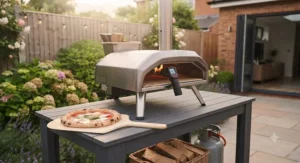
What is a dual fuel pizza oven? It’s an outdoor oven built to run on two separate heat sources, almost always wood or charcoal for smoky flavour, and propane gas for fast, consistent, low-maintenance heat, letting you switch between the two depending on the occasion. Wikipedia’s overview of pizza oven types notes that hybrid ovens capable of running on both wood and gas sit alongside purely wood-fired and gas-fired designs as one of the broad categories on the market today.
We’ll dig into propane vs dual fuel pizza oven trade-offs, look at whether a gas pizza oven for camping is a better bet than lugging a full multi-fuel rig, explain what a fuel conversion kit actually does, and be honest about just how much versatility you’re really paying for once you get past the marketing copy. Every price below is a range rather than a fixed figure, since oven prices shift constantly and this isn’t a comparison you should base on a single snapshot in time.
Quick Comparison Table
| Oven | Best For | Fuel Setup | Max Pizza Size | Price Range |
|---|---|---|---|---|
| Gozney Dome (Dual Fuel) | Ultimate versatility, big households | Built-in gas + wood/charcoal | 16″ | £1,449-£1,499 |
| Gozney Roccbox (Dual Fuel) | Premium portability | Gas standard, wood burner attachment | 12″ | £399-£515 |
| Ooni Karu 2 Pro | Digital control, mid-premium | Wood/charcoal out of box, gas burner optional | 16″ | £560-£700 |
| VEVOR Dual Fuel Pizza Oven | Tightest budget | Built-in wood + propane | 16″ | £180-£260 |
Reading across this snapshot, the headline gap is between ovens with a built-in dual burner, like the Gozney Dome and the VEVOR, and ovens where gas is an optional bolt-on, like the Ooni Karu range and the Roccbox. Based on the spec comparison, a built-in dual system tends to cost more upfront but saves you buying a separate accessory later; a wood-first oven with an optional gas burner is cheaper to start with but only becomes genuinely dual fuel once you’ve bought the extra part.
💬 Just one click — help others make better buying decisions too!😊
Top 7 Dual Fuel Pizza Ovens: Expert Analysis
Below are seven real, currently available products spanning budget, mid-range and premium brackets, including a genuine fuel conversion kit for anyone who already owns a wood-only oven.
1. Gozney Dome (Dual Fuel) — the most versatile outdoor oven money can buy
The Dome is Gozney’s flagship, and its standout feature is a built-in rolling gas flame that sits alongside genuine wood-fired cooking in the same 16-inch chamber, switchable at the turn of a dial rather than requiring you to swap components. It reaches around 500°C and cooks a 16-inch pizza in roughly 60 seconds, but the more interesting spec is capacity: at 73.2 x 63.0 x 66.0cm and 58kg, it’s built to double as a roasting, smoking and baking oven, not just a pizza machine. Based on the spec comparison with smaller ovens, the Dome’s size and dual-fuel flexibility genuinely change what you can cook, from a whole roast chicken to fire-seared steaks in a cast iron skillet, rather than just pizza on repeat. Reviewers consistently praise the ease of switching fuels mid-session and the way it holds temperature through consecutive bakes, though several note it’s a two-person job to move and isn’t designed to be portable. What most buyers overlook is that this isn’t a “starter” oven; it’s aimed at people who already know they’ll use both fuels regularly enough to justify the size and price.
Pros:
- ✅ Genuine built-in dual fuel with no separate parts to buy
- ✅ Large chamber handles full meals, not just pizza
- ✅ Consistent heat retention through back-to-back bakes
Cons:
- ❌ Heavy and not designed to be portable
- ❌ Highest price point on this list by a wide margin
At around £1,449-£1,499, the Dome sits firmly in premium territory, and it’s worth checking current price and any bundled accessories before buying, since the box famously doesn’t include much beyond the oven itself.
2. Gozney Roccbox (Dual Fuel) — best premium pick for portable versatility
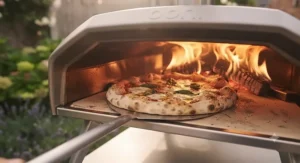
Roccbox takes a different approach to dual fuel: it ships gas-ready out of the box, with a detachable wood burner sold as the multi-fuel upgrade, rather than building both into one fixed unit like the Dome. That modularity matters for portability; at a fraction of the Dome’s weight, with retractable legs and a silicone-jacketed shell, this is the dual fuel oven you can realistically take to a friend’s garden or a family gathering. The 500°C top temperature and 60-second cook time match the bigger Gozney, but the 12-inch cooking surface is more suited to individual pizzas than family-sized ones. Here’s what to weigh: buying the dual-fuel starter pack with both burners included costs meaningfully more than the gas-only version, so it’s worth being honest about whether you’ll actually fire up the wood burner often enough to justify it. Reviewers consistently mention that the silicone exterior genuinely stays cooler to the touch than metal-bodied rivals, useful around kids at a garden party, and a repeated theme is that the wood burner delivers noticeably better crust texture than gas alone, at the cost of more hands-on attention.
Pros:
- ✅ Genuinely portable with retractable legs and light build
- ✅ Cool-touch silicone shell reduces burn risk around family
- ✅ Detachable burners let you buy gas now, wood later
Cons:
- ❌ Dual-fuel bundle costs significantly more than gas-only
- ❌ 12-inch surface limits you to one pizza at a time
Expect to pay around £399 for the gas-only version or roughly £500-£515 for the full dual-fuel starter pack, making it a genuine mid-to-premium contender for anyone who values portability over the Dome’s raw capacity.
3. Ooni Karu 2 Pro — best digital multi-fuel oven for precision cooks
The Karu 2 Pro ships ready to burn wood or charcoal straight out of the box, and becomes fully dual fuel once you add the separately sold Ooni Karu 2 Pro Gas Burner attachment, which clips on in under a minute. What sets it apart from cheaper multi-fuel ovens is the Digital Temperature Hub, a front-mounted display that also streams live temperature readings to your phone via Bluetooth, taking a lot of guesswork out of judging when the stone is actually hot enough. The 17-inch-wide cooking surface and glass ClearView door are genuinely useful too, letting you watch a bake without opening the door and losing heat. On paper this means more control than most ovens at this price, and reviewers consistently highlight the app connectivity as the feature that turns anxious first bakes into confident ones. A repeated point in aggregated feedback is that the gas burner attachment, while excellent, is an extra cost most first-time buyers don’t budget for upfront.
Pros:
- ✅ Digital thermometer with phone app tracking removes guesswork
- ✅ Spacious 17-inch surface fits full-size pizzas and roasts
- ✅ Glass door lets you monitor bakes without losing heat
Cons:
- ❌ Gas burner attachment is sold separately, adding to total cost
- ❌ Heavier than the smaller Karu 2, less ideal for frequent travel
Typically priced around £560-£700 for the oven alone, with the gas burner attachment adding roughly £90-£150 on top, the Karu 2 Pro suits buyers who want serious control without stepping up to Gozney’s price bracket.
4. Ooni Karu 2 (12″) — best compact dual fuel oven for camping and small gardens
Where the Karu 2 Pro chases precision, the standard Karu 2 chases portability, weighing in noticeably lighter and built around a 12-inch cooking surface that suits smaller households or anyone short on patio space. It ships as a wood and charcoal burner with an extra-large fuel tray, and the same gas burner attachment system as its bigger sibling turns it dual fuel for propane-fuelled cooking that reportedly uses less gas than earlier Ooni generations. This is the pick worth considering if a gas pizza oven for camping is genuinely part of your plan, since its lighter build and compact footprint travel far better than anything in the Gozney range. Reviewers consistently describe the borosilicate glass door and airflow management as noticeably improved over older portable ovens, and a common theme in feedback is that the smaller stone reaches temperature faster than the 16-inch models, which matters if you’re cooking for two rather than a crowd.
Pros:
- ✅ Genuinely light and compact for camping or small gardens
- ✅ Reaches cooking temperature faster than larger 16-inch ovens
- ✅ Same gas burner ecosystem as the larger Karu range
Cons:
- ❌ 12-inch surface limits pizza size for bigger groups
- ❌ Gas burner attachment sold separately, same as the Pro model
At around £279-£320 for the oven, plus a similar £90-£150 for the optional gas burner, this remains one of the more affordable genuine routes into dual fuel cooking once you factor in the full setup.
5. VEVOR Dual Fuel Pizza Oven (16″) — best budget dual fuel pick
VEVOR’s 16-inch dual fuel oven takes the opposite approach to Ooni and Gozney: wood and propane are both built in from the start, with no separate attachment to buy, at a price that undercuts every other oven on this list by a wide margin. It preheats to around 600°F (roughly 315°C), which is noticeably cooler than the 500°C ovens above, and cooks a pizza in about 90 seconds rather than 60, so the results lean slightly less blistered-Neapolitan and slightly more home-oven-plus. Based on the spec comparison with premium rivals, the trade-off for the lower price is a thinner shell and a lower peak temperature, which matters most if authentic Neapolitan char is your specific goal rather than simply good homemade pizza. Reviewers consistently describe it as excellent value for the price, with several specifically praising the auto-rotating stone feature on some variants, which reduces the need to manually turn the pizza. A recurring theme in feedback is a genuine learning curve in the first few bakes before users dial in their preferred flame level.
Pros:
- ✅ True built-in dual fuel with nothing extra to buy
- ✅ Auto-rotating stone available on some variants
- ✅ Lowest price point of any genuinely dual fuel oven here
Cons:
- ❌ Lower peak temperature than premium Neapolitan-style ovens
- ❌ Thinner shell retains heat less consistently over long sessions
At roughly £180-£260 depending on size and retailer, this is the oven to consider if you want to try dual fuel cooking without committing to premium-oven money.
6. Ooni Karu 16 Gas Burner (Fuel Conversion Kit) — turn a wood-only oven properly dual fuel
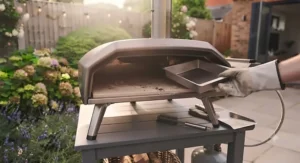
Not everyone needs to buy a whole new oven to get dual fuel flexibility. If you already own an Ooni Karu 16 or Karu 2 Pro running on wood and charcoal, this gas burner attachment is the genuine fuel conversion kit that adds propane capability without replacing the oven itself. It fits in place of the standard fuel tray in under a minute, no tools required beyond what’s included, and switches the oven from a wood-fired system that demands constant attention to a dial-controlled gas burner you can walk away from between checks. What the spec sheet won’t tell you, but reviewers note, is that this single accessory is often what turns a good wood oven into one people actually use on a random Tuesday, since gas removes the barrier of sourcing and lighting dry kindling for a quick meal. A recurring theme in feedback is that the attachment noticeably changes the character of the crust versus wood, trading a little smokiness for a lot of convenience.
Pros:
- ✅ Genuinely converts an existing wood oven to dual fuel
- ✅ Fits in under a minute with no extra tools needed
- ✅ Makes weeknight pizza realistic, not just weekend projects
Cons:
- ❌ Sold separately, so it’s an added cost on top of the oven
- ❌ Model-specific fit, so it won’t suit every Ooni oven
Priced around £90-£150 depending on the exact burner model and current stock, this is one of the more cost-effective upgrades on this list for anyone who already owns a compatible wood-fired Ooni.
7. Ooni Koda 16 (Propane Gas Pizza Oven) — best pure-gas pick for camping simplicity
The Koda 16 isn’t dual fuel at all, and that’s precisely why it earns its place here: for anyone weighing propane vs dual fuel pizza oven decisions, a genuinely excellent gas-only oven is the benchmark to compare against. Its L-shaped flame heats to around 500°C in roughly 20 minutes and delivers even coverage across a 16-inch stone without the manual rotation some single-flame ovens demand. Because there’s no wood chamber, ash tray, or fuel tray to manage, it’s noticeably lighter and simpler to pack for a trip, making it a genuinely strong gas pizza oven for camping if you’re happy trading wood-fired flavour for consistency and speed. On paper this means less versatility than the dual fuel options above, but reviewers consistently rank it among the easiest ovens to use for beginners, and a repeated theme in feedback is that the side-mounted control knob makes adjusting between Neapolitan and New York-style bakes genuinely straightforward.
Pros:
- ✅ Lighter and simpler to transport than any dual fuel option
- ✅ Even L-shaped flame reduces the need for manual rotation
- ✅ Reaches cooking temperature in around 20 minutes
Cons:
- ❌ No wood-fired option at all, so you lose that flavour entirely
- ❌ Less overall versatility than genuinely dual fuel ovens
At around £280-£450 depending on bundle and retailer, the Koda 16 sits in the same price bracket as several dual fuel ovens, which makes the decision genuinely about priorities rather than budget.
Practical Usage Guide: Setup, Seasoning and Fuel Switching
Getting the best out of any dual fuel pizza oven starts before the first bake. Season a new stone by running the oven on a low gas flame or a modest wood fire for 20-30 minutes before your first pizza, which helps cure the cordierite or stone surface and reduces the risk of cracking from thermal shock. When switching between fuels on the same oven, always let the chamber cool to a safe handling temperature before swapping the fuel tray or attaching a gas burner, since doing this hot risks burns and can warp lighter-gauge components. During the first month, expect a genuine learning curve around flame management, particularly on wood, where too much fuel too fast produces uneven heat and scorched crusts rather than the even bake you’re after.
On maintenance, brush out ash and food debris after each wood session while the oven is still slightly warm, since it lifts away far more easily than once fully cooled. For gas burners, a quick visual check of the hose and regulator before each use catches wear before it becomes a leak, and it’s worth doing this as a genuine habit rather than an occasional afterthought. A common early mistake is judging oven readiness by time alone rather than an infrared thermometer or built-in gauge, since ambient temperature, wind, and fuel quality all shift how long preheating actually takes.
Real-World Scenarios: Which Dual Fuel Oven Suits You?
Picture three different buyers working through the same shortlist. First, a family that hosts regularly and wants one oven to handle pizza night and Sunday roasts alike: the Gozney Dome earns its price here, since its size and built-in dual fuel genuinely replace multiple pieces of cooking kit. Second, a couple in a terraced house with a small patio who mostly want fast, fuss-free pizza a few times a month: the Ooni Karu 2 (12″) without the gas burner covers most of their needs, and they can add the burner later if wood-only starts feeling like a chore on busy weeknights. Third, a group of friends who camp several times a year and want restaurant-quality pizza without hauling a wood chamber and ash tray across a field: the Ooni Koda 16 solves that specific problem better than any dual fuel oven on this list, precisely because it isn’t trying to do two jobs at once. Matching the oven to how often you’ll actually use each fuel, rather than defaulting to whichever has the longest spec sheet, is what determines whether the purchase earns its keep.
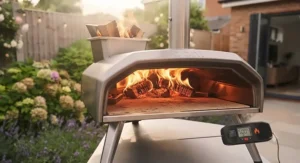
How to Choose a Dual Fuel Pizza Oven
Independent testers such as Which?’s pizza oven reviews note that price isn’t always a reliable indicator of cooking quality, which is exactly why working through your own priorities first matters more than chasing the highest-rated model. Work through these criteria in order to narrow the field quickly:
- Decide if you’ll genuinely use both fuels — if wood will realistically sit unused, a gas-only oven like the Koda 16 may serve you better for less money.
- Check whether “dual fuel” means built-in or bolt-on — built-in systems like the Dome and VEVOR cost more upfront but need no extra purchase.
- Match cooking surface size to your household — 12-inch suits one or two people; 16-inch suits families and gatherings.
- Weigh portability against capacity — bigger ovens like the Dome cook more but travel far less easily than the Karu 2 or Koda.
- Factor in the true cost of a conversion kit — a wood-only oven plus a gas burner attachment can end up pricier than a dual-fuel-from-the-box option.
- Consider your patience for wood-fired cooking — gas suits weeknight convenience; wood suits weekend hobbyists who enjoy the process.
- Set a total budget including accessories — peels, covers and fuel all add real cost beyond the oven price itself.
Propane vs Dual Fuel Pizza Oven: Which Wins?
A propane-only oven, like the Koda 16, wins on simplicity: instant ignition, consistent heat with no fuel management, and a lighter overall package that’s easier to store and transport. A dual fuel pizza oven wins on flexibility, letting you default to gas on a rushed weeknight and switch to wood when you actually want to slow down and enjoy the process, or when guests specifically ask for that smoky, wood-fired flavour. Where propane loses ground is in ultimate authenticity; purists generally agree that a proper wood fire produces a more complex crust than gas alone, even on excellent gas-only ovens. On balance, if you know you’ll rarely bother with wood, the money saved by going propane-only is genuinely well spent elsewhere; if variety and occasion-matching flavour matter to you, the dual fuel premium is easy to justify.
✨ Don’t Miss These Exclusive Deals!
🔍 Take your outdoor cooking up a level with these carefully selected dual fuel ovens. Click through to check current pricing and availability, and get proper wood-fired flavour and gas-fired convenience in the same back garden this year.
Gas Pizza Oven for Camping: What Actually Works
Camping changes the calculation considerably, since weight, packability and fuel availability all matter more than they do in a fixed garden setup. A gas pizza oven for camping needs to run on standard propane canisters that campsites and outdoor shops actually stock, rather than requiring dry, seasoned wood that’s often difficult to source or forbidden entirely under local fire restrictions. Compact gas-only ovens like the Koda 16, or a dual fuel oven with its wood tray left at home, both work well here, since gas ignites instantly regardless of weather and doesn’t need the fire-tending attention wood demands in a group camping setting. The Camping and Caravanning Club’s guidance on gas for tent campers notes that butane appliances typically need a 28mbar regulator while propane needs 30 or 37mbar, so it’s worth double-checking your specific oven’s regulator match before a trip, since the wrong fitting simply won’t connect. Weight matters too: the lighter, tray-free construction of a gas-only oven usually beats an equivalent dual fuel model once you account for the extra fuel tray, ash tool, and wood supply a multi-fuel setup demands on the road.
Fuel Conversion Kits Explained
A fuel conversion kit is any official accessory that changes an oven’s available fuel type without requiring you to buy an entirely new unit, and it’s worth understanding what these kits do and don’t include before assuming one will solve every problem. Gas burner attachments, like the one covered as product six above, add propane capability to a wood-only oven and are the most common type UK buyers encounter. Less commonly, natural gas conversion kits exist for select gas-only ovens, swapping the propane orifice and regulator for natural gas-compatible parts so the oven can run from a fixed household gas line rather than bottled propane; these are model-specific and generally require careful fitting, so following the manufacturer’s exact instructions matters more here than with most accessories. What most buyers overlook is that a conversion kit rarely matches the performance of a purpose-built dual fuel oven exactly; it adds a fuel option, but the burn characteristics, heat spread, and control feel can differ slightly from an oven engineered for both fuels from day one.

Versatility: What a Dual Fuel Oven Can Really Cook
Versatility is the word every dual fuel oven’s marketing leans on, but it’s worth separating genuine capability from a stretch. All the ovens on this list handle Neapolitan and New York-style pizza well, that’s the baseline. Where real versatility shows up is in the larger chambers: the Gozney Dome and, to a lesser extent, the Ooni Karu 2 Pro have enough internal height and stone area to roast a whole chicken, sear a cast iron steak, or bake flatbreads and focaccia at lower, sustained temperatures once the initial pizza-hot blast has settled. Smaller ovens like the Karu 2 and Koda 16 can technically manage some of this too, but their compact chambers make anything beyond pizza and the occasional side dish genuinely fiddly. Reviewers consistently note that the gas side of a dual fuel oven is what unlocks this broader versatility in practice, since holding a steady low-and-slow temperature is far easier on a dial-controlled flame than a wood fire that needs constant feeding to stay level.
Common Mistakes When Buying a Dual Fuel Pizza Oven
The most frequent mistake is buying a wood-only oven assuming you’ll “probably get the gas burner eventually,” then never actually adding it, missing out on the convenience that would have made the oven see far more regular use. A close second is underestimating how much a gas burner attachment adds to the total cost, treating the oven’s headline price as the full spend rather than budgeting for the accessory from the start. Buyers also commonly overestimate how often they’ll use wood specifically for the smoky flavour, when in practice gas ends up doing 80-90% of the cooking for most households simply because it’s faster on a weeknight. Another recurring issue is choosing a 12-inch oven for a household that regularly cooks for four or more people, leading to frustratingly long queues between pizzas rather than the fast, crowd-pleasing experience they expected. Finally, some buyers skip checking regulator compatibility entirely, assuming any propane bottle and hose will work, when in fact fittings vary and an incompatible regulator simply won’t connect safely.
Safety and Regulations Guide
Gas-fuelled pizza ovens fall under general LPG safety guidance in the UK, and the basics are worth taking seriously rather than treating as boilerplate. The HSE’s guidance on the safe use of LPG stresses that risks need to be properly identified and managed, covering everything from cylinder storage to structural stability around any potential gas escape, and while that guidance is aimed primarily at commercial installations, the underlying principles, good ventilation, secure upright storage, and checking connections before use, apply just as much to a domestic garden setup. Always use your oven on a stable, non-combustible surface, keep it well clear of fences, sheds, and overhanging branches, and never operate it in an enclosed space like a garage or conservatory, since both wood and gas combustion produce carbon monoxide that needs to disperse safely outdoors. For camping specifically, check your chosen campsite’s rules before you travel, since some restrict open flames or specific gas cylinder sizes on pitches, and pack a means of extinguishing a small fire, such as a bucket of sand or a fire blanket, as standard practice rather than an afterthought.
Long-Term Cost and Maintenance
Beyond the oven’s sticker price, dual fuel cooking carries genuinely different ongoing costs depending on which fuel you lean on. Propane is generally the cheaper cost-per-cook once you own the bottle and regulator, since a standard cylinder lasts through many bakes and gas prices stay relatively stable, whereas kiln-dried hardwood or specific pizza-oven wood packs cost more per session and need periodic restocking. Gas burner attachments and hoses rarely need replacing if stored correctly, though rubber seals are worth a visual check each season for cracking. Stones and cordierite baking boards on any oven, dual fuel or not, are the component most likely to need eventual replacement, particularly if they’re ever hit with cold water or food straight from the fridge while still hot, so budgeting roughly £20-£40 every few years for a replacement stone is realistic across most of the ovens on this list. Weighed over a five-year span, the cheaper upfront VEVOR oven can end up costing similarly to a premium Ooni once you factor in a shorter expected lifespan against the Gozney or Ooni’s longer warranty-backed builds.
What to Expect: Real-World Performance
On paper, every oven here promises high heat and fast cooking, but real-world results vary with technique as much as spec sheet numbers. Expect the first few bakes on any wood or dual fuel oven to be a genuine learning process, with flame management taking longer to master than gas, which tends to deliver consistent results from the very first use. Expect gas to slightly underperform wood on ultimate crust character, even on excellent ovens, since wood’s slightly uneven, rolling heat is part of what produces classic leoparding on a Neapolitan crust. Expect portable ovens like the Karu 2 and Koda 16 to need more frequent temperature checks during a session than the larger, more insulated Dome, since smaller chambers lose heat faster between pizzas. And expect genuine seasonal variation in performance: cold, windy evenings extend preheat times noticeably on every oven here, gas included, so factor extra time into cold-weather cooking rather than assuming summer benchmarks will hold year-round.
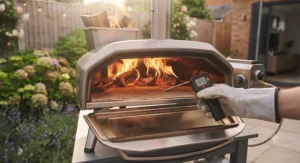
FAQ
❓ Is a dual fuel pizza oven worth the extra cost over gas-only?
❓ Can I use a dual fuel pizza oven for camping?
❓ Do I need a fuel conversion kit if my oven already says 'multi-fuel'?
❓ What temperature does a dual fuel pizza oven reach?
❓ Is wood or gas better for pizza oven versatility?
Conclusion
The right dual fuel pizza oven review comes down to being honest about how you’ll actually cook, not which spec sheet looks most impressive. The Gozney Dome earns its premium price for households wanting one oven to replace several appliances, the Gozney Roccbox balances that same dual-fuel flexibility with genuine portability, the Ooni Karu 2 Pro and Ooni Karu 2 offer strong mid-range routes into multi-fuel cooking with the gas burner added when you’re ready, the VEVOR Dual Fuel Pizza Oven proves built-in dual fuel doesn’t have to be expensive, the Ooni Karu 16 Gas Burner shows how a genuine fuel conversion kit extends an existing oven’s life, and the Ooni Koda 16 remains the benchmark for anyone who decides propane alone, especially for camping, is the smarter choice. Whichever you land on, matching the oven’s fuel setup, size, and portability to your real cooking habits, rather than the longest feature list, is what turns a purchase into something you actually fire up every week.
Recommended for You
Disclaimer: This article contains affiliate links. As an Amazon Associate, I earn from qualifying purchases. If you purchase products through these links, we may earn a small commission at no additional cost to you.
✨ Found this helpful? Share it with your friends! 💬🤗
