In This Article
Buy the wrong bag of charcoal and you’ll know about it within twenty minutes — a sluggish, smoky fire that never quite gets your stone past 300°C, pizzas that catch on the base before the top’s even coloured, and a garden that smells like a bonfire rather than a Neapolitan backstreet. Hardwood lumpwood charcoal for pizza oven use isn’t just “charcoal” in the generic barbecue-bag sense; it’s a specific category built for high, sustained heat, low ash and a clean, honest burn that won’t fight your oven for control of the flavour.
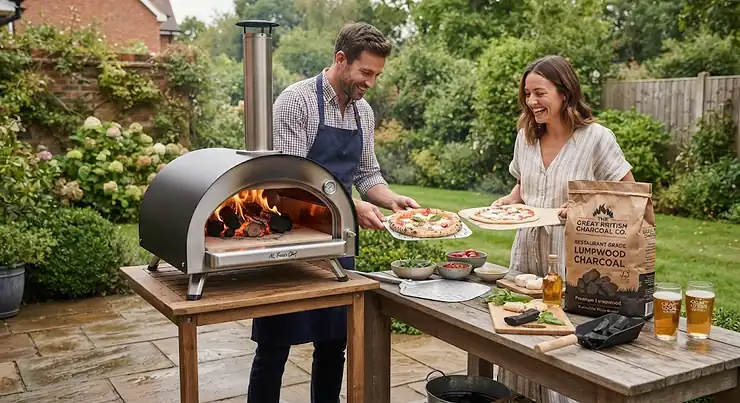
This guide walks through seven real, currently available bags on amazon.co.uk, ranging from compact starter packs to bulk restaurant-grade sacks, so you can match the fuel to your oven, your budget and how often you actually fire it up. You’ll get honest analysis grounded in real specifications and aggregated review sentiment (never invented quotes), a proper look at pizza oven temperature and what fuel realistically achieves, how wood-fired flavour actually happens, and why “oven-safe fuel” matters more than most buyers realise — especially if you live in a smoke control area. Whether you’re feeding a family on a Friday night or trying to nail a 90-second Neapolitan base, there’s a bag here that fits.
Quick Comparison Table
| Charcoal | Wood/Grade | Typical Burn Time | Best For |
|---|---|---|---|
| Ooni Premium Lumpwood Charcoal | 100% birch | Up to ~1 hour high heat | Compact dedicated pizza ovens |
| Big K Premium Grade Lumpwood Charcoal FSC | Graded large pieces, FSC | Up to 90 minutes | Consistent heat, smaller households |
| Big K Restaurant Grade Lumpwood Charcoal | Mixed hardwood, FSC | Up to 2 hours | Bulk buyers, regular use |
| Marienburg Organic Restaurant Grade Lumpwood BBQ Charcoal | Certified organic hardwood | 1.5–2 hours | Chemical-conscious cooks |
| Alderline Lumpwood Charcoal BBQ | Restaurant grade, 5–20cm pieces | 1–1.5 hours | Fast lighting, minimal smoke |
| Log-Barn Restaurant Grade Lumpwood Charcoal | Large chunk hardwood | 2+ hours | Multi-pizza sessions, catering |
| Kamado Joe XL Natural Reusable Lump Charcoal | Dense hardwood lump | Up to 18 hours | Premium, low-waste, reusable coals |
Looking at the spread above, the real split isn’t “good vs bad” — it’s burn duration versus piece consistency. Log-Barn Restaurant Grade Lumpwood Charcoal and Kamado Joe XL Natural Reusable Lump Charcoal are built for long, hot sessions where you’re firing multiple pizzas back-to-back, while Ooni Premium Lumpwood Charcoal and Alderline Lumpwood Charcoal BBQ are tuned for quick lighting and shorter, more spontaneous cooks. If you only ever bake two or three pizzas on a weeknight, paying for an 18-hour burn is money you don’t need to spend.
💬 Just one click — help others make better buying decisions too!😊
Top 7 Hardwood Lumpwood Charcoal Brands for Pizza Ovens: Expert Analysis
1. Ooni Premium Lumpwood Charcoal — best for compact dedicated pizza ovens
Purpose-built rather than repurposed from general barbecue stock, this is the bag most Ooni Karu owners reach for first. Made from 100% birch hardwood with no additives, it’s fired in small batches specifically to keep ash and moisture down — both of which matter enormously in a small firebox where airflow is limited. Because birch is a dense, slow-growing timber, the pieces pack more energy per kilo than the cheap mixed-hardwood bags you’ll find in a supermarket multi-buy.
On paper, a 15-minute run-up to cooking temperature sounds like marketing fluff, but it lines up with what compact multi-fuel ovens actually need: a fast, hot bed of embers rather than a slow-building bonfire. Reviewers consistently report that it lights cleanly with minimal spitting and produces noticeably less ash than generic lumpwood, which matters if you’re emptying a small firebox mid-cook. The trade-off is capacity — in a 4kg bag you’re not getting the marathon burn time of the bulk options further down this list, so it suits someone cooking little and often rather than catering for twenty guests.
Pros:
- ✅ Fast light-up, ready to cook in around 15 minutes
- ✅ Low ash build-up in small fireboxes
- ✅ Sustainably sourced FSC-certified birch
Cons:
- ❌ Smaller bag size means more frequent restocking
- ❌ Premium birch commands a higher price per kilo
Expect to pay in the £13–£18 range for a 4kg bag at the time of research, and prices may vary by retailer. For anyone who owns a compact multi-fuel oven and bakes weekly rather than daily, it’s a genuinely sound value pick.
2. Big K Premium Grade Lumpwood Charcoal FSC — best graded large pieces for even heat
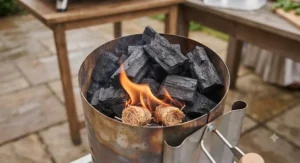
Where standard lumpwood bags are a lucky dip of fine dust and fist-sized chunks, this Premium Grade version is specifically sieved to remove the smaller pieces, leaving only larger, more uniform lumps. That single change has a bigger practical impact than most buyers expect: uneven piece sizes burn unevenly, creating hot and cold spots on your pizza stone that no amount of turning fully compensates for.
Big K rates this bag for up to 90 minutes of cooking time from a single light, which comfortably covers a family pizza night without needing to top up mid-session. Because it’s FSC-certified and additive-free, there’s no risk of the chemical off-notes you sometimes get from unbranded briquette-style products. Aggregated customer sentiment on Amazon skews strongly positive, with buyers frequently noting the consistent heat output compared with budget lumpwood, though a handful flag that bag weights can feel slightly light versus older packaging batches — worth checking the current listing details before you buy.
Pros:
- ✅ Graded for larger, more consistent piece sizes
- ✅ FSC-certified, 100% natural, no additives
- ✅ Reliable heat for up to 90 minutes per light
Cons:
- ❌ Costs more per kilo than unsorted lumpwood
- ❌ Some buyers report variable bag weights
At around £10–£14 for a 5kg bag, it sits firmly in the mid-range and represents strong value for anyone who’s been frustrated by inconsistent heat from cheaper bags.
3. Big K Restaurant Grade Lumpwood Charcoal — best bulk value for frequent bakers
This is the bag to buy once you’ve established that pizza nights are a regular fixture rather than an occasional novelty. Sold in a hefty 15kg format, it’s the same restaurant-grade FSC hardwood Big K supplies to catering customers, just packaged for home gardens rather than commercial kitchens. Buying in this volume typically works out noticeably cheaper per kilo than the smaller 5kg bags, which matters if you’re firing the oven every weekend through summer.
What most buyers overlook about restaurant-grade lumpwood is that it isn’t simply “more of the same” — it’s typically sourced and screened to the standard commercial kitchens rely on for consistency during service, where an inconsistent burn means a slow ticket. Reviewers commonly mention low spitting and reduced smoke compared with supermarket briquettes, alongside praise for the burn time of up to two hours per load. The obvious downside is storage: 15kg of charcoal needs a dry shed or bin, because damp lumpwood absorbs moisture fast and loses performance.
Pros:
- ✅ Restaurant-grade FSC hardwood at bulk pricing
- ✅ Up to 2 hours cooking time per light
- ✅ Noticeably less spitting than budget bags
Cons:
- ❌ Requires proper dry storage for 15kg
- ❌ Overkill if you only cook occasionally
Typically priced in the £20–£28 range for 15kg, it’s one of the strongest cost-per-cook figures on this list for anyone baking most weekends.
4. Marienburg Organic Restaurant Grade Lumpwood BBQ Charcoal — best organic, chemical-free choice
For cooks who read ingredient labels as carefully in the garden as they do in the kitchen, this 30-litre bag is marketed specifically around its organic certification — a step beyond the “natural, no additives” claim most lumpwood brands make. It’s aimed squarely at barbecues and pizza ovens rather than being a generic multi-purpose fuel, and the 30-litre volume translates to a genuinely substantial weight of usable charcoal.
Based on the spec comparison with standard restaurant-grade lumpwood, the practical cooking difference is smaller than the marketing suggests — both are additive-free hardwood — but the organic certification gives an extra layer of traceability that some buyers specifically want, particularly if food provenance is a priority in the rest of their kitchen. Amazon’s aggregated review sentiment for this product runs consistently high, with a large volume of ratings and repeat-buyer comments about reliable heat and clean-tasting food. It’s a fair bit pricier than unbranded lumpwood, so you’re paying a premium for the certification and consistency rather than any dramatic performance leap.
Pros:
- ✅ Certified organic hardwood, fully traceable sourcing
- ✅ Large 30-litre volume for extended use
- ✅ Strong, consistent review history on Amazon
Cons:
- ❌ Premium pricing versus non-organic lumpwood
- ❌ Piece size can vary between batches
Expect a price in the £15–£20 range at the time of research — solid mid-range value for buyers who specifically want organic certification alongside pizza-oven performance.
5. Alderline Lumpwood Charcoal BBQ — best quick-light, low-smoke option
Alderline pitches this bag around two specific promises: fast lighting and reduced smoke output, both of which matter enormously if your pizza oven sits close to a neighbour’s fence or you’re cooking in a smaller garden. The 5–20cm piece range keeps enough structure for good airflow through the embers without the huge chunks that can take an age to catch.
What the spec sheet won’t tell you, but user reports suggest, is that “quick-light” claims vary a lot between brands — this one appears to genuinely deliver, with reviewers repeatedly noting it’s usable within around 10 minutes of lighting when paired with a decent firelighter or chimney starter. That speed comes from a slightly lighter, more porous piece structure than the ultra-dense options like Kamado Joe’s lump charcoal, which is precisely why it burns a touch faster and needs topping up sooner during a long session. For anyone who wants to go from “match struck” to “dough in the oven” without a 30-minute wait, this is a genuinely practical pick.
Pros:
- ✅ Lights in around 10 minutes with a firelighter
- ✅ Lower smoke output, garden-neighbour friendly
- ✅ Restaurant-grade sourcing, no chemical odours
Cons:
- ❌ Burns faster than denser lumpwood options
- ❌ Not ideal for very long multi-hour sessions
At roughly £15–£19 for a 30-litre bag, it’s competitively priced for a fuel that specifically solves the “I don’t want to wait” problem.
6. Log-Barn Restaurant Grade Lumpwood Charcoal — best large chunks for long, hot sessions
Where Alderline optimises for speed, Log-Barn goes the other way: bigger chunks, a slower initial light, but a much longer sustained burn once established. This 12kg bag is explicitly marketed at both barbecues and pizza ovens, and the large chunk format is a genuine practical advantage when you’re cooking for a crowd — big pieces hold their heat for longer between top-ups, so you’re not constantly feeding the fire mid-service.
Here’s what to weigh if you’re deciding between this and the smaller bags: larger chunks mean fewer, more manageable additions during a long cook, but they also take slightly longer to catch fully compared with the sieved, smaller-piece options. Reviewers frequently mention the long burn time and minimal ash residue as standout points, which lines up with what you’d expect from denser, larger-format hardwood pieces — less surface area relative to volume means a slower, steadier release of heat. For anyone hosting a garden pizza party where the oven needs to stay hot for two-plus hours, that steady burn is worth the slightly longer warm-up.
Pros:
- ✅ Large chunks sustain heat for 2+ hours
- ✅ Low ash residue, less mid-cook cleanup
- ✅ Restaurant-grade sourcing at competitive bulk pricing
Cons:
- ❌ Slightly slower initial light than smaller-piece bags
- ❌ Chunk size can be inconsistent between deliveries
Priced around £20–£26 for 12kg, it’s a strong pick for anyone regularly cooking for groups rather than solo weeknight pizzas.
7. Kamado Joe XL Natural Reusable Lump Charcoal — best premium, reusable option for ceramic-style ovens
This is the outlier on the list — genuinely dense, natural lump charcoal engineered for ceramic kamado-style cookers, and it happens to work exceptionally well in multi-fuel pizza ovens too. The headline feature is reusability: because it’s such dense, clean-burning hardwood, unburned pieces can be safely extinguished and relit for a future cook rather than thrown away, which changes the economics considerably over a season of regular use.
Based on the spec comparison with standard lumpwood, the density here is the real differentiator — Kamado Joe’s lump charcoal is rated for burns up to around 18 hours in a sealed ceramic cooker, and even in an open pizza oven where airflow control isn’t as tight, that density translates into noticeably longer heat retention per kilo than any of the other six products here. Reviewers consistently rate it highly, frequently comparing it favourably to competing lump charcoal on both burn time and minimal ash. The obvious catch is price: this is the most expensive fuel on the list per kilo, so it makes most sense for buyers who cook often enough that reusability actually pays for itself.
Pros:
- ✅ Reusable — unburned pieces relight for next time
- ✅ Exceptionally dense, long heat retention
- ✅ Minimal ash, easier stone and firebox cleanup
Cons:
- ❌ Highest price per kilo on this list
- ❌ Premium cost only pays off with frequent use
At around £28–£35 for a 9.1kg bag, it’s a genuine investment fuel — best suited to enthusiasts who fire up the oven several times a month rather than occasional users.
Practical Usage Guide: Lighting, Storing and Getting the Best Burn
Getting consistently good results from hardwood lumpwood charcoal isn’t complicated, but it does reward a bit of technique. Start with a proper chimney starter or natural firelighters rather than lighter fluid — chemical accelerants leave a faint taint that a food-grade fuel is specifically designed to avoid, so using them defeats the point of buying premium charcoal in the first place. Build your bed of embers off to one side of the firebox if your oven has a “rotate the fire” design, or centrally if it’s designed for direct floor heat, and give it the full 15–30 minutes most brands recommend before you even think about sliding a pizza in.
The most common mistake in the first 30 days of oven ownership is rushing the pre-heat. A dome that looks hot to the eye is very different from a stone that’s actually saturated with heat — that’s why experienced users check stone temperature with an infrared thermometer rather than judging by flame height alone. Storage matters just as much as lighting technique: charcoal is genuinely hygroscopic, meaning it pulls moisture straight out of the air, so a bag left in a damp shed or exposed to rain will light more slowly and burn less hot within weeks. Keep bags sealed in a dry space, and for larger bulk bags like the 15kg or 12kg options above, decant into an airtight bin rather than leaving the paper sack open to the elements.
Real-World Scenarios: Which Charcoal Suits Your Set-Up
If you’re a first-time Ooni owner cooking two or three pizzas on a Friday night for the family, a compact bag like Ooni Premium Lumpwood Charcoal or Alderline Lumpwood Charcoal BBQ makes far more sense than a 15kg sack — you’ll use what you need, avoid storage headaches, and benefit from the faster light-up time when you’re cooking on a whim after work. Budget matters here too: smaller bags mean a lower up-front spend if you’re still deciding whether outdoor pizza is a regular hobby or a one-summer experiment.
If you’re hosting a monthly garden pizza party for eight to ten people, the calculation flips. Log-Barn Restaurant Grade Lumpwood Charcoal or Big K Restaurant Grade Lumpwood Charcoal give you the sustained, high-volume heat needed to keep cranking out pizzas for two hours straight without the fire dropping off between guests. And if you’re the sort of cook who fires up the oven two or three times a week through spring and summer, the maths increasingly favours Kamado Joe XL Natural Reusable Lump Charcoal — the higher upfront cost per bag is offset over a season by relighting unburned pieces rather than binning them, something none of the single-use lumpwood bags allow for.
Problem → Solution: Fixing Common Charcoal Pizza Oven Issues
Pizza base burning before the top is cooked — this is almost always a fire-placement issue rather than a fuel problem: move your ember bed further from the stone’s centre, or bank it to one side, so radiant heat cooks the top while the stone itself stays gentler underneath.
Charcoal won’t reach temperature — check your piece size first; overly fine or dusty lumpwood restricts airflow between the pieces, which is exactly the problem graded bags like Big K Premium Grade Lumpwood Charcoal FSC are designed to solve.
Too much smoke, upsetting neighbours — switch to a lower-smoke option such as Alderline Lumpwood Charcoal BBQ, and make sure the charcoal is fully caught before adding any wood chunks, since it’s the initial catching stage that produces the most visible smoke.
Charcoal burns out too quickly mid-session — this typically means the piece size is too small for the burn duration you need; large-chunk bags like Log-Barn Restaurant Grade Lumpwood Charcoal or dense lump options like Kamado Joe XL Natural Reusable Lump Charcoal hold heat for far longer per kilo.
Ash building up and choking airflow — rake ash away from the base of the fire between pizzas rather than after the whole session; a build-up under the embers is one of the most common reasons a previously hot oven starts to cool mid-bake.
How to Choose Hardwood Lumpwood Charcoal for Your Pizza Oven
- Match bag size to cooking frequency. Occasional cooks should buy small (4–5kg); regular weekend bakers benefit from bulk 12–15kg bags at a lower cost per kilo.
- Check piece size and grading. Graded, larger-piece lumpwood burns more evenly and needs less mid-cook attention than an unsorted, dusty bag.
- Look for FSC or organic certification. These marks confirm sustainable sourcing and additive-free composition — both directly affect the flavour of your food.
- Consider burn duration versus your typical session length. A 90-minute rated bag is wasted money if you only ever cook for 30 minutes, and frustrating if you regularly cook for two hours.
- Factor in reusability for frequent users. If you’re firing the oven multiple times a week, dense reusable lump charcoal can work out cheaper over a season despite the higher upfront cost.
- Check the “Ready to Burn” or equivalent low-moisture certification. Damp charcoal burns cooler and smokier, regardless of the wood species used.
- Read aggregated review sentiment, not star ratings alone. Look specifically for repeated comments about ash levels, spitting and consistency — these tell you more about real-world performance than an average score.
Pizza Oven Temperature: What Charcoal Can Really Achieve
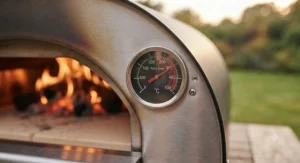
What is hardwood lumpwood charcoal for pizza oven use? It’s dense, additive-free wood charcoal, sold in irregular lumps rather than pressed briquette form, specifically screened and burned for the high, clean heat that multi-fuel and charcoal pizza ovens need — typically reaching stone surface temperatures well above what a standard barbecue fire achieves.
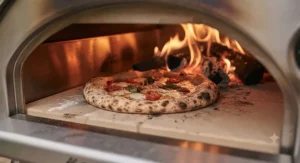
Most home pizza ovens, when fully pre-heated on quality lumpwood, comfortably reach dome temperatures of 400–450°C, with the stone itself typically running slightly cooler in the 380–420°C range depending on how long it’s been soaking up heat. That’s the temperature band that produces a proper Neapolitan-style base — cooked through in 60–90 seconds with leoparding on the crust — rather than the 20-minute bake you’d get from a domestic oven at 250°C. Reaching and holding that range depends on consistent, high-density fuel; thinner or damp charcoal simply can’t sustain the airflow and combustion rate needed, which is exactly why the specific graded and dense products covered above outperform generic bagged charcoal from a supermarket. Realistically, expect it to take 20–40 minutes of pre-heat time before the stone itself is fully saturated, even once the flames look impressively hot — patience at this stage is what separates a soggy base from a properly blistered one.
Wood-Fired Flavour: Hardwood Lumpwood vs Briquettes vs Gas
| Fuel Type | Wood-Fired Flavour | Heat Output | Ash Produced | Typical Cost |
|---|---|---|---|---|
| Hardwood Lumpwood (e.g. Ooni Premium Lumpwood Charcoal) | Strong, authentic smoky note | Very high | Low–moderate | Mid |
| Charcoal Briquettes | Mild, sometimes chemical undertone | High, very consistent | Higher | Low–mid |
| Gas | None (no wood-fired flavour) | High, instantly adjustable | None | Low running cost, higher upfront |
The table makes the trade-off obvious: gas wins on convenience and control but gives up wood-fired flavour entirely, while briquettes offer more consistent heat than raw lumpwood at the cost of a milder, sometimes slightly chemical aftertaste from their binding agents. Hardwood lumpwood charcoal sits in the sweet spot for most home pizza cooks — genuine wood-fired flavour, high peak heat, and (with a graded product like Big K Premium Grade Lumpwood Charcoal FSC) reasonably predictable burning. If pure convenience matters more than flavour authenticity, gas is defensible; if flavour is the entire point of owning a pizza oven, lumpwood is very hard to beat.
Common Mistakes When Buying Charcoal for Pizza Ovens
The single biggest mistake is buying on price per bag rather than price per kilo — a cheap 3kg bag of dusty lumpwood can easily work out more expensive per cook than a well-priced 12kg bulk bag, once you factor in how much more of the poor-quality stuff you need to reach temperature. A close second is ignoring piece size entirely; buyers frequently assume “charcoal is charcoal” and end up frustrated by patchy heat, without realising the fix was simply choosing a graded product in the first place.
Another recurring error is treating briquettes and lumpwood as interchangeable. Briquettes are compressed and bound with starches or other binders, which changes both the burn characteristics and, subtly, the flavour — fine for a standard barbecue grill, less ideal for a pizza oven where wood-fired flavour is often the entire reason someone bought it. Finally, plenty of buyers overlook storage until it’s too late: a brand-new bag of premium lumpwood left in a damp garage for a month will underperform a cheaper bag stored properly, which is a false economy nobody intends to create.
Oven-Safe Fuel: Safety, Regulations and Smoke Control Compliance
“Oven-safe fuel” isn’t just marketing language — it has real regulatory teeth in the UK. Since May 2021, wood fuel sold in volumes under two cubic metres must carry Ready to Burn certification, confirming moisture content of 20% or less, under the government’s Air Quality (Domestic Solid Fuels Standards) rules. While charcoal itself is treated slightly differently to raw firewood, the same underlying logic applies: low-moisture, well-sourced fuel burns cleaner and produces less visible smoke, which matters enormously if you live in a smoke control area. You can check whether your postcode falls inside one directly on the gov.uk smoke control area rules page, where penalties for burning unauthorised fuel in a designated area can reach £1,000.
Carbon monoxide is the other safety consideration worth taking seriously, and it’s not limited to indoor appliances. The Health and Safety Executive has published specific guidance on preventing carbon monoxide exposure from solid fuel appliances, including wood-fired pizza ovens, because incomplete combustion — often caused by restricted airflow or damp fuel — produces this colourless, odourless gas even outdoors. Never bring a lit or smouldering pizza oven into an enclosed space like a garage or conservatory to “finish cooling,” and always allow full ventilation during and after cooking. Choosing a certified, low-moisture, additive-free hardwood lumpwood charcoal isn’t just about better pizza — it directly reduces the risk of incomplete combustion and the smoke complaints that come with it.
Long-Term Cost & Maintenance: Is Premium Lumpwood Worth It?
Run the numbers over a season rather than a single bag, and the picture changes considerably. A £10 bag of budget lumpwood that burns inconsistently and needs topping up twice per cook can easily cost more per pizza than a £14 graded bag that reaches temperature faster and holds it longer — you’re not just paying for charcoal, you’re paying for wasted fuel every time a fire needs restarting. Reusable options like Kamado Joe XL Natural Reusable Lump Charcoal push this further: if roughly a third of each load survives a cook and can be relit next time, the effective cost per session drops meaningfully across a full summer of weekly use.
Maintenance costs matter too, and they’re easy to overlook. Ash from cheap, dusty lumpwood accumulates faster and needs clearing more often, which over time can affect firebox components in cheaper ovens. Cleaner-burning, graded, low-ash fuels reduce that wear, meaning the “expensive” bag can genuinely protect the more expensive appliance it’s feeding. For anyone cooking more than a handful of times a season, buying mid-range or premium hardwood lumpwood isn’t really a luxury upgrade — it’s the more economical choice once you account for consistency, waste and appliance longevity together.
Frequently Asked Questions
❓ What is the best hardwood lumpwood charcoal for a pizza oven?
❓ What temperature does charcoal reach in a pizza oven?
❓ Is lumpwood charcoal better than briquettes for pizza ovens?
❓ How much hardwood lumpwood charcoal do I need for a pizza oven?
❓ Can I use any charcoal in a pizza oven?
Conclusion
Hardwood lumpwood charcoal for pizza oven cooking rewards a bit of research far more than most garden purchases — the difference between a cheap, dusty bag and a properly graded, additive-free one shows up directly in your stone temperature, your smoke levels, and honestly, the taste of the pizza itself. Across the seven products covered here, there’s a genuinely sound option whichever camp you fall into: Ooni Premium Lumpwood Charcoal and Alderline Lumpwood Charcoal BBQ for speed and smaller sessions, Big K Premium Grade Lumpwood Charcoal FSC and Marienburg Organic Restaurant Grade Lumpwood BBQ Charcoal for consistent mid-range performance, and Big K Restaurant Grade Lumpwood Charcoal, Log-Barn Restaurant Grade Lumpwood Charcoal or Kamado Joe XL Natural Reusable Lump Charcoal for anyone cooking often enough to justify bulk or reusable fuel.
Whichever bag you choose, remember that oven-safe fuel is about more than convenience — checking for Ready to Burn-style low-moisture certification and keeping charcoal properly stored genuinely affects both your pizza oven temperature and your compliance with local smoke control rules. Get the fuel right, give the stone the full pre-heat it deserves, and the wood-fired flavour genuinely does the rest.
🍕 Ready to Fire Up Better Pizza Nights?
🔍 Take your outdoor cooking to the next level with a properly graded hardwood lumpwood charcoal. Click on any highlighted product above to check current pricing and availability. The right fuel turns an average garden pizza night into the kind your family will ask for every weekend!
Recommended for You
- Restaurant Grade Charcoal for BBQ: 7 Ultimate Picks (2026)
- Lumpwood Charcoal vs Briquettes: 7 Best UK Picks for 2026
- Best Lumpwood Charcoal 2026: 7 Top UK Picks Compared
Disclaimer: This article contains affiliate links. As an Amazon Associate, I earn from qualifying purchases. If you purchase products through these links, we may earn a small commission at no additional cost to you.
✨ Found this helpful? Share it with your friends! 💬🤗
