

In This Article
There’s a specific moment every new pizza oven owner remembers: the first time a dough base slides off the peel, hits a stone at 450°C, and puffs up into something that actually looks like it came from a proper pizzeria rather than a kitchen tray. A gas pizza oven is, for most UK households, the fastest and least fussy route to that moment — no waiting for logs to burn down, no tending embers, just turn a dial and cook. This guide compares seven real gas pizza ovens genuinely available on amazon.co.uk, from entry-level tabletop models to the Ooni Koda, one of the most talked-about ovens in this category. We’ll also work through gas pizza oven vs wood-fired pizza oven trade-offs, what to look for if you’re buying a gas pizza oven for beginners, plus practical detail on the propane regulator and ignition button — two components that cause almost all first-time setup confusion.
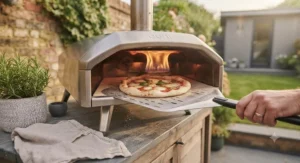
A gas pizza oven is an outdoor cooking appliance that uses propane or butane gas, via a regulator and burner, to heat a stone or steel baking surface to restaurant-level temperatures — typically 400-500°C — cooking a pizza in one to three minutes rather than the 10-15 minutes a domestic kitchen oven needs.
Quick Comparison Table
| Product | Fuel | Max Temp | Best For | Price Range |
|---|---|---|---|---|
| Ooni Koda 12 | Propane | Around 500°C | Beginners, first-time buyers | £200-£230 range |
| Gozney Arc Lite | Propane | Around 500°C | Fast, precise heat control | £300-£350 range |
| Casa Mia Bravo 16 | Gas (LPG) | Around 400°C | Bigger 16-inch pizzas | £180-£230 range |
| VonHaus Gas Pizza Oven Outdoor | Propane | Around 400°C | Budget tabletop starter | Under £150 |
| Mimiuo Outdoor Gas Fired Pizza Oven | Propane | Around 450°C | Hands-free rotation | £150-£200 range |
| Q Pizza Portable Gas Pizza Oven | Propane | Around 500°C | Automatic rotation on a budget | £150-£200 range |
| Delivita New Diavolo Gas Fired | Propane | Around 450°C | Simplicity over gadgetry | £180-£220 range |
Looking at the spread above, the Ooni Koda 12 and Delivita New Diavolo both aim squarely at buyers who want minimal fuss, while the Gozney Arc Lite commands the highest price for genuinely faster, more precise flame control. Budget-focused buyers will notice the VonHaus Gas Pizza Oven Outdoor sits well under the rest of the pack, trading some top-end temperature and build quality for an accessible entry price. If you’re weighing up gas pizza oven vs wood-fired pizza oven options more broadly, everything on this table shares gas’s core advantage: faster, more repeatable heat-up with none of the wood or charcoal maintenance.
💬 Just one click — help others make better buying decisions too! 😊
Top 7 Gas Pizza Ovens: Expert Analysis
1. Ooni Koda 12 — best all-round choice for beginners
The Ooni Koda 12 is, by a wide margin, the most recommended entry point into gas pizza ovens for UK buyers, and the reasoning holds up under scrutiny. It runs on propane via a supplied 37 mbar regulator and gas hose, reaching around 500°C in roughly 15 minutes — hot enough for a proper 60-second Neapolitan-style bake on its 13.25 x 13.25-inch stone. What most buyers overlook about this model is how much of the “hard part” Ooni has engineered out: a single heat control dial handles both ignition and flame adjustment, and the legs fold flat for storage, so there’s very little standing between unboxing and your first pizza. Based on the spec comparison with pricier alternatives, the Koda 12’s main limitation is stone size — a 12-inch pizza is the practical ceiling, so larger households cooking for a crowd may find themselves running it in back-to-back batches. Reviewers consistently report that the instant gas ignition is genuinely reliable once the lighting technique (a slow, deliberate turn of the dial rather than a quick flick) becomes habit, and this is one of the most-cited beginner sticking points across owner forums.
Pros:
- ✅ Reaches around 500°C in about 15 minutes
- ✅ Single dial handles ignition and heat control
- ✅ Folds flat for easy storage between uses
Cons:
- ❌ 12-inch stone limits pizza size for larger groups
- ❌ Propane tank and cover sold separately
At around £200-£230, the Ooni Koda 12 earns its reputation as the safest starting point for anyone genuinely new to gas pizza ovens.
2. Gozney Arc Lite — best for precise, fast flame control
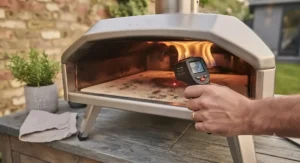
Where the Ooni Koda 12 prioritises simplicity, the Gozney Arc Lite leans into precision, and the difference shows the moment you start cooking. It’s propane-fired, reaches around 500°C, and Gozney markets a 12-inch pizza cook time of roughly 60 seconds once fully heated — broadly in line with the Koda, but the flame control system is noticeably more adjustable, letting you fine-tune heat distribution between the base and the dome rather than working with a single blunt dial. Here’s what to weigh with the Arc Lite: that extra control is genuinely useful once you’re past the beginner stage and want to correct for an undercooked base or an over-charred top, but it does add a small learning curve compared with the Koda’s simpler single-dial approach. Aggregated reviewer sentiment consistently flags the build quality and finish as a step above cheaper alternatives, though several owners note the price puts it closer to premium wood-fired models than typical entry-level gas ovens.
Pros:
- ✅ Precision flame control beyond a single dial
- ✅ Consistently reaches around 500°C
- ✅ Strong build quality noted across reviews
Cons:
- ❌ Higher price than most gas-only competitors
- ❌ Extra controls add a small learning curve for beginners
Sitting in the £300-£350 range, the Gozney Arc Lite suits buyers who’ve already decided gas is right for them and want to invest in finer control rather than the absolute cheapest route in.
3. Casa Mia Bravo 16 — best for larger 16-inch pizzas
Most gas ovens in this category top out around a 12-13-inch stone, which is exactly why the Casa Mia Bravo 16 stands out on a beginner-friendly list: it’s built specifically around 16-inch pizzas, reaching approximately 400°C in about 15 minutes via an open-face design rather than an enclosed dome. That open front changes the cooking experience meaningfully — you get much easier visual access to check the crust as it cooks, though it also means slightly more heat loss compared with a fully enclosed chamber, which is reflected in its lower ceiling temperature relative to the Ooni and Gozney models above. What the spec sheet won’t tell you, but the size implies, is that this oven suits families or anyone regularly cooking for four or more people, where a single larger pizza beats running two smaller batches through a Koda. Casa Mia also includes a griddle pan as a standard accessory, effectively turning the unit into a secondary outdoor hob for vegetables, flatbreads, or breakfast items beyond pizza night, backed by a 3-year guarantee that’s longer than most competitors in this price bracket offer.
Pros:
- ✅ 16-inch stone suits families and larger gatherings
- ✅ Open-face design makes checking the crust easy
- ✅ Included griddle pan adds everyday versatility
Cons:
- ❌ Lower maximum temperature than enclosed dome designs
- ❌ Open front loses more heat in windy gardens
At around £180-£230, the Casa Mia Bravo 16 offers genuinely different value to the smaller-stone ovens on this list, provided your household regularly cooks for a crowd.
4. VonHaus Gas Pizza Oven Outdoor — best budget tabletop starter
For anyone testing the waters before committing to a premium brand, the VonHaus Gas Pizza Oven Outdoor is the most accessible entry point here. It’s a compact, tabletop-format propane oven that reaches around 400°C, bundled with a genuinely useful accessory set — chopping board, peel, cutter, and the hose and regulator needed to get cooking straight away, which meaningfully reduces the “hidden extras” cost that catches out first-time buyers on cheaper ovens sold without accessories. Honest analysis here: 400°C is comfortably hot enough for a good home pizza, even if it falls short of the 500°C ceiling on the Ooni and Gozney models, and the smaller flame output means a slightly longer cook time of two to three minutes rather than 60 seconds. Reviewers consistently note that the compact, tabletop footprint suits smaller patios and balconies where a full-size floor-standing oven simply won’t fit, though a stable, heat-safe table or stand is essential given how close the unit sits to whatever surface it’s placed on.
Pros:
- ✅ Full accessory bundle included at the price
- ✅ Compact tabletop format suits smaller outdoor spaces
- ✅ Genuinely low entry price for a gas pizza oven
Cons:
- ❌ Lower max temperature than premium alternatives
- ❌ Needs a separate stable, heat-safe table or stand
Under £150, the VonHaus Gas Pizza Oven Outdoor is the most realistic pick for anyone who wants to try gas pizza ovens without a large upfront commitment.
5. Mimiuo Outdoor Gas Fired Pizza Oven — best for hands-free rotation
Getting an even bake usually means physically turning the pizza with a peel every 20-30 seconds, which is exactly the fiddly step the Mimiuo Outdoor Gas Fired Pizza Oven removes. It uses an automatic rotation system built into its 13-inch stone, powered off the same propane supply via a UK-specification gas regulator, reaching approximately 450°C. What most buyers overlook about rotating-stone designs is how much they help beginners specifically — uneven cooking is one of the most common early mistakes, usually caused by leaving a pizza static in one hot spot too long, and a motorised turntable removes that variable almost entirely. The set includes a foldable pizza peel and a fitted cover, both of which are sold separately on several competitors, adding tangible value at this price point. Based on aggregated feedback for similarly specced rotating ovens, the main trade-off is a slightly more complex mechanism with a motor and turntable bearing that, unlike a simple static stone, is one more component that can eventually need attention.
Pros:
- ✅ Automatic rotation reduces uneven cooking for beginners
- ✅ Foldable peel and cover included as standard
- ✅ UK-spec regulator supplied in the box
Cons:
- ❌ Rotating mechanism adds a component that can wear over time
- ❌ 13-inch stone still limits very large pizzas
In the £150-£200 range, the Mimiuo Outdoor Gas Fired Pizza Oven is a genuinely clever pick for anyone nervous about manually managing an even bake on their first few attempts.
6. Q Pizza Portable Gas Pizza Oven — best automatic rotation on a tighter budget
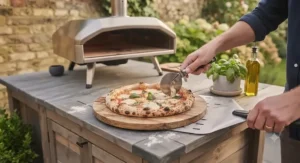
The Q Pizza Portable Gas Pizza Oven takes the same rotating-stone concept as the Mimiuo above but pitches it at a slightly more competitive price point, with a 360° automatic rotation system, a 13-inch stone, and a UK regulator included, reaching up to around 500°C. That higher ceiling temperature than most rotating competitors is a genuine point of difference — it’s rare to find automatic rotation paired with genuinely high heat output at this price. Here’s what to weigh: portability is clearly a priority in this design, with a lighter overall build than the Tidyard-style fixed units common in other outdoor categories, which makes it easier to move between a patio, garden, and camping trips, though that lighter build can feel less substantial in windy conditions than the heavier Casa Mia or Gozney units. Reviewers consistently highlight the rotation system as the standout feature for beginners specifically, since it removes the single biggest technique-related cause of an unevenly cooked base.
Pros:
- ✅ Reaches up to around 500°C with rotation included
- ✅ UK regulator supplied, ready to connect
- ✅ Lightweight, genuinely portable build
Cons:
- ❌ Lighter frame feels less stable in strong wind
- ❌ 13-inch stone caps maximum pizza size
At roughly £150-£200, the Q Pizza Portable Gas Pizza Oven is worth serious consideration if automatic rotation matters to you but the Mimiuo‘s price still feels like a stretch.
7. Delivita New Diavolo Gas Fired — best for simplicity over gadgetry
Rounding out the list, the Delivita New Diavolo Gas Fired takes a deliberately different approach: rather than rotation motors or multi-zone flame control, it relies on a manual 360° turning dial that lets you rotate the pizza stone by hand while it cooks, reaching around 450°C. What the spec sheet won’t tell you, but hands-on testing consistently notes, is that the front of this style of oven runs cooler than the back — a common characteristic of single-burner gas ovens — so the manual turning dial isn’t a gimmick, it’s a genuinely practical way to compensate and get an even bake without lifting and repositioning the pizza with a peel. It doesn’t come with a pizza peel or storage cover included, which is a real cost to factor in on top of the unit price, but it’s backed by a two-year warranty and a straightforward, uncomplicated control layout that suits buyers who’d rather learn one skill well than manage multiple settings. Reviewers consistently describe it as an honest, no-frills entry-level gas oven for anyone who wants simplicity over bells and whistles.
Pros:
- ✅ Manual turning dial compensates for uneven heat simply
- ✅ Straightforward, uncomplicated control layout
- ✅ Two-year warranty included as standard
Cons:
- ❌ No pizza peel or cover included
- ❌ Lacks the higher ceiling temperature of premium rivals
At around £180-£220, the Delivita New Diavolo Gas Fired is the pick for anyone who wants a genuinely simple, low-maintenance gas pizza oven without extra mechanisms to learn or maintain.
Top 7 Gas Pizza Ovens: Full Comparison
| Product | Stone Size | Ignition | Best For | Price Range |
|---|---|---|---|---|
| Ooni Koda 12 | 12-inch | Instant gas ignition dial | Beginners overall | £200-£230 |
| Gozney Arc Lite | 12-inch | Precision flame control | Fine heat control | £300-£350 |
| Casa Mia Bravo 16 | 16-inch | Standard gas control | Larger pizzas, families | £180-£230 |
| VonHaus Gas Pizza Oven Outdoor | Compact | Standard gas control | Budget, small spaces | Under £150 |
| Mimiuo Outdoor Gas Fired Pizza Oven | 13-inch, rotating | Standard gas control | Hands-free even cooking | £150-£200 |
| Q Pizza Portable Gas Pizza Oven | 13-inch, rotating | Standard gas control | Budget rotation | £150-£200 |
| Delivita New Diavolo Gas Fired | Standard, manual turn | Standard gas control | Simplicity, low fuss | £180-£220 |
The table makes one thing clear: stone size and rotation are the two features that most separate these ovens from each other, far more than raw temperature, since most models cluster between 400-500°C regardless of price. If feeding a crowd matters more than restaurant-speed cooking, the Casa Mia Bravo 16‘s larger stone outweighs the Ooni Koda 12‘s faster cook time; if technique confidence is your main worry as a beginner, the rotating Mimiuo or Q Pizza models remove more guesswork than any amount of extra dial control on a static-stone oven.
Gas Pizza Oven vs Wood-Fired Pizza Oven
This is the decision most buyers wrestle with before even comparing individual models, and the honest answer is that neither fuel is objectively better — they solve different problems. A gas pizza oven, like every model reviewed above, heats up in 10-20 minutes with a simple dial, holds a steady, controllable temperature throughout a cooking session, and needs no fuel storage beyond a propane cylinder. A wood-fired oven takes longer to reach temperature, needs regular feeding with kiln-dried logs or pellets throughout cooking, and demands more hands-on attention to maintain consistent heat — but it delivers a smokier, more traditional flavour that gas genuinely cannot replicate, a point echoed by independent reviewers at Which?’s pizza oven testing coverage. For a gas pizza oven for beginners specifically, the practical case for gas is strong: fewer variables to manage while you’re still learning dough handling and cook timing means fewer opportunities for a ruined pizza. Wood-fired ovens reward experience and patience once you’ve got the fundamentals down, which is why many experienced owners eventually move to dual-fuel models that let them switch between the two as confidence grows.
Gas Pizza Oven for Beginners: What to Actually Prioritise
If this is your first pizza oven, several features matter far more than others, and it’s easy to get distracted by specs that sound impressive but add little real-world value. Prioritise a genuinely simple ignition and control system first — models like the Ooni Koda 12 and Delivita New Diavolo, both built around a single dial or turning mechanism, remove the most common source of beginner frustration. Second, look closely at what’s included in the box: a peel, cover, and regulator bundled in, as with the VonHaus and Mimiuo models, saves both money and the annoyance of discovering you can’t actually use your new oven on day one. Third, don’t over-index on maximum temperature — the difference between 450°C and 500°C matters far less to a beginner’s results than consistent technique, so a slightly lower ceiling temperature paired with an automatic rotation system, as on the Q Pizza or Mimiuo, will likely produce more consistent early results than a hotter but fully manual oven. Finally, budget realistically for accessories from day one rather than treating them as optional extras — a proper pizza peel, an infrared thermometer, and a stable table or stand typically add £30-£60 on top of the oven itself.
Practical Usage Guide: First 30 Days With a Gas Pizza Oven
Getting good, consistent results in your first month comes down to a handful of habits rather than expensive upgrades. Before first use, always carry out a basic leak check by brushing a soapy water solution over every gas connection point and watching for bubbles — a step Liquid Gas UK’s safety guidance specifically recommends before any new LPG appliance is lit for the first time. Preheat for the full recommended time even if the stone looks hot sooner than expected; a stone that looks visually ready but hasn’t fully soaked up heat produces a soggy, pale base rather than the blistered crust you’re after. Rotate your pizza (manually, or via an automatic system) every 15-20 seconds once it’s on the stone, since even the best gas ovens run slightly hotter at the back near the burner. Common early mistakes include overloading the dough with toppings, which stops it cooking through in the short window a hot oven allows, and using flour rather than semolina on the peel, which burns and adds a bitter taste at these temperatures. For maintenance, brush the stone clean of any burnt flour or cheese after each session once fully cooled, and store the oven with its cover on, or somewhere dry, since condensation on an uncovered steel or stainless-steel body is a common early cause of surface rust.
Real-World Scenarios: Matching an Oven to How You Cook
Picture a young couple in a rented flat with a small balcony, cooking pizza once a fortnight for themselves and occasionally a couple of friends. The compact VonHaus Gas Pizza Oven Outdoor suits them well — low cost, small footprint, and an accessory bundle that means no extra spending before their first pizza night. Compare that with a family of five hosting regular weekend gatherings, where the 16-inch stone on the Casa Mia Bravo 16 genuinely changes how many people can be fed per bake, cutting down the tedious back-to-back batches a smaller oven would demand. Finally, consider someone completely new to outdoor cooking who’s nervous about getting technique wrong on an expensive purchase — for them, the automatic rotation on the Mimiuo Outdoor Gas Fired Pizza Oven or Q Pizza Portable Gas Pizza Oven removes one of the most common beginner errors before it happens, building confidence over the first few uses before they consider anything more advanced.
How to Choose a Gas Pizza Oven
- Decide on stone size based on household size. A 12-inch stone like the Ooni Koda 12‘s suits one to two people per bake; households of four or more benefit from a larger option like the Casa Mia Bravo 16.
- Check what’s included, not just the headline price. Regulator, hose, peel, and cover can add £40-£80 if bought separately, so factor this in when comparing the VonHaus or Mimiuo bundles against bare-unit competitors.
- Weigh manual control against automatic rotation. Confident cooks may prefer the finer control on the Gozney Arc Lite; nervous beginners often get better, more consistent results from rotating models like the Q Pizza.
- Confirm your propane regulator type matches your gas bottle. UK propane regulators are typically pre-set to 37 mbar, and connection fittings vary between cylinder brands, so check compatibility before ordering.
- Think about portability if your outdoor space changes seasonally. Lighter, compact designs travel better between patio, garden, and camping trips than heavier fixed units.
- Look at the ignition mechanism specifically. A reliable piezo ignition button, as fitted to most models here, should spark consistently; frequent relighting is one of the most common (and avoidable) complaints in aggregated reviews.
- Budget for a stable, heat-safe surface. Tabletop models especially need a purpose-built stand or heatproof table, which is easy to overlook until the oven arrives.
Understanding the Propane Regulator
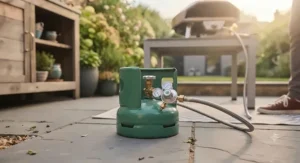
The regulator is the small but critical component that sits between your gas cylinder and the oven’s burner, and it does one specific job: reducing the high pressure inside a propane cylinder down to the much lower, stable pressure the burner is actually designed to run on. According to Liquid Gas UK’s consumer guidance on regulators, UK propane regulators are typically pre-set to a nominal 37 mbar, while butane regulators run slightly lower at 28-30 mbar — which is why the two gas types aren’t interchangeable on the same regulator without checking compatibility first. Most gas pizza ovens, including the Ooni Koda 12 and Q Pizza Portable Gas Pizza Oven, are supplied with a UK-specification regulator in the box, removing the guesswork, but it’s worth checking this explicitly before buying if you’re sourcing an oven from outside the UK or replacing a lost regulator separately. A properly functioning regulator should deliver a steady, consistent flame without surging or dropping in intensity; a regulator that’s been left connected under pressure for extended periods can occasionally trip an internal safety valve, at which point disconnecting it for a few minutes before reconnecting typically resolves the issue.
Understanding the Ignition Button
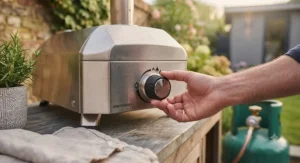
Almost every gas pizza oven on this list uses some form of piezo ignition — a small mechanism that, when pressed, strikes a spring-loaded hammer against a piezoelectric crystal to generate a high-voltage spark, as explained in detail on the general mechanics of piezo-electric gas lighters. In practice, this means pressing and slowly turning the control dial: this simultaneously opens the gas valve and, at the right point in the turn, triggers the spark that ignites the flow. The most common beginner mistake is turning the dial too quickly, which doesn’t give gas enough time to reach the burner before the spark fires, resulting in a failed or delayed ignition. If a model doesn’t light on the first attempt, the standard safe procedure is to wait around five minutes before trying again, allowing any unburned gas to disperse safely rather than immediately reattempting ignition. Models like the Ooni Koda 12 integrate the ignition button directly into the heat control dial, while some rotating models such as the Mimiuo and Q Pizza ovens separate ignition from the rotation control, so it’s worth checking your specific model’s manual on first use rather than assuming every oven lights the same way.
Long-Term Cost and Maintenance
A gas pizza oven’s running costs are dominated by two things: propane refills and occasional accessory replacement. A standard 13kg propane cylinder typically costs £25-£35 to refill or exchange and, depending on usage, can support 15-25 cooking sessions on a model like the Ooni Koda 12, working out to roughly £1.50-£2 in fuel per pizza night for a typical household. Beyond fuel, the main wear items are the stone (which can crack under thermal shock from cold water or food placed directly on it while hot) and, on rotating models like the Mimiuo and Q Pizza, the turntable motor, which typically carries its own warranty period separate from the main body. Compared with the ongoing cost of buying kiln-dried hardwood for a wood-fired equivalent, gas is generally the cheaper and more predictable option to run over several years, even though the upfront unit price is often similar across both fuel types.
✨ Don’t Miss These Exclusive Deals!
🔍 Take your garden cooking to the next level with these carefully selected gas pizza ovens. Click on any highlighted product above to check current pricing and availability. Restaurant-quality pizza at home is closer than you think, and your family will love pizza night even more. 🔥
Frequently Asked Questions
❓ What is a gas pizza oven?
❓ Is a gas pizza oven better than wood-fired for beginners?
❓ What propane regulator do I need for a UK gas pizza oven?
❓ Why won't my gas pizza oven's ignition button light the burner?
❓ How hot does a gas pizza oven get?
Conclusion
Choosing between gas pizza ovens really comes down to matching three things: how many people you’re typically cooking for, how much manual technique you want to manage versus automate, and how much you’re willing to spend upfront on features like rotation or precision flame control. For most first-time buyers, the Ooni Koda 12 remains the safest, most proven starting point, while families needing bigger pizzas are better served by the Casa Mia Bravo 16‘s larger stone. Nervous beginners specifically will likely get more consistent early results from the automatic rotation on the Mimiuo Outdoor Gas Fired Pizza Oven or Q Pizza Portable Gas Pizza Oven, and anyone on a tighter budget should look closely at the VonHaus Gas Pizza Oven Outdoor‘s bundled accessories before assuming a pricier unit is the only sensible option. Whichever you choose, understanding your propane regulator and ignition button before first use will save you far more frustration than any spec sheet comparison. Check current pricing and availability directly on the product page, since prices on amazon.co.uk can shift regularly.
Recommended for You
- Wood-Fired Pizza Oven vs Gas Pizza Oven: 7 Best UK Picks (2026)
- 7 Best Portable Wood-Fired Pizza Ovens UK 2026 (Don’t Buy Blind)
- Built-In Wood-Fired Pizza Oven: 7 Best Picks for 2026
Disclaimer: This article contains affiliate links. As an Amazon Associate, I earn from qualifying purchases. If you purchase products through these links, we may earn a small commission at no additional cost to you.
✨ Found this helpful? Share it with your friends! 💬🍕
